Showing posts with label change management. Show all posts

Friday, 22 January 2021

Why incrementalism doesn't work for KM change

Incrementalism will not work as a way to introduce Knowledge Management. KM is a mindshift - a giant leap - not a series of small steps.


Incrementalism is a method of working or changing by using many small incremental changes instead of one giant leap. Logical incrementalism implies that the steps in the process are sensible, and together each small step makes progress towards large change.  It is a preferred approach in many organisations, because it doesn't upset the status quo too much.

But Knowledge Management has to upset the status quo!

The status quo in most organisations is that the value of knowledge is unrecognised, people treat knowledge as personal asset not a valuable corporate asset, and knowledge work is not seen as "real work".

This status quo generally results in knowledge mismanagement.

I have already talked about the culture leap for Knowledge Management - the 8-inch shift from "Knowledge is MINE" to "Knowledge is Ours". This is a jump across a chasm, a polar switch in attitude, not a series of shuffles from one state to another.  Knowledge Management cannot effect this culture change in incremental steps, it requires a paradigm shift.

We see the same effect in our Bird Island exercise. People build a tower, and then start to think how they might improve the tower. They think, they discuss, they conduct after action reviews, and decide that next time, their tower could be 20% higher. They think they can improve incrementally.

Then we show them a picture of the World Record tower, which is often 3 or 4 times the height they have managed. They realise that a big leap is needed, not a series of little steps. As one of our participants said:
"That's the difference between the top learners and the rest: it will take the incrementalists all eternity to catch up with the best learning organisations. A shift from an incrementalist standpoint is quite a fundamental shift"

The "top learner" takes learning from everywhere any anywhere - from other people, other companies, and from records from the past. They challenge their thinking, they throw away their design if its unsatisfactory, they have open minds and they welcome challenge. That's where we see the giant leaps in performance in Bird Island - with performance increases of 300% or 400%. This is true also in KM implementation.  we need a giant leap, not baby steps.

So if we can't use incrementalism, how then do we effect the KM change?

We effect change through standard change management techniques.

  • Make the case that the Status Quo is unacceptable. In the Bird Island game, this is done by showing how pathetic the current performance seems against World Class performance. In the organisation, this is done by showing the unacceptable costs or risks of lost knowledge.
  • Show what the future will be like. Present case studies of embedded Knowledge Management where true value is being delivered. Show how people treat knowledge as a really valuable asset, and how they work differently as a result.
  • Find someone who "gets it" (your first follower) and work with them to pilot KM in one small part of your own organisation.  Capture your own case study.  
  • This pilot is a big leap in a small area, as opposed to incrementalism, which is a small change over the whole company. 
  • Communicate the success from the pilot. Use this as social proof to find the second follower, and the third.
  • Communicate, communicate, communicate.
  • When you have a big enough body of proof, use this to gain senior management support for roll-out.
  • Communicate, communicate, communicate.  Recognise the good performers. Publicise their successes. Continue to show the others what the future will look like. Coach, support, cajole, encourage.  Roll out KM area by area, business problem by business problem, department by department.
  • Embed KM, so the culture does not change back.

Big changes don’t happen incrementally, they happen dramatically through choice or by circumstances.  Knowledge Management is a big change in culture, and you cannot get there through small incremental steps.


Monday, 14 December 2020

Loss Aversion, and the dis-incentives for KM-based change

The risk of loss of the status quo can be a powerful disincentive for change, and can be a powerful factor working against knowledge management implementation.


There is a very apt quote from Machiavelli (The Prince, 1532), which applies to Knowledge Management as it does to any change initiative:
“There is nothing more difficult to take in hand, more perilous to conduct, or more uncertain in its success, than to take the lead in the introduction of a new order of things, because the innovator has for enemies all those who have done well under the old conditions, and lukewarm defenders in those who may do well under the new.” 
As Machiavelli points out, the status quo is a powerful factor. Introducing something new, such as KM, disturbs the status quo without yet providing anything tangible to replace it. Sometime in the future Knowledge Management will deliver rewards, but people are always more unwilling to lose tangible benefits in the here and now, in return for potentially bigger but intangible benefits in the future.

This is known as "loss aversion".

Wikipedia tells us that in economics and decision theory, loss aversion refers to people's tendency to strongly prefer avoiding losses to acquiring gains. Most studies suggest that losses are twice as powerful, psychologically, as gains.  This is reflected strongly in Machiavelli's quote.

Implementing KM involves change, all change involves loss, and all loss leads to aversion. Therefore you will make enemies of anyone who sees that they will lose something - power, prestige, profile - as knowledge management is introduced.

Elon Musk, as reported on the Farnham Street blog met a similar loss aversion from the regulators when proposing a re-usuable space rocket.

"There is a fundamental problem with regulators. If a regulator agrees to change a rule and something bad happens, they can easily lose their career. Whereas if they change a rule and something good happens, they don’t even get a reward. So, it’s very asymmetric. It’s then very easy to understand why regulators resist changing the rules. It’s because there’s a big punishment on one side and no reward on the other. How would any rational person behave in such a scenario?"
So how do we tackle loss aversion when implementing Knowledge Management?
  • Wherever possible, we make a case for change by maintaining that the status quo is undesirable. Maybe not sharing knowledge, or not learning from others, can be shown to put the profitability of the organisation at risk. Maybe failing to retain knowledge means that in 5 years time the organisation cannot compete.
  • Secondly we paint a picture of the KM-enabled future. We do this through proof of concept activity and piloting, so people can see for themselves how KM works, and can hear from their colleagues about the benefits it brings.

These two approaches allow people to re-set the loss aversion equation, by reducing the value of the status quo and increasing the tangibility of the KM future. This makes it safer for people to make the change.


Tuesday, 28 July 2020

Internal competition - the KM-killer

If Knowledge Management is like gardening and the knowledge manager is like a gardener (see here to understand the metaphor), then Internal competition is like a late frost that kills all your green shoots. 


There is no point in planting the seeds of Knowledge Management and protecting the first shoots of knowledge sharing, if the company incentive scheme has large elements of internal competition, which will just freeze your efforts dead.

Companies often encourage internal competition as an incentive to drive performance in a company. They might set up "salesman of the year" schemes, to encourage personal sales effort with big bonuses, or they might give awards and recognition to the factory that produces the best output.

But why would one sales executive share knowledge to help another, if that just meant that their bonus was more at risk? They wouldn't. They would hoard their knowledge for the competitive advantage it gives them. And the poor salesperson at the bottom of the pile - the one who needs to learn the most - finds nobody who will help them.

Why would one factory share knowledge with another, if they are in competition? They wouldn't. Or if they did, they would be very clever about it.

We worked with a company trying to introduce Best Practice sharing between a number of factories who competed for an annual “factory of the year” award. The company decided to make “best practice sharing” part of the award criteria, with each factory required to submit a quota of best practices. The wily factory staff waited until just before the award deadline, then issued all their best practices in one submission (most of them poor quality); early enough that they counted towards the award, but so late that none of their rival factories could benefit from reusing the knowledge. Internal competition therefore trumped knowledge sharing.

The knowledge manager needs to address this issue, and can do so in two ways, firstly by protecting the first shoots of KM behaviour against the Internal Competition frost, and secondly by making the case for eliminating internal competition.

The first approach - "protection" - involves ensuring that your early KM pilots and proof of concept exercises are not in areas where internal competition is an issue. Find a part of the business where the different business units can benefit from knowledge sharing, but where they are not in competition. If the factories compete on output volume, then perhaps they could collaborate on energy use, or on quality.  If the sales staff compete on sales volume, perhaps they could collaborate on customer retention.

The second approach comes once you have data from the pilots and proof of concept exercises which shows the value that KM can bring. Then you make a business case to senior management that there is more value in collaboration than in internal competition, and that all competitive efforts should be turned towards the competition, not towards other colleagues.

 Instead of incentivising one plant if it increases production, you incentivise all plants if all plants improve. Say you have 10 plants, which together produce 1 billion tonnes. Why not give ALL plant managers the target of reaching a collective total of 1.2 billion tonnes, with a handsome bonus for all of them if they collectively achieve it?  This is the "T-shaped Manager" approach used at BP, which was based on T-shaped incentives.

Why not give all the sales force the collective incentive of increasing sales by 10%? That would be a fantastic way of driving collaboration, because now it is in the interest of the strong performer to improve the results of the poor performer. The strong performers become mentors and coaches and guides.  Once company we worked with gave every salesperson in a team the same sales target, with a bonus for everyone if they all exceeded their targets. The good salespeople delivered their targets early, then spent time coaching and helping the poorer performers to increase the overall performance of the team.

Replace the KM-killing frosts of Internal Competition with the warmth of internal collaboration, and all will be well in your KM garden.

Tuesday, 7 July 2020

Which comes first - Knowledge Management or culture change?

It's the ultimate chicken and egg situation. KM requires a supportive culture, yet how do you develop the culture without doing KM?


Should you wait for the culture to change, and then start your KM initiative, or should you start your KM initiative knowing you have to battle against the culture?

The Knoco global surveys of KM tell us that Culture is the second biggest barrier to KM implementation, and the second most common reason for abandoning KM.  There is no doubt that the existing culture can strongly infuence your KM efforts, and ISO 30401:2018, the ISO management systems standard for KM, says that

"A culture where connections and knowledge activities are encouraged, and knowledge is valued and actively used, will support the establishment and application of the knowledge management system within the organization".

However Knowledge Management is also a culture change agent. The graph below, also from the Knoco surveys shows how the number of cultural barriers decreases the more Knowledge Management becomes embedded.


So we have a "chicken and egg" situation. Culture is a barrier, culture can derail your KM initiative, but the more embedded KM becomes, the more the barriers come down. 

How then do we introduce KM? Do we start with the chicken, or wait for the egg?

The answer is that we introduce KM as a culture change exercise.

  • Then we look for small areas of the business where the cultural barriers are weakest and/or the need for knowledge and KM is strongest, so that the balance is tipped in our favour, and we make these our KM pilot areas. 
  • We introduce KM in the pilot areas, deliver success, deliver value, than use these success examples in our communication and change program as "social proof". These pilots are our cultural "first followers" or "thin threads"; the equivalent of the first wave of penguins off the ice floe (see video here). 
  • Then you repeat the last step as many times as it takes for the new culture to catch hold, recruiting your second followers, third followers and so on.   
  • At the same time, you lobby your sponsor and steering team to begin to remove the institutional barriers to the new culture such as the recognition and reward scheme, the internal security barriers, and so on.
The answer to the "chicken and egg" is that you don't wait for the culture to change. You make a start, and change the culture as you go. Buy a pair of chickens, lay some eggs, make more chickens, and before long you have a whole chicken farm.

Use the power of KM to change the culture, and use the culture change to deliver KM.


Contact Knoco if you need help with your KM culture change

Friday, 7 February 2020

Driving the desire to learn by pushing people out of their comfort zone

Nobody will look for knowledge from others if they think they already know what to do, and you cannot teach anyone anything if they think they know it already. Therefore the most effective way to promote a desire to learn in an organisation, is to move people out of their comfort zone.


I don't know
An honest post-it, by Hilary Perkins, on Flickr
If people are in a familiar situation, where they think they know what to do, then they  will just rely on their own knowledge. After all – they know its provenance, and they trust it more than they trust anyone else’s knowledge.  Why look for new knowledge, if your existing knowledge is sufficient?

This means that the best way to promote learning and re-application of knowledge across an organisation is to give people challenges they don't know how to meet. To push them out of the comfort zone of “I know how to do this”, into a zone of “this is tough – I’d better see what knowledge is out there that can help me”. Then they will look for knowledge from others, to help them solve the problem.

It's a question of receptivity. You can't transfer knowledge unless the recipient is receptive. To be receptive, they have to feel a need to learn something. If they feel they don't need to know, they won't be receptive to external knowledge. Epictetus knew this in 2nd century Rome when he said "It is impossible for a man to learn what he thinks he already knows." See also the story of the nurses.

Examples from industry


John Browne (the BP CEO in the 90s and early 00s) recognised this issue, and offered a challenge.

He said that he expected every project to deliver better than the previous project (often radically better), and his budget allocations and performance targets reflected this. He forced continuous improvement in delivery and cost, and the only way to continuously improve was to continuously learn. For the project manager, these "stretch goals" were often seriously uncomfortable ("How on earth does he expect me to cut the budget by another 20%?”) and it pushed them to seek advice, look for the best of the best, and build upon the entire knowledge base of the organisation. As a result, these stretch targets were drivers of innovation, knowledge management and continuous improvement.

Ford did this as well, in the days of the Ford Best practice Replication System. Through applying continuously decreasing operating budgets, they forced their plants into a situation where they were outside their comfort zone, and had to learn in order to deliver to the new budgets.

In both cases, the strong delivery push from management was supported by an organisational framework that made knowledge management possible.

Just increasing the pressure without providing the framework would not have worked – it would have added stress to the organisation. Increasing the pressure while also providing the ability to learn, on the other hand, provided the incentives for knowledge to flow around the system to where it was needed (driven by “demand Pull”), and fuelled continuous performance increase over a number of years.

So remember, if you want to promote a knowledge seeking culture in your company (and a knowledge seeking culture is a far better driver of KM than a knowledge sharing culture), then you and your senior managers need to push people out of the comfort zone, so that they can no longer rely on what they already know.

If they think they know what to do, there is no incentive for them to learn

Thursday, 18 July 2019

KM change is not top down or bottom up, but side to side

Is KM change better seen as top-down, or bottom-up? The answer is Neither; it's side to side.


Lighting a prescribed fire, from nps.gov
Thanks to Steve Dale for alerting me to this post from Digital Tonto entitled "True Transformation Isn’t Top-Down Or Bottom-Up, But Side-To-Side, which offers a really interesting take on transformation. The author, Greg Satell, explains that

Change never happens all at once and can’t simply be willed into existence. It can only happen when people truly internalize and embrace it. The best way to do that is to empower those who already believe in change to bring in those around them.
Some key points here;

  • Change does not happen all at once, and some parts of the organisation will change first;
  • In KM, change happens once KM is embraced and internalised;
  • People who have embraced and internalised KM will bring in others around them.
As I explain in this post, change moves like a fire.

You cannot light a fire all at once - you light a small part, and once this is burning, adjacent areas will also catch fire, until finally the whole area is ablaze (see picture above). 

Greg Satell gives several examples of side to side change -
  • How a revolutionary movement toppled the Serbian dictator Milosevic; 
  • How Experian moved to the cloud;
  • How Wyeth Pharmaceutical introduced Lean; 
  • How Circuit City transformed, and why it later failed. 
He proposes three main pillars of a side-to-side transformation, which I explain below in a context of introducing Knowledge Management into an organisation, and delivering KM transformation. 
  • Identify your apostles. As I explain here in my blog post about knowing your three internal market segments for KM, about 20% of staff are supporters of the idea from the beginning. Their response to KM is an enthusiastic "Yeah!", or even "Hell Yeah!". When you talk to a room full of people about KM, the "KM Light Bulb" will switch on over the heads of about a fifth of your audience. That 20% will become your allies, your supporters, your first followers and early adopters. These are the people who will run your KM pilot projects,  who will apply KM to problems of the organisation, who will embrace KM and deliver successful outcomes. 
  • Don't try to convince - empower. Don't try to sell KM on theoretical benefits; instead empower the first followers to sell KM based on the benefits they were able to deliver. Enable them to share their stories, recognise them publicly, promote their achievements; they will be your "Social Proof" which will interest and engage others. 
  • Constrain your movement with Values. Satell gives examples of changes which faltered because they were unconstrained by Values, and KM may well be the same (imagine cases where people try to apply KM to everything, or try to document every little scrap of knowledge, or set up hundreds of communities discussing trivia). Develop some principles for KM implementation which help people avoid going off track.  I suggest 10 KM principles here, and here are others.

That's how you do change. Side to side, wall to wall. And don't change back again.


Thursday, 27 June 2019

7 lessons for KM change; case study from the early days of KM at the World Bank

In a great blog postSeth Kahan shares 7 lessons on KM change programs 

In the post from 2009, Seth talks about leading KM change at World Bank, and contrasts his first KM initiative (which failed) with his second (which succeeded).

The first initiative was "was comprised of a few select, world-class thought leaders who drew on a dedicated budget to design and implement a powerful new tool they hoped would revolutionize the way business was done. We met in closed meetings, witnessed remarkable demonstrations, and marveled at the power of the Internet to spread knowledge."

In other words, KM was being pushed by a closed group, who were "preaching only to the choir". Unsurprisingly, nothing came of it.

The second initiative, with no budget and no resources, "told everybody what we were up to. In fact, we spent a good deal of time in the beginning figuring out how to tell as many people as we could, as fast as possible. We even met regularly with our detractors, as their input was sometimes needed the most".

The second initiative was being run as a change program, with communication extending beyond the closed group of supporters, and engaging with everyone.  And within 2 years, it had changed the organisation.

Seth's seven lessons for Change


Seth identifies seven lessons for KM change based on his experience

1. Communicate so people get it and spread it. As he says though, this is not one-way communication, but a conversation that spreads

2. Identify and energize your most valuable players.
These are your supporters, your early adopters, who can be used to drive KM forward.

3. Understand the territory of change.
Seth had a method for mapping stakeholder support, and a similar stakeholder mapping will be valuable for you (see here for a possible method).

4. Accelerate evolution through communities.
This one, I think, may be specific to the World Bank. Communities of Practice worked well there, because of the large dispersed nature of the work. Smaller co-located organisations may find other ways to introduce and implement Knowledge Management; perhaps through After Action reviews, or focus groups. You need to work within your own Knowledge Management Strategy and Knowledge Management Framework.

5. Blow through bottlenecks and logjams.
Seth suggests a "SWAT Team" mentality.  But please don't bulldoze people!

6. Create dramatic surges in progress. Seth suggests special events to drive progress. Another way is to create energy around early successes; those Proof of Concept  exercises where Knowledge Management first adds real value to the business.

7. Keep your focus when change comes fast.
When KM is successful, it can accelerate alarmingly. Stay cool - it's all good!

Contact us for more details on leading change management as part of Knowledge Management implementation


Thursday, 31 January 2019

Creating a communication strategy as part of KM implementation

This post contains quotes from KM teams about building a communication strategy to support KM implementation


How to Communicate Your Ideas KM is a change program, and Communication is one of your most  levers in delivering change. Every KM implementation needs a communication strategy.

Here is some guidance on a KM communication strategy, illustrated by quotes from Knowledge Management teams we have worked with, most of which were collected at post-implementation Lessons Capture reviews. (For a free communication plan template, visit our download page). Note that most of these quotes come from people who wished they had done more communication!

Set up a Communication strategy and plan as part of the culture change aspect of your KM program.
"We should have implemented a communication strategy, to define all the different ways of communicating, what the medium would be, what the target audience would be, what the message would have to be". 
"We should have allocated always in our plan, an element of communication process. Even when push came to shove, we should have fought for that just like we fought for some of the other things that were close to our hearts and our commitment".
Start the communication strategy from day 1 - the same time as the KM strategy itself
"Maybe what we could have done with the benefit of hindsight is have that communication strategy right from the start instead of inventing it three quarters of the way through".
Make a member of the team accountable for the KM communication strategy
“Make it someone's accountability. To form a strategy and to keep revisiting that strategy. Don't let it fall below the water line”.
Communicate, even when the details are not clear 
"The message that we have been giving has been an honest one. We have told people but we are aiming to do something, although we haven't told them what it's going to look like to after the summer, because we don't honestly know ourselves. If we had gone and said "we are going to do this, this and this" then they might have asked a lot more questions".

"Compared to some that we have seen, our communication is very much better. (Program X) for example are putting a lot of effort in, but they are not telling anybody anything. We took the opposite tack, and decided to tell people that something was coming. When they ask questions, we say "we do not yet know the details"".
Build an internal mailing list
"We developed a bulletin for people who self-select to stay in touch with things. There are 1000 or 1200 people in the organization who have an interest in what we are doing. Every month we send an e-mail to all the new joiners, and say "Do you know that people are sharing their trade secrets on the intranet all across the company? would you like to be kept in touch with this?" And every time we have a workshop with a group of people, we add them on, and every time we do some consultancy or just meet people we ask them if they would like to subscribe. We send it out once a month by e-mail. It is quite colorful, it is not just plain text, we put colored text in it, we have four bulleted items, and there's a link to one thing on the Live and Learn site and then two other things on the intranet which have been published, and we advertise our workshops".
Make sure you budget for communications in your manpower planning
"We could easily have doubled or trembled the level of communications that we were doing, if we had had the manpower".
Communicate your KM successes to the outside world, so that the messages can trickle back in.
"As a company, we tend to learn more from people outside the company than from inside so we were deliberately trying to create a reputation that would come back into our company"

 “My recommendation to anybody in any organisation, is to identify who the key players are in other organisations in your sector or area, and talk to them as well, so that you are planting various seeds not only in your own organisation, but across the sector. After a while, because all these key players talk to each other, you find that you have started to connect them up and they are talking to each other”.

Monday, 21 January 2019

Can KM change culture? Results from research

I think it is well established that introducing Knowledge Management is an exercise in culture change, but can KM itself change culture?


In this summary of findings from an Oxford Review research study, the answer is a qualified Yes.

The research in question, available to subscribers of the Oxford review, was an eight-year study of three organisations, which (according to the authors) follows a number of similar studies in a number of sectors that show it is possible to promote culture change using knowledge management.

The authors cite the following conclusions

  • Leaders can use knowledge management programmes and tools to promote a specific culture change, but this requires persistence, as well as the use of a wide variety of tools and approaches, backed by a clear and sustained vision and rationale. 
  • It is important to promote knowledge management and support the people who have the right attitudes and aptitude to act as champions across the organisation. This helps to enhance local adoption of knowledge management as a tool.. 
  • Technology seduction (popular software tools) can support culture adaptation but the researchers found this approach will not work in isolation. Software and technology based methods must be accompanied by training and the promotion of related activity to ensure that people can absorb the new behaviours into everyday work practices. 
  • One problem is that knowledge management programmes on their own often promote simplistic notions of culture change. It is important to remove barriers to improved performance and think about how to change long-term assumptions, approaches and norms. Knowledge management on its own rarely does this. 
  • If the organisational culture is identified as needing to be changed, an assessment of what those cultural aspects are that need change is important, as is an understanding of why it is no longer appropriate. This can be part of the knowledge management programme. 
  • The use of short-term activities and exhortation to alter deep-seated values and assumptions does not work and is often counter-productive.

Friday, 7 December 2018

How to talk to the business about KM

Communicating KM to the business requires using business terms, not KM terms.


Talking to the manager of Publix in Naples Knowledge Management is not an end in itself, it is a means to an end, and the end is a more efficient, effective and productive organisation.

The senior and middle managers in your organisation are not interested in Knowledge Management - only in what it can do for their part of the business.

Therefore when we talk with the business stakeholders, we need to talk in their terms, and address the things they are interested in. We need to use words they are familiar with, rather than KM jargon.

One approach is to rebadge KM in words they already know, like innovation, collaboration and learning. So instead of talking to them about Knowledge Management, we talk to them about the following;

  • Innovative products - bringing together the knowledge of our people, as well as external knowledge, to build new ways of doing things, new products, and new lines of business. Here you use KM processes such as business driven action learning.
  • Collaboration solutions - bringing together knowledge from different parts of the business to develop better ways of working - using the knowledge we already know, but which is scattered and siloed. Here you use KM processes such as communities of practice.
  • Empowering the front-line with knowledge - arming our customer-facing staff with the knowledge they need to close the deal, or delight the customer. Again communities of practice are important here, and effective knowledge bases.
  • Harmonising the way we work - comparing and learning from the disparate practices across the organisation, to find the ones that work best in given circumstances. Here you use KM processes such as Knowledge Exchange.
  • Learning from Experience - ensuring our projects and business activities do not repeat the mistakes of the past, but build on the successes. This is the whole area of project-based learning.
  • Stopping the brain-drain - addressing the risk of losing capability as knowledgeable people retire. Here you use KM processes such as Knowledge Retention.
  • Speeding up the learning curve - either for new-hires coming into an expanding business, or for new areas of the business (new markets, new products, new geographies). This will require a combination of many of the KM approaches above.

Address these business issues one by one, starting with the most urgent and bringing in KM solutions as you go, and pretty soon you will have a complete Knowledge Management Framework in place!

Friday, 12 October 2018

Why hasn't knowledge management caught on? Wrong question!

Very often we hear people talking about the failure of KM as a discipline, and asking  "Why hasn't it caught on after all these years?" It's an interesting question, but it's the wrong question.

It's an interesting question, but it's the wrong question. People asking the question are often in government or the public sector, and there KM has not yet "caught on". However there are other sectors where KM has caught on, and has delivered sustained value for a couple of decades.

The consulting sector, for example - early adopters of KM, where KM is embedded, institutionalised, and part of the unconscious fabric of working. Or the legal sector, who's own document-focused brand of KM is well established. Or the oil and gas sector. Ot the construction sector. Aerospace. The military. etc etc.

Data from the publicly available Knoco global surveys of KM

The plot above shows the maturity stages of KM in various industries, with far more examples of KM fully embedded in legal firms, for example, than in education and training firms. The plot below also shows that the larger the organisation, the more mature KM is likely to be.

Data from the publicly available Knoco global surveys of KM


So the question is not "Why hasn't KM caught on" but "Why hasn't KM caught on in my organisational sector, and in organisations oy my size".

I think there are several reasons why KM has not yet caught on in the public sector in particular, and many of these can be related to the presence or lack of the components of organisational learning culture.

  • KM catches on most easily where knowledge has the biggest and most immediate impact on performance. If you can see, and measure, the added value of knowledge (on cost, speed of delivery, bid win rate, whatever) then good KM, leading to an improvement of the delivery of knowledge to the decision makers, delivers immediate and visible value. In the public sector, performance is a very difficult concept to work with. What makes up "good performance" for a public sector organisation? How easy is that to measure, and how easy is it to tie back to knowledge?
  • The value of KM certainly is more visible in larger organisations. Big multinationals have the most to gain from KM, and learning from their big-money decisions in multiple countries can deliver big benefit. In smaller organisations the benefits are correspondingly smaller and less visible, even though the proportional benefit may be the same.
  • Where I have worked with public sector institutions, one of the things that struck me most forcefully was the way messages were managed. There seemed to be a lot of reworking documents, to make sure they said things in the correct way. Now there's nothing wrong with that per se, but it introduces barriers to empowerment, to transparency, and to other elements of the required organisational learning culture. 
  • There is a distinct lack of "no blame" in the public sector, this time due to external pressures. All over the world (or almost all over), there is a hungry press waiting to pounce on anything that looks like a mistake or a failure from a government body or a national health service. This makes "learning from failure" a very risky affair. Indeed, the default approach to learning from failure is the dreaded "public enquiry", after which someone will be sacked, someone will retire in disgrace, and the true reasons for failure will remain unfixed. The "just culture" is very hard to apply in a situation like this.
So there are some real structural and cultural reasons why KM is not so easy in the public sector. In addition, where I have seen it, it tends to be focused on the tactical issues, and seldom on the strategic issues.

However, whether you sit in the public or private sector and are pondering "Why does KM seem to be dead? Why hasn't it caught on?", then you are asking the wrong question, because in other places KM has caught on and is alive and well.  You need to learn from where it works, and see what's different about your own context. And make adjustments as needed.

The question should be "why hasn't KM caught on here yet" and "how can we learn from others, where it has already caught on?"

Tuesday, 28 August 2018

Safety management as an analogue for Knowledge Management

Can Safety Management be a good analogue for KM?


In many ways, Safety Management is a good analogue to Knowledge management.
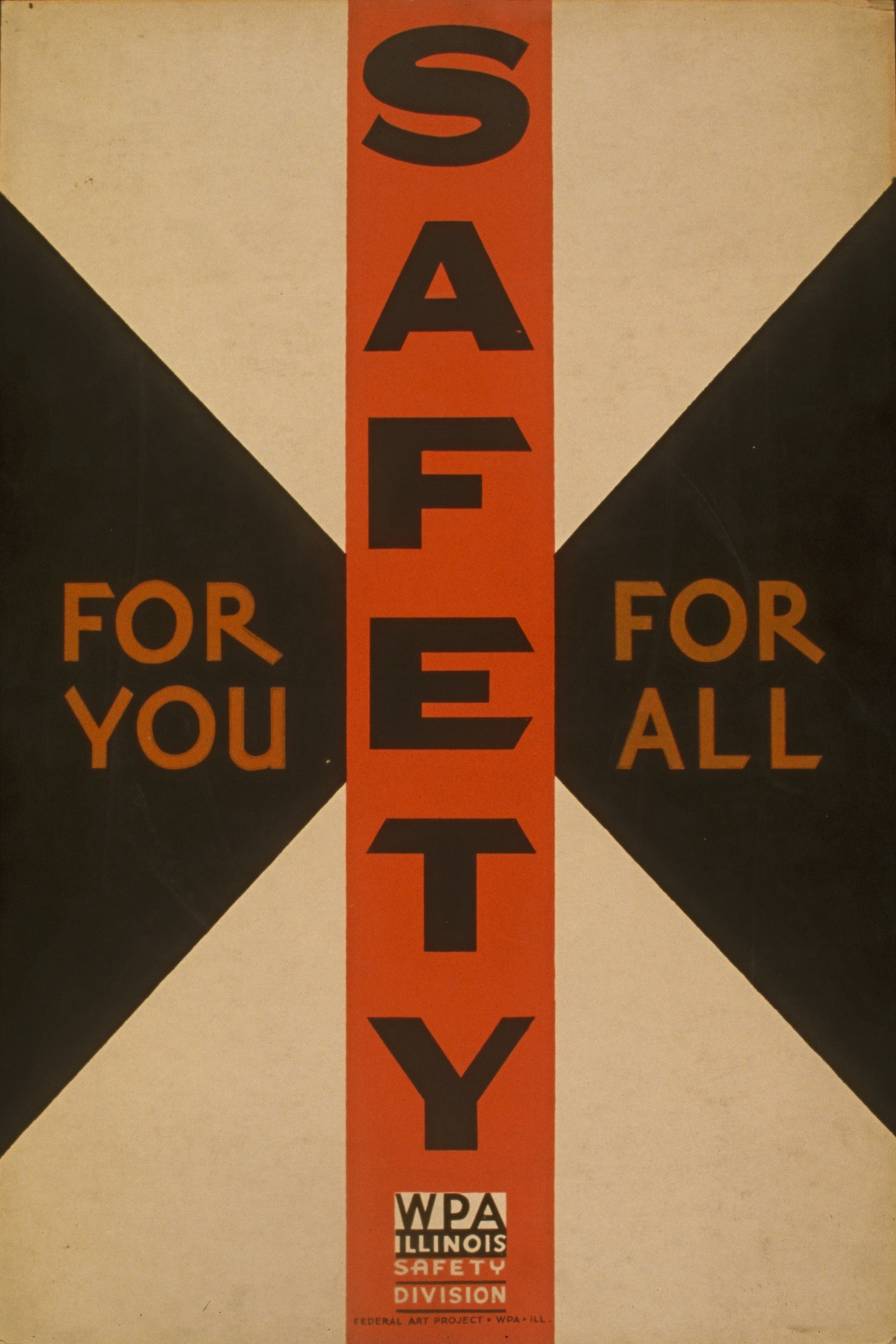
Vintage safety poster from public domain images
  • Both are management systems for dealing with intangibles.
  • Both are leaps in thinking from treating safety/knowledge as something personal, to treating it as something of company priority
  • Both require introduction of a framework, including roles, processes, governance, and technology support
  • Both need to be introduced as change programs.
  • Both deliver step changes in performance.
This is good news for the Knowledge Manager, as Safety Management has been successfully introduced in many industries, and therefore is a source of learning for KM implementation.

One of the early exercises for any knowledge manager in an organisation where a safety culture is in place, is to look at how safety management was implemented; what succeeded, what failed, what needed to be in place, and therefore what the lessons are for KM. Culture change is possible, implementation of a new intangible-management system is possible, and KM can learn from that.

There are plenty of public-domain guides to introducing a safety culture, which can also be used as templates for introducing a KM culture. For example;

ISHN provide 8 tips (my additions in italics, to show how it could apply to KM)

  1.  Define safety (KM) responsibilities 
  2. Share your safety (KM) vision 
  3. Enforce accountability 
  4. Provide multiple options 
  5. Report, report, report 
  6. Rebuild the investigation (lesson learning) system 
  7. Build trust 
  8. Celebrate success


OSG provide 6 tips - 

  1. Communicate 
  2. Provide Training 
  3. Lead by Example 
  4. Develop and Implement a Positive Reporting Process 
  5. Involve Workers . 
  6. Put your JHSC (Knowledge Management Framework) into Action 

However all analogies break down somewhere, and one of the major differences between KM and Safety Management is that a safety incident is very visible; as lost time, or as an injury. A lost time incident is far more visible than a lost knowledge incident.  Therefore safety management is easier to implement, because the outcomes are so visible, and performance metrics can easily be captured and shared.

However, intangible metrics are used in Safety are only recorded because people take time to record them, and one of the things they record are the near misses and the "high potential events" (times when things COULD have gone horribly wrong. These events and near misses themselves don't result in accidents or injury, but are a leading indicator, and show that safety processes are not being applied.

An equivalent leading indicator in KM would be the number of lessons without closed-out actions in a learning system, or the repeat mistakes, or the number of  unanswered questions in a community forum - indicators that knowledge processes are or are not being applied. So although we cannot capture a "lost knowledge incident" we can at least record whether the right questions are being asked, or the right observations and insights shared.

Indirect outcome-based metrics can be applied to knowledge management, the ultimate output being continuous business performance improvement. This does not directly measure knowledge, but indicates the effect of the application of knowledge. See my blog post on learning curves, and our website page on valuation of KM.

Wednesday, 15 August 2018

Why don't good practices spread better?

Sharing is no guarantee of uptake. Sometimes better practices and innovations take a long time, and require a lot of support, to take hold.


_MG_0095 Here is a very interesting article from the New Yorker, by Atul Gwande, about why some ideas or best practices catch on and spread, while others don't. In today's connected world we expect good ideas to diffuse virally, but the fact is that many great ideas never spread.

For example, Gwande contrasts the histories of anaesthesia and asepsis in medicine - both important life-saving ideas, but the practice of anaesthesia spread like wildfire, while asepsis is still not properly adopted world wide. What was the difference between the two?

The difference was the immediacy and visibility of the problem to the practitioner.

Anaesthesia solved an immediate and visible problem for the surgeon. Under ether, the patient was no longer screaming and thrashing about, and the operation could take place in peace and quiet. Asepsis, on the other hand, did not solve an immediate problem. The operation took place as normal, and nothing apparently changed. As far as the surgeon could see, there was no immediate improvement. OK, the long term patient survival rate improved with asepsis, but that was a longer term issue and more remote for the surgeon. Asepsis solved a big problem, but a problem that was largely invisible to the practitioner, at least in the short term.

Gawande concludes that with the big invisible problems, you cannot expect improved practices to spread virally. You need to work on them. You need to sell the solutions, and like sales reps, that requires frequent interactions (the "seven touches") between the trainer or knowledge holder and the user - person to person, door to door, talking.

He gives an example of an interaction with a nurse who learned, from a visiting trainer, a new practice that improved the survival rate of newborn infants. This was a practice that addressed one of these "invisible problems", but had proved very difficult to spread. Gwande wanted to know why the nurse had adopted the practice in this case.

“She showed me how to get things done practically,” the nurse said. 
“Why did you listen to her?” I asked. “She had only a fraction of your experience.” 
In the beginning, she didn't, the nurse admitted. “The first day she came, I felt the workload on my head was increasing.” From the second time, however, the nurse began feeling better about the visits. She even began looking forward to them. 
“Why?” I asked. All the nurse could think to say was “She was nice.” 
“She was nice?” “She smiled a lot.” “That was it?” 
“It wasn't like talking to someone who was trying to find mistakes,” she said. “It was like talking to a friend.”
This was one of those big ideas that spread through repeated personal contact and influence, rather than virally, and the repeat contact and trust that developed between the trainer and the nurse was vital for adoption and re-use of the knowledge.

So what is the implication for Knowledge Management?

The implication comes through the strategies you need to employ for knowledge re-use. Where knowledge solves an immediate problem for the user, then you can rely on a viral approach. Where it solves a longer term problem for the organisation, but may be invisible to the user, then knowledge re-use needs to be promoted through training, coaching and frequent interaction with a friendly person. 

Thursday, 9 August 2018

3 ways to look at the KM Paradigm Shift

Here is another couple of ways to characterise the KM paradigm shift.

Image from wikimedia commons
When I looked at this topic in 2009, I saw the KM paradigm shift as a shift from seeing knowledge as personal and individual property, to seeing it as collective. I presented the shift as follows:


The "individual to collective" culture shift


FromTo
I knowWe know
Knowledge is mineKnowledge is ours
Knowledge is ownedKnowledge is shared
Knowledge is personal propertyKnowledge is collective/community property
Knowledge is personal advantageKnowledge is company advantage
Knowledge is personalKnowledge is inter-personal
I defend what I knowI am open to better knowledge
Not invented here (i.e. by me)Invented in my community
New knowledge competes with my personal knowledgeNew knowledge improves my personal knowledge
other people's knowledge is a threat to meShared knowledge helps me
Admitting I don’t know is weaknessAdmitting I don’t know is the first step to learning


Here is another way to look at this shift, taken from a paper on The Learning Organisation, by organisational Psychologist Gitte Haslebo, translated by Maja Loua Haslebo.

Shift to a learning organisation


FromTo
Knowledge has permanent validityKnowledge has temporary validity
Knowledge = Adding of information from the outsideKnowledge = Insight created from within
Learning activates the intellectLearning activates thoughts, values, emotions and action
The right answers must be foundThe central questions must be formulated
The expert finds the right solutionNew ways and new methods are co-created by the employees


This mirrors the transition from Knower to Learner, and Gitte suggests it is accompanied by a shift in the attitudes of managers and knowledge workers to transition from the attitudes we learned at school to the new attitudes we need at work.

Shift in learning attitudes


FromTo
Do not make mistakesLearn from your mistakes
Do not reveal that there is something you do not knowIt is a good thing to admit that there is something you do not know
Do not make a fool of yourselfIt is important to explain what you wonder about.
Know that the teacher is always rightKnow that your manager may be wrong.
What counts is the individual achievementWhat matters is teamwork
If you ask the person sitting next to you, you are cheatingWhen there is something you do not know, ask your colleague

So there are 3 ways to look at the shift, with significant overlap between them. They give you some ideas of the culture you need to aim for in KM - the sort of attitudes and behaviours that a learning organisation, and the people within it, should exhibit.

Now you just have to make that shift, and ensure you don't shift back again.


Tuesday, 7 August 2018

Hear a CEO's view of the Knowledge Sharing culture change

Very few CEOs have written about KM, and even fewer have spoken about in on video. Here is one example, which helps us to understand the CEOs view of the topic.


This video of Bob Buckman, CEO of Buckman Labs, was recorded in Greenwich University in 2006, and in the video Bob describes the approach to KM used by Buckman labs, and the reasons behind the choices they made. He makes some very interesting points, and I include some of them below the video window.


"Knowledge can take many forms, but the principal ones we are concerned with are either written down, or between the ears and behind the eyeballs. Our experience indicates that about 90% of the Knowledge in your organisation is here (taps head) not written down. And what is typically written is frequently out of date as soon as you write it down. Therefore if we want to be dynamic as an organisation we need to focus on this stuff (taps head again) not what’s written down".

"If you have 5 people sharing knowledge around almost anything, you will get a very high quality response out of the process. It’s almost an automatic quality control mechanism".

"(In KM) we have to provide benefits to each individual as they try to define their personal time equation of work. People will use those systems that provide them benefits in doing whatever they are trying to do, and I will be very honest - if it doesn’t provide those individuals with enough benefits, they won’t use it, no matter how good your IT people think it is"
"We want to leverage Knowledge through networks of people who collaborate, not networks of technology. Connectivity begins with groups of people who want to accomplish something for the organisation beyond the face to face world. Technology is the tool that makes the connections."
"People networks leverage Knowledge through organisational pull rather than centralised information push. I don’t know of any individual in any organisation today who can deal with the amount of stuff which is pushed out to them... So focus on satisfying the need for help in solving real problems in real day to day operations, not at pushing information at your people".

"As we expand an individual’s span of communication through technology, you automatically begin to expand their sphere of influence. And as that span of influence expands, your individual expands and their value increases, both to the organisation, and the individual becomes more valuable to themselves. Think in terms of giving your associates the same opportunity to expend their own span of influence as if they were all promoted to CEO of the organisation. That’s scary I know, but that’s what we have done, and it works".

"We have got to move from hoarding Knowledge to gain power, to sharing Knowledge to gain power. If I hired a PhD tomorrow and they didn’t share anything they knew with anyone else, their value would be zero. So if you have people who do not want to share, their value is nowhere near as high as those who do want to share".

"Now you are not going to get there from the direction of the IT department, though I hate to say it. When we talk about culture change it’s got to be led by those who are in command, not the IT department. If you are throwing the monkey on the IT department’s back, you are doing everyone a disservice".

"Reduce the number of transmissions of knowledge to 1, to reduce the level of distortion of that knowledge".

"The greatest Knowledge base in the company is in the heads of the individuals associated in the company, so we have to give everyone access to everyone else in the company across the organisational barriers to communication. We have to go across the organisational silos of the organisation, and that scares most people right there".

"Sharing of Tacit Knowledge by the users will generate the content to update the Explicit Knowledge of the company".

"Individually we are all vulnerable to being beaten, but by collaborating together we can win in any situation, We need to focus on the importance of harnessing the minds that are in our organisation, to meet our needs anytime, anywhere. It’s the most powerful weapon you have available in the competitive arena today".

Friday, 20 April 2018

The 5 ways in which KM becomes embedded

There are 5 ways in which KM can be embedded in an organisation. Some of these are more common than others, and to fully embed KM can take over a decade.


The most common ways of embedding KM, from the Knoco 2014 and 2017 surveys

I often have people ask me what "embedding" Knowledge Management actually means, and how you do it.  Embedding Knowledge Management means making part of the normal work process, rather than an add-on. You do this in six ways, listed below in the order of most common applicaiton, as shown in the graph above.


You change the technology suite so that Knowledge Management tools are available, and used, as part of the working toolkit, and linked into the existing work tools. While email remains the number one work tool for many people, then link your KM tools into this, rather than requiring people to acquire a new habit. New habits can develop later, when KM becomes part of natural behaviour.

You change the Organigram to include Knowledge Management roles and accountabilities. You introduce new roles where needed (lesson teams for example, leaders and coordinators for the big Communities of practice, Practice Owners and so on), and change some of the accountabilities of existing roles (the most senior experts, for example, need clear KM accountabilities, as described here. You need to change their job descriptions, so that they are held acountable for stewardship of the company knowledge). Then you measure and reward people against their performance in these roles, and against these accountabilities, just as you measure and reward them against any other component of their job.


You change the high level processes and activities, embedding Knowledge Management processes and activities into the work cycles (using the principles of Learning Before, During and After). Change the project requirements, to include mandatory processes for capture of knowledge at the end of the project or after key milestones, and mandatory processes for reviewing past knowledge at the start of the project. Change the rules for project sanction, so a project gets no money if it hasn't done any learning.

You change the behaviours through peer pressures and through management expectation.

You change the governance system to include KM. Write it into the policies. Write it into the way people are rewarded. Change the reporting requirements, the HR appraisal mechanism, change the incentive scheme to reward collaboration and discourage competition.  This is the least common embedding approach, but it needs to be done eventually.

These changes should embed KM as part of the way people work, and so make KM part of everyone's job.  Once this is the case, you can claim KM is embedded and fully mature, as shown below.
The degree of embedding KM into normal activity, vs KM maturity. Results from Knoco 2014 and 2017 surveys


However this takes time. The chart below shows how this level of embedding varies with the length of time organisations have been doing KM.  Even after 16 years working with KM, only half the organisations claim KM is fully integrated and routine, rather than a non-routine activity.

The degree of embedding vs the length of time doing KM. Results from Knoco 2014 and 2017 surveys


Thursday, 22 February 2018

There are only 4 types of barrier to Knowledge Management

Here's a great Boston Square which looks at the four barriers to KM in a generic way.


It looks at the unwillingness and the inability that can affect both the knowledge supplier, and the knowledge user. Any combination of these is a block to Knowledge management.

The Supplier is Unwilling to share.

The unwilling supplier is afflicted by Knowledge Hoarding. He or she feels they will lose something (power, job security, reputation) if they give their knowledge away. Luckily we can demonstrate that this is not true, and managers can ease the shift from hoarding to sharing by careful use of incentives, eventually outlawing hoarding entirely.

The User is Unwilling to learn.

The unwilling user is afflicted by Not Invented Here (NIH). He or she feels more secure in their own ("invented here") knowledge than in scary knowledge from somewhere else. This barrier can be addressed by redefining "here", so that "invented in my community" equates to "invented here", by using performance metrics to shock people out of complacency, and eventually by outlawing NIH completely.

The Supplier is Unable to share

The unable supplier suffers from the Stranger problem - "I don't know who to share this with". This can be tackled through developing a Pull-based approach, so that they share by answering  the questions of an individual or team (through community forums, or peer assist), or by using the concept of the "Unknown User" - the psychological construct that we can bring into retrospects and after action reviews.

The User is Unable to find knowledge

The unable user suffers from "needle in a haystack" - they don't know where to look. Here we need the knowledge assets, that synthesised knowledge that creates the faucet rather than the firehose. We need the expertise locator. We need good search, and we need the places to ask - the community forums described above.

All four of these barriers are very real. All four can be overcome.  The Ability to share and learn is provided by the creation and roll-out of a Knowledge management framework, while the Willingness to share and learn is provided by culture change and communication activities, and cemented by KM governance. 

Wednesday, 18 October 2017

"KM is all about change" - up to a point, and then it isn't

Knowledge Management is only a change management exercise, until a certain point is reached. After that, it is about not changing.

It is an accepted fact that introducing KM is all about change.

You are bringing in  new processes, new roles, new technologies and new governance, that will enable, drive and support new ways of working, new behaviours, and new attitudes to knowledge. You are asking people not only to change the way they work, but also they way they think, In particular you are asking them to start to treat knowledge as a collective asset, not a personal asset.

So your KM program has all the trappings of a change management program - a vision, champions, a communication strategy, publicity for the strong perfomers, and so on.

However if you are successful, you come to a point where KM is institutionalised in the organisational frameworks. That's when you need to stop changing.

Once KM is institutionalised, it is easy to take your eye off the ball, and think that the job has been done. However it is all too easy for the organisation to change back, to lose sight of the value KM brings and to start to revert back to how it was. The role of the KM team, once the KM change has been made, is to embed that change so that there will be no reversion.

Now your KM program has all the trappings of an established discipline - a policy, accountabilities, governance, standards, metrics and reporting, sanctions against the people who refuse to do KM, and so on.

And if you are successful with this, then KM can become internalised within the culture for the long term, and thats where the benefits will be greatest.

So Yes, KM is a change program, until it becomes a "don't change back" program.

Tuesday, 19 September 2017

After Action Review as an agent for culture change

When we talk about Culture Change and Knowledge Management, we need to realise that the Knowledge Management processes themselves are in themselves culture change agents.


change_thoughtsAfter Action reviews are a prime example. They promote openness; people will learn that ‘there is no comeback’ and questions will receive answers. They promote reflection, learning and a performance focus, through discussions on "What did we set out to achieve? What actually happened” "How can we do better next time".

Below is some feedback from work we did several years ago at an industrial plant in the US, experimenting with introducing After Action Review. We found that not only did the AARs identify many many opportunities to save time and money, they also started to change the mindset, as these quotes from the workforce demonstrate.

"I thought I needed to be the expert and felt threatened at first. After a few AAR’s I felt comfortable that the guys appreciated using their ideas and we became a team" (Supervisor)

"Before the AAR, they didn’t feel like they were a team; After a few AAR’s they became one". (Boilermaker)

"I have been doing this work for 20 years, and no one has ever asked me what I thought before; so it was a change". (Boilermaker)

"We are now doing a Before action review in the mornings". (Supervisor)
Here's another quote, from a mine manager in Botswana, where we used AARs to radically improve some of his production processes, and deliver savings in the million-dollar range. However for him, there was something even more important than the money.
"The most important thing was the engagement of the people. The people who were involved in this, they actually feel that they are part of a team now. It's not the project team vs the contractor vs the end users - everybody is part of a single team now. And people are actually coming up with suggestions for implementation, and what makes it quite exciting is that people come up with very good suggestions, we implement it, they see the implementation of that, and they see the benefit afterwards, and so success breeds success".

That engagement, and that "success breeding success," was worth more to this manager than a million dollars, because it is the start of a new engaged performance-driven knowledge-enabled and knowledge-seeking culture that will deliver value for years to come.

Tuesday, 1 August 2017

How Knowledge Management maturity progresses

Here is a nice graph from our global KM surveys that shows how KM maturity progresses.


This graph is a combination of two questions, and we have combined answers from both the 2014 and 2017 surveys, so over 570 answers are included in the graph. The first question was:
Which of the following best describes the current status of KM within this organisation (or part of the organisation)?
  • We are in the early stages of introducing KM 
  • We are well in progress with KM 
  • KM is embedded in the way we work
The second question was

To what extent is KM now integrated with the normal work of the organisation? Choose the sentence that most closely fits your answer.
  • KM is not part of normal activity but is being addressed by a separate group
  • KM is performed as a one-off intervention after which business returns to normal 
  • KM is a non-routine part of normal activity, done as an exception or when requested 
  • KM is fully integrated and is a routine part of normal activity or operations 
 The graph shows how the responses to the second question vary according to the first question, and shows how the integration of KM changes with maturity.

In the early stages of KM, KM is mostly either performed by a separate group (30% of responses) or as an exception to normal process (48% of responses).

For organisations which are well in progress, the role of the separate group is much reduced (to 12% of responses), as is the one-off intervention. The largest proportion of responses is still that KM is an exception to normal process (54% of responses), but the second largest is that KM is fully integrated in normal activity.

For organisations who claim that KM is fully embedded, almost three quarters say that KM is fully integrated in normal activity.

As you might expect, there is a close link between fully embedded KM, and full integration of KM activities into operations.


Blog Archive