Showing posts with label KM pilot. Show all posts

Thursday, 24 September 2020

How to recognise a KM opportunity

Implementing Knowledge Management involves identifying opportunities where KM can help the business. But how do you spot these opportunities?


Implementing KM is not just a case of top-down roll-out of a Knowledge Management framework, but should involve looking for opportunities where KM can help the business. 

You can recognise these opportunities at two scales. The first scale is the "proof of concept" trials -  small interventions with a KM tool or process, so people can see it in action, and realize that "KM is not all smoke and mirrors – it can work here".

Suitable opportunities might include the following:

  • A lessons capture meeting such as a retrospect for a tricky (or successful) project. For one of the companies we have worked with this was a project that had gone disastrously wrong, and they effectively said to us "if you can get learning from this project, then we will believe what you say about KM”. We did gather learning - some very powerful learning - and this opened the door to management support. 
  • A peer assist for a high profile project. This has been the proof of concept for many companies - a straightforward demonstration that valuable knowledge can be shared between project teams, and can make a positive impact to project plans.
  • A facilitated exchange of knowledge on a key topic. In another organization we worked with, the proof of concept was getting experts together from all over the world to build a company best practice on bidding and winning large government contracts. 
  • Creating a knowledge asset on a key topic. Another client we worked with was going through a series of mergers, and compiled knowledge in the form of a set of guidance summarizing "what we have learned about delivering effective mergers." 
  • A retention interview from a departing expert. This has been the proof of concept for many retention-based KM strategies. Management want to see what is possible, and they want to be convinced that KM can generate valuable output. 

In each case, you should seek to create two things from the proof of concept. The first is some valuable knowledge, either exchanged between people, or captured as lessons or guidance. The second is stories, reaction or feedback from the people involved, saying "Hey, we tried KM, it was great, it was not difficult, and it created real value".

KM Pilot projects


Beyond the opportunities for small proof of concept tests, you can look for the big piloting opportunities.

KM Pilot projects are intended to test and refine the KM framework, and so involve more than just piloting one tool.  An effective pilot will deploy a complete (but potentially minimum viable) KM framework, and will  address a knowledge domain or practice area that could cover many business teams and divisions – rather than covering a single business project or team.

A pilot will therefore test the validity and value of the KM framework in a cross-organizational setting. Suitable business problems for KM pilots, where better access to knowledge can significantly help performance, are as follows:
  • A business critical activity which is new to the organization, where rapid learning will deliver business benefits. If the activity is new to only one part of the organization, then transferring learning from where it has been done before may give huge benefits. 
  • Repetitive activity business activity where continuous improvement is needed, where KM can help accelerate the learning curve. 
  • Activity which is carried out in several locations, and where performance level varies, in which case KM can help exchange knowledge from the good performers to improve the poor performers.
  • A business area which is subject to rapid change, where innovation and rapid learning are critical to survival, in which case KM can help by providing team sharing and learning processes, as well as access to relevant knowledge bases.
  • An area of rapid business growth where deep experience and skills need to be scaled up to deliver on projects and services, in which case KM can help by facilitating knowledge capture and transfer and faster learning curves for mid-level staff.
  • A business area where people are stuck due to lack of knowledge.
Pilots require a complete framework - a mix of roles, processes, technology and governance - and are a vital step in your KM programme.

Contact us for help in identifying and ranking KM pilot opportunities.

Monday, 24 August 2020

Lean KM and the Minimum Viable Product

There is a concept in lean manufacturing known as the "minimum viable product". This is a very valuable concept to bear in mind when introducing Knowledge Management to an organisation


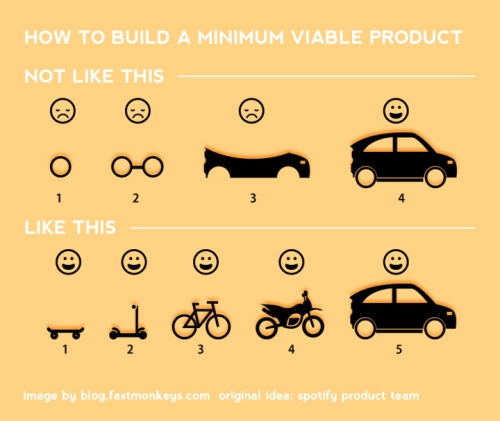
Image from blog.fastmonkeys.com
The concept of the Minimum Viable Product (MVP) is generally taken as being the simplest and easiest version of the product you can build that delivers customer value.

The software manufacturer builds and releases (often to a customer subset such as the early adopters) a completely bare-bones version of a product in order to


  • get customer feedback
  • learn about the product in use, and 
  • get some revenue.

We can use the same approach when it comes to implementing Knowledge Management within an organisation (as discussed in my blog series on "implementing KM as if it were a business start-up").


There are two key words in the definition

Firstly the product should be viable. In other words it should solve the customers problem, add core value, and provide a complete focused experience to the early adopters. The diagram at the head of this post illustrates the principle. If you were creating the first car by a lean and agile process you would not first release the wheels, then the axle, then the coachwork, as none of these elements on their own are viable. It would be better to develop a powered skateboard, then a powered scooter, then a motorbike, so that at each step you provide the complete experience of powered wheeled transport.


Secondly the product should be minimum. It should be the smallest subset of features that delivers value, because this is your starting point to lean about how the user interacts with the product, and which then allows you to take the next development step.  The Knowledge management version of the MVP is the Knowledge Management pilot - that first release of a knowledge management solution to a group of early adopters in the business, in order to test the concept and deliver business value.


In Knowledge Management terms we know that the viable unit is not the tool or the process, but the framework

No single item, be it a tool, a technology, a process or a role, will deliver KM value on its own. You need a framework of roles, processes, technologies and governance in order for Knowledge to flow from source to user, and to be applied for business benefit.  The minimum viable product is therefore the simplest possible framework you can release.

For example, if you want to pilot KM in an area of the business where knowledge needs to be shared between multiple business units you could take one of two approaches.


  • The all-too-common approach is to introduce a technology (Yammer, for example, or Jive) and anticipate that people will start to use it. However this is neither minimum (both of these technologies are well-developed, with many features), not is it viable (technology alone will not work).

  • Better to introduce a simple framework such as a community coordinator (role) who sets up monthly discussions (process) using dial-in conference calls (technology) to discuss an identified agenda of critical knowledge issues (governance). Once the community realises this minimum system adds value, then they can start to build upon this system until they have a KM Framework that fully meets their needs. This is exactly the approach taken by the community described in Johnny's story


Therefore lean and agile Knowledge Management focuses on delivering the minimum KM framework to the business as soon as possible, in order to deliver value, prove the concept, and most importantly to gain learning which allows the Knowledge Management product to take the next step of development.

As the web-page The Lean start-up says

Progress in manufacturing is measured by the production of high quality goods. The unit of progress for Lean Startups is validated learning - a rigorous method for demonstrating progress when one is embedded in the soil of extreme uncertainty

We see this principle in action in the way that IDEO introduced their KM system - through introducing a minimum viable product,learning from it, demonstrating progress, and iterating early and often.

Implementing KM is a place of extreme uncertainty. Apply a lean and agile approach; start with your MVP, introduce the KM skateboard, test it with the users, learn from it, iterate, and build the next improved version.  Pretty soon you will have your KM Porsche.


Tuesday, 28 January 2020

What KM can learn from start-ups - 5, build a good product

Last week I started a set of blog posts likening KM implementation to a business start-up. Here is number 5 in the series. 


The Lean Startup Methodology
Lean Start-up methodology, by Rebeca Zuniga on Flickr
This blog series uses this analogy of a start-up to inform KM implementation. It reviews 5 common reasons for start-up failure and suggests ways in which KM programs can avoid these failure modes. These common reasons are taken from  a great article by David Skok , and are as follows:

  1. Little or no market for the product; 
  2. The business model fails; 
  3. Poor start-up management team; 
  4. Running out of cash; 
  5. Product problems.

Ensuring the Product meets the market need

The final reason that start-ups fail is because they develop a product that doesn’t meet the market need. In our case, the KM product is the management framework we introduce to the business, comprised of roles and accountabilities, processes, technology tools, and governance.

This failure mode often happens when the product is developed in isolation from the users, and turns out to be not what the market wants. An approach commonly used to avoid this pitfall is the Lean Start-up or Agile approach, where products are developed through an iterative series of prototypes. “Minimum viable products” are released to early adopters in cycles of Deploy, Measure, Learn, and the learning from each cycle is used to improve the product for the next cycle.

A minimum viable product is the simplest version of a product that will still add value to the customer, and the design team then use customer feedback to elaborate the product further. The piloting phase of KM implementation can use a similar approach.

KM Piloting has 4 objectives:

  1. To gain learning about the application of the KM framework, which can be used to improve the framework and so develop it into a product that fits the market need; 
  2. To test the market; 
  3. To demonstrate value through KM in order to justify further investment, and 
  4. To create success stories and user testimonials for marketing purposes. 
 In order to satisfy the first of these objectives, it makes sense to pilot, as early as possible, a minimum viable KM framework. This will not be a single KM tool, as one tool is not a framework. Instead it will be a complete but bare-bones management framework. And in order to satisfy objective 3, the bare-bones Framework should be applied to solve a real business problem. 

 For example, one organisation set up a simple KM framework to address problems in Production Engineering. A volunteer community coordinator set up monthly discussions using dial-in conference calls among a dozen enthusiasts around the globe, to discuss an identified agenda of critical knowledge issues. This minimum system added real value and solved several problems, and over time was extended to become a community of practice of several hundred people with a dedicated portal, software, meetings, roles and governance.

 Starting small and growing allowed the KM Framework to be tested at every step, and ensured that the final version of the Framework was exactly what the users needed in order to add value. The product grew to match the market need.

Use an Agile piloting approach to ensure your KM Product is tailored to the market

Monday, 7 May 2018

Selecting KM pilots to address non-Quality

Among many interesting discussions at the KAConnect 2018 conference was one on selecting KM pilots focused on reducing the cost of non-quality. 

Participants at KA connect 2018
The conversation was, as many KM conversations are, about Value.

The annual KAConnect conference is for the Architecture and Engineering community, and many of the architects were struggling to find value measures that KM could help with, especially as many of them are billed on a day-rate basis, and so have no direct incentives to be more efficient. Helping them to deliver their work faster would save the client money, but would not impact the profits of the firm.

One insightful suggestion was to address the cost of non-quality, which we discussed on this blog last week. Non-quality, in architectural terms, results in write-offs (doing extra work at the firms expense to correct errors), rework and change requests. A Knowledge Management pilot project aimed at reducing write-offs and rework would deliver real value to the organisation, and act as a proof-of-concept for KM.

This pilot would need to look analyse the causes of write-offs and rework, identify how many of these causes were knowledge-related, identify the critical knowledge which would reduce write-offs and rework, and then put in place an approach to ensure this knowledge was available to the teams at the point of need. The approach need not be complex - a "minimum viable" solution may be enough - but provided it was targeted at the critical knowledge, and focused on reducing the cost of non-quality, it could be an excellent showcase for the value of KM. 

Thursday, 8 March 2018

3 key roles in a KM pilot project

To achieve success in a KM pilot, there are three major roles that need to be in place.


Blickling Hall, Gardens and Park
Blickling Hall, Gardens and Park by Martin Pettitt, on Flickr
KM pilot projects are when you take Knowledge Management out into the business, and "try it for real". They are a public road-test for knowledge management, and a crucial step in your implementation, You can't afford for them to fail.

In order to ensure success, you need to set up 3 key roles.

The first role is that of the business sponsor, who acts as the customer for the project within the business. They play an active role in setting the direction, providing resources, and agreeing objectives and deliverables. The business sponsor is likely to be the manager of the business unit, and it is crucial that they be committed to the success of the project.

 The second role is that of the local pilot project manager. This person will be accountable for delivering the results of the project. It is important that this role is owned by somebody within the business, so that the project is seen as internal to the business, rather than something “which is being done to us by outside specialists”. The KM person should never be the pilot project manager.

 The third role is that of the knowledge management adviser or supporter, who works closely with the local project manager in implementing the project; providing the knowledge management processes tools and technologies. The knowledge management adviser will be a member of the KM implementation team, and provides learning from the pilot project back to the KM team. They may work full-time on the pilot project, depending on its complexity and scope.

Wednesday, 14 February 2018

How many KM pilots do you run at once?

KM Pilots are a key step in agile KM implementation, but how many pilots do you run?


Knowledge Management pilot projects are a core componment of KM implementation. As we explained last month, a pilot project uses KM to solve a business problem in order to test and demonstrate that KM can do what it is supposed to do, and so that you can learn enough to improve and enhance the framework using experience from the pilot.

But how many pilots do you need, and how many can you run at once?

The answer is - you need enough pilots with enough positive results and enough learning that

  • you have fully tested your Knowledge Management Framework, and
  • you have enough evidence to convince both senior management and the knowledge workers that KM adds enough value to be adopted.

As for how many you can run at once, that depends on the level of coaching, mentoring and support resources you have available. Do as many pilots as you can handle, and no more. The process you need to decide which pilots to undertake is as follows:

  1. Canvas the business to find out a list of business issues which KM can help solve. This blog post gives you some pointers which business issues to look at, and you should be able to come up with a long list. 
  2. Rank the pilots against the 4 criteria of potential measurable impact, management support, doability and abiklity to upscale (see blog post for more guidance).
  3. Starting with the top ranking ones, select as many as you can support given the time and resources.
  4. Also try to select a portfolio of pilots that will test all elements of the KM framework.

In BP, for example, with our central team of 12 full-time KM staff, we ran 4 pilots at once. In Mars, with a smaller team, they ran 2 a year.

Choose your pilots wisely and run as many as you can handle until KM is tested, refined and proven

Thursday, 25 January 2018

How to select a successful KM pilot project

Knowledge Management pilot projects are a crucial part of any KM implementation. But how do you select a good pilot?                                                   

A KM pilot project is an opportunity to test KM in a small part of the business; to see if it works, to use it as a testbed to adapt and improve your KM framework, and to deliver success stories to use in the roll-out phase.

But what makes a good pilot?

First of all, a pilot project needs to use KM to solve a business problem.  The pilot must be problem-led, not solution-led.

  • So "testing a Sales portal" is not an effective pilot, but "using KM to improve our sales figures in Germany" is.
  • "Testing a better search engine" is not an effective pilot, but "using KM to reduce costs in our new product production line" is.
  • "Setting up a Geologists community of practice" is not an effective pilot, but "using KM to improve our geological predictions" is.

The focus of the pilot is on business issues, as the purpose of Knowledge Management is to solve business problems, and the purpose of the pilot is to test and demonstrate that KM can do what it is supposed to do. In most cases, your pilot will cover multiple divisions, or multiple projects, and will look at ways of developing, sharing, transferring and re-using knowledge to solve business issues.

Please note that you do not need to use a very sophisticated KM Framework to solve the pilot. Maybe you can use simple approaches and build a "minimum viable" version of the framework which you can use for testing purposes, and then improve and enhance the framework using experience from the pilot.

How do you find a suitable business problem to solve? The problem must somehow be knowledge-related, if KM is going to help, and there are four
  • Where there is a business critical activity which is new to one part of the organisation, where rapid learning will deliver business benefits. If it is new to only one part of the organisation, then transferring learning from where it has been done before, will give huge benefits.
  • Where there is repetitive activity, and where continuous improvement is needed, in which case knowledge management can help drive down the learning curve.
  • Where there is activity which is carried out in several locations, and where performance level varies, in which case knowledge management can help exchange knowledge from the good performers, to improve the poor performers.
  • Finally where there is an area of the business which is stuck due to lack of knowledge, in which case knowledge management can help develop the knowledge needed to get unstuck.

When you start looking around, you will find very many business opportunities for KM piloting. Your "opportunity jar" will soon be full to overflowing, and you will need to find a way to compare and rank these piloting opportunities. We have a set of ranking criteria we have been using for about 15 years now, which includes looking at the following questions;
  • If the project is successful, can we measure the value, and so demonstrate that the pilot has "worked"? 
  • Is there is strong management support for the pilot, and for knowledge management, within the potential pilot area?
  • If we create knowledge, is it purely for the pilot team or can others use it across the business, allowing us to leverage the results and spread the benefits? 
  •  Finally, can we practically complete the pilot in the required timeframe and with the resources available (money, staff, KM support resource etc)? 

Any pilot where you can answer a strong YES to all of these questions, will be a top-ranking pilot, suitable for selection as part of your KM program.

Tuesday, 14 March 2017

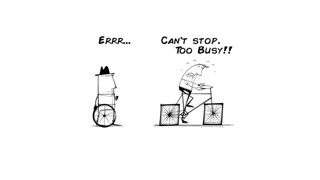
The "busy trap" in KM

What do you do when people are too busy to implement time-saving activities such as KM?

We know that good KM saves time. But how do you make the time to save the time? This was a conversation I was involved in recently with a client.

This client is very busy. They are short-staffed and work to tight deadlines. They have "no time" for Learning before Doing, and so Do Before Learning.

However much of the busy work they do is wasted, because they lack the knowledge to do it right. As a result, they waste time doing the wrong things, waste time doing things wrong, and waste time reworking everything to get it right.  

Some of the staff we talked to were certain that, with the right access to knowledge, they could do a week's work in 4 and a half days. But right now a week's work takes at least 6 days, and they have no time for KM activity. They are in a "busy trap" -  too busy to take the time to do the KM that will stop them being too busy. 

How do they break out of the trap?

The only way, really, is to take a Piloting strategy.

Find one small part of the business which has a supportive manager and a little bit of headroom to invest in making a change. Introduce KM, change the culture, invest in learning, and demonstrate the time savings that result. Use the results to convinces another manager or two to sponsor a second pilot, and a third, and a fourth. Pretty soon the whole business has changed.

A busy business can't be changed all at once. You have to take an incremental approach, and change it one small area at a time.

Tuesday, 30 August 2016

Testing a tool vs piloting a framework

I blogged yesterday about this different between a KM tool and a KM framework. This distinction is critical when it comes to testing and piloting Knowledge Management. 


Test card, from wikipedia
The early stages of Knowledge Management Implementation often involve testing and piloting. We can look at these as tests at two different levels:


  • Tests are where you apply a single KM tool,process or technology to a single business issue, in order to demonstrate that it can be applied in your organization ("proof of concept"). A proof of concept trial usually lasts a few days, or weeks at the most. 
  • A Knowledge Management pilot where you apply a complete (but often simplified) KM framework to a business problem, in order to solve the problem, deliver value, gain knowledge and create success stories. A KM pilot can last several months, or even a year.
It is important to distinguish between these two levels. As we know that one tool alone does not deliver value, a test of a single tool will prove the viability of the tool, but will not itself deliver business value. For value delivery, you need a framework pilot, even if it is a
 Minimum Viable framework.

I was reminded of this last week, visiting an engineering firm where the KM team has been running a series of single-tool tests in one department.  They were puzzled why these tests had not convinced management of the value of KM, so I explained the need for a a joined-up system or framework, to ensure that knowledge was taken right the way through the journey from creation to re-use.

You therefore need to decide what you want to achieve. If you want to test a tool, then that's fine, but if you want to show some value to the organisation through knowledge management, you need a pilot where you apply a framework to a business issue.

Thursday, 28 February 2013


Strategies for engaging your KM pilot sponsors


I am recycling this Boston Square that I first published in 2009, as only 6 people ever looked at it, and to be honest, it's an important topic. If you can't manage your high level stakeholders, and gain the sponsorship you need,  then your KM initiative is not going to go far. This is particularly the case when selecting pilot areas during KM implementation, where identification of an engaged influential business pilot sponsor is a key step.

I blogged yesterday about the three roles in a KM pilot, including the role of the business pilot sponsor.  My Knoco South Africa colleague Ian Corbett uses this matrix to identify areas within a business, where sponsorship for business pilots is likely to be forthcoming. The Square is from the excellent book "The new strategic selling"

The Boston Square is built from two factors

1. The corporate business need in the pilot area (need for growth, or need to close performance gap). Remember that KM always has to be driven by business need!
2. The character of the potential business pilot sponsor (open to help, closed to help)

The potential pilot sponsor who is open to being helped is obviously the one to work with initially, but you need to recognise those two types of help - "get me out of trouble" or "help me grow" - and plan your approach accordingly.

With the other managers, the ones that are closed, you really need to ask yourself, is it worth trying, at this stage, to get them to change their perception? This will be difficult, because if they perceive no need, then there is no perceived opportunity for business-led KM.  Maybe it is better to wait until you have success from the other managers, and use the power of the success story to change their mind.


Wednesday, 27 February 2013


The three key roles for a KM pilot


Blickling Hall, Gardens and Park KM pilot projects are when you take Knowledge Management out into the business, and "try it for real". They are a public road-test for knowledge management, and a crucial step in your implementation, You can't afford for them to fail.

To achieve pilot success, there are three “ relevant parties”, three major roles in the pilot project.

 The first role is that of the business sponsor, who acts as the customer within the business. They play an active role in setting the direction, providing resources, and agreeing objectives and deliverables. The business sponsor is likely to be the manager of the business unit, and it is crucial that they be committed to the success of the project.

 The second role is that of the local pilot project manager. This person will be accountable for delivering the results of the project. It is important that this role is owned by somebody within the business, so that the project is seen as internal to the business, rather than something “which is being done to us by outside specialists”. The KM person should never be the pilot project manager.

 The third role is that of the knowledge management adviser or supporter, who works closely with the local project manager in implementing the project; providing the knowledge management processes tools and technologies. The knowledge management adviser will be a member of the KM implementation team, and provides learning from the pilot project back to the KM team. They may work full-time on the pilot project, depending on its complexity and scope.

Tuesday, 8 January 2013


Ranking and selecting your KM pilot projects


Select I blogged a couple of years ago about Knowledge Management pilot projects, and suggested that there are many business opportunities which could constitute a suitable KM pilot, these being


  1. Where there is a business critical activity which is new to the organisation, where rapid learning will deliver business benefits. If it is new to only one part of the organisation, then transferring learning from where it has been done before, will give huge benefits.
  2. Where there is repetitive activity, and where continuous improvement is needed, in which case knowledge management can help drive down the learning curve.
  3. Where there is activity which is carried out in several locations, and where performance level varies, in which case knowledge management can help exchange knowledge from the good performers, to improve the poor performers.
  4. Finally where there is an area of the business which is stuck due to lack of knowledge, in which case knowledge management can help develop the knowledge needed to get unstuck.
The focus of the pilot is on business issues, as the purpose of Knowledge Management is to solve business problems, and the purpose of the pilot is to test and demonstrate that KM can do what it is supposed to do. In most cases, your pilot will cover multiple business areas, or multiple projects, and will look at ways of developing, sharing, transferring and re-using knowledge to solve business issues.

When you start looking around, you will find very many business opportunities for KM piloting. Your "opportunity jar" will soon be full to overflowing, and you will need to find a way to compare and rank these piloting opportunities. We have a set of ranking criteria we have been using for about 15 years now, which includes looking at the following questions;

  • If the project is successful, can we measure the value, and so demonstrate that the pilot has "worked"? 
  • Is there is strong management support for the pilot, and for knowledge management, within the potential pilot area?
  • If we create knowledge, is it purely for the pilot team or can others use it across the business, allowing us to leverage the results and spread the benefits? 
  •  Finally, can we practically complete the pilot in the required timeframe and with the resources available (money, staff, KM support resource etc)? 

Any pilot where you can answer a strong YES to all of these questions, will be a top-ranking pilot, suitable for selection as part of your KM program.

Tuesday, 5 June 2012


Making the KM business case, but for what?


Off to Work: University Professor At a workshop last week in Copenhagen, there was a lot of interest in "Making the Case for Knowledge Management".

At the intereactive stage, where people were identifying their common issues for further discussion, several people asked about "Making the Case", and the crux of the issue seemed to be that KM could be seen as a big investment, and that without some investment, you won't see much value. So are you asking Senior Managers to take KM on trust, and invest in something where the value is unclear and intangible?

Basically, the answer is not to invest all at once.
As I said in this blog post, you can look at KM as a series of investment decisions. Each investment is only enough to get you to the next decision point.
Therefore, you only need to make the case for the investment for that stage.

Let me explain.

  1. The first business case you need to make, is the case to set up a task force, and commission some studies to gain some idea of whether KM is something the company needs to invest in.  You can make this case fairly simply - either using case studies from other companies, or by showing waste or risk in your own company through ill-managed knowledge (see the white paper on "Making the Case" here).
  2. The second business case is to scope out the scale of the implementation, to set strategic direction, and to do a first-pass costing of what the implementation exercise might cost. More assessment may be needed to fully map out the scale of the interventions needed. This could be an extension of number 1, or a separate investment. This scoping work will include an estimate of implementation costs, and of the scale of business value, and these figures make the case for the next step.
  3. The third business case is the case to set up a piloting program. This will include a full-time KM team and budget, buy you arent investing in a massive change program, only one or two (or maybe three) pilots. However the value data gathered through piloting will confirm the scale of the business value (above), and will prove evidence for the next business case.
  4. This is the big one. This is the business case for roll-out of KM across the whole organisation, as a change program. However this case can be made in the light of hard business figures delivered through the piloting in stage 3. If the pilot program was successful, this business case should be unarguable.
So the point is, you don't have to make the business case all at once. You just have to make enough of a case to escalate to the next step.


Wednesday, 1 February 2012

Knowledge Management Pilots, a summary

One or more Knowledge Management pilots is an important step in Knowledge Management implementation. A pilot is where you apply an entire KM framework to a part of the business, in order to "road test" KM before Going Live.

I have already blogged about Pilots, but here's an overview


An effective pilot will address a Practice Area – one that could cover many  business projects, teams and divisions – rather than covering a single business project or team.
Some of the good pilots we have worked with in the past include
o   Turnarounds in refineries
o   Developing “route to market”
o   Retail site construction in Europe
o   Entering far eastern markets
o   Marketing pet food in emerging nations
o   Winning government contracts
o   Business Downsizing
o   Mergers and Acquisitions
o   Underground mining techniques
and many others


o  Good support from the business, with the business providing a leader for the pilot 
o  The ability to measure the impact of the pilot (so an area with clear business metrics, and a baseline)
o  The ability to use the knowledge from the pilot more widely
o  An issue which is not to big to solve in the required time frame

The purpose of piloting the KM framework will be as follows;
o   Understanding What Works in terms of KM
o   Fine-tuning the KM framework
o   Delivering success stories for future marketing
o   Gathering enough evidence of value, that Senior Management will then commit to the roll-out of KM

The last point is important, and the KM team needs to gain agreement with Senior Management that
o   The pilot will be able to deliver the evidence
o   What that evidence needs to be, and
o   That if the pilot delivers the evidence, then KM roll-out will proceed (in other words, if they "test the water" and it's fine, they need to be committed to swimming!)

Friday, 4 February 2011


13 rules for KM pilots


Thirteen (Takoma Park, MD)

Here's a checklist from the archives.

I'm not sure where it came from originally, but it's a good checklist for KM pilots.


1. The results have to be clear enough to provide an answer (pilots don’t make management decisions ). A pilot may be requested by the sponsor to avoid making a decision between a number of options. Be wary of putting anything that requires an organisational/management decision into a pilot. You can avoid this by revisiting the objectives of the pilot with the sponsor).

2. The people you choose to pilot have to be ‘up for it.’  There will always be issues with a pilot. It is sometimes better to pilot with a group who show the most enthusiasm even if they are not the target audience of the pilot. This will enable you to check processes and procedures first, particularly if the pilot is around new ways of working. You can then invite a more appropriate and targeted community for the main pilot).

3. Avoid checking technical issues within the remit of a pilot. Questions around ‘can we do it’ should be resolved outside of any pilots. You can avoid this by revisiting top-level objectives with your sponsor and asking questions such as are you looking for new ways of working, what are your criteria for success

4. Avoid placing all responsibilities on your project manager. Using a group of three - a project manager (for business processes), a finance person (to look at the budget for the pilot and whether financial benefits are being achieved) and a KM specialist

5. Sponsorship is not sponsorship unless it brings funding. Ensure your sponsor understands that they will not always be able to guarantee savings as a result of the pilot, they may have to spend money to save money - it may be a return in future benefits such as derisking. You may to quantify the cost of derisking at project initiation stage to assess whether the project is worth the cost.

6. A project by definition is throwaway

7. Target project champions who understand where the business is going and why they are adding to that vision

8. Minor scope creep is an important and necessary step within a pilot

9. Technology should not drive the pilot, the pilot should drive the technology

10. Focus on the business processes which each business area identifies will make the most savings

11. Be prepared to factor in additional costs to help pilot users keep up to date. New systems or processes may cause users delays in their day job. Service Level Agreements may not be able to be changed for short periods of time, so you may have to factor in additional funding to help them keep up to date with their date job

12. When a pilot ends, ensure that users understand where any funding ends. If they wish to continue with the process/system, help them look at what can be done to extend pilot arrangements

13. stablish a mechanism for selecting what to pilot. This could be looking at objectives as they arise, revisiting high level aims and going back to the sponsor to agree costs.

Friday, 31 December 2010


KM pilot projects


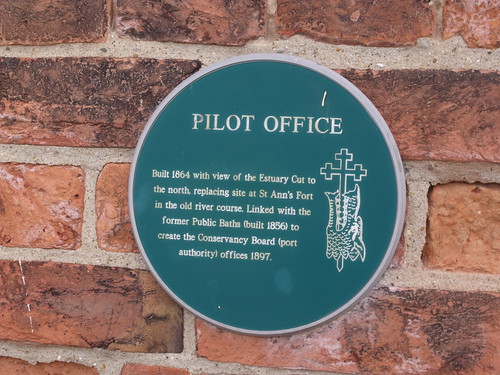
Pilot Office, Ferry Street, King's Lynn - Green Plaque
We need to draw a distinction between testing individual components of knowledge management, and piloting a knowledge management system. Both may be needed, and proof-of-concept tests of individual KM components can be valuable exercises, but we would highly recommend piloting the complete system on a small part of the business, even if you don’t do tests of individual components.

There are four reasons for doing pilot projects, and four things that the pilot projects will deliver.
  • The first few pilot projects will be “proof of value” projects, and the organisation will be watching them closely to see if they work, and in particular, to see whether knowledge management work in your individual context. You may need to many people within your organisation who say “yes, knowledge management sounds fine, and I can understand how it worked in Ford, or Shell, or BP, but our business is different”. A successful pilot project will demonstrate that knowledge management also delivers value in your own business.
  • Secondly, the pilot project will deliver a lot of learning about how knowledge management works in your business, and how knowledge management can be implemented in your culture.
  • Thirdly, if the pilot is successful, it will deliver monetary value to the organisation, and so should be worth doing in its own right
  • Finally, you should be able to get some good marketing material from the pilot project, in terms of stories, endorsements, quotes and video. This will be incredibly valuable for the roll-out phase.
Below are some of the areas where you might consider suggesting a knowledge management pilot.

  • If there is the business critical activity which is new to the organisation, then rapid learning will deliver business benefits. If it is new to only one part of the organisation, then transferring learning from where it has been done before, will give huge benefits.
  • If there is repetitive activity, where continuous improvement is needed, then knowledge management can help drive down the learning curve.
  • If there is activity which is carried out in several locations, where performance level varies, then knowledge management can help exchange knowledge from the good performers, to improve the poor performers.
  • Finally if there is an area of the business which is stuck due to lack of knowledge, then knowledge management can help develop the knowledge needed to get unstuck.
 
Each of these areas carries the potential for a successful pilot.

Thursday, 30 December 2010


3 steps to KM implementation


In terms of implementation approaches for Knowledge Management, you ultimately want the organisation to be in the box where all of the knowledge management framework is used by all of the business (and by system, we mean the framework of roles, processes, technologies and governance which will underpin KM). This is the yellow box shown in the diagram, and this is your ultimate implementation destination.

However there are three routes you can take to the yellow box.

Firstly you can go straight into the box, design a system in isolation and roll it out across the business, with no testing. This is the top red arrow that takes you straight into the yellow box. We don’t recommend this route - it's too easy to get it wrong, and there's no opportunity to tweak the system en route.
Secondly you can roll out components of the system across the business, building and testing the system piece by piece (point A) until it is complete (point B). This is the second red arrow, and we don’t recommend this route either. Firstly the individual components are unlikely to add much value on their own. Secondly, you have no opportunity to test how all the components work together.

What we do recommend, is two stages of testing in small parts of the business. Firstly proof of concept testing of specific interventions (point 1, bottom left box, some of the system in some of the business), and then piloting the whole system (point 2, top left box) prior to rolling out across the whole organisation (Point 3). This takes longer, but is far more robust.

I will post more about the piloting process tomorrow.

Wednesday, 20 January 2010

Guerilla KM and the big impact


Explosion
Originally uploaded by ˙Cаvin 〄

Two excellent quotes in this blog post (now removed), reposting from Ken Miller in his 2007 article, Guerrilla Warfare, How to Create Change when you are not in charge. She says

"Some of Ken’s useful tips for creating change when you’re not in charge are:

•“Implement the change initiative in one unit. “Don’t make the mistake of piloting the concepts on low-hanging fruit. Think big. If nobody notices what you’ve done, you’ve missed the point of guerrilla warfare. And if everybody notices what you are doing before you’re done, you have also missed the point.”

•Create a buzz. “If you have selected a high-impact, high-visibility system, you won’t need to broadcast the results — people will notice.”"


I really like that first one - "If nobody notices what you’ve done, you’ve missed the point of guerrilla warfare". However it is also a matter of selecting your pilot implementation carefully. Like a guerrilla unit, you want a big bang, but you can't afford to fail either.

Blog Archive