Showing posts with label success story. Show all posts

Monday, 6 March 2023

The Battle of the Hedgerows - an example of rapidly-evolving bottom-up knowledge

The story of the "Battle of the Bocage" is a great example of evolving knowledge, driven from the bottom up.

Normandy Bocage
Image from
wikimedia commons
I am reprising this post from the archive, not just because its a great story, but because in demonstrates the maturing of knowledge through several stages, as described in this post from 2 weeks ago.  Thanks to Jack Whalen for first pointing me at this excellent Learning Story from WW2 and the D Day landings. 

What has been quoted as being "one of the greatest intelligence failures of all time", was the failure of the US forces to realise the nature of the battle they would fight after the D day landings - a battle in a maze of small fields, sunken lanes and almost impenetrable hedgerows, known as the Bocage.

For many of us brought up in rural Europe, where small fields and ancient hedgerows are a familiar site, we might have realised that this sort of landscape would be an obstacle. Yet for the US forces in early June 1944, the nature of the landscape was a huge surprise.  Hedgerows cultivated for over a thousand years to keep even the strongest bull in a small field, are not a feature of the American countryside. They are impenetrable to troops, and the earth banks under the hedgerow make them a death trap for tanks, as the unarmoured base of the tank is exposed as it climbs over. 

As one U.S. Army Captain put it, “We had been neither informed of them or trained to overcome them”. General Bradley called the Bocage the "damndest country I've seen."

Actually there had been warning of the hedgerows - see this quote from Brigadier General James M. Gavin- "Although there had been some talk in the U.K. before D-Day about the hedgerows, none of us had really appreciated how difficult they would turn out to be."  This is a classic failure of Learning Before - failure to share a context. The British would have known about the challenge of the hedgerows, as similar countryside is found in Devon, Dorset and south Somerset. They would probably have assumed that Americans knew about the challenge as well (this assumption is known as the Curse of Knowledge). The conversation might have gone

  • Brit "Watch out for the hedgerows"
  • American "Yeah no problem"

Whereas the conversations needed to have been

  • Brit, "No, I mean REALLY watch out for the hedgerows"
  • American "How do you mean? What's the problem with a hedgerow? Its just a few bushes, right?"
  • Brit, "Let me explain ....."

The Germans knew all about hedgerow warfare, and had been practicing tactics for months - tactics of covering fire, pre-aimed mortars, communication lines between fields, covering fire from parallel hedgerows, turning each field into a deathtrap. They knew that they were perfectly hidden behind the dense hedges. The Germans had a knowledge advantage; they had knowledge of "how to fight effectively in the Bocage", which the American troops did not have. 

As a result, the first few weeks were a nightmare for the American troops, losing on average one man for every metre of progress. Imagine marching down the road shown in the picture above, with the potential machine-guns behind every hedge.

However, despite this failure to "learn before", some very smart "learning during" went on to fill the knowledge gap. The Americans improvised and innovated in the early stages of knowledge development, with successful innovations including;
  • The Rhino Tank invented by Sergeant Culin - a tank-bulldozer combination, where recycled beach defences were welded to a tank, enabling it to burst through a hedgerow;
  • A communication system, where an infantry observer could shelter under or behind a tank and direct its fire, linked by telephone to the tank crew;
  • Use of light rifles for covering fire, instead of more unwieldy machine guns;
  • A whole language of hand signals for communicating between tanks;
  • Using the back of a tank as a platform for the mortar spotter;
  • Employing light aircraft to scout in advance.

The book "Busting the Bocage" summarises the learning approach (my emphasis in bold)
Ideas on how to achieve better results against the Germans came from a wide variety of sources. In general, ideas flowed upward from the men actually engaged in battle and were then either approved or rejected by higher commanders. Within the bottom ranks of the Army, individual soldiers suggested ways that enabled their units to move against the enemy. Sergeant Culin's hedgerow cutter is the best example of a single soldier's idea that influenced all of First Army. At the top end of the chain of command, general officers also produced ideas on how to defeat the Germans. General Cota's supervision of the development of hedgerow tactics in the 29th Division typifies the contributions made by general officers. 
The effort to gather ideas on how to beat the Germans was decentralized. There was almost no effort to work out an Armywide solution to the tactical problems of combat in the Bocage. The First Army staff made no distinct attempt to devise tactical solutions for. the whole command to use in overcoming the German defenses. First Army did publish and distribute to all units a series of "Battle Experiences," reports that contained information and lessons learned in battle. The bulletins were not directive in nature, but subordinate commanders were expected to use the information to assist them in finding ways to defeat the Germans. In fact, in only one area did First Army headquarters take an active role in dealing with tactical problems: the production and distribution of Sergeant Culin's hedgerow cutter.

What explains the decentralized, collective method of tactical problem solving exhibited within First Army? Firstly, the U.S. Army was not in a position to analyze the German defense systematically and produce one best solution for attacking through the hedgerows. First Army simply did not have the time to slow the pace of combat operations while seeking a uniform, coordinated solution to tactical problems. The U.S. Army had to push inland and expand its beachhead as a prelude to larger operations. Corps and division commanders received orders and were expected to execute them as quickly as possible while overcoming all difficulties. Commanders who did not perform well were relieved; several division commanders lost their posts during the Normandy campaign.
Once the knowledge of tactics had been created, it was rapidly spread among the various divisions through use of the bulletins. Individual divisions created their own variants of these approaches, which were shared as Example Practices.

Within a few weeks a standard practice was developed; a doctrine, or series of approaches, for clearing a field, involving the close operation of a tank and an infantry squad ("'One Squad, one tank, one field'"). This close operation of armour and infantry at this level of detail (single squad, single tank) was itself an innovation. 
  
As quoted here
"After the rehearsal on 24 June, the 29th Division's operations staff prepared diagrams and explanatory notes outlining the new hedgerow tactics in detail. The operations section then distributed the information as a training memorandum to all regiments within the division. Units in the 29th Division practiced and rehearsed the new tactics in preparation for their next bout with the Germans.  On 1 July, General Cota summed up the 29th Division's tactical experience in France: "What held us up at first was that we originally were organized to assault the beach, suffered a lot of casualties among key men, then hit another kind of warfare for which we were not organized. We had to assemble replacements and reorganize. Now we have had time to reorganize and give this warfare some thought. I think we will go next time"

Using the new knowledge, and with Rhin Tanks being manufactured in advance, the 2nd Battalion made spectacular progress. They completely ruptured the main line of German resistance.  Infantry casualties were relatively light during the attack, and not one tank was lost. Other US Army units delivered equally impressive advances.

Thus newly developed knowledge turned the tide of the battle.

This is an interesting story, and an interesting example of Learning in Action, when speed of deployment was more important than consistency. It is also an example of the development of knowledge, starting with the recognition of a knowledge gap, the bottom-up development within the community of practice of good practices, and the eventual development and application of a standard practice. 

Of course, were the context to change, the knowledge would need to go through a new cycle of development. Who knows how the tactics would change with the introduction of drones, satellite imaging etc. However within one month in 1944, the US Army was able to create, develop and deploy knowledge of a critical topic - "How to effectively fight your way through the Bocage".

Monday, 16 January 2023

Quantified KM Value story #144 - $1.4 million at Goodyear

 From a post on Linked-In, and with permission of the author, here is another quantified KM value story.


Jim Clarke,  Knowledge Management Project Leader at The Goodyear Tire & Rubber Company, posted the following on Jan 13, 2023

"My KM team has deployed a customized Rapid Learning Cycle (RLC) methodology based on the writings of Katherine Radeka. Our version of the method deployed within the Global Technology division at Goodyear involves the inclusion of the scientific method for prototype testing. We've documented reusable learnings for 26 technological innovation project cycles thus far, and we've measured $1.4 million in project cost avoidance. By December, the total project cost avoidance may exceed 10 million".


Friday, 22 September 2017

Quantified value stories in KM - numbers 115, 116 and 117

As part of our series of stories and examples of quantified value from KM, please find below three examples from a 2015 article in the UAE National, entitled "Knowledge management is power for companies"

An example of KM in action is the case of El Paso Corporation – a 5,000-employee North American provider of natural gas and related products. To maximise the benefits of a new organisational structure and encourage communication, El Paso decided to try a KM programme focused on business opportunities and challenges. Its aim was to foster expertise within the workforce and share technical knowledge with a scorecard used to measure and report on the programme. Its elements included: savings, improvements, successes, costs and milestones. In the first year, the goal was to save the organisation US$500,000, but it delivered $1.2 million in savings.

“A recent best-practice transfer between KOC and other k-Companies in Kuwait, where technology and know-how have been transferred between companies resulted in savings of several million Kuwaiti dinars,” (Abdul Jaleel Tharayil, project leader of Knowledge Management Practice for Kuwait Oil Company) says.

“Another example is an internal collaboration between deep drilling and development drilling, which brought forth a reduction in non-production time by introducing a change in casing design, leading to savings of around 250,000 dinars.”


The Kuwaiti Dinar is currently worth about  3.3 US Dollars.

Monday, 5 September 2016

Quantified KM success story number 105 - Domestic and General

Here is another quantified KM success story, this time from the customer service field. 


image from wikimedia commons
The story appears here, and is described as follows:

With more than 7 million UK customers, Domestic & General is the UK’s leading warranty specialist. Customer service is handled by 1,400 agents in three contact centers. Previously, all the information agents needed to answer telephone-based queries, such as details of warranty plans, was stored in a paper based system. This meant that staff needed to manually search physical folders to find the answers to customer questions, slowing the pace of service, reducing consistency and lowering First Contact Resolution rates.
Domestic & General chose to work with Eptica’s self-learning knowledge base as the basis of Fido, its new knowledge management system. After they log on, agents can type questions into Fido to receive relevant answers, including a full script outlining any specific details that need to be confirmed with the customer. This ensures that legal and regulatory obligations are met, as well as driving consistency. Agents can give feedback and comments on answers, which is then used to improve the content within the knowledge base. 
The results exceeded expectations: 
  • The knowledge base now receives an average of 60,000 hits per month from agents 
  • Average call time has reduced by 22%, saving nearly 30 seconds per call 
  • Hold times have reduced by 55% 
  • The time taken to train a new agent has dropped by 2 days 
  • Savings in support and training of £158,000 – the equivalent of 10 full time staff

Tuesday, 8 December 2015

Quantified KM success stories #94, 95 and 96

The three examples of savings through KM are taken from the article "Investing in boundary-spanning collaboration to drive efficiency and innovation" and come from case studies of  a company anonymised as "Global Oil and Gas"


A China-based member of a Specialty Equipment network connected with a member from North America and, on his advice, insisted on a rigorous inspection of a gas turbine rotor that was on order from the manufacturer. The inspection turned up more than 200 deviations from the original specifications. Had the inspection not occurred, the product would have halted operations once it was put into offshore production. 

As another example, a team in Indonesia asked the Heavy Metals Network for guidance in removing mercury from an organic compound. The process for removal was developed and supported by network experts from around the world, preventing a major contamination risk. This single collaboration saved several millions of dollars in costs that would have been incurred had the problem not been resolved efficiently and effectively. 


In another example the Drilling Network collaborated with the Well Integrity Network to reduce production losses resulting from barium scale build-up in large wells on an offshore platform. Working together, experts in both networks identified and solved the challenge, decreasing production losses at the initial location by more than 10,000 barrels a day in the first year after the change was made. (The current oil price is about $40 per barrel, would would mean savings of $400,000 per day).

Wednesday, 14 October 2015

Great NASA story on checklists

The NASA CKO office publishes a series of "learning from experience" stories on their blog called "my best mistake".  This is a great way to spread the concept that mistakes make great learning opportunities.


Photo from wikipedia
I really like this story from David Oberhettinger

It's not so much a "mistake" story as a "value of learning" story. David tells how we was in a small plane preparing for landing when..............

Suddenly, dense black smoke begins to fill the cockpit. I flip the checklist over and follow the five steps listed on the back under In-Flight Electrical Fire:
  • (1) Master Switch to Off
  • (2) Other Switches (Except Ignition) to Off
  • (3) Close Vents/Cabin Air
  • (4) Extinguish Fire (in this case, I isolated a faulty transponder)
  • (5) Ventilate Cabin
These steps took maybe 90 seconds. Then we descended to an uneventful landing. The crisis hardly caused a significant increase in heart rate, because I just followed the checklist.

I have written before about how checklists are a fantastic way to provide knowledge to the decision maker at the point of need, and there can be no more graphic indication of the "point of need" that a smoke-filled cockpit of a small aeroplane.


However David then goes on to talk about how that checklist ended up in his hand.

  • The formal checklist as a concept derives from a lesson that was learned on October 30, 1935, during a test flight of the B17 bomber prototype. The pilots attempted to take off with the tail wheel locked; this prevented the wheel from swiveling and resulted in a crash and the death of both pilots. From then on, Boeing provided a printed checklist with each production version B17. (Previously, pilots were expected to make their own checklists.) 
  • Today, all airplane manufacturers provide a pilot’s handbook containing checklists specific to the model of plane

Therefore, when you buy the plane, you buy the knowledge of what to do in any form of emergency.  This is an excellent example of a "knowledge supply chain", which had become standard practice in the aviation sector because of the life-saving value of the knowledge.

As David concludes
Why do I love checklists? Because a checklist helped avert what could have been some serious unpleasantness. And because rather than letting my imagination run amok to my detriment (otherwise known as “panicking”), effective use of checklists allow me to direct my imagination to more productive purposes.


Thursday, 1 October 2015

Quantified success story #93 - lives saved through Knowledge Managament

The video below is a KM success story from the Customer Service wing of KM


Ths story is told by Linda Yeardly of eGain customer support software. It describes how rapid access to high quality knowledge allowed a new member of a Gas Utility customer service team to make a call that probably saved many lives.


Wednesday, 26 August 2015

How After Action Review added value to a negotiation team

Sometimes the simplest KM tools add the most benefit. 


Here’s a really good example of After Action Reviews being used by a negotiation team as part of a bare-bones KM framework. The source has to remain anonymous, but what’s great about this example is that the application of KM was totally business-led, and the simplest tool gave the greatest benefit. The story is written by the team knowledge manager

“For the first 5 months of this year I co-ordinated a real-life, application of KM in Country X. The situation was one of intensive commercial negotiations, on multiple fronts across senior levels. Negotiations are difficult being the first deal of this type and size for the country. Things were tough and decisions difficult to achieve despite daily contact with a large team with many different players meeting many different people. 
"The stand-off and complexity, led to a reasonably forthcoming environment for KM in the team, and almost a desire to try anything, including Knowledge Management. However, the main KM tool that achieved instant buy-in was the After Action Review process, which we applied rigorously to all external interactions. 

"Key success factors
• Heavy facilitation in the early days
• Keep it short (around 15 minutes)
• Do not let it substitute the minutes of the meeting
• Output less than one page, big font, based on proforma, 3 or 4 points per question
• Ensure everyone gets the opportunity to speak, best run and owned by one of the team, not the team leader ... who should always add his views last
• Concentrate on How and Why, not What
What it gave us in return
• Effective fast, broad communication throughout the team of what happened and what was learnt at each meeting
• Lateral communication across all teams and into management, within 24 hours of each interaction occurring
• Consolidated weekly summary of all AAR's, linked together into the bigger picture, and pushing all lessons that can be learnt laterally across the organisation ... prepared by me in my KM role”


A few things to note;


  • KM was introduced as a solution to a business problem, and it was a knowledge based problem - they did not know the best way to negotiate, they did not even know what was going on at times.
  • The KM solution was very simple, and tailored to the working style and culture
  • Facilitation was heavy in the early days
  • KM was kept distinctive, not just "another way to write minutes"
  • Knowledge turnaround was very rapid - everyone know the learning from each interaction within 24 hours
  • The KM solution was coordinated. There was a KM role; coordinating, consolidating, pushing knowledge laterally

Wednesday, 19 August 2015

6 lessons from KM implementation

In a trawl through the Knoco archives, I found a copy of the 6 lessons I wrote from my very first role in KM, as Knowledge Manager for BP in Norway in the mid 90s. 

The original text, and a description of the BP knowledge manager role, can be found in "Leading Knowledge Management and Learning" by Dede Bonner. The lessons below are still valid today.

First, the way you approach the introduction of a knowledge management system is important. If you try and forcibly impose a system, people are unlikely to be receptive. We did not try to impose our system on the office. In Norway we took the staff offsite so they could build a system themselves. That way they had already bought into it, because it was their own system. This is perhaps the most fundamental lesson.

However, as staff numbers turn over, the new people have to be allowed their own say in the process. We revisited our system at several offsite meetings, and adapted it to suit new needs. If you want people to adopt it, you have to let them adapt it.


Second, any knowledge management system in the business needs to be applied at high level as well as at low level. The top management of the business has to be seen as "walking the talk" in order to legitimize the time spent in the capture and transfer of knowledge. If the manager is introducing a KM system "for the benefits of the staff" but does not get involved in it himself or herself, then the system will have no credibility. In Norway, the business unit leader was involved in all the Retrospects for which he was the direct customer. He was a very visible user of the system. For the staff in the office, this was the highest endorsement that the system could have.

Thirdly, the knowledge management system has to have somebody with an overseer role.  As the Norway office was so small, I was playing all the KM roles at once, from CKO right the way down. I spent a lot of time making sure that the system was happening, especially prompting and badgering people to hold their Retrospects. If you don't badger people, people don't make the time, and the whole system breaks down.

Knowledge management is important -- everybody knows that -- but it’s often seen as non-urgent. The knowledge manager needs to add the urgency. The knowledge manager may also be the person with the journalistic skills of interviewing, summarizing, distilling and so forth; skills which the "workers" in the organization may find unfamiliar.

Fourth, you need to make the system visible. I made a lot of use of the main notice board, which was positioned immediately across the corridor from the coffee machine. People would collect their coffee in the morning and drift over to the board, where they would find a list of all the activity in the office, plus the posting of all the lessons learned from completed projects in the previous week or two.

Although these lessons were also available via the Intranet, their "week of fame" on the notice board prompted very many discussions and serendipitous learnings, as well as keeping the knowledge management system in the public eye. If we had kept the lessons solely on the Intranet, or in an electronic database, without posting them on the board, the system would have been largely invisible, and easily forgotten.

Fifth, you need to actively maintain the "bank of knowledge" (the database of lessons, or the website of collected knowledge). If your knowledge management system works, you'll find your collection of lessons grows very rapidly. After a while you will have so many lessons, nuggets, best practices, etc. that the sheer volume becomes daunting, and people won't take the time to sift through it. You need to commit resources to distilling out the knowledge and synthesising and packaging it in such a way that is useful for others.

This was a lesson I learned the hard way, as the database of lessons we had in Norway grew eventually to be so daunting that people would not use it. I had to act as a human interface to the system. I wished that I had invested time in weeding out the old lessons, combining the duplicates, and producing a compilation of extracted best practices.

My final piece of advice would be to make sure that you choose the right type of people to be your knowledge managers. Knowledge is not like information; it lives in people's heads and not in computers. People will only exchange knowledge in an atmosphere of trust and openness. Anyone working with knowledge needs to have good interpersonal skills, and needs to be comfortable operating through influence, respect, trust and friendship. Not all our staff your staff will be like this; many of them will be excellent technical contributors, but may lack the softer skills that make a good knowledge manager. The best knowledge managers are people who like people.

Thursday, 16 July 2015

Quantified KM success story #92 - $700m in value at Conoco in one year

The Q2 2014 issue of the ConocoPhillips in-house Magazine, "Spirit"  contains an article about the annual Archimedes awards, with an interesting quantified statement of value.

Image from wikimedia commons

The article begins as follows:

Winners of the 2013 Knowledge Sharing Archimedes Awards gathered on March 20 in Houston and around the world via webcast to celebrate their extraordinary accomplishments. Winners hailed from 10 countries and contributed more than $700 million in documented business value, as well as a significant health, safety and environmental impact.

“Ten years of this kind of success is quite impressive,” said Matt Fox, executive vice president, Exploration & Production. “Effective knowledge sharing around the globe has made a huge financial and cultural impact on the company.”

That $700 million came from 33 awards, rather than being the total KM value for the whole organisation. It also represents only one year of awards, rather than the total value for ConocoPhillip's 12 years in Knowledge Management.

ConocoPhillips is a large independent (17,000 staff) multinational Oil and Gas company and a many-time winner of the MAKE awards.

Tuesday, 14 July 2015

Quantified success stories 89 through 91 - Three more success stories from Fluor

Here are three more quantified KM stories from Fluor, the US-based construction company, taken from a paper called The Institutionalization of Knowledge Management in an Engineering Organization by Amy Javernick Will

Image from commons.wikimedia.org
Fluor has a history of KM going back over a decade, and their annual Knowvember campaign attracts a host of KM success stories from the use of their KM Framework known as Knowledge Online.

Some of these success stories are published  , and here are three of them.

One award winning story was from a member of the engineering community in South Africa. He was commissioning a plant and found that a transfer line from a fired heater was leaking. The cost of having to flare natural gas is approximately US $120,000 per day; therefore, time was of the essence to obtain a solution. Not having the expertise available locally, he posted a discussion forum topic to the piping community with an urgent response time requirement of 3 days. Within two days, he received responses from Houston, Haarlem and New Delhi providing the answers needed to fix the plant. 

In another example, the topic was unlikely, but the story highlighted the value that searching in Knowledge OnLine can provide. An employee in South Carolina was having difficulties with a computer software tool. The program continued to lock up, causing the project disruptions. The employee reported the problem to the software company. Over the next two months, despite over 25 emails, the company was unable to provide a solution. At a loss for how to provide a fix to the software, the employee posted this problem to a discussion forum on Automation Tools and Technology on a Friday afternoon. By Monday morning, he had received a response from New Delhi by an employee in that office who had experienced the same problem. They were able to provide a “fix” that solved the Greenville office’s problem. This story was dispersed throughout Fluor Corporation to reiterate the benefits of Knowledge OnLine and to teach people to search within the Fluor Corporation community. 

 The KM team also communicates the value of Knowledge OnLine in other ways. The Knowledge OnLine homepage has stories that are updated bi-weekly. One story, entitled, “Sound Familiar?” was intended to show people the time benefits that searching the system can provide. In the true story, an Engineering Manager was attempting to find and share a PowerPoint presentation with a colleague. Over the course of 3 weeks, multiple email strings were sent through the office in an attempt to locate the presentation. Finally, an individual was copied on the email and immediately located and linked the presentation from Knowledge OnLine. Inevitably, people have had prior, similar experiences and can relate to the frustration and lost time that comes from email communications. These stories enable them to see the quick solutions and benefits that result from using Knowledge OnLine.

Tuesday, 23 June 2015

Quantifed success story #89 Lesson learning ensures early delivery at Airbus

One of the stand-out presentations for me at KMUK this year was by Rafi Oghoubian of CIMPA, Airbus. Rafi talked about the introduction of Lesson-learning in aircraft production, and the impact it had on delivery of the Airbus 350XWB.


One of the problems besetting the aircraft industry is delays in delivery, or (in the jargon) "entry into service".

As Daniel James, the MRO guest blogger, says - "rarely, if ever, do new aircraft types get delivered in time to the airlines that have been waiting in line for their shiny new combination of advanced composites and electrical wizardry."

This delay can cause tension between the airline and the aircraft supplier.

The entry into service issue was one of the targets for Airbus in their revamped Lesson Learning program. As Rafi described to us, Airbus had had a history of lesson learning, but there were many parallel initiatives, they were not coordinated, the learning loop was too often not being closed, and many people were becoming disinterested in Lessons Learning.

The KM team conducted a major Lesson learning overhaul, introducing


  • a template for Lessons 
  • processes for lessons capture, reuse and maintenance, with lessons capture through team workshops such as retrospects
  • quality control of lessons content
  • a Lessons Management technology
  • distribution of lessons to those who needed to know them, and
  • support from a central team.


Over 5000 lessons were captured from the Airbus 380, for example, of which over 1000 were  transferred and embedded in the design of the next series of aircraft.

The lesson learning helped support the entry into service of the Airbus 350XWB, described in this press report as being "certified ahead of schedule and in a record time of 15 months".

This was a big deal for the client, Qatar Airlines, who's CEO told CNN that "It's important to note that the aircraft has been delivered to us one week ahead of schedule, not late."

Lesson learning had a key role to play in that 1-week early delivery.

Thursday, 19 February 2015

Quanitified sucess story #87 - Fluor

From Inside Knowledge Magazine, this is one of the winning stories submitted by a Fluor employee during its annual ‘Knowvember’ KM awareness campaign. 

"I worked on a process study in Kuwait for dehazing of diesel and gas oil to meet the Haze-2 specification at 77°C. Roughly said, this meant reducing the water content from 1000 parts per million by volume (ppmv) at 135°F [Fahrenheit] to 100 ppmv at 77°C. The client-design basis was to use an electrostatic coalescer and salt-bed drier with a water cooled chiller, to pre-cool the coalescer feed to 105°F.  
"On Knowledge OnLine, we found the salt-bed drier manual. This manual provided valuable information. Among other things, it recommended maintaining an operating temperature in the salt-bed drier at or below 100°F to restrict brine solubility in diesel. 
"Via the Process Community forum we asked for designing and operating experience with the proposed electrostatic coalescer/salt-bed drier design, the effect of operating temperature on the degree of drying, experience with alternative drying processes and advice on the most economical design solution for the given capacity: coalescer/salt bed drier or vacuum drying.  
"Within three days, three responses were received, from Haarlem [Netherlands] and the Calgary [Canada] offices. They provided project references/contacts for each of the different design options considered. The information underlined the strong effect of operating temperature on salt-bed efficiency: at too high an operating temperature the efficiency of the salt bed is eliminated by the brine solubility in diesel.  
"This insight was confirmed by vendor information: “The dynamics of the salt bed is such that it is only 30-35 per cent efficient and at higher temperature the water simply partitions back into the diesel stream.” Based on this information and project references, our recommendations to the client were to pre-cool the diesel/GO feed to 60°F with a chiller before being sent to the coalescer and to eliminate the salt-bed drier.  
"The Fluor recommendation was recognised by the client as a positive improvement. Knowledge OnLine allowed the client to make an informed decision in favour of the new concept for the Dehazing Facility design. 
"Based on the information from Knowledge OnLine, the client asked to visit one of the project references mentioned: an existing refinery. This visit was arranged through the Haarlem office and is now planned for next month.  
"Value for the client: The elimination of the salt-bed drier saved the client money on equipment cost (TIC reduced by €1m) and operational cost. In addition, elimination of the salt bed drier will save a lot of maintenance hassle in future.  
"Value for Fluor: Client satisfaction: The client is positive about the alternative design solution proposed by the Fluor team. They were impressed by the short response time, the quick access of our team to Fluor’s worldwide knowledge and expertise and the new possibilities it opened (for example, the client visit to an operating facility). Our client is so pleased that a new work-order has been awarded to Fluor: a similar study for the other refinery of the client. This study represents a business value of €700,000. Once the feed package is approved, to carry out the job would even fetch a much higher value for Fluor."

Monday, 9 February 2015

Quantified KM success story number 86 - three weeks work saved at Crossrail

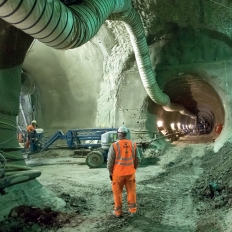
Taken from this APM article, we see this story from Crossrail showing the value of collecting and re-using Knowledge in the form of lessons and innovations.


"Crossrail has developed its own ‘innovation portal’ in order to capture, track and develop innovation across its supply team. The portal is also a useful means of sharing ideas and unusual solutions to problems. Meanwhile, (John Pelton, Crossrail’s strategic projects director)'s team is proactive about encouraging innovation on the ground. 
“Their job is to go to the sites and talk to people about the innovation programme,” he says. “They have to be known, so people will come up to them and say: ‘I’ve had this really good idea. What do I do with it?’ Or, if they have a problem, they can be shown how to search and see what can be done to overcome any challenges they have faced.” 
An example of where this has worked in practice is the Pudding Mill Lane site in Stratford, east London. There, the contractors had struggled with erecting a reinforced earth wall. They tried a new technique, which had mostly worked, but there were a few problems. So they captured the lessons learned and logged the new construction technique on the innovation portal. 
A year later, contractors at the Plumstead site, also in east London, were having difficulties with a reinforced earth wall of their own, while battling severe time constraints. Fortunately, the innovation team was able to point them in the direction of the innovation portal and the lessons learned from Pudding Mill Lane. These were taken and developed further in order to devise a frame in front of the wall. 
“Nobody had ever done that before,” Pelton explains. “It took three weeks off production and they delivered the wall on time.”

Thursday, 5 February 2015

A story of a bottom-up Community of Practice

Communities of Practice can be selected top-down, or bottom-up. In the former case, the company seeds and sponsors CoPs in critical knowledge areas.  In the latter, CoPs emerge spontaneously, driven by the passion and energy of key individuals. This is a bottom-up story, told by one-such individual. 


Johnny is an engineer, based in the UK. He was a very early adopter of Knowledge Management, and extremely enthusiastic about the business potential of KM and shared learning. Johnny's personal drive and enthusiasm have been instrumental in setting up and maintaining a major community of practice. Here is his story of how the community started.

"The role I have now, of operations coordinator, grew from the company KM launch meeting, where 2 or 3 people met, and decided we would stick together and would keep others in touch with what we were doing. Every 10 or 11 weeks we would get on the phone and have a conference call, and we called ourselves the "Continuous Improvement Forum", because we needed a name.

"We attracted more people to that phone call, and it spread around the world. We had a member on the western seaboard of the US, we had people offshore on rigs using satellite phones. I was in the UK, and we had someone in Germany. So every 10 or 11 weeks we would get this conference going at night, and because we were talking to someone in the US, I would be here at 7 o'clock at night on a conference call.
"We would talk about what each of us was doing in our organisation around any subject - competence, procedurals, process upset reporting - how we were handling different things. And that attracted the attention of the then head of operations, and he sat in on one of our calls one night, He thought this was so great - what we were trying to do. We changed out name to "Operational Excellence" because we were all in operations and we were pursuing some kind of excellence, so we became the Operations Excellence forum".
"We attracted about 80 people who wanted to be involved in operations excellence across the company. We ran a couple of workshops to tell them what we thought operations was about, and we gave them what we called the Operations Excellence Portal - a website that would be a common area to gather information and put news stories in, and it all revolved around a self-assessment process we asked business units to do.

"We said "this is the Operations Excellence community of Practice", and I moderated and looked after that community from a central point. We created a community distribution list, so that everyone was in contact with everyone else. 
"The community then started to grow. Like a virus they began to slowly but surely to infect other people, with the stories, success stories that were happening. The possibilities of making change, and being involved in that change, were tremendous. 
"So they community grew from September 2000 to the present day (this story was recorded in 2003), where it sits at just over 260 people. That is pure organic growth.I guess the next stage would be to bring the whole community together at some point ... to bring these people back together, and be face to face, and tell their stories, and the energy and power that's in a room when you get people like that together, is terrific".

I love this story. It is a story of how the seed of Knowledge Management fell on fertile ground, and grew into a forest.  It is the story on one person's passion, and how this grew. And it is the story of how a community of practice which delivers real operational value to its members can expand like a virus.


Thursday, 18 December 2014

Quantified KM success story number 85

This quantified success story for KM comes courtesy of Kent Greenes

.
Accelerating consumer product development in Malaysia  
The research & development group of a major consumer product company used a series of Peer Assists to reduce the time to develop and bring a new product to market. Peers from the product development and marketing organizations were brought together to share their experience and transfer relevant knowledge to a new team designed to ‘fast track’ a new product to market. 
The bottom line: the new product was tested with consumers and brought to market 6 months earlier than planned. This resulted in a significant increase in revenue by beating their competition to the market.

Wednesday, 26 November 2014

Positive deviance in a business context

The concept of positive deviance is a powerful and attractive concept in the Development sector, involving looking for those individuals who succeed the best, and allowing others to learn from them. This works in business too!


The Positive Deviance Initiative is based on the observation that in every community there are certain individuals or groups whose uncommon behaviours and strategies enable them to find better solutions to problems than their peers, while having access to the same resources and facing similar or worse challenges.

Wikipedia gives us this example;

At the start of the pilot 64% of children weighed in the pilot villages were malnourished 
 Through a Positive Deviance inquiry, the villagers found poor peers in the community that through their uncommon but successful strategies, had well-nourished children. These families were collecting foods typically considered inappropriate for children (sweet potato greens, shrimp, and crabs) washed their children’s hands before meals, and actively fed them three to four times a day instead of the typical two meals a day provided to children.

Without knowing it, PDs had incorporated foods already found in their community that provided important nutrients: protein, iron, and calcium. A nutrition program based on these insights was created. Instead of simply telling participants what to do differently, they designed the program to help them act their way into a new way of thinking. To attend a feeding session, parents were required to bring one of the newly identified foods. They brought their children and while sharing nutritious meals, learned to cook the new foods. 
At the end of the two year pilot, malnutrition fell by 85%. Results were sustained, and transferred to the younger siblings of participants.
We can apply the same approach in business, as part of our Knowledge Management program (perhaps as a KM pilot). It works this way.

  1. Identify your critical knowledge areas, and critical activities
  2. Look for the teams that perform best in these areas (best sales team, best bid team, safest factory, most engaged staff, fastest production, lowest energy use etc etc)
  3. Proactively learn from them. Use interviews, knowledge visits, knowledge exchange etc to understand the secrets of their success
  4. Share these with others (through peer assist, perhaps, or knowledge handover), and challenge the others to deliver the same results


Tuesday, 18 November 2014


Learning from Failure, learning from Success


Trial and error, or trial and success? Which is the better learning mechanism? 

A thought provoking piece here, makes the argument that people learn much better from their mistakes, as a result of the emotional charge and the emotional scars that failure brings.

On the other hand, a well-argued article in  Business Insider suggests that success is a better teacher, because a fail mode only tells you one option not to try; it does not tell you how to succeed.

Which is correct, and what is the implication for Knowledge Management?

Personally I tend slightly more towards the "learn from success" argument.

I believe that on a corporate level, or as a society, we collectively make the biggest learning steps when we finally succeed. Think of Edison and his light filament; when did he do the most learning? When he tried each of the 99 options that didn’t work, or when he found the one that did?

Now you can argue that he learned from both, but now let’s look at transferring that knowledge. If you were a light bulb maker, which of these two statements would be of most value to you?

  1. You can’t make a light bulb filament out of cat hair 
  2. You can make a light bulb filament out of tungsten 

The implication for Knowledge Management


The implication for Knowledge Management is this:

You need to learn from both success and failure, but you need to learn much more carefully from success, because success is what you want others to replicate.

It is learning from the successes that are most valuable for others, so that is where the most KM effort needs to be applied.

As an example, let's look at the typical systems set up to learn from safety incidents. Most of these systems have detailed root cause analysis when there is a near miss or an incident, and the lessons from these are sent around the organisation so others can learn from this safety failure.

However it is far more important to learn from the factory or plant that never has an accident, and never has a near miss. That is the factory everyone needs to emulate, which means they need to carefully understand WHY they are so safe, and then learn from this.

We know that it is human nature to learn best from mistakes, but we don’t want to be at the mercy of human nature. We don’t want people to have to screw up in order to learn. We don’t want failures and screw ups if we can possibly avoid it, because mistakes and screwups can cost money, they can cost lives (in certain cases), and they can cost careers if they are big enough.

Learning in a KM Framework


The ideal situation, in any mature KM or lesson-learning framework, is that you learn as a matter of course, whether you deliver failure, success or a mixture of both (and it usually is a mixture).

Learning, as in lesson identification meetings such as After Action reviews and Retrospects, should be a routine exercise, regardless of success or failure. Address both, learn from both, and give particular attention to understanding the causes of success.

Fail fast and fail often is a good mantra, so long as it leads to success, and it is the success that is the greatest learning opportunity.

Wednesday, 12 November 2014


Lesson Learning at NASA (video)


An interesting video on the history and development of lesson learning at NASA

"One of the challenges of a project based organisation is that people work on a mission, and when it ends, you want to get onto the next good work; opposed to an institution working on the same thing for decades and can accumulate knowledge - on a project you can't do that"


“When people thought about lessons learned, they usually thought about failures…let’s sit down and talk about what went wrong. Now, as project managers and designers are starting up a new spacecraft or a new design, they need to look to the past and look to other places for what can they incorporate into a design to make it better, to improve upon it.”

Monday, 8 September 2014


Quantified KM value story number 78 revisited - Ford


This old article from Inside Knowledge magazine in 2005 shows how Ford was able to make massive savings through rapid replication of improved practices in its manufacturing sites.


I have already described the Ford Best Practice Replication system as one of my quantified KM success stories (as well as describing how difficult it was to replicate in other companies), but the Inside Knowledge magazine article contains some more value delivery data.

I quote
Many of the readers of this article have surely heard the Ford tag line, ‘Quality is Job 1’. This is not just a tag line, but an overall corporate policy at Ford. Supporting this policy are three key top-down strategies:
  • Quality Operating System (QOS): Launched in the 1990s, this ensures adherence to a common standard set for procedures, guidelines, standards and metrics that are ‘critical to quality’; 
  • Quality Leadership Initiative (QLI): Established in 2002 to support the company’s back-to-basics strategy. The purpose of the QLI is to engage all employees to improve quality and customer satisfaction jointly as a team; 
  • Consumer Driven 6-Sigma: Launched in 1999 to improve quality faster. 6-Sigma is a methodology that applies a set of statistical tools to reduce and eliminate defects, and also help improve quality of products and services; 
  • Supporting these three top-down systems is a bottom-up employee-based KM system, including best-practice replication, which allows employees to capture and share proven quality improvement practices. 

What are the results of these efforts? 

It is truly gratifying to note the results of replication on on-going quality improvements, as reported by newspapers and trade publications: “Between 1998 and 2003, Ford has improved about 18 per cent in initial quality”,
Brian Walters, director of Quality Research at JD Power Associates, in ‘Ford’s Quality Battle, Serious efforts appear to be paying off’, Automotive Industries, June 2003 Ford Motor Company reduced warranty costs by about $1bn since 2001, as quoted by the VP of quality, Detroit Free Press, 8 December 2004.
“Since 6-Sigma’s inception (1999), Ford has saved about $1bn in waste elimination globally. Year-over-year savings worldwide were $359m last year”. 6 Sigma in ‘Ford Revisited’, Quality Digest, June 2003

Getting maximum value of quality-improvement efforts 

Since 1996, BPR has been averaging close to 10,000 replications per year. There are currently 53 active communities of practice, each onesupported by a Gatekeeper and an average of 50 Focal Points. This, coupled with a high level of enterprise-wide quality-improvement efforts, has helped Ford Motor Company generate a value of $1.25bn. This goes to show that high rewards that can be generated when a high level of knowledge management activity is combined with a high level of quality-improvement activity.

Blog Archive