Showing posts with label management. Show all posts

Monday, 26 July 2021

Leaders are knowledge workers too

We often approach leaders and try to sell KM on the benefits it will deliver to their staff, forgetting that leaders are knowledge workers too.


If we think of knowledge workers are "people who make decisions for a living", then managers and leaders are also knowledge workers.

All levels of management make decisions, and often very big decisions, with costly implications. They also need access to the best knowledge they can find, and if your KM program cannot help them they will need to hire in expensive external consultants. 

Each of these management-level knowledge workers needs access to knowledge in order to make the correct decisions and take the correct actions;

  • Project managers making decisions on major (and minor) projects
  • Divisional managers making decisions about market penetration
  • Sales managers deciding how to enter new markets
  • Plant managers deciding how to optimise their plant
  • Senior managers deciding how to set up new business
  • Senior managers making decisions about acquisitions and divestment
  • Technical managers, making decisions about developing organisational capability
and so on

The biggest decisions are made at the highest level, and there the need for knowledge may be greatest and the application of knowledge can yield the best return. That's where some of the thorniest issues can be resolved through the application of Knowledge.  That's where some of your most influential knowledge workers reside.

One of our clients focused their KM applications at senior level, and likened this to "KM removing the thorn from the lion's paw". If you solve the lion's problems, the lion will always be on your side!

Also once your managers understand the value of KM and begin to develop T-shaped management behaviours, these behaviours will spread rapidly to the staff below them, and then the next level down, and so on. It's far easier to drive a pervasive culture change from above than it is from below. 

Wednesday, 9 December 2020

3 words that put "Management" in Knowledge Management

The difference between Knowledge Sharing and Knowledge Management lies in three words - systematic, routine, strategic.

Quite often we find clients who don't like the term "knowledge management" and prefer something like "knowledge sharing" instead.

Often this comes from the assumption that "knowledge management" means "the management of knowledge", and that knowledge, being intangible, is incapable of management. We already know this is not a sound reason to avoid the term, as "knowledge management" can also mean "knowledge-centred management" or "management with knowledge as a focus", and there are plenty of intangibles with their own management systems.

Knowledge sharing is also only part of knowledge management, which also includes knowledge seeking, knowledge synthesis, knowledge creation, knowledge re-use etc.

However there is another difference between the two, a difference which justifies the use of the term "Management", and a difference that can be summed up in three words.

Systematic

Knowledge Management should be part of a joined-up management system  - not relying on ad-hoc use of a tool, or selection from a toolbox, but a systematic approach and the application of a full framework.

Routine

Knowledge Management should be embedded into the routines of work, rather than being an occasional add-on, or something separate. It should be a component of the work cycle.

Strategic

Knowledge management should support the business strategy, should focus on strategic business knowledge, and should have a clear line of sight to the strategic business drivers (as in this excellent example from Oxfam).

If you are approaching the way knowledge is created, discussed, shared, synthesised, stored, sought and applied, in this way - systematically, routinely and strategically - then you can justifiably use the word Management to describe what you are doing. 

Friday, 20 March 2020

A CEO's view of KM - the organisation as a knowledge factory

It's always insightful to read a CEO's view of KM. Here's one that might surprise you.


One of the more interesting essays on Knowledge Management in the mid 1990s was written by John Browne (now Lord Browne of Madingley),  who at the time was the Chief Executive of BP.

It is interesting because it gives a CEO's view of KM, which is a view we don't often see.

In the quote below, we read not just what this CEO saw as the value of KM and Organisational learning, but also how the importance of Knowledge changed how he saw the organisation itself.

"Learning is at the heart of a company's ability to adapt to a rapidly changing environment. It is the key to being able both to identify opportunities that others might not see and to exploit those opportunities rapidly and fully. This means that in order to generate extraordinary value for shareholders, a company has to learn better than its competitors and apply that knowledge throughout its businesses faster and more widely than they do. The way we see it, anyone in the organization who is not directly accountable for making a profit should be involved in creating and distributing knowledge that the company can use to make a profit"


Let me stress that last sentence again

"anyone in the organization who is not directly accountable for making a profit should be involved in creating and distributing knowledge that the company can use to make a profit"

That is a remarkable view of an organisation as a profit-focused knowledge factory, creating and distributing knowledge for the benefit of the front-line knowledge workers.

The same "knowledge factory" image came to me recently, working with a public sector educational organisation, who's whole raison d'etre was to create knowledge. Here we took a new process-focused view of the organisation, and started to identify the knowledge and information inputs and outputs for each step in the value chain. It was really illuminating.

If you think of your organisation as a profit-focused knowledge factory, then you can start to think about applying manufacturing thinking to the flow of knowledge - thinking such as debottlenecking the knowledge flow, or lean approaches to knowledge supply. You can start to ask, who is in charge of production? What is the knowledge supply chain? Can you use Japanese style processes such as Kaizen and quality circles to improve the flow?

Take a look at how well your organisation operates as a knowledge factory, and ask - just how well do we process knowledge? Does everyone who is not making a profit or delivering a service, actually realise that their job is knowledge production?


Friday, 13 October 2017

The role of corporate management in KM

Everyone has a role to play in KM, but what's the role of corporate management?

Copyright-free image from pxhere
I pointed out last week that corporate management is one of the stakeholders for KM, and that they have certain needs from the KM program, but with these come responsibilities. Senior management support can make or break KM success, but what role exactly do they play?

Here are the highlights.
  • Managers need to endorse the knowledge management program, and be seen to be giving it their support, perhaps by drafting, endorsing and promoting a KM Policy
  • The endorsement extends to providing resources within their part of the business - the knowledge managers, the subject matter experts, the KM team. 
  • Managers need to help steer the KM program in their part of the business - to work with the knowledge management implementation team in order to help them understand which knowledge is strategic for the specific business unit or business group, in order that knowledge management activities can fully support the strategic business agenda. 
  • Managers need to lead by example. Knowledge management is not something which will only be done by the junior grades - the managers need to be involved as well. 
  • Managers at all levels need to take the lead in their part of the business in setting an expectation for managing knowledge. They need to make it clear what they expect to see 
  • Assuming managers have set expectations as described above, they need to follow up on these expectations. The organisation will be watching closely how senior managers deal with people who shirk their KM responsibilities.
  • Managers need to recognise and reward wisely, if knowledge management is to survive. It will send a very negative message if senior management reward and recognise the wrong behaviours, such as internal competition or knowledge hoarding. 
  • Managers need to provide challenge to the business; to continuously improve in what they do through applying knowledge from others, and to share their knowledge in order to help others to improve. 
  • Managers need to provide challenge to KM; to audit what they are doing, and continuously improve the KM Framework in support of the business.

Wednesday, 22 June 2016

Middle managers -the KM blockers

Middle management can form an almost impenetrable layer to knowledge management in many organisations.


The two main stakeholder groupings for KM are the senior managers and the knowledge workers. The value proposition for the senior managers is that KM will deliver greater efficiency, greater effectiveness, faster growth, bigger market share, faster time to market, and happier customers. The value proposition for the individual knowledge workers is that KM will provide then with easy access to reliable knowledge that will save them time, will reduce their risk of failure, and will make their results better.

However between these two groups lies a layer of middle management; the sales directors, the plant managers, the project managers etc.

These are the people who have tough choices to make. They have demanding customers, tight budgets, and tighter deadlines. Every penny they spend on KM is a penny less to spend on operational issues. KM, for them, is two steps away from operations (the first step is that operations reauires knowledge, the second is that knowledge requires management).

The result is that these are the poeple for whom KM is the toughest sell - the people who won't be swayed by high level arguments or appeals to emotion.

Here is what John Keeble, CKO at Enterprise Oil, had to say

"It is that bunch between (top management and the "coalface" that I think are almost the most important - the team leaders, the middle management. They are the people who are constantly trying to juggle this dilemma of too much to do and not enough people. So if you cant convince them of the value of knowledge management, its likely not to get the resources applied to it. So then you get the situation where in theory you have support from the top, and demand from the base, but that demand from the base is being frustrated by the fact that their managers aren't freeing them up to do it. And that can be a very negative cycle if you get trapped in it. Overall I think you have got to get support from all levels, but it is very easy to overlook that middle management level, and they are perhaps the most important"
We heard the same message from Lutz Lemmer at Transport for London last week, and have heard it from many many clients over the years.

Make sure your stakeholder management plan clearly addresses the middle managers as a core group, and that you have a well worked business case that addresses their concerns. Without this, they can derail the whole program.

Tuesday, 7 June 2016

The knowledge manager's request to senior management

Following on my post last week about managers being knowledge workers; here is a reprise of a post from 5 years ago which rings just as true today.


It takes the form of a letter from the Knowledge Management team to the senior managers of the organisation.

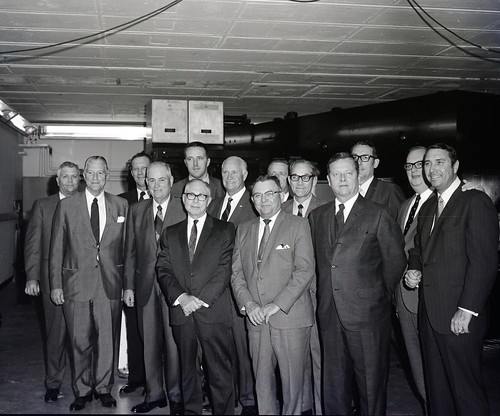
Businessmen from Tyler
Dear Senior Managers

Over the past year, our pilot projects in Knowledge Management have shown that there is huge value to be delivered to the organisation through introducing a systematic managed approach to knowledge. The ROI of these pilots has been in the order of 10-fold, and we believe this can be scaled up to corporate level.

We, the KM team, commit to delivering this value to you, but we need something in return.

Here are our requests for you

1.  We need you to steer our program. Help us to understand what knowledge is strategic to the organisation, so that KM activities can fully support your own strategic agenda. Lets work together to make KM a core supporter of the business strategy.

2. We need your endorsement. We need you to be talking about the importance of knowledge. We need you to be asking the questions "Who have you learned from?" and "Who will you share this with?" Eventually we will be asking you to set clear expectations for KM in the organisation in teh form of a Knowledge Management Policy.

3. We need your example. As someone once said, "I cannot hear what you say, for the thunder of what you do", so you need to be acting, as well as talking. Get involved in KM. Hold your own learning reviews. Capture and share and build knowledge at senior management level.

4. We need you to reward and recognise wisely. KM requires a change in culture, and people will be very alert to how you recognise behaviours. If you reward and recognise the wrong things, such as internal competition, or the lone hero who "doesn't need to learn", or the knowledge hoarders who keep it all "in their heads", then our good work of culture change will be in vain. Recognise instead those who learn before doing, those who share hard-won lessons, and those who show bravery in admitting to mistakes from which others can learn.

5. We need you to be consistent in how you follow up expectations. The company will watch how you deal with the project that doesn't hold a learning review, or the expert who neglects their community. If you let them get away with bad KM behaviours, you have sent a strong message to the organisation; that you can refuse to be involved in KM, and nobody will make a fuss.

6. Finally, we need you to challenge us. We know the value of KM, and you need to challenge us to use it to make a real step-change in business deliverables.

Together, we can make a real difference through knowledge management.

Sincerely,

the KM team

Tuesday, 5 January 2016

The CEO's role in KM

This article by Arun Hariharan is a very interesting look at the CEOs' role in KM.

I have already discussed the role of senior managers in KM on this blog, and it is reassuring to see that I am well aligned with Arun's views when he identifies the following 9 roles the CEO can play:

  • Expecting significant business results from KM. 
  • Treating KM as a strategy and not a task. 
  • Involvement in reviews. 
  • Making KM a key part of performance appraisals. 
  • Making senior people accountable for KM results. 
  • Investing in KM talent. 
  • Spreading the KM culture. 
  • Investing in rewards and recognition. 
  • Setting personal examples.
I would like to pick up on the first point, which Arun amplifies as follows:

Leaders get the results they expect from KM. It’s like a self-fulfilling prophecy. If the leader’s expectations are low, naturally, their involvement in KM will be low, leading to low results. The reverse is equally true. Leaders with high expectations know that it’s worth spending their time on KM, and this gives them results.
The implication of this observation is that we, as knowledge managers, can influence the results of our KM programs by setting the expectations of our senior leaders at a high enough level. If we set their expectations high, then we achieve high results. If we don't, we don't.

It's up to us!

Monday, 18 November 2013


Creating "Learning Urgency"


Does "fleeting" mean "URGENT"? When I give my Knowledge Management Training courses, I start proceedings by presenting three stories from organisations who are doing knowledge management, showcasing some of the benefits KM can bring.

I then ask the class to discuss the stories, and to identify the success factors that lie behind each one. Often these are a mix of successful interventions, and successful cultural elements.

Last week, in the South of France, one of the success factors they identified was a "sense of urgency". In each case, the protagonists in the story treated learning as Urgent - one of the first things to be done - and as a result, delivered great results.

This was a really good insight.

All too often, learning (and Knowledge Management in general) is seen as important, but not treated as urgent. In these stories, the urgency was there, and learning followed.

So how had the organisations in the stories created that sense of urgency?

  • In the first story, the organisation gave a high-profile task to an individual who had never done that sort of thing before, with clear instructions not to "screw up". A risky move, were it not for the Knowledge Management system which gave the individual all the knowledge they needed to succeed.
  • In the second story, the organisation challenged a team to improve on the past benchmark performance by nearly 20%. An impossible challenge, were it not for the access the team was given to all the lessons and knowledge from past performance.
  • In the third story, the organisation gave the same audacious goal to twelve different teams simultaneously. A crazy thing to do, were it not for the way they set up knowledge-sharing between the teams, so they reached the goal far faster collectively, then they did individually. 
There is a saying, by the Greek philosopher Epictetus, that "you cannot teach someone something they think they already know". This means that if you give people problems they know how to solve, they will not look for additional knowledge, and they will not think outside the box. 

Learning, for them, will not be urgent. They will use the knowledge they have, do what they have always done, and deliver the performance they have always delivered. Safe, but no improvement.

An organisation can really drive Knowledge Management by giving people challenges they don't know how to meet, or putting them in positions where they don't know what to do. This is not as risky as it sounds, once KM is in place. 

Once KM is in place and is trusted, KM and management work together in delivering breakthough performance. Management gives people challenges they don't know how to meet, KM provides the knowledge they need to meet them. 

Learning becomes both Urgent, and Easy. Everybody wins.


Monday, 21 October 2013


Knowledge - the asset you already own


Buerried Treasure, by Banksy This is an argument you can use with your senior management, when trying to sell Knowledge Management.

Knowledge is like treasure buried in your own back yard - it's a resource you already own; you just haven't uncovered it yet. 
Any organisation is rich with knowledge, any organisation pays a lot for knowledge already (60% of the non-capital spend according to Larry Prusak). That knowledge is a very powerful resource, but it's mostly locked away in silos, and in the heads of individuals. 
All you need to to, to release the value of that knowledge, is start to link up the people.  
You don't need to buy the knowledge - you own it already. All you need to do it free it up to move to where it is needed.


Wednesday, 8 December 2010


KM for senior management


Meeting room stencil graffiti
Lots of managers assume that knowledge management is "something my staff need". They therefore set up KM initiatives to cover routine tasks at low levels in the organisation. They might set up a KM program to improve call centre response, or to improve shift handover, or to improve productivity on the assembly line.

This misses the point.

Knowledge Management is something that is of value at all levels. Knowledge supports decisions, and decisions are made at all levels. In fact the most valuable and risky decisions are made at senior level. The default approach to supporting these senior management decisions is to hire a big-5 consutant firm to supply the knowledge, but there is no reason why KM can't help as well.

So when you are proposing KM pilots, look for pilots at senior level, to support the big decisions. Here are some examples from the past.

Knowledge Management to support mergers and acquisitions. There's a massive, high level task, which requires big decisions. Learning from past mergers can materially improve future mergers.
Knowledge management to support new business. Companies may open new offices, or start up in new countries. With knowledge, this start-up may be quick and effective. Without KM, the start-up may hit snags, be delayed, or fail to deliver the required business results.
Knowledge of leadership. That's a massive issue! One company uses a detailed 6-monthly staff survey to measure morale, and gathers insights and learning from the managers of high-morale teams to help develop leaders in the organisation. Another has build an entire knowledge asset providing knowledge for plant managers.

 Delivering a high level KM pilot on these areas has three benefits.

  • It delivers massive value to the business
  • It engages senior managers in KM, and helps them understand the value KM can bring
  • It gets senior managers on-side, by solving their problesm for them (see the thorn in the lions paw).
 KM is something that is needed at all levels, and the sooner you involve the senior managers, the faster and smoother your implementation will become.


Friday, 19 November 2010

The Knowledge Supply-chain and its Management


NHS Supply Chain FG58EVT
Originally uploaded by didbygraham
I was at a meeting yesterday with an engineering client, musing about KM while a discussion was going on about supply chains, and it suddenly struck me that we could also usefully think about KM in terms of a supply chain.

I don't know if you have heard the US Army Hurricane Support story - if not, I will blog the story shortly - but its a story about an Army Colonel who needs knowledge on a topic which he is unfamiliar with, and is able (through the centre for army lessons learned - CALL) to find all the knowledge he needs to do a great job. He can only do this, because there is an entire supply chain devoted to creating, organising and shorting the knowledge and information to provide it to the user, at the point of need.

We also discussed this topic in the NATO lessons learned conference, where I used the analogy of a "lessons conveyor belt" (an idea I had picked up in the Moscow KM conference), but the idea of a supply chain is actually a better analogy, and one that might fit well into the thinking of an engineering company.

Firstly, we think of a supply chain as giving the engineer or the chef or the pharmacist what they need, when they need it, in a form that works. When they are constructing an aeroplane or preparing a bouillabaise or prescribing a remedy, they need the parts and components, and these have to be good quality, and available when needed. It's the same with knowledge. If you need to make a decision, then the knowledge to make that decision has to be good quality, and available when needed.

Secondly, a supply chain should be "just in time".  You don't want parts littering up the workshop - but you need them just in time. It's the same with knowledge. You need it when you need it. You don't want to have to remember everything all the time, but when you need to know something, you are at you most receptive.

Thirdly a supply chain may need to be organised. Most engineering organisations have a PSCM organisation (procurement and supply chain management) to ensure the correct flow of parts and materials to those who need them. The PSCM organisation manages both the stock and flow of material - the stock of parts in the warehouses, and the supply and transport of new material to replenish the stock. Maybe we need a KSCM organisation for Knowledge Supply Chain Management (this is the role of the central KM team). One of the reasons why the US Army KM process works so well, is that there is a KSCM organisation who manages the knowledge supply chain (CALL). This organisation manages both the stock and flow of knowledge.

Fourthly a supply chain is concerned about quality. Parts are useless if they aren't up to the job, so there is quality control and quality assurance built into most supply chains. Similarly, knowledge is useless if it isn't up to the job; if it's wrong, or just Opinion, or if its out of date. There should be quality control and quality assurance and validation steps built into the knowledge supply chain.

Now there are also many ways in which the flow of knowledge is not like a supply chain, the primary reason being that knowledge is both created and consumed in the same place; the projects and operating units of the organisation. It's more a supply loop than a supply chain.

However the analogy of the supply chain is one way of thinking about KM, and has the benefit of thinking about it from the point of view of the knowledge user. You can think "If a person in this organisation were in need of a specific piece of knowledge to make a specific decision, what chain is in place to make sure that this knowledge a) gets to the person on time, and b) is of the correct quality?"

With this particular company we used the analogy in discussion, and decided that their supply chain worked as far as the identification of lessons, but these lessons vanished into a complexity of databases and systems, that there were some key supply chain links missing (validation, verification, compilation, broadcast), and that there was no KSCM organisation in place to fix this. The supply chain analogue gave us a focus for discussion and a way of looking at knowledge flow that enabled a quick diagnostic, and enabled us to identify some key missing items in their KM approach.

Friday, 12 November 2010


Minimum conditions of satisfaction for KM


Street limbo 4
Originally uploaded by Endlisnis

What are the minimum conditions of satisfaction in your company for KM?

What is the minimum standard that individuals and teams and projects need to do, to deliver a satisfactory level of KM?

Do they need to conduct lessons capture for each project? Do they need to ensure communities of practice are active for each key area of knowledge? Do they need to consult the company knowledge base at the start of each piece of work?

If there are no minimum conditions of satisfaction, then effectively KM is optional; you can do as little of it as you want. If you want to do zero KM, that's up to you. Nobody cares, nobody minds. And if KM is optional, then it won't get done. Nobody has time for optional activity.

If there are minimum conditions of satisfaction, then people are clear about the acceptable standard. They know what is expected of them (at a minimum level, anyway). If they fall below the minimum, then people do mind and people do care. That's the point of minimum conditions of satisfaction - if you don't meet them, then your performance is not satisfactory.

So if you want to drive KM behaviours in your company, get management to set some minimum conditions of satisfaction.

Friday, 23 July 2010


Learning, in the genes of the future CEO


CEO Face
Originally uploaded by rogerimp

Here's an interesting quote from a report by the Korn Ferry institute called "Discover the DNA of future CEOs".

They believe that learning ability (or learning agility) is part of that DNA. I quote from their report.

"According to Ian Smith, Former CEO of Reed Elsevier: “There needs to be openness to learning. It’s a paradox as in order to learn you need to make yourself vulnerable – but great leaders walk a tight rope between being open to learn (vulnerable) and striving forward.”

Here, there is a striking parallel with previous research by the Korn/Ferry
Institute. In our 2008 White Paper “Using Learning Agility to Identify High
Potentials Around the World” De Meuse, Dai, Hallenbeck and Tang underlined
the importance of ‘learning agility’ as a predictor of high potential in business executives. Learning agility is, in simple terms, the ability to learn from experience and to quickly adapt to, as well as drive, change.

Successful executives learn faster than those who ‘derail’, not because they are more intelligent, but because they have the necessary skills and strategies, and are therefore ‘learning agile’. By contrast, those that do not learn from their jobs, and simply repeat their previous performance in each new role, will never become the most effective leaders"

So if the future CEO is learning-agile, can we expect them to develop a similar learning agility in their organisations?

Thursday, 15 July 2010


Rise and fall of a community


This rather sad rise-and-fall progression for a community of practice was published by Tom Stewart in "The Invisible Key to Success" in Fortune magazine, 5 August 1996, and was adapted from work at Shirley Corporation. It represents what commonly happens to communities that become over-managed.

Although the publication is old, the progression can still be seen today, anywhere senior management take too much of an interest in Communities.


0 Months
Creation of Community of Practice

2 months
Community of practice meets for the first time

4 months
Community begins to develop innovation through shared insight and problem solving. Group begins to attract organizational attention.

6 months
Senior manager becomes intrigued with the community of practice and begins to attend meetings. Manager offers to act as advocate and acquire resources for the group.

8 months
Manager begins to dominate the session with questions-the meetings begin to focus less on sharing insights and more on educating the manager regarding the community's area of expertise.

10 months
Manager obtains corporate funding, proposes instituting ROI metrics to track performance.

12 months
Community of practice dissolves. Members cease to attend meetings.

:o(

The moral is, if there is that much senior management engagement, you don't need a community of practice, you need a community of purpose - a very different animal altogether.

Friday, 30 April 2010


The four roles in KM


This blog post arises from a conversation I have been having with Mary Abrahams over the roles of knowledge manager and content manager and content catalyst, following the "turf war" post below. She asked me about my definition of content, in the context of roles and role descriptions, and we agree that content is recorded material (documents, videos, photographs etc). As the conversation moved into the field of Roles, then I realised that it was becoming too big for a comment on a blog post, and becoming a blog post in its own right.

In a managed KM system, I see four main facilitative roles, which we can link to the four squares of the Nonaka and Takeuchi SECI model, the four squares being

Socialisation - the transfer of knowledge between people,
Externalisation - where tacit knowledge is extrnalised, and then can be recorded (thus creating content)
Combination - where externalised knowledge or content is combined
and refined
Internalisation - where externalised knowledge or content is
internalised or "learnt" by the user


(I just want to say at this point that not all content, in fact only a small proportion, is externalised knowledge. There is a huge amount of content which is information or data. Also not all externalised knowledge, by the N&T definition, is content, but for the purpose of looking at roles, I will assume that we can equate the two. Please feel free to question this assumption, but that would lead us into different territory).

So what are the roles?


Socialisation - the role of the contact broker, for example the facilitator of a community of practice, or the subject matter expert who puts people in touch with people, arranging knowledge visits, conferences, round tables, knowledge exchanges, mentoring, demonstrations, conversations etc.

Externalisation - the role of the facilitator, who facilitates peer assists, AARs, Retrospects, Knowledge handovers, who conducts interviews, and who creates learning histories. This could be close to Mary's "content catalyst" role.

Combination - the role of the knowledge owner, or content owner. There will be a content manager role as well, who manages the repository of the content.

Internalisation - this is a fuzzier area, and this is an area of weakness for many KM programs. The role here is the broker for the internalisation of other people's knowledge. It may be the facilitator of the Business Driven Action Learning exercise, or the facilitator or trainer of other exercises(trainings, briefings, role plays, scenario planning) where people can internalise explicit knowledge.


These roles are in addition to the basic roles of knowledge provider and knowledge receiver/user. They facilitate the flow of knowledge, rather than contribute to it. Also they are not neccessarily roles on the KM team.

These need not be separate people - the knowledge owner or content manager could act as the contact broker, the externalisation facilitator can act as the internalisation facilitator. Or it could very well be more than four people. There may be many communities, each with a facilitator. There may be many facilitators of knowledge capture and knowledge internalisation.

But if knowledge transfer is to work well, these roles are needed.

Thursday, 10 December 2009


KMAS


I think all of us who worked in the BP KM team in the 1990s would agree that the KM program was terminated too early. We had tested the tools, we had piloted the framework, and we were poised to roll out KM. We had a vision of "99 in 99" - 99 knowledge managers in place across the organisation by the end of 1999.

Then, as history records, BP became embroiled in what was then the largest industrial merger in history - the merger with Amoco - and the KM program (together with very many other programs) was terminated early.

One thing I really regret about this early termination was that we never got to experiment with what we termed "KMAS" - the Knowledge Management Assurance System. This was very much conceptual, and we hadn't really progressed far beyond the name, but the parallel was with PMAS, the people management assurance system.

An assurance system is the system you put in place, to make sure something works. PMAS was the system BP put in place to make sure its People Management system worked. KMAS would have been the system BP put in place to make sure its Knowledge Managament system worked. KMAS is not KM, it was the assurance system for KM. Without the assurance system, there is nothing to sustain KM, and that's just what happened in BP. After the early termination of the team, KM faded away, with the exception of a few hotspots like Drilling. It took another 6 years for KM to be re-established, and for assurance systems to be put in place which would sustain it.

In Knoco, we refer to assurance systems as Governance, and you can find a few posts on governance in this blog, by using the search bar. We feel we've got a pretty goood handle on governance now. Having seen it fail in many places and succeed in a few, we think we know what the sustaining factors are. But if we had had that extra year in BP to put KMAS in place, we might have had that knowledge 6 years earlier.

For more details on effective governance, drop me an email and I will send you a reprint of my article "Masterclass - Sustaining the Knowledge Management Culture". Nick Milton from Inside Knowledge, March 2007

Monday, 23 November 2009


It's not my job! Recruiting the experts to KM


Remember the ancient approach to Knowledge Management, of Master and Apprentice? Throughout the middle ages, and into the early industrial age, the Masters were the knowledge holders, and Apprenticeship was the system of transferring that knowledge to a new generation of practitioners of a skill.

Has that survived to the knowledge age? Many clients I speak to are having real problems recruiting the knowledge holders to the concept of KM. Even in those companies where knowledge holders are few, and knowledge seekers are many, the experienced subject matter experts are often reluctant to become involved with KM.

The reason is, that because knowledge is scarce, they are busy doing the job, and have no time to teach. The fewer experienced practitioners the company has, the busier they are in actually performing the work. In addition, many experienced staff are experienced because they enjoy doing the work, and doing it well, and they see KM as a distraction or an added burden. They often feel that KM "is not my job".

"I am an experienced boiler-maker/salesman/brewer/application designer - my skills are in huge demand. Why should I take time out to share my knowledge? That's not my job"

The answer to this, of course, is to make it their job. You can't expect busy people, in demand from all over the organisation, to add to their burdens with work that isn't in their job description. But if their knowledge is vital to company performance, then sharing that knowledge needs to be in their job description. It needs to be recognised as part of their job, and they need to be given the space, the resources, the assistance, and (if necessary) the training to allow them to share their knowledge with the next generation - the apprentice generation.

The old career progression was Apprentice - Journeyman - Master. Knowledge Companies need to rediscover this progression, so that the Masters (of both sexes) - the Subject Matter Experts - can see their role as Teaching as well as Doing, and as passing on their skills to those who need them, through the tools of KM (wikis, community forums, peer assists etc) as well as through the traditional tools of apprenticeship (coaching, mentoring, training).

(The need for Knowledge Retention, described in the white paper available here, is often a symptom that the SMEs have become disengaged from knowledge sharing)

Monday, 2 November 2009


Business focus for KM – the wisdom of 12 years ago


Focus
Originally uploaded by Tiago Rïbeiro
Looking in my archives today, I found an old article from CIO magazine in 1997, where John Cross, the head of IT for BP, was talking about Knowledge Management, back in the early days. I think it is very interesting to look back, after 12 years, and see the outcome of the approach he described
This is what he said

“[At British Petroleum], we think there is another level of performance that can be extracted by a more powerful utilization of the knowledge inside an organization. I think the challenge is, well, what does that mean? And how does it translate into practice?

Rather than talking about it, we're simply running a lot of pilots in and around it. We have been looking at the key processes of the business, testing them for their "knowledge intensity" to see if we would create some significant new change in the performance of that particular process if we managed knowledge in a more profound way. The concept has not been difficult to sell to the top executive team.
The chief executive of our aviation business said, "I know that getting the next 10 percent of performance out of this business is going to be entirely dependent on my ability to manage knowledge." That was quite an interesting observation because knowledge is what executives really work with when you think about it. It's not a techie thing.

In the oil business, we spend a lot of money trying to punch holes in the ground in drilling. We reckon that, broadly, we should be able to halve those sorts of costs. And we know that knowledge management is one of the key strategic levers to performance in drilling. Absolutely. We can track our performance and improve our drilling rates, and it is almost all due to incremental buildup of knowledge about the management of the drilling process. So we're concluding that this would be one of those knowledge hot spots with high financial leverage.”


Wow. Look at that. Look at his focus –

“Knowledge Intensity”
“Knowledge hot spots with high financial leverage”
“significant new change in performance”
“10 percent ….. halve those costs”

This degree of focus on business need, on knowledge-intensive hotspots, and on performance improvement was behind BP’s early success in KM, and the embedding of processes and approaches that have survived for over a decade. The focus was not on introducing groupware, or on setting up portals, or on building communities; it was on business performance.

This is an approach that all KM initiatives can learn from. Focus on the knowledge-intensive hotspots and on performance improvement, and then work out what you need to put in place to deliver this. Let the solutions fit the need, rather than letting them drive the program.

For more on this theme of business focus, see my post "are you putting a man on the moon, or trying out a new mop"

Tuesday, 27 October 2009


Two questions that drive KM culture change - message to managers


Question!
Originally uploaded by Stefan Baudy
Culture change has been a theme throughout this blog (click the Culture label to the right), and I make no apology for this, as effective knowledge management is accompanied with a change in culture. But culture change is easy to say, and far far harder to deliver. Ultimately, you need to look at a governance system to ensure the KM culture is sustained, but way before that the leadership of the company need to be demonstrating a clear expectation for KM behaviours.

And actually, this is surprisingly easy for them to do. It involves two questions.
Who have you learned from?
Who have you shared this with?

If you are a leader, then every time someone comes to you with a proposed solution to a problem, or a proposed course of action, you ask “Who have you learned from”? Through this question, you are implying that they should have learned from others before proposing a solution – that they should have “learned before doing”. Also, every time someone comes to you to report a problem solved or a process improved, or a new pitfall or challenged addressed, you ask “Who have you shared this with”? Through this question, you are implying that they should share any new learnings with others.

The great thing about leaders’ questions, is they drive behaviour. People start to anticipate them, and to do the learning before, and the sharing afterwards. People hate to be asked these two questions, and having to answer “umm, well, nobody actually”. They would much rather say “we have learned from X and Y, and have a Peer Assist planned with Z”, “We have shared with the A community, and are holding a Knowledge Handover next week with B project”. And once your drive the behaviours, the transfer of knowledge will happen, the value will be delivered, and the system will reinforce itself.

But the moment you stop asking the questions, people realise that you, as a leader, are no longer interested in KM, so they will stop bothering.

There’s an old saying – “What interests my manager fascinates me”, so make sure you are interested, and ask the questions.

Friday, 23 October 2009


Targets and motivation in KM


On Target
Originally uploaded by viZZZual.com
Yesterday I was running our ever-popular Bird Island exercise, and as always, the teams made massive leaps in performance as their knowledge base increased.

The real value of this exercise comes in the debrief, when we analyse the success factors and relate them back to KM at work. One of the topics we analysed was Motivation and Target setting. What motivated the teams to set aggressive targets, and what motivated them to use the knowledge from others, to deliver those targets?

The primary motivation factor was "to deliver a great performance". They didn't set the target of beating the world record, they set the target of being at least "up there with the leaders" and delivering a great result. They wanted to be proud of their achievement - that it should stand well in the rankings. Of course, in order to set the target properly, they needed good benchmark data, and data from historical performance. We gave them that data, so they knew what to aim for, and they know what was possible.

And of course, in order to reach the benchmark, they needed the entire knowledge base of how to complete the task, so they could reproduce the successes of previous teams, and ideally could innovate further.

That combination of knowledge of past performance and how to achieve it, allowed them to set targets that were 2 or 3 times greater than the results had achieved so far, and in each case, through reapplication of knowledge, they exceeded those targets and achieved top quartile performance.

A very powerful combination of knowledge and motivation, with self-assigned targets.

Then I asked them how targets are set at work, and how motivating these are. You could hear the groan go round the room. "Targets are set from the centre" "Nobody buys into them" "Targets are a joke" "We set our targets, then define the metrics later so we can beat the target" "Targets are political". Such a contrast from the motivation in the exercise. Knowledge and Performance are so closely linked, that I often say that if you don't manage performance*, you can't manage knowledge. If you can't motivate people to perform, how can you motivate them to learn? So although many of these participants had KM programs, and were introducing the tools and techniques, they were really struggling with motivation issues.

Is it possible to motivate in the same way that we did during the exercise? Yes it is, and you can see that clearly in the Shell Technical Limit process I have blogged about before. Here teams have access to the performance data from the past, have access to all the knowledge they need, and work out for themselves how they are going to innovate beyond the best of what has been achieved to date (it is taken for granted that they can match the best historic performance. After all, that has been proven to be possible- that's "in the bag"). Then of course they are heavily motivated, through performance bonuses, when they beat the benchmark.

So it was a very interesting discussion, contrasting the success in the exercise with the struggles at work, with motivation and target setting coming out as a key factor.

I guess the learning point is that if you are introducing KM, start first where the performance culture is well defined, and where people are motivated to perform. If you choose a part of the business with no performance management, joke targets, and where people play political games with metrics, then you may very well struggle to develop a learning culture.

*Performance is the P in the OPEC acronym for KM culture

Blog Archive