Good to see the focus on culture and networks.
Showing posts with label strategy. Show all posts
Showing posts with label strategy. Show all posts
Friday, 10 November 2023
UNDP KM strategy
Linked below is an excellent video on the 2022 KM strategy from the UN Development program.


Monday, 7 November 2022
10 reasons why a KM Strategy is important
You need a strategy if your KM introduction and deployment is to be successful. Here are 10 reasons why.
 Implementing (or Introducing) Knowledge Management without a strategy is a risky endeavour. As Sun Tzu is reputed to have said said, in "the art of war",
“Strategy without tactics is the slowest route to victory. Tactics without strategy is the noise before the defeat.”
Lots of books and articles on strategy come from a military point of view or from game theory, and are strategies for competing and winning. So should we think in terms of winning and competing, when implementing Knowledge Management? Surely it's a Good Thing to do - it's a win-win for everyone?
But as leader of the KM program, you are in competition. You are in competition against other programs and initiatives, for internal resources (money, people, time) and you are in competition for internal attention (management support). If you do not have a good strategy, then good tactics are not going to save you.
We are constantly hearing of yet another KM program closed, and yet another KM leader looking for a job, as the company sought to cut back on expenditure, and found KM to be too far from the front-line delivery - too non-strategic - and thus an easy target.
So what can a good Knowledge Management Strategy do for you?
- Your strategy will help you define where you heading, and what the end point should be. It will define the vision, and the desired outcomes for knowledge management within your organisation, and allow these to be discussed and agreed up front, before you start on the planning.
- Your strategy will provide a set of principles or ground-rules to guide your actions, and guide your decision making during knowledge management implementation, in order to deliver the greatest chance of success. Don't forget that 80% of knowledge management programs fail (depending on what you mean by “knowledge management program” and what you mean by “fail”). The reasons for KM failure are well known, and a good strategy will be designed to avoid these reasons.
- Your KM strategy will be closely linked to business objectives, business strategy, and business results, if it follows the principles mentioned above. This protects you from being seen as peripheral to the business, and an easy target for downsizing.
- Your strategy will clarify the stakeholders for KM, and the scope for KM. It will tell you who the interested parties are for KM, what they need from KM, and which areas of the business (and which areas of knowledge) are in scope, and which are out of scope. It defines your area of interest, in both human, organisational and topic terms.
- Your strategy will form the framework of constraints for planning purposes. It will define the areas to focus on, the risks to be addressed, and the allies to work with.
- Your strategy will guide you in deciding what not to do. If a tactic is outside the constraints, or in opposition with the principles, or outside of the defined scope, then it is not strategic, and a waste of resource.
- The strategy also looks at implementation priorities and issues. It’s not just a vision; it’s a high level approach for how the vision will be realized.
- Your strategy allows managed flexibility. As your business context changes, your organisational priorities, or the competitive or technological landscape, so your knowledge management strategy should also evolve over time, but will need to be renegotiated with your steering group. This is your "Management of Change" process for the KM implementation.
- Your strategy is a public agreement with your leadership. It represents agreed ground rules for knowledge management implementation, and should have leadership blessing and support. If over time that support does not materialise, then you should be able to go back to the strategy, remind them that it was agreed, and claim their support (or else renegotiate the strategy). The strategy is therefore a key decision point for the organisation.
- Your KM strategy paves the way for a KM Policy. There will come a time when you have introduced and deployed a KM management system that works for you, and that is embedded into normal operations. This is the stage where KM becomes an issue of policy rather than an issue of strategy. Instead of leadership agreeing ground rules for KM introduction, leadership create and endorse a Policy for KM, that says "this is the way we will work from now on". The role of the implementation strategy is over, though you may still have strategies for how to comply with, and operationalise, the policy.
The most important thing for you, therefore, is to get a good strategy in place from the start.
Contact us at Knoco if you want a copy of our guide to KM strategy.
Monday, 12 September 2022
9 arguments for a Knowledge Management strategy
You need a strategy if your KM implementation is to be successful. Here are 8 reasons why.
Implementing Knowledge Management without a strategy is a risky endeavour. As Sun Tzu is reputed to have said said, in "the art of war",“Strategy without tactics is the slowest route to victory. Tactics without strategy is the noise before the defeat.”
Lots of books and articles on strategy come from a military point of view or from game theory, and are strategies for competing and winning. Should we think in terms of winning and competing, when implementing Knowledge Management? Surely Knowledge Management is a Good Thing to do - it's a win-win for everyone?
But as leader of the KM program, you are in competition. Specifically knowledge management is in competition for
- internal resources (investment, dedicated staff)
- the attention of management (who have competing priorities), and
- the attention of staff (who have a million other things to do).
We are constantly hearing of yet another KM program closed, and yet another KM leader looking for a job, as the company sought to cut back on expenditure, and found KM to be too far from the front-line delivery - too non-strategic - and thus an easy target. The investment and resources were therefore diverted to a competing internal endeavour.
So what can a good KM strategy do for you?
- Your strategy will help you define where you heading, and what the end point should be. It will define the vision and the desired outcomes for knowledge management within your organisation, and allow these to be discussed and agreed up front, before you start on tactical planning.
- Your strategy will provide a set of principles or ground-rules to guide your actions, and guide your decision making during knowledge management implementation, in order to deliver the greatest chance of success. Don't forget that 80% of knowledge management programs fail (depending on what you mean by “knowledge management program” and what you mean by “fail”). The reasons for KM failure are well known, and a good strategy will be designed to avoid these reasons.
- Your KM strategy will be closely linked to business objectives, business strategy, and business results, if it follows the principles mentioned above. This protects you from being seen as peripheral to the business, and an easy target for downsizing.
- Your strategy will define the interested parties you need to work with. It will define those stakeholders who will use the KM framework (the knowledge workers), those who are interested in the business outcomes (the internal and external customers), and requirements of each of these parties. It may also rank these, to allow you to focus on the most important stakeholders first.
- Your strategy will form the framework of constraints for planning purposes. It will define the scope, the areas of focus, the risks to be addressed, the allies to work with, and the stakeholders.
- Your strategy will guide you in deciding what not to do. If a piece of work is outside the constraints, or in opposition with the principles, then it is not strategic, and is a waste of resource.
- The strategy also looks at implementation priorities and issues. It’s not just a vision; it’s a high level approach for how the vision will be realized.
- Your strategy is a public agreement with your leadership. It represents agreed ground rules for knowledge management implementation, and should have leadership blessing and support. If over time that support does not materialise, then you should be able to go back to the strategy, remind them that it was agreed, and claim their support (or else renegotiate the strategy). The strategy is therefore a key decision point for the organisation.
- Your strategy allows managed flexibility. As your business context changes, your organisational priorities, or the competitive or technological landscape, so your knowledge management strategy should also evolve over time, but will need to be renegotiated with your steering group. This is your "Management of Change" process for the KM implementation.
The most important thing for you, therefore, is to get a good strategy in place from the start.
Contact us at Knoco if you want a copy of our guide to KM strategy.
Monday, 12 April 2021
Your business plan is wrong. That doesn't matter if you can learn fast enough.
The world is too complex for us to get things right first time. So what matters is the speed at which we adapt and learn.
 |
| Image from wikimedia commons |
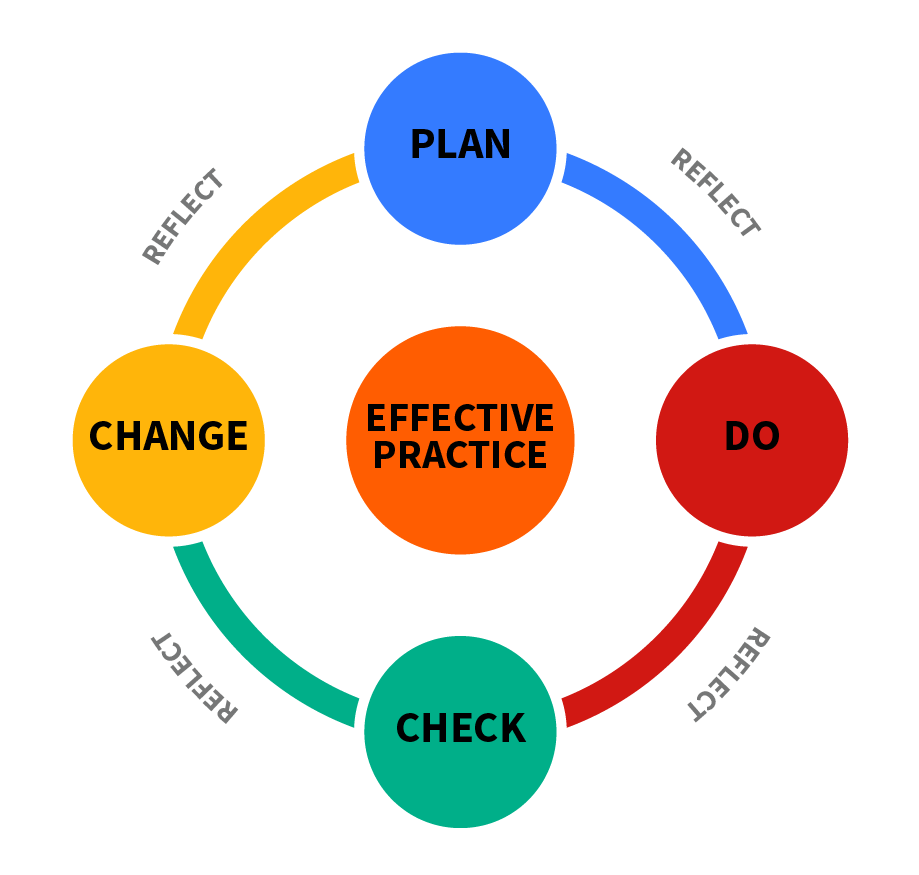
"I am tempted to say that whatever doctrine the armed forces are working on now, they have got it wrong. I am also tempted to declare that it does not matter. What does matter is their ability to get it right quickly, when the moment arrives......When everybody starts wrong, the advantage goes to the side which can most quickly adjust itself to the new and unfamiliar environment and learn from its mistakes."In a complex and changing environment, it is the agile and the adaptive who survive. Everyone starts wrong, but the adaptive get righter quicker.
This is as true in the marketplace as it is on the battlefield. Planning is essential, but plans are not enough. No plan of battle ever survives contact with the enemy, and no commercial strategy or marketing plan survives contact with the market, the customer and the competition.
If Howard is right for business as well as for the Military, and that the advantage goes to the organisation that most quickly learns from its mistakes, then Knowledge Management and Organisational learning is a survival strategy.
An organisation must be confident enough to embark into the unknown, prepared to modify or even abandon processes, practices and plans, based on focused and high-quality learning. Knowledge Managers must attend to
If Howard is right for business as well as for the Military, and that the advantage goes to the organisation that most quickly learns from its mistakes, then Knowledge Management and Organisational learning is a survival strategy.
An organisation must be confident enough to embark into the unknown, prepared to modify or even abandon processes, practices and plans, based on focused and high-quality learning. Knowledge Managers must attend to
- Increasing the clock speed" of organisational learning to increase your adaptation rate
- Removing the waste from the knowledge supply chain to make KM more lean and efficient
- Maximising signal to noise in knowledge transfer to make the learning signal clearer, and
- Bursting the knowledge bubbles to make sure the decision makers are open to new knowledge.
An organisation can then learn its way forward in an agile way, learning from mistakes and successes, "sounding the way forward" to find the safe passage. This is as true in the post-Covid recovery world as it ever has been.
Knowledge has a shrinking half-life, and where knowledge has a short half-life, Knowledge Management is not about documenting and protecting "what you know", it is about how fast you can know something new, and how easily you can let go of the old. That's what will win you the battle with the competition.
Colonel Ed Guthrie of the US Army used to liken it to the aerial dogfights in world war 1.
Colonel Ed Guthrie of the US Army used to liken it to the aerial dogfights in world war 1.
"In those days" he used to say, "It was about getting inside the other guy's turning circle. That's what would win you the engagement. Now it's about getting inside the other guy's learning circle."
So whatever your business plan is, it's wrong, and it does not matter. What does matter is your organisations ability (enabled by Knowledge Management) to quickly adjust itself to the new and unfamiliar environment and learn from its mistakes and successes.
Wednesday, 9 December 2020
3 words that put "Management" in Knowledge Management
The difference between Knowledge Sharing and Knowledge Management lies in three words - systematic, routine, strategic.

Often this comes from the assumption that "knowledge management" means "the management of knowledge", and that knowledge, being intangible, is incapable of management. We already know this is not a sound reason to avoid the term, as "knowledge management" can also mean "knowledge-centred management" or "management with knowledge as a focus", and there are plenty of intangibles with their own management systems.
Knowledge sharing is also only part of knowledge management, which also includes knowledge seeking, knowledge synthesis, knowledge creation, knowledge re-use etc.
However there is another difference between the two, a difference which justifies the use of the term "Management", and a difference that can be summed up in three words.
Systematic
Knowledge Management should be part of a joined-up management system - not relying on ad-hoc use of a tool, or selection from a toolbox, but a systematic approach and the application of a full framework.Routine
Knowledge Management should be embedded into the routines of work, rather than being an occasional add-on, or something separate. It should be a component of the work cycle.Strategic
Knowledge management should support the business strategy, should focus on strategic business knowledge, and should have a clear line of sight to the strategic business drivers (as in this excellent example from Oxfam).If you are approaching the way knowledge is created, discussed, shared, synthesised, stored, sought and applied, in this way - systematically, routinely and strategically - then you can justifiably use the word Management to describe what you are doing.
Monday, 30 November 2020
Knowledge Management Strategy at a regional political level - guidance from the WHO
In 2006, the World Health Organisation published a regional KM strategy for Health in Africa. This suggested approach for developing a regional KM strategy could potentially be used in other political contexts.
 |
| Image under CC licence from pxhere created by Mohamed Hasan |
Knowledge Management is not just for industry or for individual organisations; it is also of value politically and regionally. The concept of the Knowledge Economy, for example, is recognition that knowledge is an asset to countries and to regions.
To date, there seems to be no consistent view for how KM can be applied at a country economy level, and many governments focus less on KM and more on promoting research in order to support a knowledge economy. Even the World Bank seems to miss KM as a pillar for a knowledge economy.
However if we move away from finance and into the realm of Health, there is a much clearer view of how KM can help governments and regions perform better.
The WHO strategy linked in the header does just that, and sets out a set of steps whereby KM can be improved in countries and regions. The result should be better performance in knowledge-based work; including health, but also including other knowledge work - the sort of work that supports a knowledge economy.
The steps proposed by the WHO are as follows. My commentary is provided in bold.
Priority interventions
Advocacy. Knowledge Management for health should be promoted by policy-makers at the highest level of government and by international and regional development partners. This should apply to other contexts as well. Eg in a knowledge economy, economic KM should be promoted by policy makers. In a safety context - safety KM. etc,
Data and evidence generation. A situation analysis of KM at regional and country levels through surveys and special studies should be performed and regularly updated. Such analyses should generate evidence; identify best practices; consider explicit, tacit, community-based and traditional knowledge; and locate available expertise. This can also be done in other contexts.
Development of policies and plans. Country-specific policies and plans should be developed for further progress in KM and to ensure that KM is embedded across the health system, including all programmes and projects. This can also be done in other contexts. If a country or a region has plans to develop a knowledge economy, then this needs to be set into policy. We see this to some extent in the Science, Technology and Innovation policy in the UAE, and similar innovation policies in the Middle East.
Setting of standards and norms. Appropriate norms, standards and regulations are the key for sustainable progress in KM, especially in e-Health and telemedicine. They should be based on the best international practices and adapted to the national context. Now we have ISO 30401:2018, the setting of standards and norms for KM will be much easier.
Capacity-building. Capacity concerns three main components of KM: people’s skills and behaviour, managerial processes and technologies. The key approaches to be implemented include training and continuing education, staff incentives, institutional mechanisms and effective use of ICT infrastructure. This is definitely needed.
Fostering partnerships and mobilizing appropriate resources. The global momentum in favour of Knowledge Management and Information Technology development created by the WSIS and other international and regional initiatives should be actively used for building strong partnerships at country and regional levels, and for mobilizing adequate resources for KM.
Effective knowledge generation, sharing and application. Countries and all stakeholders should foster Knowledge Management across health systems for health development and equitable health outcomes. KM, including learning, sharing and application, should be an integral part of the managerial culture in health sectors and systems. Special attention should be given to health and health-related tacit, traditional and oral knowledge, particularly in rural areas. This includes extensive use of mechanisms such as communities of practice and ICT-assisted tools. KM should be strongly associated with health information systems, health research and human resources development. And of course all of this is true of other contexts, not just health.
In previous blog posts on the knowledge economy I have already suggested training and the application of standards, and also suggest that knowledge-related tax breaks and government advisors would be useful as well.
If countries and regions are serious about knowledge as a resource to drive a knowledge economy, then then the 7 suggestions above from the WHO can be used as a blueprint for policy makers.
Monday, 14 September 2020
4 types of KM plan
Knowledge Management plans exist at many scales. Here are 4 of them.
 |
| KM planning session |
Implementing KM is a project, and a project needs a plan. However KM can be implemented at many scales, and many variants of KM plan may be needed. In this post we describe 4 of them:
- The organisational KM strategy
- The organisational KM implementation plan
- A KM plan for a project
- A KM plan for an operational department
KM strategy
A KM strategy is the framework document that sets the context, direction and principles for KM implementation. The strategy ensures that the Knowledge Management implementation proceeds in a way that is aligned with the current business approaches, is targeted on the right problems, and is coordinated with other existing change initiatives.One of the key components in the strategy is an analysis of “What Knowledge do we most need to Manage? These strategic knowledge areas are identified through discussion at the highest level (CEO if possible).
One of our clients had an excellent discussion with their senior management, while preparing their KM strategy, on this topic of key knowledge, and were given a strong steer to “focus on driving growth in new consumer markets, through knowledge sharing networks”. That decision set their KM strategy, and formed a framework for the next 4 years of KM activity.
KM implementation plan
Once you have your strategy in place, you can start on your implementation planning. This is where you plan your activities and resources, in order to develop and embed an effective KM “system”. The plan will be based on- the Knowledge Management strategy
- an assessment and benchmarking of your current state of KM
- an outline “desired end state” (KM framework)
- a staged, change management approach
- a full analysis of the risks to Knowledge Management delivery
The KM implementation plan maps out the steps from the current state to the end state, guided by the strategy and the assessment. It defines your timeline, and the resource needs.
Project KM plan
The project-level Knowledge Management plan is a device that allows KM to be fully embedded into project controls, at the same level of rigour as risk management, or document management. It allows the assignment of accountabilities to individual project team members, and allows these accountabilities to be monitored and reviewed. Some organisations also address.A KM plan has three main components.
- A Knowledge Register, which defines the key areas of knowledge needed by the project (“key knowledge inputs”), and the assigned actions to make sure this knowledge is accessed. It also defines the key areas of knowledge which the project will be learning about, and which they need to share with the rest of the organisation (“knowledge outputs”), and the actions to make sure this sharing happens.
- A KM Protocol, which defines the system by which knowledge will be managed in the project. It defines the roles and accountabilities, the technologies (such as lessons databases) which will be used, and the processes which will be applied and when they will be applied as part of the project timeline.
- An implementation plan for the project, to make sure the protocol is ready to use. This will require training of staff in the tools and technologies, induction of new staff, registration of staff onto the relevant communities of practice, installation of technology onto people’s desktops, and so on.
The plan is created at a KM Planning work-shop, early in the project, held as part of the set-up activities; about the same time the team are developing their risk management plan, their document management plan, and other front-end planning activities.
Operational KM plans
Just as a project KM plan is built into the planning and review framework of a project, an Operational KM plan needs to be built into the operational planning and review framework. This should be done as follows;- During the annual planning cycle, the operation will agree its annual objectives and budget. The next step will be to create the annual KM plan.
- The KM plan will contain the same components as a project KM, though the key topics in the knowledge register will be set by the new operational objectives. The operational management team will get together for a KM planning workshop, and start with the question – “What do we need to know (or to learn) in order to deliver our operational objectives”?
- The main deadline for the operation to capture new knowledge for other operations will be at the end of the year, when they review performance against objectives, and ask “What were the causes of any deviation from planned performance (either a positive or a negative deviation), and what have we learned from these to improve next year’s performance”? They will also review the application of the KM plan through the year.
- The operational department may also assess the level of management of key operational topics or knowledge domains, for example through a KM audit or Scan. If any knowledge domain needs to be better managed (better documented for example, or updated, or a community of practice initiated), or is at risk of loss through potential departure of key experts, then the KM plan will define the remedial actions that need to be taken.
Contact Knoco for help with KM planning at all scales
Tuesday, 18 August 2020
An evaluation of a KM strategy - example from Oxfam
It's not often you see a public review of a KM Strategy - here is a good example.
 |
| Image by Stefan Erschwendner, on Flickr |
More recently Oxfam have published an evaluation of how well that strategy has performed, including an entire section devoted to knowledge and learning. This is excellent practice, and provides an example of how such evaluations may be conducted.
I am not going to reproduce that evaluation here - there are pages and pages of it - but want to identify a few points.
Firstly, I like the Vision they present:
Oxfam expressed its ambition of becoming a knowledge-based organization in this way: “A modern organization is about knowledge and how we accumulate it and how we share it amongst each other and the world.” (Oxfam, 2015: 4. Internal) This ambition comes with the demand that knowledge and learning be used internally to implement better quality and more impactful programs (and more), and externally to better position Oxfam to influence change.
Oxfam's investment in knowledge has been clear, including regional "learning labs", increased research effort, new KM-focused processes and technology, 5 "global knowledge hubs", and a number of thematic networks (communities of practice). Examples are cited of where these investments have added significant value, while recognising that there are still opportunities for improvement, especially in "closing the learning loops" (they say "A knowledge and learning approach to unlocking this beneficial cycle would mean that we insist on the use and re-use of knowledge"), and also in ensuring that knowledge spreads laterally through the organisation, and out to stakeholders and others.
I very much like the following statements:
Focusing on its people is the best step that Oxfam can take to strengthen its efforts to become a knowledge-based organization. All Oxfamers hold knowledge and the ability to learn and help others learn... Our task is to let them know that every time they tweak a process they are engaged in because last time it did not work so well, or help someone else fix a process that is not efficient, or capture what they have done and send it to a colleague, they are using knowledge and learning. It is the responsibility–and more importantly,the right–of all Oxfam colleagues and our partners to develop and use strong and consistent reflection and learning practices in support of individual and organizational goals. This is true “knowledge citizenship.”
Also
If knowledge and learning processes and practice are not immediately related to what people do, applied to their daily goals, jobs, tasks and approaches, it will continue to be an add-on that is not fit-for-purpose. We must first understand and internalize that functioning as a knowledge-based organization is not a task, an initiative, or a formal network or hub we set up but a way of being: a way of thinking, a way of communicating, and a way of working. Then, we must communicate that we value what people learn through their work and how they help others to problem-solve. Finally, we must reward efforts to reflect on both success and failure, to explicitly build on that in future efforts, to question why we do something the way we do it, and to try the same thing differently.
All of this is very good KM practice.
Treating KM as a strategic enabler, putting investments in place to improve KM, and then reviewing both the strategy and its KM components, are things that every organisation can copy. If Oxfam learns from the review quoted here, and puts in place activities to further improve knowledge and learning, then even greater things are possible in the future, and their KM afforts will deliver more and more value for Oxfam, their donors and partners, and their beneficiaries.These behaviours of review are also prompted by ISO 30401:2018, which requires that a knowledge management system be regularly audited, that corrective actions are taken, and that the system is continually improved.
See if you can do something similar in your own KM program.
Monday, 17 August 2020
KM strategy map - example from Oxfam
A KM strategy map is a great way to visually connect KM activity and organisational strategy. Here is an example.
Last week I blogged about Knowledge Management at Oxfam, and shared their Rights and Responsibilities table. In today's post I use Oxfam again, as a demonstration of how to create a strategy map in order to clarify the link between the KM program and organisational strategy. This provides a case history of how Knowledge Management can directly and explicitly support the vision and strategy of an organisation.
I constructed the strategy map below myself, based on the Oxfam 2013-2019 strategic plan.
I constructed the strategy map below myself, based on the Oxfam 2013-2019 strategic plan.
 |
| What a Strategy Map for Oxfam might look like |
The Oxfam Strategic Plan 2013 to 2019 is entitled "The Power of People against Poverty". The vision of Oxfam is as follows
Oxfam’s vision is a just world without poverty: a world in which people can influence decisions that affect their lives, enjoy their rights, and assume their responsibilities as full citizens of a world in which all human beings are valued and treated equally.
To deliver this vision, Oxfam has set 12 strategic goals - six of them outcome goals and six of them operational (internal organisational development) goals.
These are shown on levels 2 and 3 of the map, and are as follows
SIX (Outcome) GOALS TO CHANGE OUR WORLD
- The Right to be Heard – People claiming their right to a better life
- Advancing gender justice
- Saving lives, now and in the future
- Sustainable food
- Fair sharing of natural resources
- Financing for development and universal essential services
SIX (Operational) GOALS TO CHANGE THE WAY WE WORK
- Creating a worldwide influencing network
- Program quality, monitoring, evaluation and learning
- Strengthening accountability
- Investing in people
- Cost effectiveness
- Income strategy
Knowledge management appears as a support to three of those OPERATIONAL GOALS
- Operational Goal 2 Program quality, monitoring, evaluation and learning
- Innovation, learning and knowledge management increase the quality and impact of our program work and that of our partners
- Define a focused learning strategy based on the change goals
- Share learning and good practice through networks of staff and create a reflective culture based on learning from frontline program experience
- Translate learning into new program policy and guidelines and to influence external stakeholders
- Operational Goal 4: Investing in people
- Systems, processes and structure: Oxfam maximizes its effectiveness through increased use of shared services
- Invest in systems and processes to enable people to collaborate, share knowledge and learn together
- Operational Goal 5: Cost effectiveness
- Efficiency: Oxfam will achieve optimum efficiency and convert the returns into delivery of programs
- Align ways of working across affiliates and rationalize structures;
- After business process analysis and revision, move to one process for all support services;
- introduce one policy and strategy across affiliates, for example, in communications;
- invest in knowledge management across the confederation;
For one of the operational goals, KM is a direct objective, supported by a learning strategy, network-based learning and learning from experience. For the other two, KM is an enabler to operational effectiveness and operational efficiency.
Analysis
The strategy map above is a good way to tie this together in a visual way, but we can see from the text that KM is being deployed at Oxfam in a very strategic way. Through the cascade of goals and objectives you can see how Knowledge Management directly supports Oxfams vision.
Through introducing KM, collaboration and organisational learning Oxfam will improve program quality, make people more effective and make the organisation more efficient in delivering the six goals needed to build a just world without poverty.
If only all organisations had such a clear model of how KM supports their vision! Well done Oxfam.
Monday, 3 August 2020
KM - who is in the driving seat?
A knowledge management strategy is not set in stone. It is not a fixed, immutable 5-year roadmap - it needs to change as the business landscape change. But who should steer these changes? Who is in the driving seat?
 |
| Image by Ivan Radic on Flickr |
Does the KM team drive the strategy? Surely not - that would be a case of the horse leading the cart. Steerage needs to come from the business, not from KM.
Is is the KM sponsor? Potentially yes, but the sponsor is usually a single person with a single view point.
In order to get a representative steer from across the business, the best solution is to set up a steering team for your KM implementation. This is a team of diverse senior leaders from within the main business units and functions, who help direct and drive the KM implementation effort by providing guidance, advice and challenge.
A successful steering team should powerful in terms of composition (senior managers with the titles, expertise, reputations, relationships, leadership skills and access to support and resources), their mutual level of trust, and their shared objectives. KM will usually need such a team to drive the change and steer the program, particularly in large and complex organizations.
The steering team will also ensure that the business is fully represented in the planning and decision making within the KM implementation. Committee members should represent the main functions (IT, HR, Quality etc) and the main lines of business (Marketing, Sales, Production, etc) in order to represent all the primary stakeholders. For example, in one Oil Company KM project the steering team consisted of:
- MD - Planning
- DMD - Marketing Operations
- Deputy Chairman & DMD – Planning & Gas
- Deputy Chairman & DMD – Refinery
- Vice President & Chief Operating Officer
- DMD – Joint Operations
- Manager – Information Technology
The steering team is not a decision making board, but an advisory board to the sponsor and so to the KM leader. They give decision making authority in the sense that decisions will be well informed, relevant to the business, and likely to garner support.
The steering team members do not have to be KM converts. In fact, it is probably useful if some of them have some level of scepticism; to add a level of real business challenge to the program, and to ensure that objections are met and resolved early on.
The steering team can also act as ambassadors for the KM program in their own part of the business. The manager of IT, for example, can ensure that the needs of the KM program are honoured by the IT department, and the Chief Operating Officer can help identify and facilitate KM pilots in the operational departments.
The steering team should meet on a regular basis; for example quarterly. It should be chaired by the KM sponsor, in order to support the sponsor’s review of the progress and performance of the KM program, and to advise on next steps.
Through the use of such a mechanism, the KM program can use the wisdom of the business to navigate KM through any strategic changes, and ensure it delivers maximum value for the business.
Thursday, 23 July 2020
Free access to knowledge, or structured access to knowledge?
Here is another excellent article from Tom Davenport, one of the clearest writers on the topic of Knowledge Management, making the case for a structured "just-in-time" approach to the supply of knowledge.

Tom starts his article as follows:
In the half-century since Peter Drucker coined the term “knowledge workers,” their share of the workforce has steadily grown—and so has the range of technology tools aimed at boosting their productivity. Yet there’s little evidence that massive spending on personal computing, productivity software, knowledge-management systems, and much else has moved the needle. What’s more, a wide variety of recent research has begun suggesting that always-on, multitasking work environments are so distracting that they are sapping productivity.He goes on to contrast two approaches to the provision of knowledge
- A "free access" approach where the organization provides free access to a wide variety of tools and information resources, assuming that the individual employees will do the selecting, prioritising and filtering and find the knowledge they need to conduct their work.
- A "structured" approach where knowledge is delivered in the context of tasks and delivereables, providing just in time knowledge at the point of need. In this case the prioritising has been done before the knowledge reaches the knowledge worker.
Long-term readers of this blog will recognise these options as the "knowledge firehose and the knowledge faucet", or will recognise the second as the lean knowledge supply chain. The first rapidly overwhelms the knowledge worker, the second efficiently provides the knowledge they need with no additional waste.
However Davenport adds a nuance. He suggests that the free access approach may be valid among the autonomous knowledge workers with high levels of expertise, who can invest the time and energy needed to filter the firehose and draw out the selected nuggets which may make a subtle difference.
The problem with providing free and unstructured knowledge to all knowledge workers is the associated productivity loss. Here are some of Davenport' statistics.
- One survey revealed that over a quarter of a typical knowledge worker’s time is spent searching for information.
- Another found that only 16 percent of the content within typical businesses is posted to locations where other workers can access it.
- Average knowledge workers access their e-mail more than 50 times, use instant messaging 77 times, and visit more than 40 Web sites a day.
- A UK study suggests that social-media use by knowledge workers costs British companies £6.5 billion a year in lost productivity.
Davenport contrasts this with the structured supply of knowledge using workflow technologies. Here productivity is the major gain - by providing people with the knowledge they need without them even having to look for it, task-based productivity can rise by 50%. The downside of these systems is the lack of a personal touch - the lack of the social component.
However there is always a combined approach. Through Connect and Collect we can provide a push-based supply chain of explicit knowledge to the knowledge workers, linked to their task workflow (or prompt them to pull structured knowledge from a structured knowledge base) and in parallel allow them to pull unstructured tacit knowledge from a community of practice. A Knowledge Management Strategy can be used to determine the balance between these two approaches for different knowledge topics.
Davenport concludes his article as follows:
It’s time to think about how to make [the knowledge workers] more productive by imposing a bit more structure. This combination of technology and structure, along with a bit of managerial discretion in applying them to knowledge work, may well produce a revolution in the jobs that cost and matter the most to contemporary organizations
Thursday, 25 June 2020
The 10 principles behind successful KM strategies
I blogged last week about the 5 basic principles behind successful Knowledge Management. Let's take that one step further, into the principles behind a KM Strategy.
When Stephanie Barnes and I wrote our book "Designing a successful KM Strategy" we included a chapter on the ten principles behind KM strategies. These are not just principles about KM, they are principles about how KM should be introduced, so they go beyond the 5 principles in last week's blog post.
Here are our 10 principles.
1. KM implementation needs to be organisation-led; tied to organisation strategy and to specific organisation issues. This is the fundamental behind KM implementation - the number one success factor (if present) and a common reason for failure (if absent).
2. KM needs to be delivered where the critical knowledge lies, and where the high value decisions are made. Knowledge Management needs to focus, and to focus on business-critical or business-strategic knowledge. This might be at operator level (the operator of a plant, the driller of a deepwater well, the pilot of a passenger aircraft) or it might be at senior management level.
3. KM implementation needs to be treated as a behaviour change program. Failure to
realise this is failure reason number one for KM programs.
4. The endgame will be to introduce a complete management framework for KM. Unlike a KM toolbox, a Knowledge Management framework is a joined-up system of roles, technologies, processes and governance. The ISO standard for KM, ISO 30401:2018, describes the framework as a "Management System".
5. This framework will need to be embedded into the organisation structures. If you don't embed it in the business, KM wont survive. KM roles need to be embedded into the organigram, processes into the high level working process, technologies into the core technology set, and governance into the organisational governance structure. Without this, Km remains separate and optional. Many of the high profile failures of KM are due to a failure to embed.
6. The framework will need to include governance if it is to be sustainable. Governance is the combination of structure, expectation, support and monitoring that any management discipline requires if it is to be applied systematically.
7. The framework will be structured, rather than emergent. I explain this here.
8. A KM implementation should be a staged process, with regular decision points. Don't rush in and try to implement KM in one go. Take your time, stage the process, and learn as you go. Treat implementation as if you were launching a start-up, and make sure you have a viable business model.
9. A KM implementation should contain a piloting stage. This is crucial both to test the framework, and to create the social proof you will need for the culture change program. This also allows agile development of the KM framework, informed throughout by user feedback.
10. A KM implementation should be run by an implementation team, reporting to a cross-organisational steering group. In other words, just like any other change program or project! Choose the team wisely - they have a difficult job to do.
These are our 10 principles. Many of these are embedded within ISO 30401:2018; the ISO management systems standard for KM. Numbers 1 through 7 will be satisfied if you follow the guidance within the standard. 8, 9 and 10 address the structure of the implementation rocess itself which is outside the scope of the standard.
Tuesday, 9 June 2020
Balancing long term and short term benefits in KM

The short-term/long-term balance is critical in KM. The business of KM is long term culture and behaviour change, but the company will have no patience for the long term, if you do not deliver benefits in the short term.
Many companies seem to start instinctively with Push. "Let's share our Best Practices" they think. "Let's find what we are doing well, and then look for opportunities to replicate this elsewhere in the company".
Knowledge push is "a solution looking for a problem". Seductive though this idea is, it is a long-term game and won't deliver the quick wins,.
Let's imagine you capture some best practices on mergers, or on outsourcing, or on implementing ISO. It may be a long time before another merger, or another outsourcing, or another ISO implementation. Maybe nobody is ready to adopt these Best Practices right now. The gains will come at some point in the future, when the next merger or the next acquisition or next ISO implementation is on the cards.
Pull, on the other had, delivers quick wins. Knowledge Pull is "a problem seeking a solution".
Start with a problem, and seek for the knowledge to solve the problem.
Take, for example, Peer Assist; a meeting held by a project team with a problem, who are seeking knowledge from others to solve the problem. The knowledge shared through the Peer Assist will find an instant application and a willing audience. There should be little or no "Not Invented Here".
Knowledge Pull delivers the short term wins, Knowledge Push delivers the longer term.
Some time in the future, there will be another merger, or another outsourcing, or another ISO implementation, and then the knowledge will come in really handy. And then later there may be another another merger, outsourcing, ISO implementation. Then another. Push reaps benefits over the long term. Capture knowledge once, re-use it twenty times. Pull, on the other hand, reaps instant benefit, but maybe only once. It solves an instant problem, but leaves no trace.
Any well-balanced KM strategy requires Push and Pull, but don't count on Push for quick wins, or Pull for long term benefit.
Wednesday, 3 June 2020
Why "Finding Better Knowledge" is 100 x more valuable than "Finding Knowledge Better"
2 years ago I posted an article where I suggested that a KM strategy based on "finding better knowledge" was more valuable than a strategy based on "better ability to find knowledge". Now we have a figure for how much more valuable.
In the 2018 post I suggested that there are two basic ways in which Knowledge Management can add value to an organisation:
- Finding Knowledge Better;
- Finding Better Knowledge.
The first approach focuses on better search, better content management, tagging, taxonomy, portal structure, and so on. The intent is to have "documented knowledge at your fingertips", and the result is faster and better access to documents and documented knowledge. The value of this approach is that it saves people time in searching for relevant material, and so drives operational efficiency.
The second approach focuses on learning from experience, on capturing lessons, on connecting people into networks and communities of practice, on collaboration, and on synthesising knowledge into current "best" practices. The intent is to create learning loops and channels in the organisation, for improvement of practice, so that knowledge is continually improved. The value of the second approach is in delivering better decisions, and delivering better results, not just faster decisions. The value comes through improved operational effectiveness.
Often the choice between these two is a clear choice, and the two options are mutually exclusive. To get good knowledge requires time and conversation; good knowledge is rarely fast, and fast knowledge is rarely good.
In my 2018 article I suggested that the value of the second approach, is at least an order of magnitude greater than the first; maybe 2 orders of magnitude. I did not have the statistics to test this estimate at the time.
Now I do.
In the three Knoco KM surveys in 2014, 2017 and 2020 we asked people to tell us (among other things) their business drivers for KM, in order of priority. Business drivers included operational efficiency and operational effectiveness, as discussed above. We also asked them, where they could, to tell us how much value in $USD their KM program has delivered. So we now have the data to test the value of these two approaches.
The graph below shows the average value for the organisations grouped by their priority business driver.

Now I do.
In the three Knoco KM surveys in 2014, 2017 and 2020 we asked people to tell us (among other things) their business drivers for KM, in order of priority. Business drivers included operational efficiency and operational effectiveness, as discussed above. We also asked them, where they could, to tell us how much value in $USD their KM program has delivered. So we now have the data to test the value of these two approaches.
The graph below shows the average value for the organisations grouped by their priority business driver.

- Organisations whose primary driver was to increase organisational efficiency, delivered on average $1 million from KM. For these organisations, the most common KM strategy was to improve access to documents.
- Organisations whose primary driver was to increase organisational effectiveness, delivered on average $106 million. For these organisations, the primary KM strategy was divided between improved access to documents, connecting people through communities and networks, and better lesson learning.
- The business driver of "providing a better service to customers and clients" is also a type of operational effectiveness driver.
So we can see that in this dataset, operational effectiveness, which comes from finding better knowledge, is actually 100 times more valuable than operational efficiency, which comes from finding knowledge better/more easily. Thats 2 orders of magnitude better.
Bear this in mind when you set out your KM strategy and business case. If the business case is based on saving people time through better access to knowledge, you may be underselling the value by a factor of 100.
Tuesday, 15 October 2019
What are the most popular strategic elements of KM?
What do companies around the world identify as their primary KM strategic approaches? This was another area we wanted to explore in our two global surveys of Knowledge Management.
One of the questions in our surveys therefore covered the topic of strategic focus areas for KM, and we asked the participants to prioritise, from a list of 11 potential approaches, those most important to them.
The pie chart below shows the frequency of each of these approaches as "first choice." The approaches are of course not exclusive, and most respondents applied many of these. However

- 19% of respondents said their highest priority within their Knowledge Management strategy was to connect people through communities of practice or networks;
- 17% chose "better access to documents"as their highest strategy. This is the average of the two surveys, and if you look at the 2017 survey alone, this was the most popular choice. However the 2017 had a much higher percentage of contributors from the legal sector, where this is their default approach;
- 13% saw Knowledge Retention as their highest priority approach;
- For 12%, Learning from experience was the most important;
- 10% chose "Creating and providing access to best practices"
- For another 6%, Innovation was the most important;
- Provision of knowledge to customer facing staff was also the primary strategy for 6%
The remaining options all received small percentages of the votes.
Some of our respondents pointed out that there were maybe 3 or 4 strategic options on the list with more or less equal priority - Communities of Practice plus Learning from Experience was the most common combination.
The choice of primary strategy varied to some extent with the industry -
- "Connecting people" was most popular in Aid & development, Construction,and Oil and Gas
- "Learning from Experience" was most common in the military and emergency services
- "Development of best practice" was the preferred focus for the military
- "Better access to documents" was the area prioritised by the legal firms, the public sector and the financial sector.
What does this mean?
I think we can take the results of this question and assert that it shows what the world of KM practitioners tends to choose as primary KM strategies.On the whole, Knowledge Management seems to be recognised as a combination of Connecting People, Learning from Experience, provision of access to documents, retention of knowledge, creation of best practices, and innovation. Individual industries favour one of these six over the others, but in combination they seem to pretty much map out the mainstream field of KM as it is currently understood.
Wednesday, 4 September 2019
Knowledge of product, knowledge of process, knowledge of customer
Some companies make things, some do things, some maintain relationships. Process companies, Product companies, Client companies - different focus, different business, different approach to KM.
OK, so that is an oversimplification - most companies are a mix of Doing, Making and Relationship Management; they have product departments where they Make things, and marketing departments where they Do things, and sales/service . However there are still three types of KM approaches; focusing primarily on Product, Process and Client.
The Ternary attached here (from our global KM surveys) shows how the balance between these approaches varies by industry sector.
The Ternary attached here (from our global KM surveys) shows how the balance between these approaches varies by industry sector.

For those of you for whom ternary plots are unfamiliar, the closeness of a datapoint to each of the three corners represents the degree of importance of that element.
Process-based KM.
A typical process-based organisation would be the oil sector, near the bottom right of the plot. They don't make things, they do things, and their KM approach is all about the development and improvement of Practice. The focus is on Practice Improvement. Communities of Practice, Best Practices (or whatever you prefer to call them), Practice Owners - the entire focus is on knowledge of Practice, Practice Improvement, and Doing Things Better.Utilities and some of the non-profits are similar, as are the military.
Product based KM
A typical product-based organisation would be an aircraft manufacturer or a car manufacturer. They exist to make things, and their KM approach is all about the development and improvement of Product. They develop product guidelines.In DaimlerChrysler, their Electronic Book of Knowledge was about motorcar components, and their tech Clubs were more Communities of Product than Communities of Practice. The experts are more likely to be experts on a product, than experts on a practice area. With the more complex products, were design knowledge is critical, KM can become Knowledge Based Engineering, with design rationale embedded into CAD files and other design products.
The KM focus in Legal firms is also Knowledge of Product; the product here being legal advice.
The figure above shows that none of the sectors surveyed is purely focused on Product - there is always a mix of Product and Practice, but the closest points to the top corner are Legal Services and Manufacturing
Customer based KM
A typical customer-based organisation would be a government department. They exist to serve a customer base. They are not making anything (other than policy) and the KM focus is on the customer.Customer focused Knowledge Management consists of developing and documenting a knowledge of the customer (through Customer-focused communities and through research), and may also involve the provision of knowledge to customers, and the involvement of Customers in discussion through communities and social media.
The plot above does not show any sectors to be dominated by customer knowledge, but the points closest to the bottom left are Government Admin, and Aid and Development.
Balancing the types of knowledge
The danger in KM comes when you try to impose a solution where it does't apply.KM should be pragmatic, and consist of "horses for courses", rather than a one-size-fits-all approach. This is also true for divisions within large companies.
While the projects division may need Communities of Practice, perhaps the division that makes the products needs Communities of Product, so that Knowledge of Product can be transferred across company boundaries. Perhaps the traditional tools of Learning Before, During and After need to look at Product knowledge as well as Practice knowledge, and look for improvements in Product as well as improvements in Practice.
Then the Marketing division or sales division might need Communities of Customer, so that knowledge of different customer groups can be developed, shared and re-used.
Know the type of knowledge that's important, and set up a KM framework that suits.
Friday, 30 August 2019
A twin-strategy approach to implementing KM
Implementing Knowledge Management requires two parallel strategies, like the two prongs of a fork.
There was a very interesting article by Ron Bascue in the 2011 Fall edition of the US Army KM newsletter (now no longer available online), about a twin-strategy approach to delivering a Knowledge Management strategy.
"Getting to a fully developed KM strategy takes significant time. And while the assessment and strategy development process is going on, the parent organization is moving forward while the clock is ticking on the KM organisation to show its value."So Ron recommends a two-pronged strategy to address this issue.
"Our approach incorporates two lines of effort; one a strategic development effort and the other focused on providing immediate tangible results - a series of quick wins".Ron recommends Kaizen events as a way to deliver the quick wins, each of which should solve a business problem or improve an internal process. However a number of Knowledge Management processes could be used, depending on the nature of the problem to be solved;
- After Action Reviews for improving team delivering,
- Retrospects for capturing team lessons,
- Communities of Practice for improved knowledge sharing, Peer Assists for bringing knowledge into projects,
- Knowledge Assets for creating knowledge resources, and so on.
Ron's two-pronged approach is also what Knoco recommends.
We refer to the Quick Wins as "Proof of concept" events; small interventions with a Knowledge Management tool or process during the Strategy Creation phase, just so that people can see KM in action, and realise that "Yes, it can work here. No, it's not all smoke and mirrors. Now I understand".
However even after the strategy is complete, the KM team needs to continue to solve business problems. However rather than small proof of concept exercises, you move on to larger scale Pilot Projects as part of the Implementation program.
By solving business problems, the KM team continue to show the value, and engage people in the process without requiring them to buy in at strategic level.
Follow Ron's advice (and ours) - make pilots and "proofs of concept" part of your twin-strategy Knowledge Management implementation.
Wednesday, 24 July 2019
Analysis of a strategic KM role description
This post is an analysis of a KM role description, taken from a recent job vacancy, identifying the core elements of a strategic KM leadership role.
 |
The full vacancy note appears at the end of this blog post, and I would like this as an example of a high level KM leadership role, driving KM in full support of business priorities. I point out a number of elements in this role description which combine to make this an excellent example of a strategic role KM. I have marked these elements *1* etc, and discuss them below.
Key elements (my analysis)
- The first point is that this role starts from a clear Vision for KM; to become a learning organisation where ideas insights, lessons and best practices are shared and applied for business benefit ("leveraged"). This is good - clarity of vision leads to clarity of role.
- This role builds on a solid foundation - Shell have been a leader in the KM field for decades; winners of the global MAKE awards from 2009 through 2016, and have all of the basics of KM in place. This role is not about introduction or implementation of KM, it is about application.
- For Shell, the focus of KM is on delivering value, measured in monetary savings through efficiency improvements. The Vision mentioned above translates into profit. There is absolute clarity on this.
- This role is part of a strategic plan, with defined strategic priorities. The strategic priorities are to strengthen and extend what already exists (with a main focus on communities of practice), to bring in new areas of technology where these may extend KM capability, and to strengthen existing internal linkages.
- Number one accountability is value delivery. The job holder will be measured against the value delivered, with a $1 billion target. This is not a support role where the role-holder can work in the shadows; this role is about serious enabling of the business through KM, with a big-money target at stake in the very short term.
- But there is a longer term aspect to the role - to shape KM for the future
- And to continue to evolve Shell's KM Framework.
- The last three requirements really speak to the nature of this role in using KM to deliver value to the business. First the holder must be able to translate business needs into KM solutions. They need to be versed in Applied KM.
- Secondly they need change management experience. This is one of the main competencies of a KM leader.
- Thirdly they need excellent diplomacy, negotiation, communication and stakeholder management skills. This person will not deliver $1 billion in value on their own - they will do it in partnership with the business.
Role description follows; my notes above are indicated by the asterisk-bracketed numbers.
Knowledge Management Manager
The only sustainable competitive advantage is an organization’s ability to learn faster than the competition – Peter Senge. *1 * We want to make Shell a learning organization. Where people can leverage all the lessons and best practices learned in one asset or project and leverage those in another asset or project. Where we have vibrant communities that share ideas and insights across the world.
We have taken the first steps
*2*Over the past 6 years, we have built a comprehensive set of structures, processes and applications supported by Working Out Loud behaviors, and implemented this Solution across Shell’s Technical Functions and C&P. This program has touched approximately 43,000 Shell staff in Technical Functions. *3*A total value of over US$480 mln has been delivered through application of key practices in Shell’s business activities. Our ambition is to achieve US$ 1 bln by the end of 2020.
We need your help to take the next steps.
In Shell’s Projects & Technology (P&T) business, we are looking for a Knowledge Management manager to help us achieve our ambition, building on the foundations and taking the next step in the journey (4)which consists of 5 key priorities for 2019-2020
The main purpose of this role is to lead Shell’s KM journey to deliver the priorities summarized above and to define and deliver what the journey should look like after 2020.
- Sustain KM in Technical Functions, Strengthen and continuously improve the completed KM implementations in the Technical Functions and C&P
- Leverage the communities to improve asset & project performance in close co-operation with the project excellence organization and the production excellence organization
- Support new and emerging communities including in digital, new energies, etc.
- Further develop KM solution accelerated application of new digital technologies that, by building on the established infrastructure, will make access to Shell’s knowledge even easier. This includes more focus on mobile technology, further integration and leveraging of data sources, and using advanced analytics and visualisation methods to support the creation of insights from knowledge, with the goal of pro-actively making critical knowledge available to those who need it at the time they need it
- Strengthen the KM foundation for RDS further integration of KM into Shell’s Organization Development & Learning (OD&L) portfolio, ensuring that a wide range of possible interventions is being considered when addressing business challenges.
Accountabilities
Requirements
- *5*Deliver the KM plan for 2019-2020, with an aim of delivering US$ 1bln of success stories by the end of 2020.
- *6*Shape and drive Shell’s KM journey beyond 2020.
- Lead and coach a team of professionals.
- Manage several key cross-functional and cross-business communities in order to deliver the overall KM plan.
- Drive stronger collaboration with the OD& Learning Managers/Advisors to build integrated solutions leveraging the best of what OD&L has to offer (Knowledge Management, Learning, Change Management, Continuous Improvement, etc.).
- *7*Accountable for further defining and delivering the development of Shell’s broader KM solution (in terms of processes, behaviours, tools, ways of working, etc.).
- Deliver key metrics, champion success stories and use cases where KM has created and enhanced value for the company.
- Drive an RDS wide agenda experience in delivering a cross-functional / cross-business KM Agenda
- Team leadership Leading a virtual team experience of working within a global team in a virtual and high-ambiguity work environment.
- Business acumen and understanding of all Shell’s businesses, organizational issues, challenges and needs would be beneficial.
- *8*Performance consulting experience in diagnosing the root causes of business and functional challenges and translating those into possible relevant KM Solutions
- *9*Change management experience experience in driving change journeys.
- *10*Stakeholder management ability to build confidence and manage stakeholders across the organization and at all levels and build effective working relationships/networks.
Wednesday, 17 July 2019
But what knowledge do you need to manage?
When beginning with KM, don't start with the How; start with the What.

This is all great thinking, and if they have done well, they may come up with a holistic solution, of Processes, Accountabilities and Technologies, which provides an excellent framework through which Knowledge will flow around the organisation. They have sorted out the How question.
However the question that is often not asked, is the What question.
"What knowledge do we need to manage?"
This is one of the fundamental questions to get right in your Knowledge Management strategy (this blog post is not about the Why question, which of course is the other fundamental question, and even more important).
As consultants, one of the greatest Knowledge Management
insights we bring to client organisations is that you don’t have to manage
it all; just manage the 20% that makes 80% of the difference.
Find out;
If you focus your effort proactively on the knowledge of highest business value - the business-critical knowledge areas - then your KM efforts will not only be easier, they will deliver far higher benefit.
- Exactly what knowledge do we need to flow around the organisation?
- What’s the high value stuff?
- What’s the knowledge that will give us a competitive edge?
- What is the knowledge that will give us “first learner advantage?
- What knowledge do our people need, to help them make teh decisions that will drive growth, prosperity and customer satisfaction?
If you focus your effort proactively on the knowledge of highest business value - the business-critical knowledge areas - then your KM efforts will not only be easier, they will deliver far higher benefit.
Focused KM systems add maximum value. By focusing on the 20% of the knowledge that delivers the 80% of the
value,
it maximises the rate of return on your KM investment. People are busy, time is
precious, and so it makes sense to focus your precious time on the
highest-value knowledge.
So before you get too far with your KM implementation, ask yourself two questions -
The ISO KM standard (ISO 30401:2018) requires you to ask these two questions, plus a third one about stakeholders (the Who question) before you get anywhere near the question of How.
If you want to know how to determine what this critical knowledge is, read this newsletter and see this blog post for advice, also this one. Start with the strategy of the organisation, ask what do we need to do to deliver that strategy, then ask what do we need to know, to be able to do these things. And once you understand the critical knowledge, find out where it lies and who currently holds it, and then determine what tools, processes and roles you need to make it more widely available to the people who need it.
So before you get too far with your KM implementation, ask yourself two questions -
- Why do we need to manage knowledge better?
- "What knowledge do we actually need to manage?"
The ISO KM standard (ISO 30401:2018) requires you to ask these two questions, plus a third one about stakeholders (the Who question) before you get anywhere near the question of How.
If you want to know how to determine what this critical knowledge is, read this newsletter and see this blog post for advice, also this one. Start with the strategy of the organisation, ask what do we need to do to deliver that strategy, then ask what do we need to know, to be able to do these things. And once you understand the critical knowledge, find out where it lies and who currently holds it, and then determine what tools, processes and roles you need to make it more widely available to the people who need it.
Generally you find the What by starting from the Why. That leads you to the How. Don't start from the How - that is the wrong end of the chain.
Subscribe to:
Posts (Atom)

 Posts
Posts

