Monday, 21 August 2023

Please take part in the global KM survey

 You are invited to take part in the 2023 Knoco global survey of KM. 

What is this survey?
This is a survey of what organisations around the world are doing under the heading of "Knowledge Management". 
This is the 4th survey in a series; the previous surveys were held in 2014, 2017 and 2020. The questions in each of the surveys are mostly identical, allowing us to track changes in the field of KM over time. 
Even if you have taken part in previous surveys, please consider taking the survey again so we can see what has changed.

Who should take part?
Anyone can take part, who can answer questions on behalf of a current KM program within an organisation. You will need to know this program well. Perhaps you lead KM in the organisation, perhaps you are on the KM team or perhaps you consult to the KM team. If you do not know a current KM program in detail, it's best if you sit this out. 

What does the survey cover?
The survey is quite comprehensive. It covers the maturity, aims and scope of the KM program, the budget and value delivery, the KM team size and skills, the processes, technologies and governance in use, plus optional sections on communities of practice, lessons learning, knowledge retention and AI. 

How long will it take?
we will be honest with you - this survey is a big survey and takes about an hour to complete. We know this is a significant investment of your time, but this ensures the richness of the data gathered. We hope you will feel this is time well invested.

What do I get  in return?
We will send you a copy of the survey report as soon as it is complete. This will not only contain the results of the 2023 survey, but also a comparison with the results of previous years, to show trends in the responses over time.

Will I be anonymous?
Your  name and email address, and the name of the organisation you are answering on behalf of, will not appear in the report,. nor will they be shared with any third parties. 

How do I take the survey?
The link is here, and the survey is open until 20 September.

Thank you in advance!


Monday, 14 August 2023

Should you be able to time-write knowledge management activity?

A common question from clients in professional services, legal or consulting firms, which usually operate a strict time-writing regime, is "How do we Time-write KM activity"?

Image from wikimedia commons
Creative commons licence
Author LetsgomusicStyle

In an industry where billable hour is king, how do you time write, and therefore bill, time spent in Knowledge Management activities such as Peer Assist, KM planning or Retrospects?  Is the activity billed to the relevant client? Or do you introduce Knowledge Management as a separate charge code, and therefore treat it as an overhead, which you pass on to all clients by increasing your fee level? Or do you cover the costs of that overhead by the leverage that KM offers; enabling more junior staff to deliver highly billed work?

Approaches seem to vary, with some companies allowing neither billing to clients nor a separate timecode, therefore relegating KM to a "personal time" activity.

Personally, I think KM should be billed to clients. 

Knowledge Management should only be introduced if it is going to benefit clients, and indeed the whole purpose of Knowledge Management within a professional services firm is to "bring the whole knowledge of the firm to bear on each client's problems". Therefore KM is part of providing a better service (in fact you could see KM as a component of good business practice).  If you are providing goods to a client, then the costs of the supply chain for those goods are passed on to the client, and if you are providing knowledge to a client, then KM is the supply chain for that knowledge. 

By this logic, KM should be paid for by the client. The time spent in Peer Assists, After Action reviews and even Retrospects should be billed to the client, by the logic of "we provide an excellent service to you through KM, so KM is billed as part of that excellent service". Of course, by the same logic, if KM is not delivering an excellent service, then you should stop doing KM. Time writing in this way keeps the focus on KM as a means to support the clients.

Certainly the KM activities that provide direct and immediate benefit to the client; the Peer Assists, the KM planning, and the After Action reviews are easiest to argue as being billable.  Retrospects, which do not benefit the current client but which benefit other clients in future, are harder to argue for. You could argue that because the results of the Retrospect are not shared with the client, you cannot charge the activity to the client, and therefore you could bring in a separate time writing code as part of overheads. However most firms try to keep overheads down, which disincentivises taking time for learning.

Giving KM a separate time writing code altogether, and not billing any of it to the client, implies that KM is an add-on, and an overhead, which is why I don't like this approach. KM should be seen as an investment, both for the client and for the firm, and not as an overhead cost.  

Not allowing people to timewrite KM at all will kill KM, unless you can find a sneaky way around the system. Last week I was discussing just such a sneaky way, with a KMer from a company with no KM charge code, and where nobody would spend any time on Retrospects or Lessons Learned. However one thing they do, on every client project, is to assign a junior as part of the juniors' Development Activity.

Here they have the opportunity for KM by Stealth - to use the Junior as the corporate learning resource.

The junior can keep a "learning blog" or "lessons blog" on which they can identify and publish all lessons and good practices recognised on that project. This is analogous to the "commanders blogs" used in the Army, which prove an excellent source of learning. The blog allows the junior to reflect and learn, and through that public reflection allows the firm to learn as well. The community of learners can take a role similar to the "lessons learned integrators" but without the supporting lessons learned system.

Of course KM by stealth is not a long term solution, and should only be used to demonstrate the value of KM with sufficient clarity that it becomes fully adopted, which means it then becomes a valid time writing activity and a cost/investment that can be passed to clients.

However you charge KM - to the client, to a separate code or as part of Development Activity - you need to find a way to make it fit with corporate incentives, otherwise your organisation will fail to learn, and thereby learn to fail. 


Thursday, 10 August 2023

What's the size of your "knowledge footprint"?

How far does your knowledge spread in your organisation?

Image from wikimedia commons
We are used to the idea of the Carbon Footprint - the amount of carbon dioxide released into the atmosphere as a result of your activities - but what about your Knowledge Footprint? This is the amount of your knowledge released into the organisation (or the world, if you prefer) as a result of your activities.

What is the size of your knowledge footprint?

We could measure that by seeing how far your knowledge spreads; whether you contribute in Community of Practice discussions, for example; whether you contribute to lessons learned, whether you add your contribution to Wikis and knowledge assets, whether you blog, or publish. All of these are examples of broadening your knowledge footprint, and contributing your knowledge to the wider organisation.

In contrast, a small knowledge footprint would be if you shared your knowledge only with the team you work with, or only in individual reports in a library which nobody might read. As an example, a study of "Which World Bank Reports Are Widely Read" found that over 31% of the reports they publish are never downloaded. The knowledge in these reports effectively has a zero footprint.  Just publishing knowledge does not mean a large footprint, the knowledge has to be read and reused.

Some companies incentivise having a large knowledge footprint.
  • In Deloitte, the performance appraisals will address what employee has done to contribute value to the firm beyond standard billable hours, including the creation of knowledge  
  • A similar approach is applied in McKinsey where one of the ways in which an employee can advance is by gaining recognition outside their own office through knowledge sharing. The knowledge behaviours people exhibit directly affects their promotion. 
  • The Fluor KM “Pacesetter” Program uses peer recognition to reward employees who are actively engaged in knowledge sharing behaviours. 
  • Boeing offer "Knowledge sharing awards" for people whose knowledge has been reused elsewhere for business advantage.
In Knowledge management, unlike in carbon dioxide release, a large footprint is generally a good thing.

How big is your knowledge footprint?

Monday, 31 July 2023

The decision log as a KM tool

A decision log can be a useful tool in learning, and as part of a KM system, provided to you log the right things.


Dia 91: Decisiones Many projects and many non-project bodies maintain a decision log, to keep track of and record the major decisions which have been made. This allows them to revisit the decisions later, and to understand the basis behind them in the light of later knowledge. This sort of review enables them to make better decisions in future. 

Some public bodies require these logs be kept. The Sussex Police, for example, require a decision log for major , saying that "the primary objective of the policy file or decision log is to record investigative direction, instruction, parameters and priorities for major crime investigations and other complex investigations whilst complying with the requirements of the Criminal Procedure and Investigations Act (CPIA) 1996".

Similarly the UK government HSE site requires a decision log for major investigations saying that "A key decision log (KDL) is a contemporaneous record of the key decisions that affect the course of an investigation and the reasons for those decisions.

But how helpful are these logs for learning purposes? 

That very much depends on the template of the log and therefore the items recorded. Some logs are very simple, and end up being diaries of what happened rather than reasons for decisions. The &nbsp Washington DNR site has a good decision log template including a column for decision rationale and one for the alternatives considered, but even that one does not have a column to record assumptions, and often one of the major causes of learning is that our assumptions were incorrect.

I think it helps to start from the review end, and work backwards. Once we understand how a decision log can be reviewed,  we can understand what should be logged.

The critical decision method is an established way to review, and draw knowledge and learning from, decisions in hindsight. As explained here, it involves 4 steps:
  1. Creating a timeline of the incident under review;
  2. Identifying the main decisions and decision points;
  3. Analysing why these decisions were made at the time, and also alternatives that were considered; and
  4. Asking "what-if" questions and other hypotheticals, to explore the decision process more deeply.
This study by Harenčárová, published in Human Affairs 25 in 2015, used the critical decision method to explore decisions made by paramedics, and created a template for retrospectively logging the decisions during the third step, using the following categories:
  • Cues (what was seen at the time)
  • Situation Assessment
  • Decision
  • Why? (Decision rationale)
  • What for? (intended outcome).
I think we can include "Assumptions" under "Situation assessment", in which case this becomes a pretty good template. Harenčárová goes on to further analysis, identifying the thinking strategies and heuristics the paramedics were using.

The critical decision method is great, allows for some really deep analysis, but faces the challenges that it is frequently applied long after the event, when memories have faced and the human brain has already post-rationalised many of the decisions. That's where the decision log would be very useful - allowing people to revisit the event based on notes taken at the time - which is of course difficult when the decisions were made under time pressure or in matters of life and death.

In engineering, the Toyota A3 report acts as a decision log for product design, and is a simple and visual way to keep track of engineering decisions, recording
  • The problem
  • the details of the current situation
  • root cause analysis
  • the "target state" 
  • the alternative countermeasures to address root causes
  • the chosen implementation plan with accountable actions and costs
  •  a follow-up plan, including preparation of a follow-up report 
These reports are used to communicate decisions in review meetings to build a knowledge base about good practices in product development, and to develop a final Basis of Design document.  The great thing about the A3 report is that it is completed in real time, and the rationale for all decisions is clearly made. That's why A3 reports are such a useful KM component.

If a decision log is to be useful as a part of KM, then it needs to cover some of the same ground as the A3 report and Harenčárová's log, and to record.
  • The problem that needed to be addressed (in terms of the information and cues which were available at the time)
  • An assessment of the situation, including what was assumed
  • The decision that was made
  • The alternatives that were rejected
  • Why the decision was made, i.e. the deciding factors that resulted in choosing that particular option
  • The intended outcome of the decision
On a large project, or one that is exploring new ground, or one that has big impact, then consider the use of the decision log as a KM tool.

However decide how you will review that log later, so you make sure you include all necessary columns in the log template. 

Monday, 24 July 2023

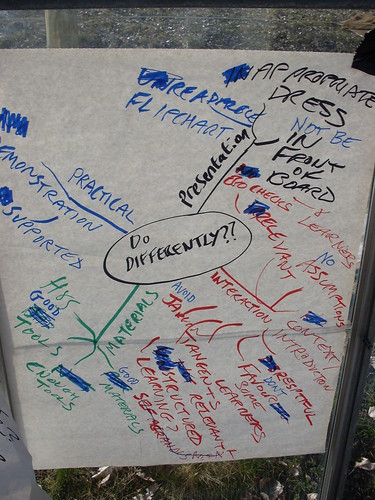
KM's crucial question - "What would you do differently next time?"

To learn from the past, we need to reflect on the past, and questions are crucial for prompting reflection. Here's one question that makes all the difference.


Do differently? - edited...When you observe the conversations and presentations at conferences and in organisations, they are very often stories about the past.
"We did this, we did that, this happened, we met these obstacles and through perseverance we achieved success"
It is possible to learn from these stories in a general sense, but often these stories are narrative and not reflective, they are history and not analysis, and it is from the reflection and the analysis that knowledge arises.

The question "If you were to do this again, what would you do differently next time?" is an excellent question to provoke reflection. It is a question that we use all the time in After Action Review and Retrospect, but it is one that you otherwise rarely hear at work, and almost never hear raised at conferences.

Many times people at work, or people at a conference, would ask each other “what did you do, how did you do X, how did you respond to Y”, and what they would get in reply would be, effectively, history. The replies would help you understand what the team did, but not understand whether this is a good thing to do, and bad thing to do or a random thing to do.

But if someone is asked “what would you do differently”, you can't answer with history; you have to answer with analysis and with insights.

The progression from Observations ("What we did and what happened") to Insights ("This is why things happened he way they did") to Lessons ("This is what I would do next time") is a process of analysis, and needs to be driven by questions - either questions from a facilitator or a third party, or by self-questioning.

History is not knowledge. It is analysis of history - reflection on history – that creates knowledge. We need to ask, not just “what did you do”, but also “with reflection, what would you do differently” if we are to get a true knowledge.


Monday, 17 July 2023

The KM strategy map - a visual link between KM and strategy

KM can be a crucial underpinning for business strategy. Here is a great way of showing how this can be delivered.


I am a firm believer in business led Knowledge Management Strategy.  Sometimes however we seem to lose sight of the KM/strategy link, and KM can then become relegated to a service function - something nice to have, but not strategic.

The KM strategy map is a way of  linking KM back to the business strategy, and showing that it has a crucial strategic role to play.


  First a bit of background to the strategy map itself.

A strategy map is an established way of mapping out the strategy of a company in a visual way, The approach was invented by Robert S Kaplan, and is well described in this 2004 HBR article and in his book Strategy Maps. A strategy map can be linked to Balanced Scorecard, and can be used to explain why a company is choosing the initiatives that it has.

The example above - a strategy map of Volvo Dealership -  is taken from one of Kaplans articles, and can also be found here. This map starts at the top with the vision, and works down, via elements of the strategy (in the example shown, growth and efficiency), then looks at the financial, customer, process and learning elements or objectives that support it.

Adding the Knowledge Management layer

As we know, Knowledge Management should be driven by the corporate vision and strategy, and should support the key activities that are needed to deliver that strategy. When Kaplan and Norton developed the ideas around strategy maps, KM was in its infancy and the "learning" elements were pretty generic (and to be honest, judging from examples, the learning elements are still pretty generic). 

What KM can do is make these less generic, more specific, and show how the elements of KM can directly support the business strategy.


As an example, I have added a Knowledge Management layer to the HBR "Volvo dealership" map. 

Please note this KM layer was not created in consultation with Volvo, nor does it reflect (other than by coincidence) what Volvo are doing in KM. Instead it is the sort of elements, and the sort of KM solutions, that you might be able to add at the bottom of a strategy map, that "flow upwards" to the corporate processes, strategy components, and vision. 

Sales and Marketing, for example, can be supported by more than generic "active participation, quality focused co-workers" etc; it could be supported by a Sales and Marketing CoP, actively developing and sharing ideas, solutions, good practices, with a knowledge base of past successful marketing materials and lessons. Similarly continued education of Volvo dealers can be supported by an online knowledge base, eLearning, and a dealers' community of practice. Risk handling could be supported by an effective lesson learning system.

Each KM intervention supports a process, which supports a customer and financial objective.

There are two advantages of this form of strategic map with a Knowledge Management layer;
  1. it helps the KM team to focus on those interventions that most directly support business strategy, and 
  2. it makes it clear to the business, and to Top Management,  how KM will help in delivering that strategy.

The KM strategy map can be a powerful tool in steering your KM program, and communicating to the leadership of the organisation the value you deliver.

Tuesday, 11 July 2023

How knowledge drives performance

There is a very close link between knowledge and performance, which is at the heart of any KM framework.


Knowledge results in performance. The more knowledge we have, the more capability we have, and the better we can perform. The more we learn from performance, the more knowledge we have. This puts us in a reinforcement cycle – a continuous improvement loop – continuously improving knowledge, continuously improving performance.

Conversely, if knowledge is missing, we do not know what to do, and make mistakes or slow down in order to learn, and performance suffers. 

We are all well aware of this link as it applies to us as individuals. The more we learn about something, the better we get, whether this is learning to speak Mandarin, or learning to ride a bicycle. The knowledge builds up in our heads and in our legs and fingertips, and forms an internal resource we can draw on.

It's much harder to make this link for a team, or for an organization. 

How do we make sure the organization learns from performance and from experience? How do we collect or store that knowledge for future access, especially when the learning takes place in many teams, many sites or many countries? How do we access the store of knowledge when it is needed, given that much of it may still be in peoples' heads?

This link, between knowledge and performance, is fundamental to the concept of knowledge management.  Knowledge management, at its simplest, is ensuring this loop is closed, and applied in a systematic and managed way, so that the organisation can continuously learn and continually improve performance.  In order to create this link and close the circle, the knowledge manager should

  1. Know what sort of organisational performance needs to be improved or sustained (and in some organisations this may not be easy - the performance requirements of public sector organisations, for example, may not always be easy to define);
  2. Know what knowledge is critical to that performance;
  3. Develop a system whereby that knowledge is managed, developed and made available;
  4. Develop a culture where people will seek for that knowledge, and re-use and apply it;
  5. Develop work habits and skills that ensure performance is analysed, and that new knowledge is gained from that performance (using processes such as lesson learning or After Action reviews);
  6. Set up a workflow to ensure that the body of knowledge is updated with this new knowledge; and
  7. Be able to measure both the flow of knowledge through this loop, and also the impact this has on performance.


That's KM at its simplest; a closed cycle of continuous learning and continuous performance improvement.

The complexities come in getting this loop up and running, in a sustainable way, in the crazy complex pressurised world of organisational activity.

But that's what they pay us Knowledge Managers for, right?  Dealing with those complexities. Designing the framework that closes the loop. Delivering the value;

ensuring that the best of existing knowledge drives the best possible performance, and that even better performance results in new knowledge.

Blog Archive