Monday, 30 May 2011
Free KM newsletter
The new Knoco newsletter, on the topic of business-led KM, is available for free download here
http://www.knoco.com/knowledge-management-news.htm


Saturday, 28 May 2011
Store of wisdom (quote)

"The store of wisdom does not consist of hard coins which keep their shape as they pass from hand to hand; it consists of ideas and doctrines whose meanings change with the minds that entertain them."
John Plamenatz, political philosopher
Friday, 27 May 2011
Why technology alone is not the answer to KM

If technology were the only barrier to KM, we would hear staff saying the following
- "I really want to learn from others in the organisation, but I have no technology to help me"
- "I really want to share my knowledge - if only I had the technology!"
- "I wish I could pass my lessons on to other projects, but I don't have any technology for doing this"
- "I have taken the time to document my knowledge, but don't have any technology to share it with"
- "Sharing knowledge? Why would I want to do that?"
- "I would love to learn from others but I don't have time"
- "I'm an engineer; managing knowledge isn't part of my job"
- "What's knowledge management?"
Thursday, 26 May 2011
Keeping the human voices in KM

When packaging or documenting knowledge, I like wherever possible to use the voices and the words of the people involved.
I either do this through the use of small video or audio clips, or through the use of quotes.
Nancy Dixon gives one reason
“What is necessary for Far Transfer of Knowledge is some form of interpretation that blends many voices without losing them”.
Klein and Roth take this further
“To make sense of a learning effort, people need to see it through the various perspectives of people who have been involved with it firsthand ,so that they can come to terms with it based on actual data, not just on the gossip that reaches them”
The human voice gives context, gives humanity, and gives credibility to the knowledge.
Wednesday, 25 May 2011
Business focused KM revisited

I have often blogged about business-focused KM, so I really enjoyed the rant in this blog post from Peter Shankman of BusinessInsider.com entitled
Why I Will Never, Ever Hire A "Social Media Expert"
His conclusion, below, gives you a flavour
"Why the hell are you listening to the 22-year-old who says, “we’re going to do this social media thing because it’s cool?” Social media is not “cool.” MAKING MONEY IS COOL. Social media is simply another arrow in the quiver of marketing, and that quiver is designed to GENERATE REVENUE. If you’re doing anything else with social media, here’s a book of matches, and I expect to never see you again".
It's the same for Knowledge Management. We don't do it because it's cool (not that it's "cool" any more, thank heavens), we don't do it "to promote a sharing culture" or to "increase collaboration", we do it (at least in the business world) to cut cost, to reduce risk, to improve safety and to drive growth. Those are the only valid reasons.
Tuesday, 24 May 2011
KM and the personal balance

To interest people, knowledge management must satisfy the principle of local value.
What they get out of it must exceed what they put into it.
This is a very personal equation. People have limited time, limited energy and limited enthusiasm. If they do knowledge management, they must stop doing something else. The value it delivers, must exceed what people have to put into it, otherwise they will not bother.
So it's a balance. On one side is the personal cost, on the other, the personal benefit.
Personal Costs include the following
- KM takes Time
- KM takes Effort
- KM takes Thought
- KM may require Exposure (exposure of your ignorance, or exposure of your knowledge)
- KM requires Change in the way you work
- If you access useful knowledge, this means Less risk
- If you access useful knowledge, this means Less stress
- When KM is culturally embedded, doing KM brings Peer approval
- Sharing Knowledge gives Community approval
- When KM is a management expectation, doing KM brings Management approval
- Outstanding delivery of KM may bring Formal recognition
- KM gives you The chance to be heard
- KM gives you The chance to make a difference
- When KM is seen as part of the job, then doing good KM means Doing a better job
Making the culture change in KM means changing the culture one heart and one mind at a time. Your job, as culture change agents, is to ensure that the personal balance is weighted in the right direction, for each of these hearts and minds.
Monday, 23 May 2011
Top cultural barriers to KM and how to break them

What are the main cultural barriers to Knowledge Management? How can they be addressed? Some ideas below.
Knowledge is power
This really means that people fear that sharing knowledge will harm their status. Help people realise that sharing knowledge increases collective power, that being generous with your knowledge helps your status, and that accessing the knowledge of others makes you more effective.
Building empires
This is a result of rewarding internal competition, which means that people build silos for personal security and reward. Focus instead on building communities which cross-cut organisational divisions, on removing all incentives for internal competition, and on bridging the silos.
Individual work bias/Local focus
Here people are incentivised solely by their own contribution, which disinentivised sharing with others,. Promote and reward work in teams and communities, and show how this gives better results
Not invented here
"Not invented here" is a symptom of an unwillingness to learn, and there is absolutely no point in creating the best knowledge sharing system if your organization has a learning problem. Redefine “here”, so “here” could mean “this community” or “this company”, not just “this team”. Then outlaw NIH completely.
Fear of "not knowing"
Here peoeple are unwilling to look for knwoledge from others, in case they appear personally incapable. Help people realise that it is better to look widely for solutions that to rely on your own personal store of knowledge, and that the wisest person asks the most questions.
Penalising errors
Help people learn that mistakes are OK so long as you learn from them and share that learning, and so long as you are not repeating someone else’s mistakes (or even worse, repeating your own).
No time to share
Very often people say "we don't have the time for Knowledge Management". But in fact, it's not a question of time, it's a question of priority. Capturing and sharing and resusing knowledge needs to be seen as part of the job, not an add-on, and just as much a priority as many other management aspects of the way we work.
Friday, 20 May 2011
Knowledge of right and wrong

If you know you're right, that's great.
If you know you're wrong, that's OK (you can fix it)
It's when you don't know whether you are right or wrong, that's when you are in big trouble.
Wednesday, 18 May 2011
The service trap - a pitfall for KM teams

The service trap is a trap that I have seen several Knowledge Management teams fall into. It works like this:
- The KM team introduces some good KM processes as part of a KM strategy
- These processes deliver real value
- There is an increasing demand for the services of the KM team in operating these processes
- The KM team find that they are spending all their time on service provision
- The KM team no longer have time to work on strategy
- The final limit of KM activity in the company is set by the available resources in the KM team, who are working at capacity. KM therefore cannot be scaled up to the whole organisation.
Don't fall into the service trap!
Tuesday, 17 May 2011
KM gives greatest potential for productivity gains

The ultimate WIIFM for Knowledge Management.

That's what we need to think about when talking with individuals in our organisations and explaining the value of Knowledge Management.
Sure, there is a value proposition for the organisation - greater effeiciency, greater effectiveness, faster growth, bigger market share, faster time to market. But there needs to be a value proposition for the individual as well - a local value proposition - a WIIFM from their point of view.
The WIIFM is simple
"When we have a functioning Knowledge Management framework in place, it will make your life easier. It will give you easy access to knowledge that will save you time, will reduce the risk of failure, and will make your results better".
Look at Shell, with their Community forums, where staff browsing the forum estimate that every minute spent on the forum saves them 7 minutes work. That's the value proposition you need to focus on - "Use the KM system and it will more than repay the time you spend".
Then of course you need to make sure that your KM framework really does deliver value to the user; that it delivers accessible, useful, comprehensible, valuable knowledge to the point of need, be it through connecting people, through collating advice, or through any other means necessary. And you do this, through relentless focus on the knowledge customer.
(see here for a list of what staff say they want from KM)
Monday, 16 May 2011
Two routes to knowledge retention analysis
 Knowledge retention is a big issue for many organisations, particularly engineering organisations, who may be facing a 10%-20% annual loss of knowledge as the experienced staff retire. Knowledge retention is also one of the most challenging tasks for KM, as it represents the need to "capture" and/or transfer tacit knowledge, as it is the tacit knowledge that is being lost. And everyone knows that tacit knowledge is very challenging to transfer and to capture. It's not as simple as a "brain download" or a vulcan mind meld.
I am currently updating our company offering on Knowledge Retention, the first step in which is an analysis of the risk of knowledge loss. It has become clear to me that there are really two strategic approaches to doing this.
The first is a people-based approach, where you go through the company person by person, assessing both the risk of their leaving, and the value (and replaceability) of the knowledge they hold.
The second is a topic-based approach, where you go through the needed competencies of the organisation one by one, assess for each the value (and replaceability) of the topic, and its risk of knowledge loss.
The end point is the same - a risk assessment mapped against both individuals and topics, which is a starting point for your retention plan, and for the suite of interventions you will need to apply, depending on the context and the amount of time you have available. However the starting points are different.
The choice of which approach to apply depends on the size of your company. An SME, with a relatively small number of staff, many of whom take multiple roles, will need the people-based approach. A large organisation, for pratical purposes, will need to take the topic-based approach.
Whichever approach is best for you, it will allow you to clearly map out the scope and impact of retention risk, and so build an effective retention plan.
Thursday, 12 May 2011
Each solved problem becomes a rule (descartes)
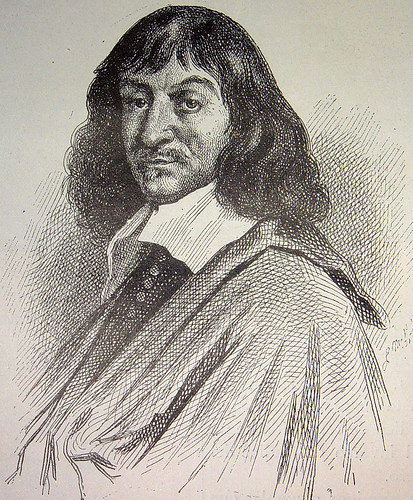 “Each problem that I solved became a rule, which served afterwards to solve other
problems.”
René Descartes in Discours de la Méthode
Nice KM video
KM at "TheTeam" - a nice example of a largely technology-led KM framework in a small (130 people) creative organisation.
Wednesday, 11 May 2011
Silos and dual loyalties

There is an interesting discussion going on in Linked-in on Silos.
Silo is one of those perjorative terms, which everyone assumes is BAD. And a lot of talk in KM circles is about "breaking down the silos", as if KM is anti-silo and therefore GOOD.
However as the discussion shows, silos are not all bad. There are three main areas of value to silos;
- they provide focus
- they develop a closely understood shared context
- they develop a fierce internal loyalty and feeling of "belonging"
Silos very often follow organisational heirarchy, but this is not always the case, and communities of practice can also form silos (see my blog post - "We build our own silos - groupthink in social media"). This excellent post, "The silo reconsidered", suggests that "the signature feature" of a silo is that it will develop an internal language. This is particularly true of communities of practice, and a community is often a group of people united by a common jargon.
Part of the key to success here seems to be to introduce "dual loyalties" or "dual belonging", so staff can feel deep team loyalty to their business silo, with a real drive towards business delivery, and at the same time can feel deep loyalty to their practice community, with a real drive towards communal practice development and knowledge sharing.
There is no harm in organisational silo structures, so long as we have INTERSECTING structures. The organisational silos form a vertical accountability/delegation/work breakdown structure, the Communities of Practice form a horizontal practice-based structure, and they intersect to form a connecting network that allows knowledge to flow freely wherever it needs to.
Silos deliver clarity of delivery, and clarity of accountability. What knowledge management can enable, is communication and learning between the silos, which makes that delivery easier and more effective. No need to break the silos down - just help them learn to talk and to learn from each other.
Tuesday, 10 May 2011
What "knowledge is power" really means

Here's an interesting extract from the book "A Little Knowledge - What Archimedes really meant, and 80 other key ideas explained" by Michael Macrone.
The topic is the saying "Knowledge is Power", and the extract suggests that originally this did not refer to personal power, but to "control of nature". So the original saying is closer to the definition of knowledge as "the ability to take effective action".
"Knowledge Itself Is Power"
This little aphorism appears in Meditationes Sacrae (1597). an obscure work by Francis Bacon (1561-1626), lawyer, politician essayist, and co-inventor of the scientific method. On the surface, the saying is obvious, especially in this age of information. But we're apt to misunderstand what Bacon means by "power", it is not "personal or political advantage", but "control of nature."
Bacon was campaigning against the sterile science and philosophy of his day. Scientific debate, chained to Aristotelian metaphysics and plagued by hair-splitting and sophistry, produced little save grounds for further debate. Meanwhile, the mechanic arts, which the theoreticians considered ignoble, had been making steady and swift advances; gunpowder, Gutenberg's printing press, and the mariner's compass were unmatched by progress in loftier realms.
Sizing up the situation, Bacon concluded that knowledge could be fruitful only if technology and philosophy were united. Instead of debating the fine points of matter and form, scientists directly observe nature, draw conclusions, and employ practical tools to test them. In other words, science ought to be based on induction and experiment, not metaphysics and speculation.
Bacon was hardly the first to suggest the experimental or scientific method. And despite all his talk about it, he performed very few significant experiments of his own. Nonetheless, his contemporaries were impressed, and most great scientific m of the seventeenth century, including Newton, cited his work as a direct inspiration. Furthermore, the collaborative character of scientific research from the 16oos to the present owes much to his repeated insistence that communities, rather than isolated geniuses, are responsible for true scientific progress, and thus "power" over nature.
On the other hand, beyond his own practical shortcomings Bacon's theories do leave something to be desired. He tossed the baby out with the bathwater of speculative science, slighting the role of hypothesis, which he viewed as groundless and thus sterile. All true knowledge, he asserted, derives from observation and experiment, and any sort of prior assumption is only likely to distort perception and interpretation. But without hypotheses, there can be no controlled experiments, which are the essence of the modern scientific method.
Bacon thought the world was essentially chaotic, and that therefore it was a mistake to approach nature assuming regular laws. But science has advanced principally by assuming the world is lawful, that there are regular and simple patterns underlying nature.
So Bacon got some things right and some things wrong, and on the whole he was much better at criticizing the old than at forecasting the new. As a result, his reputation has had its ups and downs. Current opinion is mixed; some celebrate his pioneering work in scientific philosophy, while others blame his doctrine of "knowledge is power" for skewing science towards the exploitation of nature. Power, in the view of these critics, has become an end in itself, resulting in materialism and alienation. Bacon himself thought that social values and morality would always direct and constrain technological advances. It is in this regard that he was most wrong.
Monday, 9 May 2011
It's not always experts who have the answers

It shows the results of a study into how mathematicians collaborated to solve a problem, which in many ways mimics how members of a community of practice may work together to solve a business problem, or to answer a problem of one of the members.
The problem to be addressed is known as Polymath1, and the "blog and wiki"-based approach is described here as follows
"In February, 2009, an international group comprising mathematicians ranging from amateurs to elite professionals converged on the WordPress blog of Cambridge mathematician Timothy Gowers in order to attempt to prove a mathematical theorem; a project Gowers called Polymath1. Their results surprised even the project's most optimistic participants. In six weeks, the group had managed to combinatorially prove the density Hales-Jewett theorem, yielding in the process a host of new mathematical insights".
A huge success for a collaborative approach, but equally interesting are the statistics shown in the diagram concerning where the contributions within the collaborative group came from. The diagram's vertical axis represents the number of contributions from each individual, the horizontal axis represents the "significance" of each contributor to solving the problem, and the size of the blob represents the professional seniority of each contributor, with small dots being "professionally junior" and big dots being "professionally senior".
The most interesting thing about this plot for me, are the small dots in the "low volume, high importance" sector. These aren't the famous expert mathematicians, they are people such as Jason Dyer, a mathematics teacher in Arizona, which was able to throw light on one type of logic puzzle involved in the final solution.
With tricky problems, its not awlays the experts that have all the answer. The diagram above shows that many people can contribute, and that the non-experts can provide crucial input.
So what is the lesson for those of us working in Knowledge Management?
I think this data throws light on one of the choices we need to make, which is whether we create communities of experts, or communities of practitioners.
Some companies like to create communities of experts, or lists of experts, who people can go to if they have a problem to solve. The thinking is that "the knowledge is held by the experts, so they are the default people to go to".
Other companies like to create communities of practitioners, or lists of everyone working in an area, who people can consult if they have a problem to solve. The thinking is that "the knowledge is out there somewhere; it might be with the experts, it might not, so let's ask everyone and see what we turn up".
The former is like "phone a friend", the latter is like "ask the audience".
What the data from Polymath1, shown in the graph above, demonstrates is that the non-experts can make massively significant contributions, and that asking the audience seems to be, certainly for this type of problem, a far more effective strategy.
Friday, 6 May 2011
How do you structure your knowledge?
 Sooner or later you are going to have to think how you structure your knowledge in your organisation.
This is for two reasons - for findability, and for ownership.
You structure your knowledge so that people can find what they need in a single place, and you structure your knowledge so that you can ensure that the key areas of knowledge are owned and maintained and connected to communities of practice. Yes, you can also have ontologies, taxonomies, folksonomy, etc etc - you can index and tag your knowledge in many ways - and structure is valuable also; if for no other reason than to give people access to the things they never thought to search for.
The choice of your overarching primary structure - the highest level of your taxonomy, and the way in which you divide ownership - depends on your organisation, and you have many options.
You can structure according to process, if you are a process-driven organisation or department. Knowledge is about process - how to do stuff - and is owned by process owners. Many of the oil companies, such as ConocoPhillips, use this structure.
You can structure according to equipment, if your role is to maintain and operate a piece of plant such as a nuclear power plant. Sellafield uses this structure for their configuration management knowledge.
You can structure around clients, or industry segments, if you are a sales organisation. Buckman labs use this structure for their Communities of Practice, as does Aon.
You can structure according to product or client offer, if you are a consulting or service organisation. we structure the knowledge in our Knoco knowledge base this way, as do the Big 5, as do oil sector service companies such as Schlumberger or Halliburton.
The key is to see which structure most fits your key knowledge, then ensure the knowledge base, the knowledge owners and the communities of practice are aligned with this.
Thursday, 5 May 2011
Knowledge as an Asset

How much is knowledge worth to your organisation?
I know it's really hard to come up with an exact and defensible figure, but you can come up with an estimate in "orders of magnitude" terms. You can ask "if we forgot how to do what we do, how much would we lose?" for example (see examples from Boeing and the NNSA). Or you follow Larry Prusak, and claim that the value of knowledge equates to 60% of your organisations non-capital spend
When you do make an estimate, that estimate is a pretty huge number. I know that one Drilling organisation, for example, estimated that their knowledge was worth $500 million on an annual basis.
Knowledge is a massive asset, worth a huge amount, and that asset needs to be protected, and it needs management.
So the two questions for your organisation, if they recognise that value, is
1. Who manages that asset?
2. How do they manage that asset?
All too often the answers are 1. "Nobody, at least not explicitly" and 2. "I dont know".
But who would leave a company asset, worth 10s or 100s of millions per year, unmanaged? Nobody in their right mind, surely?
That's where Knowledge Management can step in ......
Wednesday, 4 May 2011
Colin Powell, leadership and KM

Interesting to see on Colin Powells Leadership Skills List For Highly Effective Managers, at number 8, the following;
8.Knowledge management and therefore people management is critical to all businesses.
Leadership has to foster the right environment and people within the company (since this is what powers modern knowledge economies). Focus on technical management 30% of the time, and assign the rest for people management.
and then at number 10
10.Business is all about change. Effective leaders realize this and foster an environment where learning and change management is encouraged.
Commanders are always developing leadership skills in their subordinates to foster learning and ownership of tasks within the organization.
KM - when voluntary becomes optional.
One of David Snowden's dictums is that Knowledge can only be volunteered, it cannot be conscripted.
This is a good reminder of the fact that knowledge is personal, and resides in people's heads, from which it cannot be forced.
However there can be a middle way between voluntary and conscripted. Knowledge cannot be conscripted, but it can be requested, and sharing knowledge can even become expected.
Very few people will refuse to share knowledge when they are asked, so long as they realise there is a real need. I have only once seen someone say "I am not going to tell you" when they were asked to share knowledge, and that was because they were about to leave to become a consultant (though who would hire a consultant who would not share what they know"). Nancy Dixon says that many companies who think they have a Knowledge Sharing problem, actually have an Asking problem.
Also, volunteering your knowledge can become expected behaviour in a company. It can become expected by Management, and it can become expected by Peers. In fact, it needs to be an expectation from both (expectation from one and not the other sets up an unhealthy tension). Yes, knowledge can only be volunteered, but volunteering knowledge can become the expected behaviouor and become default behaviour. And in some companies, the expectation is so strong that you won't last long in the company, if you don't volunteer your knowledge. That's not the same as conscripting knowledge; its setting a corporate culture where not volunteering is not done.
The trouble with keeping KM too voluntary, without asking and without expecting, is that it becomes optional. And we are all too busy to bother with optional activity.
Tuesday, 3 May 2011
KM beyond culture change

However there comes a time when culture change is no longer the big issue. There come a time when the company has bought the concept, and the culture is already tipping, and you move to the next big issue, which is Process.
Culture sells the WHY
After the WHY, you need to define HOW and WHO and WHEN and WHERE.
That's where you get into KM as a Framework, or a set of process, role/accountabilities and supporting technologies.
We are working with a company right now who have bought the WHY, and are onto the next step, which is to embed a KM Framework into their operating processes. We are working with them to fully document the framework. We are drawing process flows, we are writing RACI charts, we are looking at issues of performance management of KM. It's really refreshing, and there is a lot of experience we can draw on, from our own work and from world-class organisations that similarly have gone Beyond Culture in KM. This is where the long-term value will be added, if we can fully embed a working framework.
So please, worry about the culture change. And also, at the same time, worry about what comes after. Once you have sold "Why KM" you then have to define "How KM".
Subscribe to:
Posts (Atom)

 Posts
Posts

