Monday, 31 October 2011


KM - emergent or structured?


Emergent There is a bit of a philosophical divide in KM circles - between the Emergent and the Structured camps.

The Emergent people believe that if you provide people with the tools, then Knowledge Sharing will naturally emerge. They point to Wikipedia as a prime example of this - the wisdom of the crowds spontaneously emerging as documented knowledge. They point to Twitter, to Linked-In, to many of the global social networking tools. They believe that Knowledge is organic, and that too much management will kill it. This was certainly a very prevalent view a decade ago, particularly where communities of practice were concerned.

The Structured people believe that knowledge is an asset to an organisation, and that assets cannot safely be left to manage themselves. They believe that if there is an area of knowledge which is important to the organisation, then there should be a community of practice that looks after that knowledge. ConocoPhillips is a prime example of the structured knowledge company - they divide their business into areas of competence, and for each one they make sure there is a community of practice and a network leader, who is also the editor of the relevant wiki page. The network leaders are given training, and the communities are nurtured through a growth process until they become very effective knowledge-sharing mechanisms. Each network leader reports upwards through functional excellence teams into the functional leadership of the organisation.

There seems to have been a change over the past 10 years, with the Structured view becoming more dominant, at least for KM within organisations, and the Emergent view less dominant. This was clear to me a couple of weeks ago, listening to a presentation from Harry Scarbrough about his research for the KIN network. http://mik0ton.wordpress.com/2011/09/21/so-what-do-we-do-as-community-facilitator%E2%80%99s-based-on-research/. I think this change has come through experience with working with knowledge sharing within organisations, and the need to adapt and structure the Internet free-for-all.

Unstructured networking on the internet is not a great model for knowledge sharing in organisations, for several reasons.

  • The emergent discussion forums in Linked-In very quickly fragment into multiple parallel conversations, which often deteriorate further into silos. That would be a disaster in an organisation where there needs to be one place to go to tap into a network, not 422 places.
  • The 90:9:1 participation model of Wikipedia is fine if there is a massive pool of potential contributors, with redundancy in knowledge. Tapping into what is effectively 2% to 3% of the available knowledge is fine, if the available knowledge is global. In a company, it just isn't enough.
  • The diversity profile of Wikipedia is highly skewed. If your company knowledge base was disproportionally populated by the knowledge of unmarried males under the age of 30, you would think something was amiss.

For me, KM is a strategic business tool, which needs to be focused on business issues. Knowledge is too important to be left to chance, and to have no steward or guardian. It needs structure and support.

But there is a middle way between structured and emergent. Sure, knowledge is organic, but "organic" does not mean "unstructured". 

The classical structured organic enterprise is the Garden - the flower garden, the vegetable garden, the market garden, the allotment. The vegetables grow organically, within a structure. And anyone with a garden will know that if you want to produce flowers or vegetables, then "organic" is hard work, and requires a lot of management. You don't just "create the conditions so anything can grow", because all you get is weeds. If you "let a thousand flowers bloom", then most of them will be dandelions, and few if any of them will be tomato plants. Instead, you create the conditions, fertilise the soil, plant the seeds, remove the weeds, deter the pests, tend and water and fertilise, and eventually your flowers and vegetables will grow. If knowledge is Organic, then KM is Gardening. There's your mix of structure and emergence. 

Sunday, 30 October 2011


I, I who know nothing (KM quotes)


"Real knowledge is to know the extent of one's own ignorance."
Confucius

"I know nothing except the fact of my ignorance."
Socrates  

"He who thinks himself wise . . . is a great fool."
Voltaire

"I know nothing"
Manuel

"It is better to know nothing than to know what ain't so."         
Josh Billings

"It ain't what you don't know that gets you into trouble. It's what you know for sure that just ain't so."
Mark Twain

"The highest form of ignorance is when you reject something you don't know anything about."
Dr. Wayne W. Dyer

"It's much easier to suggest solutions when you don't know too much about the problem."
Malcolm Forbes

"Our biggest problem as human beings is not knowing that we don't know."
Virginia Satir

"Not ignorance, but ignorance of ignorance is the death of knowledge."
Alfred North Whitehead

Friday, 28 October 2011


Re-creating success in KM


4Rs RHC Creative Theme We often talk of value delivery in KM coming from two areas
  • Never repeating mistakes,
  • Always replicating successes
I came across an organisation recently which has subtly rewritten these two. Instead they talk about

  • Never repeating mistakes,
  • Always re-creating successes

  • I like this re-emphasis. By saying "re-creating" instead of "replicating" they recognise that learning is seldom applied within the same context as that where it was created. Knowledge, experience and lessons will be reapplied in a different context, and there will need to be some adaption, before there is adoption. There will need to be some re-creation, before there is reapplication.

    The lessons and knowledge will add value; not through blind copying, but through applying the lessons from the past in the context of the future.

    Thursday, 27 October 2011


    Excel as a KM database


    Excel in a foreign land We have worked with many organisations that use Microsoft Excel as a lessons database for projects or for operational activity.

    There is a lot be be said for this; Excel is a good structured way for capturing data, and for storing and sorting. In fact we offer a free Excel template to act as a lessons log in PRINCE2 projects.

    However the lessons learned process is far more than just storing and sorting, and so Excel is by no means adequate for a proper KM and learning process.

    Identifying and documenting lessons is only the first step in the lesson-learning process. Each lesson will need one or more associated actions, and those actions need to be notified to the accountable person (often a process owner), and someone needs to be tracking this process. So a sophisticated lesson learning system needs to be supported by a sophisticated technology, that allows workflows to be defined, with automatic notification, and with monitoring and tracking facility. Most companies who take KM and lesson-learning seriously will invest in a lessons learned database to provide the technological underpinning.

    I am afraid that if you want to take lesson-learning seriously, Excel just doesn't hack it.

    Wednesday, 26 October 2011


    KM - it's in the contract!


    My Princeton Architectural Press Book Contract I suggested last year that contracts will drive KM adoption.

    I recently heard about a government contract which is doing just that.

    Here are two of the clauses;

    "the contractor shall employ knowledge management systems and processes to promulgate knowledge and experience resulting from the service to the user community"

    "The contractor shall provide the following ... A knowledge management systenm to promulgate lessons learned, good practice and to facilitate improved maintenance and operation"

    These are good clauses. They sidestep discussion about "what is a KM system", to discuss what the KM system will acheive, namely transfer of knowledge to the user community, and improved service through learning lessons.

    If we see a few more contracts like these, then good KM will start to become a clear expectation.

    Tuesday, 25 October 2011


    Speech recognition software as a KM tool


    IMG_6470.jpg
    One of the tools I use most often in my trade as a knowledge management consultant is speech recognition software. 
    As humans, one of the most common ways in which we transfer knowledge to each other is through speech.  In after action reviews, in retrospect, in peer assists, we talk to each other and transfer knowledge in words and in stories.  If you can’t be there at the event, then somehow those words and stories need to be passed on in text, losing as little of the richness as possible.  You could also pass them on using video or audio, but even then you might need a transcript that you can read on the plane or make available for the hearing-impaired.
    There is a lot to be said for recording events like Retrospects on to a digital voice recorder, but these are generally pretty dull to listen to afterwards, and there is nothing quite so tedious as typing speech into the computer.  However dictating into the computer is relatively straightforward, and with practice you can dictate the recording almost real-time.  You play back the recording into headphones (maybe at half speed to start with), and read it into a microphone, and the computer creates a transcript for you. 
    Speech recognition software nowadays is pretty good. I used to use Dragon Dictate, but the free speech recognition software that comes with windows 7 or Windows Vista is almost as good.  You can find this under Accessories, Ease of Access, in the Start menu.  It’s not perfect, there is an error in most paragraphs, but it is still far far quicker than typing.

    Monday, 24 October 2011


    Self-generated silos - it's worse than we thought.


    Shattered glass
    I blogged a while ago about how social media can fragment into small silos of discussion, and how the wisdom of the crowd can fragment into the self-reinforcement of the clique. I cited the fact that there were over one hundred Knowledge Management discussion groups on Linked-in as an example of how discussion can fragment into silos.

    It's worse than I thought.
    According to a recent post by Ian Wooller, there are now,


  • 26 Alumni groups
  • 32 Corporate groups
  • 20 Conference groups
  • 132 Networking groups
  • 16 Nonprofit groups
  • 196 Professional groups.

  • All purporting to cover Knowledge Management.

    That's a total of 422 groups.

    What a mess!

    Where would you go to ask your Knowledge Management question? Where, in those 422 groups, is the person who can give you the most useful answer? You don't know, they could be anywhere. Looking for knowledge in the Linked-In groups is a total lottery.

    Friday, 21 October 2011


    Knowledge Management "Track Changes"


    change This blog post is born out of a phrase used recently by my colleague Ian Fry. He was presenting in the ActKM Conference in Australia, and (in the context of measuring and demonstrating the value of knowledge management) mentioned the term "KM Track Changes"

    What Ian meant by this is that you should be able to demonstrate that your knowledge management programme has actually made a difference.  You should be able to show that things have changed as a result of your knowledge management initiative.

    So what should change?

    I argued a while ago that the memory of an organisation lies in its procedures, as well as is its structures and other ways working.  The way in which an organisation works and is structured, represents the way it has learned to work can be structured.  If knowledge management is going to help that organisation learn to work better, then we should see the structures and processes and procedures changing as well (see this blog post about the learning loop) .  And we should be able to track those changes.

    Here are some examples of how this is done.

    In one organisation, new knowledge and new lessons are captured on a routine basis through after action reviews of the workforce.  Each lesson has an associated action, and each action is for a expert or process owner  to update a procedure or a process.  The route from observation to lesson to action to update is documented and tracked and reported.  For example, on a quarterly basis the administrator of the system reports how many processes have been updated as a result of new lessons.

    Similarly, in the military setting, observations are collected from military activity, these are analysed by a team of analysts, actions are recommended, and these are sent to the doctrine owner in order to update the military doctrine (doctrine being what the military call process).  Again, this process is monitored and any updates are tracked and reported.

    In another organisation, the processes are kept on a Wiki, which is owned and managed by the leader of the relevant community of practice. All  new lessons, all new observations, all new conversations within the community forum are forwarded to the community leader.  He updates the community Wiki based on this new knowledge, and of course with any Wiki the changes are tracked.  Community members are notified of any new knowledge in the Wiki.

    In each case the organisation is not only using its new knowledge to make changes to the way it works, but is also doing this in a systematic and tracked way.

    Thursday, 20 October 2011


    KM and information overload


    Information overload There is a real tension that we face in knowledge management, and that is the tension between increased knowledge sharing and "information overload".  Especially when we use e-mail as part of our knowledge management system, users often complained that bringing in e-mail associated with knowledge sharing is adding to the information overload problem, rather than help to sort it out.

    On the one hand, we realise that communication and conversation is an essential part of a knowledge management, and that knowledge management is an essential part of business nowadays.  On the other hand, people don't want more communication.

    Sometimes people say "let's not add any more to the e-mail burden; let's share knowledge through twitter, yammer, RSS feeds, blogs and wikis instead".  But that is not reducing the information overload, it is merely changing the number of channels through which that overload of information comes.

    There are a couple of issues here.

    Firstly, there is no such thing as information overload when it is information we are truly interested in. What causes the overload people complain about in email is an overload of irrelevance. It's not a matter of urgency, it's a matter of relevance. Shell have done research on the use of email-enabled community forums which show that a community message is treated as much more relevant than yet another FYI from HR, and a request for assistance from a community colleague is treated as urgent and important and something we should be interested in. So the issue here is not information overload, but relevance underload.   It's a signal to noise issue.

    Secondly, there is the way in which this information is presented.  Some knowledge management system seemed to think that you need to forward everything to everybody.  Perhaps you set up a sharepoint folder, and you notify all the members of the community if there is any updates to any file within that folder.  That can be a huge amount of information, and most of it minor details that people really don't need to know.  Why not just send out one alert, from a central coordinator, when there is something of real significance of people need to be alerted about?  You can organize the information, and send it out in a digestible form, rather than sending it out in a raw form. The issue here is not information overload, but organisational underload.

    So let's be smart about our knowledge management.  Let's increase communication within communities of practice and across organisational boundaries , but let's be sensible about it.  Let's send out messages that are relevant to people.  Let's not bombard them with raw information but give them organised knowledge, packaged in a way that is useful and relevant and interesting to them.  Let's increase signal to noise, let's increase organisation, let's increase relevance (this can be part of the role of the community of practice facilitator or leader). Let's keep the knowledge in a central maintained place, and use e-mail only for notifications and not for storage.

    Even better, let's drive a knowledge management primarily through pull rather than through push.  Let's ensure our community conversations are driven by questions, rather than just sending out information FYI. Let's make sure that there is a market for our communication, before we send it.

    Wednesday, 19 October 2011


    The value experience brings


    Map readingMy recent blog post about the role of experience in knowledge management has generated quite a lot of comment.

     I made the point that information alone is not enough to create knowledge, and that knowledge is more usefully seen as coming primarily from experience than from information.

     Let me give you an example.

     I would like to provide you with a high-resolution gravity map over the Kalahari desert. This contains a vast amount of information. As additional information, I would like to give you some maps which show the trend of geological data taken from borehole samples in the area.

     Now I would like you to tell me the most likely place for a diamond mine. Based on your recommendation my investment company is going to make $1,000,000 decision to conduct a programme of drill holes, looking for the diamond bearing deposits.

     Could you tell me the best place to site that drilling programme?

     I suspect you couldn't.

     However there are people out there who could. They would have exactly the same information that you have, but they would be able to make the correct decision, and allow my investment company to take effective action.

    So what do they have, that you don't?

     They have knowledge, and they have experience. The knowledge partly comes from theory, but it also comes from a vast amount of experience in looking for diamond mines; experience gained through a few successes, and from many failures over the years. This is the valuable stuff that we need to address through knowledge management; not the maps and the samples, but the experience, the heuristics, the judgement, the insight, and the ability to make million dollar decisions and take correct actions.

     The value from knowledge management comes not from saving time in looking for maps and looking for data and looking for documents and looking for information, but by making better decisions and taking better actions based on that information once you find it. In this case, not wasting a million dollars looking for a diamond mine in the wrong place.

    Tuesday, 18 October 2011


    Failure analysis in KM


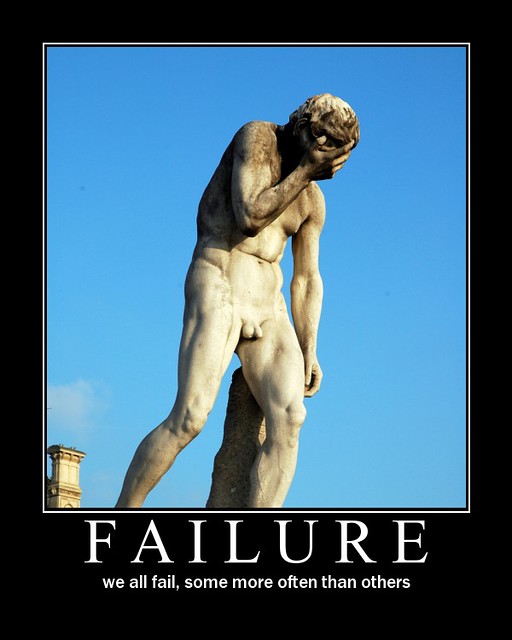
    failure
    I have been reading an interesting article entitled “the hard work of failure analysis”, which looks at the structures and processes people put in place to learn from failure – a difficult task for most organisations, and prone to cognitive bias. I thought that the following was a good example of ways to work around these issues

    Julie Morath, the Chief Operating Officer at the Minneapolis Children's Hospital, implemented processes and forums for the effective analysis of failures, both large and small. She bolstered her own technical knowledge of how to probe more deeply into the causes of failure in hospitals by attending the Executive Sessions on Medical Errors and Patient Safety at Harvard University, which emphasized that, rather than being the fault of a single individual, medical errors tend to have multiple, systemic causes. In addition, she made structural changes within the organization to create a context in which failure could be identified, analyzed, and learned from. 
    To create a forum for learning from failure, Morath developed a Patient Safety Steering Committee (PSSC). Not only was the PSSC proactive in seeking to identify failures, it ensured that all failures were subject to analysis so that learning could take place. For example, the PSSC determined that "Focused Event Studies" would be conducted not only after serious medical accidents but even after much smaller scale errors or "near misses." These formal studies were forums designed explicitly for the purpose of learning from mistakes by probing deeply into their causes. 
    In addition, cross-functional teams, known as "Safety Action Teams," spontaneously formed in certain clinical areas to understand better how failures occurred, thereby proactively improving medical safety. One clinical group developed something they called a "Good Catch Log" to record information that might be useful in better understanding and reducing medical errors. Other teams in the hospital quickly followed their example, finding the idea compelling and practical.
    Some good ideas there, and I really like the “Good Catch Log”

    Monday, 17 October 2011


    The conversations in social media


    Kids of conversation


    Last week in Brazil I met Bob Boiko, who gave a very interesting presentation on information management and the role of social media.  His point was that social media is all about electronic conversations of various types – all of them about publishing, but many of them allowing a level of response or reaction. 

    Conversation is very important within knowledge management, particularly when it is the right sort of conversation.  Conversations come in various types –assertions, gossip, argument, debate, telling jokes – but this only really one type of conversation at effectively transfer is knowledge, and that is dialogue.  Very few of the common social media allow effective dialogue, even the discussion forums you find on LinkedIn, and listening to Bob I began to wonder what sort of typical conversations the common social media generate, and the following caricatures popped into my mind.
    • Facebook is like gossip at a party – rapidly changing social conversations within groups of friends
    • Twitter is like shouting sound bites into an echo chamber – the good ones or the interesting ones echo longer than the others
    • Linked-In conversations, when they are good, are debate or question-and-answer, at their worst they serial assertion, sometimes escalating into serial disagreement.
    • Blogging is like Speaker’s Corner at Hyde Park – monologue with heckling
    • Wikipedia at its best is like a TV debate panel correcting each other, at its worst is a TV debate panel arguing with each other.
    • I don’t have a caricature yet for Google+ as I haven’t been on there for long enough

    Friday, 14 October 2011


    The four KM incentives expanded


    I blogged recently about the four incentives for knowledge management; logic, emotion, expectation and peer pressure.  When I was in Brazil last week I was asked to expand on these, and I thought I would share that expansion with you.

    The first incentive, the incentive of logic, is the one that you have to address first, when you start off knowledge management in your organisation.  There needs to be a business case, there needs to be a logical business driver for knowledge management, and this needs to be explained in a very simple way.  In many ways, you need this logical argument in order to convince management to let you even start, and when you to start communicating about knowledge management, again you have to start with the logical business case.  This is not enough to convince people, but it needs to be in place before or any of the other incentives can work.  It can be really helpful if you get your CEO or another senior person to give you a sound bite in which they “make the logical case”. 

    In order to bring the second incentive, the emotional incentive, into play, you need to have some success stories from within the organisation.  A good success story, told on video by the people involved, can begin to convey the value of knowledge management emotionally.  People tell how much it helped them, how knowledge management solved a problem, or reduced a risk, or added value.  Through these stories, you can begin to project a human face onto knowledge management that goes beyond the logical business case.  You can make it personal.  But you can’t make it personal until you have piloted KM and have some success stories, and the stories really need to come from within your own company in order for people to identify with them.

    The third incentive, management expectations, comes later after the piloting phase.  Once you have defined how knowledge management will work within your organization, when you have piloted the knowledge management framework of roles, processes, technologies and governance, then your managers can set clear expectations and targets for knowledge management, and by doing so they give the message that knowledge management is now part of the job.  Most people go to work to do a good job, at some stage managers need to set the expectation that in order to do a good job, you need to include a component of knowledge management.

    The fourth incentive, peer pressure, comes later again.  Once you’ve made the business case, piloted knowledge management, delivered the success stories, defined the framework and set management expectations, then as you begin to roll out knowledge management across your organisation a larger and larger number of people will begin to be involved.  This is where peer pressure comes in; when people see others involved in communities of practice, re-using lessons, sharing knowledge online and so on, then knowledge management becomes “business as usual”, and not doing knowledge management becomes seen as unusual.

    Thursday, 13 October 2011


    How to build a KM strategy, in less than 50 words.


    strategy
    Decide what knowledge is vital for the organisation (A)
    Find out who needs that knowledge (B)
    Find out where that knowledge is now (and if it doesn’t exist, where it will come from) (C)
    Work out how to get A to B from C
    ·         Routinely
    ·         Systematically
    ·         Effectively
    ·         Efficiently

    Wednesday, 12 October 2011


    Analogy for burying lessons in project files


    Listening recently to how one company buried it's lessons learned in project files, scattered across multiple folders, reminded me of this scene from Raiders of the Lost Ark

    The analogy is

    Crate with incredibly valuable cargo = lessons from a project
    Huge and cluttered warehouse = lessons database
    "Top Men" = KM team


    You just know you will never see those lessons again!

    Tuesday, 11 October 2011


    A Question, or short rant


    If, as many people claim, Knowledge Management is "getting the right information to the right people at the right time"  then what on earth do they think Information Management is?

    Management of X is not concerned with delivery of Y.

    It's like saying "Our grocery delivery service is about getting the right letters to the right people at the right time", or "The postal service is about delivering the correct aeroplanes to the correct addresses", or "Air traffic control is about ensuring the right groceries arrive at the right airports."

    Unless you think that Knowledge and Information are the same, of course, but even then, why not call it Information Management?


    more on The Illusion of Confidence in KM


    In this post, I talked about the Illusion of Confidence, one of the three fatal illusions in Knowledge Management. According to this illusion, people value knowledge more if it comes from a confident person. This would be fine if confidence and knowledge go hand in hand, but in fact there is almost an inverse relationship. A lack of knowledge is, instead, allied to overconfidence. Lack of knowledge leads to confidence, which leads to you being seen as knowledgeable.

    There is an interesting article in Strategy+Business called "The Decision-Making Flaw in Powerful People" that shows that there is another side to this, namely the illusion of self confidence.

    The article cites for studies which look at the issue of Power in whether people are open to advice and knowledge form others, and says that

    "In all four studies, they found that powerful people were more likely than those with less power to disregard and mistrust outside perceptions and advice — and that men were more likely than women to disregard guidance from others"
    Power increases confidence, the paper’s authors say, which can lead to an excessive belief in one’s own judgment and ultimately to flawed decisions, as powerful people give short shrift to a crucial part of the decision-making process: listening to advice. As a result, leaders can live in a knowledge bubble.

    This is something we need to be aware of in KM, especially when trying to improve the knowledge flow up and down the heirarchy.

    Monday, 10 October 2011


    Where does knowledge come from?


    In most of the training courses I run, I ask the question "where does knowledge come from?"

    Always, every time, I get the answer "Experience - Knowledge comes from Experience". Never does anyone answer "Knowledge comes from Information".

    Never

    If you don't believe me, try it yourself. Ask people "where does knowledge come from"? and see what they say.

    So why do we persevere with the Data/Information/Knowledge pyramid? It's misleading, and it does not represent what people think.

    If you believe in this pyramid, then your KM approach will be an extension of information management. You will look at organising and aggregating information so that you can turn it into knowledge.

    If instead you believe that knowledge comes from experience, and shared knowledge comes from shared experience, then your KM approach will be based on review and transfer of experience, connection of people, and conversation.


    So we could in fact come up with a different pyramid, shown here, where experience leads to knowledge, which leads to decisions, and which leads to action.

    The great thing about this version of the pyramid, is that action leads back to experience. And if we can share the experience from many actions, we can build shared knowledge which others can use to make correct decisions.

    So the pyramids stack, as shown below.

    Our previous approach, of treating Knowledge Management as an extension of information management, now becomes an approach of sharing experience in order to make better decisions, and take better actions.

    Guess which of these works better?

    Saturday, 8 October 2011


    Thirst for knowledge


    Thirst For KnowledgeVery funny picture, from Flickr (mouseover for details)

    Friday, 7 October 2011


    In praise of email as part of KM


    email
    Everyone professes to dislike email.

    In most offices, especially after the holiday break, you hear people competing about the number of emails they received – “I had 500 to deal with”, “that’s nothing – my inbox had 1000 unread messages”, “I actually took my blackberry on holiday so I could weed them out before i got back”

    Then when you introduce communities of practice, and suggest that the community Q&A forum may use email, people say “Oh No – not MORE emails”.

    And yet, you can’t keep people away from email. It’s the first thing they do when they come to the office.  It’s the last thing they do at night. They check email at the weekend, and on the train. Email is communication, and lots of email means lots of communication and for most of us, communication is a large part of the job. The email habit is still very strong, and very strong to break. So why not work with it, and use email as a key enabler for KM?

    Agreed, there is a lot of Spam email, which adds no value. There is a lot of email “FYI”, which is often overdone. There is a fair proportion of email that could be completely eliminated with no loss of value to anyone.

    But for the majority of people, email is the best way to get their attention. With very few exceptions, email is the primary attention mechanism within most companies. For as long as people “have the email habit”, then our Knowledge Management activities need to be linked to email. Yes, there are better technologies, but why not align with the workhabits rather than try to break them?
    • Link the community Q&A forums to email, so people are notified by email of new questions, and can follow a link to reply to the question.
    • Link the community Blog to email, so people are notified of new items, and can follow a link to read it all, and comment.
    • Link the lessons database to email so people are notified of new lessons, and new actions they need to take.
    • Link the Wiki to email, so people are notified of new content

    For a large proportion of people in a large proportion of companies, if they don’t hear by email, it might as well not have happened.


    Thursday, 6 October 2011


    Knowledge democracy quote, heard at KM Brasil


    Real Democracy Now Brighton
    "When knowledge is within one person, we have a monarchy
    When knowledge is within an expert group, we have an aristocracy
    When knowledge is with everyone, we have a democracy"
    (quoted  at KM Brazil by Diego Hernandez, head of KM at Petrobras, based on something similar from Victor Hugo)


    Measuring knowledge


    Measuring up_4124In knowledge audits, we seek to measure the status of knowledge within an organisation, to see whether it is at risk, and if so, to what degree of risk, so that we can prioritise our KM efforts.

    The problem begins with the “measurement”. How can you “measure” the state of knowledge? Knowledge is not something that can be counted, or weighed, or measured.

    All our efforts so far have had to fall back on a qualified analysis of knowledge. We ask for marks out of 10, or marks out of 5, for things like the in-house level of knowledge, the level of documentation, the spread of knowledge within the company, the maturity of the topic and so on.

      It is all very subjective, even when you give guidance in terms of descriptions of what the levels 1 to 5 “look like”, but at this stage I think that this is the best we can do. We bolster this by using the same person to run multiple audits, and to sense-check the results, but there is that underlying subjectivity.

     You can argue that if all we are looking to do is to rank knowledge topics for attention, and to provide a relative baseline to show improvement and to create a dashboard, then subjectivity is OK so long as it is consistent. 

    But does anyone else have a more objective approach to the measurement of knowledge, as part of an audit? Suggestions welcome.

    Wednesday, 5 October 2011


    To teach is to know


    Heidi teaching There is an old saying, that the best way to really know a topic is to teach it.

    If you are an expert in an activity or process, you probably have in your head a set of working practices and assumptions and heuristics about how best to perform the activity or process, but it is not until you have to explain these to someone else that you have to sift through them, decide what’s really important, and actually make sense of it all.

    At Knoco, we use this principle all the time in Knowledge Management.

    • Rather than asking people to write down lessons, we discuss it as a team, and decide the lessons we want to teach others based on what we have learned.
    • When those lessons are captured, we hold a knowledge handover to allow the next level of teaching, and to get the next level of detail.
    • Rather than asking retiring experts to write down their best practices, we ask them to teach a younger employee, and ask that younger employee to do the documentation.

    Without that teaching step, it can be hard to get to the real, detailed and valuable knowledge

    Tuesday, 4 October 2011


    Collecting the KM stories


    When it comes to delivering the KM culture change, one of your most powerful weapons is a collection of stories, showing real value being delivered through knowledge management in your own organisation.

    These stories will counteract the common counter-argument of "it will never work here", and will give people a clear that KM will work here, and will deliver value to "people just like you", in a context very similar to yours.

    The best stories are those told by the people themselves, explaining how KM has helped them. We have a collection of over 300 such stories now, and it's still growing.

    So as a KM practitioner, make sure you have a digital video camera, and any time you have a successful pilot, or hear of a successful application of KM, then go and interview the people concerned. Get their feedback on film. Capture their stories.

    You will find these of inestimable benefit when it comes to convincing and enrolling others.

    Monday, 3 October 2011


    The four key incentives for KM


    $500 Reward, Farm Bureau In my talk at KM Brazil this week, I am covering the topic of the KM culture change, and one slide deals with the issue of incentives.

    I am coming to the view that there are 4 main personal incentives for KM, and they are as follows, from the weakest to the strongest.

    The first is logic. People understand that KM makes economic sense to the organisation, and can deliver personal value to the individual. This is a weak incentive, but needs to be in place before moving up the scale to the other three.

    The second is emotion. KM sounds like it's a good thing to do, it sounds easy, it sounds attractive. You woulld rather like to try it if you have the time.

    The third is company expectation. Management make it clear that KM is part of the job. Everybody want to do a good job, and KM is considered part of doing a good job. Neglecting KM is neglecting your responsibility and doing a poor job. Personal pride becomes part of the driver.

    The fourth and most powerful incentive is peer pressure. If everyone else is doing KM, then you stand out as the "oddball". Once a critical KM mass kicks in - supported by logic, emotion and expectation - then peer pressure cements the deal.

    Blog Archive