Tuesday, 30 November 2010


Knowledge management and Japanese football


Japanese Fans
Originally uploaded by StewieD
Here's an interesting article.
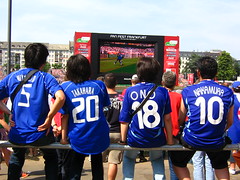
It's about Akihiro Nishimura, the Youth Development Technical Director for the Japanese Football Association (that's "soccer", for our American friends), and his plans to use Knowledge Management to support the development of world class football in Japan.

When I started reading this, i thought "I bet he's really talking about Information Management", but he isn't. As he says in the article
“Japan is facing problems in these three areas – understanding other languages and cultures as well as its standard of football against world standards. The solution is our ‘Knowledge Management’ concept, which aims to translate ‘tacit knowledge’ into ‘explicit knowledge’ and covert ‘individual knowledge’ into ‘organisational knowledge’,” he said.
It will be interesting to see how he does it, but there is absolutely no reason why you cannot look at the tacit cultural knowledge from nations such as Brazil or Spain, where football is woven into national life at all levels and has become so tacit as to be instinctual, and draw out the implications for Japan. We can see some of Nishamura's plans from this quote
Nishimura also revealed that Japan’s development plans are based on world standards, even that of competitions that its national teams were not involved in. “We use world competitions as our standard and then we will analyse them, identify problems, create hypothetical scenarios and then try to solve the problems. And we implement this cycle not just for the national teams. We have a system to make this cycle nationwide,” said the former national player.
We wish him luck, though not TOO much luck when Japan plans England in the next world cup!

Monday, 29 November 2010


The missing skill in KM


Sometimes knowledge has to be transferred in writing or in a recorded form. Sometimes you need to create a written or recorded Knowledge Asset in order to be able to store knowledge, and to be able to broadcast it widely. And if knowledge is to be transferred effectively in text, then some of the core skills required for this are writing skills.

Now many organisations do not select people for their writing skills. Engineering organisations, sales organisations, manufacturing organisations, do not necessarily select or recruit for skills of journalism, or text-based explanation. Many of the most skilled engineers or salesmen or operators can be fantastic experts, they can have huge quantities of knowledge, but they can lack the skills to pass it onwards effectively in text form. When they write it down, the value is lost. I recall Nancy Dixon coming to review KM at BP a few years ago, for example, and concluding that what BP needed to support KM was more Technical Writers.

If transferring knowledge in writing is an important part of your KM framework, then you either need to develop technical writing skills through training and coaching, or you need to provide technical writing services, almost like in-house journalists, to be able to help transform tacit knowledge into writing without loss of value.

Sunday, 28 November 2010


Prediction is difficult, especially about the future


”Computers in the future may weigh no more than 1.5 tons.”

--Popular Mechanics, forecasting the relentless march of science, 1949


”I think there is a world market for maybe five computers.’

--Thomas Watson, chairman of IBM, 1943


”I have traveled the length and breadth of this country and talked with the best people, and I can assure you that data processing is a fad that won’t last out the year.”

--The editor in charge of business books for Prentice Hall, 1957


”But what ... is it good for?”

--Engineer at the Advanced Computing Systems Division of IBM, 1968, commenting on the microchip.


”There is no reason anyone would want a computer in their home.”

--Ken Olson, president, chairman and founder of Digital Equipment Corp.,1977


”This ‘telephone’ has too many shortcomings to be seriously considered as a means of communication. The device is inherently of no value to us.”

--Western Union internal memo, 1876.


”The wireless music box has no imaginable commercial value.Who would pay for a message sent to nobody in particular?”

--David Sarnoff’s associates in response to his urgings for investment in the radio in the 1920s.


”Who the hell wants to hear actors talk?”

--H.M. Warner, Warner Brothers, 1927.


”I’m just glad it’ll be Clark Gable who’s falling on his face and not Gary Cooper.”

Gary Cooper on his decision not to take the leading role in “Gone With The Wind.”


”We don’t like their sound, and guitar music is on the way out.’

--Decca Recording Co. rejecting the Beatles, 1962.


”Heavier-than-air flying machines are impossible.”

--Lord Kelvin, president, Royal Society, 1895.


”Drill for oil? You mean drill into the ground to try and find oil? You’re crazy.”

--Drillers who Edwin L. Drake tried to enlist to his project to drill for oil in 1859.


”Airplanes are interesting toys but of no military value.”

--Marechal Ferdinand Foch, Professor of Strategy, Ecole Superieure de Guerre.


”Everything that can be invented has been invented.”

--Charles H. Duell, Commissioner, US Office of Patents, 1899.


”Louis Pasteur’s theory of germs is ridiculous fiction.”

--Pierre Pachet, Professor of Physiology at Toulouse, 1872


”The abdomen, the chest, and the brain will forever be shut from the intrusion of the wise and humane surgeon.”

--Sir John Eric Ericksen, British surgeon, appointed Surgeon Extraordinary to Queen Victoria 1873.


And a classic quote from “640K ought to be enough for anybody.”

- Bill Gates 1987

Saturday, 27 November 2010


The value of missing knowledge


It's very difficult to value knowledge. It's hard to know what a piece of knowledge is worth. It's much easier to see the value lost when knowledge is missing.

When conducting end-of-project Retrospects, it can be illuminating to ask "what would it have been worth to have had this knowledge at the start of the project?" Here are some real example answers from past Retrospects

“The 8 months hiatus may have cost $30 million”

“The documentation issue may have cost the project about $0.5 million”.

"The impact was a delay in the order of 3 months".


In none of these cases did the knowledge deliver a saving; instead a lack of knowledge incurred a cost or a delay. Nor can we assume that KM will necessarily deliver that value in future. However what these statements do, is start to put a monetary or time value on knowledge, by showing the value lost when knowledge is missing. It also starts to show the size of the prize which KM might make possible, by ensuring critical knowledge is available at the start of projects.

Friday, 26 November 2010


Learn from the mistakes (quote)


You must learn from the mistakes of others. You can't possibly live long enough to make them all yourself.


- Sam Levenson

Thursday, 25 November 2010


The two styles of crowdsourcing


The crowd
Originally uploaded by Sreejith K

Crowdsourcing is a popular topic within KM circles. Where knowledge is dispersed, then accessing the knowledge of the crowd may be the best way to gain insight on a particular topic.

However there are two ways to use the crowd, depending on the sort of topic you are researching.

Where the crowd as a whole (or at least the majority of the crowd) has experience of a topic, then it can be useful to ask the entire crowd, and take an average answer; for example, the often quoted example of using the crowd to guess the weight of a pig, or the number of marbles in a jar, when the average of the guesses from the crowd is more accurate than the guesses of individual experts. We see this in the "Who want to be a millionaire game, when the audience (crowd) is very helpful on the easy questions.

Where the majority of the crowd has little or no experience of a topic, then they become less reliable en masse.  As the Millionare strategy guide tells us - "Once you get through to the later stages the audience becomes unreliable, as on the difficult questions there may still be some audience members who know the right answer, but their contribution will be blotted out by everybody else just having a guess". In situations like this, you canvas the crowd to find the person with experience, and then you ask them individually for the answer. This is how communities of practice forums work - you ask the crowd a question, and only those with experience and knowledge give you an answer. You find the experts in the crowd, and use their knowledge.

The key to crowdsourcing, as in Millionaire, is knowing when to ask the audience en masse, or when to look in the crowd for a friend to phone

Tuesday, 23 November 2010


The removal of false knowledge


I am reading a fascinating book at the moment, called "Deadly Decisions - how false knowledge sank the titanic, blew up the shuttle and led America into war" (and not just America either)

The author, Christopher Burns, looks at decision making from a human point of view, exploring how people and groups filter information and knowledge, and how mistakes in that process can occur.

One of the biggest problems is the persistence of false knowledge - and just how difficult it can be to persuade people that they are wrong (or even to admit to yourself that you are wrong). People have an amazing ability to force-fit new facts into a pre-existing model, and if they don't fit, to ignore them completely.

As a classic example, he quotes Johannes Kepler, the astronomer who first realised that the planets orbit the sun in elliptical orbits.

"For ten years Kepler dismissed his data as false, since he knew per­fectly well that orbits could only be circular. "I was almost driven to madness in considering and calculating this matter," he wrote later. "I could not find out why the planet would rather go on an elliptical orbit [than a circular one]. Oh, ridiculous me." Making a change in so fundamental a scientific concept was profoundly dif­ficult, but exhausted and humbled by his failure, Kepler fell back in his chair, looked out the window, and entertained for the first rime the possibility that the evidence might be correct.
If such an eminent scientist struggles for ten years to challenge a mental model, imagine how difficult it will be in ordinary work situations. Just presenting knowledge to people is not enough. They have to grapple with the new knowledge, internalise it, allow it to challenge existing practices and models, until they too can say "Oh ridiculous me - my existing knowledge is false; I must make a change"

Monday, 22 November 2010


The price of excellence


The price of excellence is discipline. The cost of mediocrity is disappointment.

William Arthur Ward


Trust-building in online communities


trust
Originally uploaded by notsogoodphotography
It is generally accepted that trust is a pre-requisite for effective knowledge transfer and re-use. Trust is relatively easy to deliver in face-to-face groups and teams, but how do you develop trust in online communities of practice, especially those of several hundred members? Here there is no possibility of developing any sort of social relationship with other community members, and yet for years people have trusted these communities enough to be able to disclose their ignorance, ask questions, and act on the answers.

Some of the answers to developing trust can be found in this article from 1998. Although the paper was talking about virtual teams, I think many of the conclusions are valid for online communities as well, and I would suggest that these trust-building factors are applicable to communities of practice

  • A focus on Social communication in the early stages of community formation - at least among the core team. After a while, social communication becomes less important, and many of the communities of practice I follow have little or no social communication nowadays.
  • A transition from early communication about community process, to later communication about task. The early communications in a community are often about "how we work", but soon the conversation needs to change, and to cover content, not process.
  • Communication of enthusiasm and support.
  • Substantial and timely responses to members questions (so that people know that if a question is asked, they WILL get an answer)
  • Good leadership.
  • "Phlegmatic reaction to crisis". This was suggested in the article as a key trust-builder in virtual teams which hit a rocky patch. In a community of practice, the rocky patch is often online dispute or argument, and the community leader who defuses this and turns it into creative problem solving, is often successful in building trust. Communities need a code of behaviour, and the way in which the leader deals with breaches of the code is crucial to maintaining trust in the community as "a safe place to be".
  • Predictable communication. This is key in communities of practice as well as virtual teams. Communities suffer from "out of sight, out of mind" and the community that does not communicate is a community in decline. The leader needs to build and maintain momentum.
Those are some of the trust-building aspects - together they can build a community which people can trust to be safe, to be active, and to be a reliable source of knowledge and guidance.


The US Hurricane story


This is an old story, reprinted from here, but its still a good one.

In the third quarter of 1996 the Technology Advisory Board of BP senior scientists, R&D etc., external professors and industry experts met for one of the two or three colloquia BP delivers annually. This colloquium was focused on the enabling use of IT. A memorable event was Dr. John Henderson's (Boston University) rousing speech to the group on knowledge and leadership. He got people to think about this statement: “if you become part of a team or organization that learns and reuses learning, you can be ready for anything”. Among the stories Henderson told was the story below, from the US Army – a compelling story that provided BP with a vision of what KM could make possible.

“I interviewed a Colonel. Now this Colonel was a Colonel in one of the elite groups in the US army. He had gotten a call, 8 am Saturday morning, reminding him that a hurricane had just hit outside a US city and was told that because the current administration had very strong ties to the area, they believed that this should not be left to the reserve group, because they wanted no Mess-Ups. The orders to the Colonel were clear – go down there, provide any help and support necessary to the state of Louisiana after this hurricane, and Don’t Mess Up. Clear orders, The Army calls it “Intent”, “Strategic intent”. The strategic intent was clear. Now this particular Colonel was in fact a highly decorated combat soldier, he had never done this in his life. He had never actually commanded any type of civilian related activity; he had always been right on the front lines in hot action.
It turns out though that as part of his executive education in the Army he had been exposed to this thing called the Center for Army Lessons Learned. So he got on his laptop computer, dialed into Army Net, hooked into the Center for Army Lessons Learned, and asked the following question (he actually showed me the type) –
“What does the Army know about Hurricane Support Clean-up?"
“And within four hours he had a profile of the deployment of troops from the last three hurricanes in North America that the Army had been sent to support and clean-up on, including types of staff, types of skills, numbers of skills, had a proforma budget, both what budget was requested and what the actual budget was, and where the cost overruns were, he had the ten questions you will be asked by CNN on the first 30 minutes after your arrival, he had a list of every state agency and federal agency that had to be contacted and coordinated with, and the name of the person that he had to contact with, and the Army liaison person who was currently working with that group, some place in North America. And he had established a Lotus Notes advisory team of the three commanders, two of whom were currently generals, one was still a Colonel, who agreed to be his advisory group in this command structure. Four hours later.”

That for us was a tremendous vision of what KM can deliver

Saturday, 20 November 2010


Chesterton quote


Don't ever take a fence down until you know the reason it was put up.


- G. K. Chesterton


King Solomon on KM


King Solomon knew a thing or two about learning from others, and tapping into the wisdom of many, even though he is considered one of the wisest people in history

Plans go wrong for lack of advice; many advisers bring success.
Proverbs 15:22


(see also Proverbs 11:14 - "Where there is no guidance, a people falls, but in an abundance of counselors there is safety".)

Friday, 19 November 2010

The Knowledge Supply-chain and its Management


NHS Supply Chain FG58EVT
Originally uploaded by didbygraham
I was at a meeting yesterday with an engineering client, musing about KM while a discussion was going on about supply chains, and it suddenly struck me that we could also usefully think about KM in terms of a supply chain.

I don't know if you have heard the US Army Hurricane Support story - if not, I will blog the story shortly - but its a story about an Army Colonel who needs knowledge on a topic which he is unfamiliar with, and is able (through the centre for army lessons learned - CALL) to find all the knowledge he needs to do a great job. He can only do this, because there is an entire supply chain devoted to creating, organising and shorting the knowledge and information to provide it to the user, at the point of need.

We also discussed this topic in the NATO lessons learned conference, where I used the analogy of a "lessons conveyor belt" (an idea I had picked up in the Moscow KM conference), but the idea of a supply chain is actually a better analogy, and one that might fit well into the thinking of an engineering company.

Firstly, we think of a supply chain as giving the engineer or the chef or the pharmacist what they need, when they need it, in a form that works. When they are constructing an aeroplane or preparing a bouillabaise or prescribing a remedy, they need the parts and components, and these have to be good quality, and available when needed. It's the same with knowledge. If you need to make a decision, then the knowledge to make that decision has to be good quality, and available when needed.

Secondly, a supply chain should be "just in time".  You don't want parts littering up the workshop - but you need them just in time. It's the same with knowledge. You need it when you need it. You don't want to have to remember everything all the time, but when you need to know something, you are at you most receptive.

Thirdly a supply chain may need to be organised. Most engineering organisations have a PSCM organisation (procurement and supply chain management) to ensure the correct flow of parts and materials to those who need them. The PSCM organisation manages both the stock and flow of material - the stock of parts in the warehouses, and the supply and transport of new material to replenish the stock. Maybe we need a KSCM organisation for Knowledge Supply Chain Management (this is the role of the central KM team). One of the reasons why the US Army KM process works so well, is that there is a KSCM organisation who manages the knowledge supply chain (CALL). This organisation manages both the stock and flow of knowledge.

Fourthly a supply chain is concerned about quality. Parts are useless if they aren't up to the job, so there is quality control and quality assurance built into most supply chains. Similarly, knowledge is useless if it isn't up to the job; if it's wrong, or just Opinion, or if its out of date. There should be quality control and quality assurance and validation steps built into the knowledge supply chain.

Now there are also many ways in which the flow of knowledge is not like a supply chain, the primary reason being that knowledge is both created and consumed in the same place; the projects and operating units of the organisation. It's more a supply loop than a supply chain.

However the analogy of the supply chain is one way of thinking about KM, and has the benefit of thinking about it from the point of view of the knowledge user. You can think "If a person in this organisation were in need of a specific piece of knowledge to make a specific decision, what chain is in place to make sure that this knowledge a) gets to the person on time, and b) is of the correct quality?"

With this particular company we used the analogy in discussion, and decided that their supply chain worked as far as the identification of lessons, but these lessons vanished into a complexity of databases and systems, that there were some key supply chain links missing (validation, verification, compilation, broadcast), and that there was no KSCM organisation in place to fix this. The supply chain analogue gave us a focus for discussion and a way of looking at knowledge flow that enabled a quick diagnostic, and enabled us to identify some key missing items in their KM approach.

Thursday, 18 November 2010


Putting a face to a name


Transferring knowledge in a written form is very difficult. It's far easier to talk with someone, to ask questions, to enter into dialogue. Very often the written form of the knowledge can act both as an introduction (so that the person who needs the knowledge has a basic understanding of what has been learned, and so knows that they can discover something of value through the dialogue) and an aide memoire for the knowledge provider (because, as we know, the human memory alone is unreliable).

One thing that really helps the introduction, and that makes it easier for the knowledge seeker to get in touch with the knowledge provider, is a photograph. A name is good, but somehow putting a face to that name helps us feel more of a link with the person before we even meet them. Any of you who have done online dating know the same - it's hard to feel a connection with an anonymous piece of text, its far easier with a photograph.

So for those of you building knowledge bases, or wikis, or yellow pages systems, or lessons learned systems, make sure people can include their pictures. And make sure these are customisable; let people use informal smiley pictures if they want. It will facilitate connection, which will facilitate knowledge transfer.

Put a face to the name!

(For a while, I used to put a picture in my email signature, but that just made the .pst file too big, so I stopped that practice)

Wednesday, 17 November 2010


Questions quote


Question mark
Originally uploaded by Marco Bellucci


"The one who asks questions doesn't lose his way."
African Proverb
(thanks to Marina Hiscock!)


When to innovate - when to follow


Part of the skill of being accountable for KM in an organisation is balancing creativity and innovation against developing and deploying best practice. Creativity in the wrong place is known as "reinventing the wheel" - wasting time and effort in recreating something which is already very well established. Following and improving established best practice at the wrong time is known as "reorganising the deck chairs on the Titanic" - making small improvements to a doomed system.

So how do we know when to be creative, and when to follow? I have tried to explore this question graphically, as I am a visual learner, and like to plot out idea as pictures.

In this picture, the orange curved areas represent "solution space" - space which represents a technology or a process or a product which "works". Note that the solution space is curved in the time dimension - contexts change, technologies change, markets change, competition changes, and the product or solution that works today, may not work tomorrow.

Let't think about a team trying to develop a project. This is represented by the yellow lines overlying the "old context" solution space. Initially (point a) the team goes through divergent thinking. They innovate - they create - they try many ideas until they find a solution that fits into the valid solution space. After that, they refine their product or process (point b), going through a learning process to find the best fit, the best product, or the best practice. A company which is good at innovation finds a solution quickly, getting from point a to point b as quickly and reliably as possible. A company which is good at developing and deploying best practice narrows down the options very fast from point c, converging rapidly on the most effective solution. From here on, there's no need for any more innovation, until one of two things happens.

Firstly, the solution space moves away from the solution (point c). Your process or product is obsolete, or outmoded, or no longer valid, and you have to find another solution in the new solution space.

Or, secondly, if you are smart, you see the new solution space coming. You say "what if ......". "What if we did X - we could capture a new and emerging market" - that's point d on the plot, when the new solution space emerges. That's where you can do some really creative stuff and capture a new market.

So where do you innovate? You innovate when you need to move into a new solution space - either because a new space appears, or because the old space is no longer tenable.

So where do you perfect and continuously improve? Where the solution fits comfortably in a static or stable context, then don't worry about innovation, worry about continuous improvement. But watch out for then the context changes, or a new context opens. Thats's when innovation is needed again

Tuesday, 16 November 2010


New Knoco newsletter - KM roles


Our latest free newsletter is on the topic of KM roles, including some detail on the roles and capabilities of the KM team.

You can find the newsletter, for free download, here.

Monday, 15 November 2010


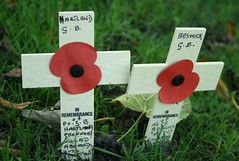
Remembrance


In Remembrance
Originally uploaded by Parksy1964
Yesterday was Remembrance Sunday, the day when we remember those who died or were wounded in the first world war, and in all other conflicts that followed. In the UK we wear red poppies, as a symbol of the poppy fields of France, where so many died.

In our little village church, the sermon yesterday was on Remembrance, and in one or two places it came very close to being a sermon on Knowledge Management. For why do we remember, if not to learn?

In the sermon, the vicar talked about how learning involves reflection on the past, not merely remembrance of the past, and then involves validation of what we reflect, so that we can sift opinion from reality. These observations are familiar to us who work in the KM field. It's not enough just to remember - we all have seen examples of people saying "I remember we made that mistake several times in the past". Remembering is not enough - we need reflection as well; we need to ask "why did that happen?" "what were the root causes behind that event?"

And then we need to validate that reflection. I remember John Henderson of Boston University saying that "all knowledge management systems have a validation step" and I think he is correct, because it is through validation that we convert opinion into knowledge.

And then, of course, we need to make changes. Learning involves change. If we do not make changes, we repeat the past. As Peter Cook (the comedian) used to say "I have learned from my mistakes, and now I am sure I can repeat them exactly". And we will repeat our mistakes exactly, if we do not make changes.

So how does this apply to Remembrance Sunday?

If we are to draw positives from Remembrance of the conflicts of the past, then we need to make Remembrance a part of learning. We need to move beyond Remembering old grievances, and even beyond honouring the memory of the fallen - in order to make Remembrance the first step in Learning.

It would be really heartening to think that this sort of Remembrance-driven learning happens in the governments of the world. It would be fantastic to think that politicians and civil servants analyse the conflicts which we find ourselves involved in, and reflect on what happened, and validate those reflections, and then make changes to avoid these ever happening again. I believe that steps towards this learning are being made in many countries, despite the cultural handicaps that affect learning in the government sector, such as the need to learn across multiple agencies or departments, the scrutiny of the press that makes open reflection a real risk, the huge issues of validating multiple opinions, and the massive issues of confidentiality and information security. I hope these steps continue, for here is an area where effective learning, and effective knowledge management, can make a difference not only to the security of nations, but maybe one to to the ending of war itself.

Sunday, 14 November 2010


Marie Curie quote


One never notices what has been done; one can only see what remains to be done.


- Marie Curie

Saturday, 13 November 2010


Knowledge hoarding will not be tolerated


So long as knowledge hoarding is an effective survival strategy for individuals and contractors, knowledge management will be an uphill struggle.

Instead, your company needs to turn this around completely, and link promotion and job retention with knowledge sharing and re-use. You need to give a clear message to staff and to contractors that, if you share your knowledge freely, you are guaranteed a place at this company. If you don't, your future here is limited. Knowledge hoarding will not be tolerated.

As Bob Buckman used to say at Buckman labs "if you are unwilling to contribute (your knowledge), the many opportunities open to you in the past will no longer be available". There's a cultural driver for you!

And here's the team leader of one of the pioneering learning teams -

"We said that when a person comes on the team they have to really conform to the team goals and beliefs (which included a knowledge-seeking ethos) in order to bed down, and it happened in three or four occasions where somebody came on board and just did not work out. They could not conform to that and we had to ask them to leave"

You can't let knowledge-hoarding thrive and be rewarded, if KM is your goal.

Friday, 12 November 2010


Minimum conditions of satisfaction for KM


Street limbo 4
Originally uploaded by Endlisnis

What are the minimum conditions of satisfaction in your company for KM?

What is the minimum standard that individuals and teams and projects need to do, to deliver a satisfactory level of KM?

Do they need to conduct lessons capture for each project? Do they need to ensure communities of practice are active for each key area of knowledge? Do they need to consult the company knowledge base at the start of each piece of work?

If there are no minimum conditions of satisfaction, then effectively KM is optional; you can do as little of it as you want. If you want to do zero KM, that's up to you. Nobody cares, nobody minds. And if KM is optional, then it won't get done. Nobody has time for optional activity.

If there are minimum conditions of satisfaction, then people are clear about the acceptable standard. They know what is expected of them (at a minimum level, anyway). If they fall below the minimum, then people do mind and people do care. That's the point of minimum conditions of satisfaction - if you don't meet them, then your performance is not satisfactory.

So if you want to drive KM behaviours in your company, get management to set some minimum conditions of satisfaction.

Thursday, 11 November 2010


Bridging the generation divide in knowledge sharing


Generation Gap
Originally uploaded by Joi

This blog post is prompted by Suresh Nair, who added a comment to this post as follows "I have got yet another thing to point out - the old usually are stubborn and are a hard nut to crack. The young do share the available knowledge liberally to at least make their position strong".
Let me tell you about some findings from a recent piece of work, conducting a detailed KM assessment in an organisation.

This organisation had a major issue. The bulk of their knowledge was held by an ageing workforce, and they needed to transfer this to the next generation of young graduates. They had set up a system of mentoring, and personal development plans, but somehow this was not working. When we investigated, these are some of the things we heard

Old guys
"Unfortunately the young guys are not responding. I have to go looking for them -- I have to pull them out of bed to come and learn".

We are ready to share our knowledge with them, but they have to ask. We don't know what they want; we can't read their minds"

"They never ask us anything"

Young guys

"The old guys don't share with us. Maybe they are worried we will take our jobs"

"they are too busy solving problems to train us"

"They never tell us anything"

Do you see the problem? "They never ask us anything - They never tell us anything"

It's not that the old guys are stubborn or the new guys are lazy - both of them would share knowledge, but there is a gap between them, and nothing to bridge the gap. Each is waiting for the other to make the first move. There is no process to help them, and there is no incentive to close the gap either. The young guys lose face by asking to be taught, the old guys are distracted from "important work" by teaching (they see themselves as doers, not teachers). So the knowledge does not get shared.

So how to we get round a problem like this?
First of all we recognise that the problem does not lie with the old guys, nor does it lie with the young guys. The young guys would ask, if they knew how to ask, and if they had an opportunity to ask. The old guys would share knowledge willingly if they thought the young guys were interested. The problem is with the system, and with the assumption that if you say "share knowledge", people will just do it, with no process, no technology, and no governance.
So we introduce some process. We train the young guys in knowledge harvesting. We give them some status as "knowledge managers". We give the old guys some status as internal consultants. We create approaches that close the gap. Then we monitor and measure and track, and we support the people who need support, encourage the people that need encouragement, and recognise the people who need recognition.
What we don't do, is blame the people.

Wednesday, 10 November 2010


Collaborate, but with structure


structures (untitiled II)
Originally uploaded by procsilas

Three sources of input combined for me today, each bearing a message about collaborating within a structure.

The first was Tom Davenport. In this blog post he says  "While we're all becoming familiar with tweets, profiles, writing on walls, and open online discussion, the key to turning those conversational activities into business value has been elusive. I'm becoming convinced that the way to gain value is to combine computer-based sociality with computer-based structure...... the combination of the social and structuring aspects of technology ensures that online social activities are oriented to getting work done. The addition of structure makes everyone more conscious of the work tasks at hand, which limits the desire for purely social interaction. A cultural context emerges around the system in which most people hesitate to chat about personal topics that don't involve work. Purely social applications are too social, and purely structured applications provide too much structure. Combinations of the two are where the work gets done fastest and most effectively".

The second was from an interview with Morten Hansen, where he says " to my great shock, in my first study at Hewlett Packard, or I found that some project teams did worse because they collaborated.  That changed my thinking; the quest was (now) to understand the difference between bad and good collaboration....... The key point in disciplined collaboration is to start with the end in mind: the goal of collaboration is not collaboration but better results!  This means you should only collaborate when it is the best way to improve performance.  Many times it is better to work independently.  You need to have permission to say no to collaboration."

The third was from the Cisco collaboration guide, where they distinguish a phase of collaboration experimentation and investigation, from a second phase which they call the performance phase.  They say "The investigation phase is a natural and necessary introduction to web 2.0 tools and enterprise collaboration as a means to improved operations, but organisations must move into the performance phase to reap organisation wide benefits.  In this crucial stage, organisations move from one-of collaboration efforts that help personal productivity to carefully organised, supported and broader adoption aimed at improving the way that a business works ... efforts shift from a strictly organic and opportunistic approach to a more structured and prescriptive approach to development of collaboration".
 
The message from all three of these is the same. Experimenting with collaboration is fine in the early stages, but sooner or later you must make a mindshift. Collaboration needs to be about business results, and it needs to be set within a structure, and applied with discipline. It needs to be focused on those areas where collaboration will make the biggest business impact, and will solve the big problems. It needs to focus on the "knowledge intensive hot-spots" which are the critical knowledge areas within your Knowledge Management Strategy. It needs to move away from "we must introduce Yammer" or "we must have personal pages" to "we need to connect the people working with our global brands, so collectively we can increase global profile" (for example).

Tuesday, 9 November 2010


Mistakes are a part of being human


Mistakes are a part of being human. Appreciate your mistakes for what they are: precious life lessons that can only be learned the hard way. Unless it's a fatal mistake, which, at least, others can learn from.


- Al Franken


Knowledge sharing, the incentive that works


i love to share
Originally uploaded by creativecommoners
There is a lot of discussion about incentives for sharing and re-use of knowledge, and many of these revolve around the topic of whether you should pay people, or reward people, for putting material into a "knowledge base" such as a wiki or a best-practices database. I have always argued against this sort of transactional incentive, as all too frequently it can easily be gamed.

So I would like to share with you the only incentive system that works to drive knowledge sharing and re-use (other than the hard-nosed approach of making it such an integral part of company culture, that if you don't do it, you aren't welcome at that company).

The most effective way to motivate knowledge sharing across different business units or teams, is to give those teams or unit a common target, a stretch target, and incentivise them strongly for meeting that target. This is the concept of a Peer Group.

For example, imagine a food company, with ten factories round the world producing ready-meals. Imagine that in total, those ten factories annually produce $1bn-worth of product, at a cost of  $200m. Now consider what would happen if you said to those ten factory managers - "you guys are now the Food Production Peer Group.  If you, as a group, can collectively get your total production costs down to $180m, then you will all, as individuals, get a 50% bonus".

What do you think would happen then?

Those 10 factory managers are no longer in competition, they are now part of a collaborative group - a Peer Group.  The first thing they will do is take a good look at the ten factories, and look how they can help each other out. They may certainly look at economies of scale in raw materials etc, but they will also look at how they help each other solve problems, how the poorer performers can learn from the better performers, and how knowledge and good practices can be developed and shared and reapplied among the ten factories. The incentive may be at leadership level, but the leaders will themselves start to set the tone in their own factories; asking "how does the factory in Prague deal with this problem? "Have you looked at how Beijing tackle this? Have you shared that solution with Rio?". They will set up the Peer Assists and the Communities of Practice that enable the sharing of knowledge across the Peer Group, and that will start to improve teh collective performance.

Here is a quote from a manager in a Peer Group, illustrating how the peer group structure actually makes a difference, through knowledge sharing, to the individual businesses.

"I think the activity that builds trust and proper behaviour is when the Peer Group actually begins to intervene in the details of a business and it makes a positive impact. They've done a Peer Assist, or somebody has learned some valuable lessons; its when the individual business begin to feel that belonging to this club is helping them manage their business better."

A Peer Group doesn't have to be a group of factory owners. It is a grouping of mid-level managers who are all tasking the same business problem. Maybe its a group of sales directors selling the same brand. Maybe its a group of store managers in charge of city-centre stores. Maybe its a group of project leaders, leading construction projects building road tunnel projects. The key is to incentivise them collectively, and not just individually; to give them a collective stretch target, and to incentivise it powerfully enough that they become what is known as T-shaped managers - managers that look laterally to their peer group, as well as downwards to their business unit, project or team. And T-shaped managers drive a connected organisation.

Monday, 8 November 2010


The role of analysis in knowledge management


The more I work with public sector organisations in knowledge management, the more I come across things that are unusual, if not unknown, within the private sector. In industrial knowledge management, the project teams tend to do their own analysis of lessons learned. They look at performance, they look at outcome against expectations, they identify the learning points, and they decide the actions needed to embed the learning. In the public sector, the analysis is often done by a different group.

Take for example the NATO Joint Analysis And Lessons Learned Centre (note how they link analysis and lessons learned into a single organization). Their learning cycle is based on the Observe, Orient, Decide, Act loop (OODA). Here individuals involved in an activity, maybe an exercise or maybe a military operation, will make a number of observations about things that went well, things that did not go so well, and ways in which performance mis-matched against expectation. The analysis of these observations will often be done by a separate team of analysts. The purpose of this analysis is to understand the root causes of the observations, to investigate the value of potential action plans, and to appreciate where lessons are being identified that could benefit the wider organisation (see the Jallc analysis handbook). The analysts can then make recommendations to senior people, who can make the decisions and decide the actions which complete the learning loop.

Similarly many government organisations have analytical teams. DFID and the Foreign Office have Analytical teams, and their remit at least partly to look at lessons from the application of overseas policy. They base these analyses on external assessments, and sometimes on data they have gathered themselves, and on interviews with their own staff and with external people. In fact one of the key cornerstones of evidence-based policy, is that the effect of policy should be evaluated through evidence, and there needs to be one or more groups to analyse that evidence and to recommend lessons to be learned. As in the NATO example, the analysts can make recommendations to senior staff, who can make decisions about future policy.

So why doesn’t this happen in industry? Should there be an analysts who, looking at the observations from the teams, picking out the generic learnings, and making recommendations for action?

I think partly the situation is simpler in industry. Seldom are you looking at anything of the complexity of a military operation, or government policy. Instead you are looking at decisions made within a project, or within a factory, or within a marketing and sales team. The situation is less complex, and observations can usually be analysed by the team themselves, with the help of a facilitator.

Secondly, when the situation becomes more complex, that’s when analysis is introduced. If there is a major accident, a big incident, a serious environmental breach, then an investigation team is convened and analysis happens (see chapter 13 of the Lessons Learned Handbook).

However I think there is an area where industry could learn from the public sector, and that would be to have a small analysis group trying to pick up the “weak signals”, looking at the lessons from across the organisation, looking at trends, looking at common reasons for failure or common repeat mistakes. They may well pick things up by taking a high level view, that individual project teams might miss. Sometimes this happens; sometimes industry will undertake a portfolio review, or a “train wreck analysis;” looking at common reasons for failure, but this tends to be ad hoc and one-off. There is certainly a case for having a small group with this as their fulltime remit.

Similarly, the public sector can learn from industry. High level analysis and evaluation is not the only way of learning. It can form part of a learning loop, but this is a very long-cycle learning loop which may take years for the actions to be identified and closed out. It is also a learning loop which involves many parties – the people who make the observations, the analysts themselves, the people who make the decisions, and the people to take the actions. These are four parties, and every time you pass accountability from one party to another, there is a chance that the ball is dropped. The public sector could look also at introducing a shorter learning loop, where lessons and recommendations are picked up from the implementation teams and the field staff and routed through to quick action. Here NATO have got the best structure, through combining analysis and lessons learning into a single team.

Friday, 5 November 2010


Company satisfaction with KM remains low


Pointed out by David Griffiths in the KMRussia conference last week - Bain & Company has surveyed executives around the world for the past 17 years, about the management tools they use and how satisfied they have been with the performance of those tools. 
 
They focus on 25 tools, honing the list each year.
 
Every year, KM has been on the list. Every year since 2002, it's usage seems to be around the mean, or above the mean. Every year, satisfaction with KM seems to be below the mean (I know the graph gives satisfaction scores of about 3.5 out of 5, but compared to other tools, this is low; 3rd or 4th quartile).
 
Interesting, eh? People still see it as important, but they can't get it to work. This suggests that there's still a market there for KM support and services. Either that, or KM doesn't work (which I know is not true, having seen it work many times).

Thursday, 4 November 2010


The three distinct KM areas of focus


Another snippet from Larry Prusak last week.

Larry says that there is so much confusion between KM and IM, that when he is talking with organisations, he quickly turns the conversation away from KM in general, to two topics in particular

Innovation
Collaboration.
Larry says that everyone can understand these terms more clearly than "knowledge management", and he believes that most of KM can fit under these two categories.

Personally, I would add a third one

Learning from experience.

I think this is sufficiently distinct from collaboration that it needs its own category. But otherwise, I think the Big Man speaks truth (as usual). While KM is such a fuzzy term, lets focus on what's distinctive about KM, and where it's different from document management, information management, etc etc. And these three areas of focus are distinctive enough to start off most conversations.

Wednesday, 3 November 2010


The value of knowledge - Larry Prusak's question


When I was at the KMRussia conference with Larry last week, he asked a question which made me really think hard, and its an interesting question for anyone concerned with KM metrics.

He asked "What percentage of a company's non-capital spend, is spent on knowledge"?

Now I would be thinking in terms of 3% maybe - perhaps the training budget, or perhaps the budget spent on conferences, but Larry suggested that would be quite wrong.

His answer was - 60%

60% of an organisations non-capital spend, is spent on knowledge.

As he said - "When I was at my last job, at the age of 50 they paid me 10 times more than a 30-year old with the same qualifications. What was the residual difference? Knowledge and experience".

Hmmm - now, that's an interesting way to think about it! Take the company wages bill, take away what this bill would be if everyone was paid as a new graduate, and that's the investment in knowledge. After all, if knowledge was not valuable, you could staff the company with smart young graduates at a fraction of the cost. The only reason you don't, is because knowledge is valuable.

And what do most companies do with this knowledge, that they have invested 60% of their non-capital spend on?

Usually they leave it in people's heads, where it can't be seen, can't be accessed easily, where it leaks away until the day it walks away.

Unless, that is, they have bought into the value of KM, as a way of maximising that investment.

Tuesday, 2 November 2010


KM and the experience curve - a chance to test the model?


The concept of the Experience Effect has been around for a long time, "first observed by the 19th Century German psychologist Hermann Ebbinghaus according to the difficulty of memorizing varying numbers of verbal stimuli" (according to Wikipedia).

Basically, the experience effect means that the more times you do or produce something, the faster and cheaper it becomes.  The experience effect is measured as a percentage, and its the percentage of the initial cost reached through each doubling of production. So if the first 1000 cost £100 each, and the second 1000 cost £90, the experience effect is 90%

NASA quotes the following experience curves

Aerospace 85%
Shipbuilding 80-85%
Complex machine tools for new models 75-85%
Repetitive electronics manufacturing 90-95%
Repetitive machining or punch-press operations 90-95%
Repetitive electrical operations 75-85%
Repetitive welding operations 90%
Raw materials 93-96%
Purchased Parts 85-88%

Now it struck me that here is the opportunity to test KM. KM also has an effect on the learning curve, and theoretically at least, good KM should result in steeper learning curves and a lower Experience Effect percentage. With poor KM, or no KM, the experience effect should still be there, but a higher percentage.  With good KM, it should be accelerated.

So my question is - is it? Is it actually accelerated? Are percentages lower?

Do we have enough data on learning curves from (say) Shell or Exxon Mobil, where KM is applied rigoroously, to show that good KM can beat the natural Experience Effect?

Or do we have data from Ford's heyday in KM, to show that they could drive costs down faster than "natural experience"?
I don't know the answer, and would be interested in any input. Does anyone have good statistics on learning curves that could answer this?

Blog Archive