Showing posts sorted by relevance for query knowledge supply chain. Sort by date Show all posts

Monday, 19 July 2021

The Knowledge Manager as Supply Chain manager - an analogy

If Knowledge Management is like a supply chain for knowledge, then the Knowledge Manager is the Supply Chain manager.


Image from wikipedia japan

I have blogged many times about the analogy between Knowledge Management and a supply chain for knowledge. Like all analogies, this is limited (the view of the supply chain, which implies a supplier and a user, can be balanced by a view of knowledge co-creation and emergence, for example), but can also be a very useful lens through which to examine KM.

 A corollary of this idea is that the Knowledge Manager for the organisation or division takes the role of the Supply Chain manager for knowledge.  The knowledge manager does not create the knowledge nor use it, but is accountable for its creation and supply to the user.

We can explore this idea by looking at the job description of a supply chain manager, and seeing how this translates into KM terms. The supply chain job description below is taken from here and here.


Supply chain manager job description

Knowledge manager job description

Supply Chain Managers plan, develop, optimize, organize, direct, manage, evaluate, and are accountable and/or responsible for some or all of the supply chains processes of organizations. Knowledge Managers plan, develop, optimize, organize, direct, manage, evaluate, and are accountable and/or responsible for some or all of the knowledge management processes of organizations.
Diagram supply chain models to help facilitate discussions with customers.Diagram knowledge management models to help facilitate discussions with knowledge users.
Select transportation routes to maximize economy by combining shipments or consolidating warehousing and distribution.Select knowledge transfer approaches to maximize efficiency and effectiveness
Assess appropriate material handling equipment needs and staffing levels to load, unload, move, or store materials. Assess appropriate KM staffing levels for knowledge creation, transfer, storage, synthesis and re-use.
Confer with supply chain planners to forecast demand or create supply plans that ensure availability of materials or products. Confer with the business to forecast the demand for knowledge; create strategies and plans that ensure availability of knowledge as and when needed.
Define performance metrics for measurement, comparison, or evaluation of supply chain factors, such as product cost or quality. Define performance metrics for measurement, comparison, or evaluation of KM factors, such as knowledge availability or quality.
Monitor supplier performance to assess ability to meet quality and delivery requirements. Monitor knowledge supplier performance (eg the the knowledge supply from projects or from research) to assess ability to meet quality and delivery requirements.
Analyze information about supplier performance or procurement program success. Analyze information about knowledge supplier performance or knowledge creation / acquisition program success.
Meet with suppliers to discuss performance metrics, to provide performance feedback, or to discuss production forecasts or changes.Meet with knowledge suppliers to discuss performance metrics, to provide performance feedback, or to discuss new knowledge needs.
Design or implement plant warehousing strategies for production materials or finished products Design or implement storage and synthesis strategies for documented knowledge
Analyze inventories to determine how to increase inventory turns, reduce waste, or optimize customer service. Analyze knowledge stores to determine how to increase re-use, reduce waste, or optimize customer service.
Review or update supply chain practices in accordance with new or changing environmental policies, standards, regulations, or laws.Review or update KM practices in accordance with new or changing standards and requirements.
Implement new or improved supply chain processes.Implement new or improved KM processes.


But what's different?

The main difference between the role of the supply chain manager and the role of the Knowledge Manager is that the supply chain manager can assume that there is a customer for their services. They can assume that there are manufacturing workers who are ready and waiting for the supply of parts and materials.

The  Knowledge Manager cannot assume this.

The Knowledge Manager also has to work as a Demand Chain Manager; stimulating the demand for knowledge, and introducing the process and systems by which knowledge is sought, as well as those by which it is supplied.

Also, as stated above, there are elements of KM which are more collaborative and less of a flow process.

But where knowledge flows from supplier to user, then the knowledge manager can see herself acting as a supply chain manager, with some of the accountabilities listed above.


Friday, 19 November 2010

The Knowledge Supply-chain and its Management


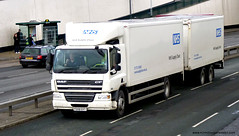
NHS Supply Chain FG58EVT
Originally uploaded by didbygraham
I was at a meeting yesterday with an engineering client, musing about KM while a discussion was going on about supply chains, and it suddenly struck me that we could also usefully think about KM in terms of a supply chain.

I don't know if you have heard the US Army Hurricane Support story - if not, I will blog the story shortly - but its a story about an Army Colonel who needs knowledge on a topic which he is unfamiliar with, and is able (through the centre for army lessons learned - CALL) to find all the knowledge he needs to do a great job. He can only do this, because there is an entire supply chain devoted to creating, organising and shorting the knowledge and information to provide it to the user, at the point of need.

We also discussed this topic in the NATO lessons learned conference, where I used the analogy of a "lessons conveyor belt" (an idea I had picked up in the Moscow KM conference), but the idea of a supply chain is actually a better analogy, and one that might fit well into the thinking of an engineering company.

Firstly, we think of a supply chain as giving the engineer or the chef or the pharmacist what they need, when they need it, in a form that works. When they are constructing an aeroplane or preparing a bouillabaise or prescribing a remedy, they need the parts and components, and these have to be good quality, and available when needed. It's the same with knowledge. If you need to make a decision, then the knowledge to make that decision has to be good quality, and available when needed.

Secondly, a supply chain should be "just in time".  You don't want parts littering up the workshop - but you need them just in time. It's the same with knowledge. You need it when you need it. You don't want to have to remember everything all the time, but when you need to know something, you are at you most receptive.

Thirdly a supply chain may need to be organised. Most engineering organisations have a PSCM organisation (procurement and supply chain management) to ensure the correct flow of parts and materials to those who need them. The PSCM organisation manages both the stock and flow of material - the stock of parts in the warehouses, and the supply and transport of new material to replenish the stock. Maybe we need a KSCM organisation for Knowledge Supply Chain Management (this is the role of the central KM team). One of the reasons why the US Army KM process works so well, is that there is a KSCM organisation who manages the knowledge supply chain (CALL). This organisation manages both the stock and flow of knowledge.

Fourthly a supply chain is concerned about quality. Parts are useless if they aren't up to the job, so there is quality control and quality assurance built into most supply chains. Similarly, knowledge is useless if it isn't up to the job; if it's wrong, or just Opinion, or if its out of date. There should be quality control and quality assurance and validation steps built into the knowledge supply chain.

Now there are also many ways in which the flow of knowledge is not like a supply chain, the primary reason being that knowledge is both created and consumed in the same place; the projects and operating units of the organisation. It's more a supply loop than a supply chain.

However the analogy of the supply chain is one way of thinking about KM, and has the benefit of thinking about it from the point of view of the knowledge user. You can think "If a person in this organisation were in need of a specific piece of knowledge to make a specific decision, what chain is in place to make sure that this knowledge a) gets to the person on time, and b) is of the correct quality?"

With this particular company we used the analogy in discussion, and decided that their supply chain worked as far as the identification of lessons, but these lessons vanished into a complexity of databases and systems, that there were some key supply chain links missing (validation, verification, compilation, broadcast), and that there was no KSCM organisation in place to fix this. The supply chain analogue gave us a focus for discussion and a way of looking at knowledge flow that enabled a quick diagnostic, and enabled us to identify some key missing items in their KM approach.

Wednesday, 15 June 2016

The Knowledge Manager as Supply Chain manager

If Knowledge Management is like a supply chain for knowledge, then the Knowledge Manager is the Supply Chain manager.


Image from wikipedia japan
I have blogged many times about the analogy between Knowledge Management and a supply chain for knowledge, and am presenting this idea later today in KMUK.  A corrolory of this idea is that the Knowledge Manager then takes the role of the Supply Chain manager for knowledge.  The knowledge manager does not create the knowledge nor use it, but is accountable for its supply to the user.

We can explore this idea by looking at the job description of a supply chain manager, and seeing how this translates into KM terms. The supply chain job description below is taken from here and here.


Supply chain manager job description

Knowledge manager job description

Supply Chain Managers plan, develop, optimize, organize, direct, manage, evaluate, and are accountable and/or responsible for some or all of the supply chains processes of organizations. Knowledge Managers plan, develop, optimize, organize, direct, manage, evaluate, and are accountable and/or responsible for some or all of the knowledge management processes of organizations.
Diagram supply chain models to help facilitate discussions with customers.Diagram knowledge management models to help facilitate discussions with customers.
Select transportation routes to maximize economy by combining shipments or consolidating warehousing and distribution.Select knowledge transfer approaches to maximize efficiency and effectiveness
Assess appropriate material handling equipment needs and staffing levels to load, unload, move, or store materials. Assess appropriate KM staffing levels for knowledge creation, transfer, storage, synthesis and re-use.
Confer with supply chain planners to forecast demand or create supply plans that ensure availability of materials or products. Confer with the business to forecast the demand for knowledge; create strategies and plans that ensure availability of knowledge as and when needed.
Define performance metrics for measurement, comparison, or evaluation of supply chain factors, such as product cost or quality. Define performance metrics for measurement, comparison, or evaluation of KM factors, such as knowledge availability or quality.
Monitor supplier performance to assess ability to meet quality and delivery requirements. Monitor knowledge supplier performance to assess ability to meet quality and delivery requirements.
Analyze information about supplier performance or procurement program success. Analyze information about knowledge supplier performance or knowledge creation / acquisition program success.
Meet with suppliers to discuss performance metrics, to provide performance feedback, or to discuss production forecasts or changes.Meet with knowledge suppliers to discuss performance metrics, to provide performance feedback, or to discuss new knowledge needs.
Design or implement plant warehousing strategies for production materials or finished products Design or implement storage and synthesis strategies for documented knowledge
Analyze inventories to determine how to increase inventory turns, reduce waste, or optimize customer service. Analyze knowledge stores to determine how to increase re-use, reduce waste, or optimize customer service.
Review or update supply chain practices in accordance with new or changing environmental policies, standards, regulations, or laws.Review or update KM practices in accordance with new or changing standards and requirements.
Implement new or improved supply chain processes.Implement new or improved KM processes.


But what's different?

The main difference between the role of the supply chain manager and the role of the Knowledge Manager is that the supply chain manager can assume that there is a customer for their services. They can assume that there are manufacturing workers who are ready and waiting for the supply of parts and materials.

The  Knowledge Manager cannot assume this.

The Knowledge Manager also has to work as a Demand Chain Manager; stimulating the demand for knowledge, and introducing the process and systems by which knowledge is sought, as well as those by which it is supplied.


Wednesday, 18 November 2020

Revolutionising the productivity of the knowledge worker - part 3, the knowledge supply chain

Over the last two days I have blogged about the challenge of revolutionising the productivity of the knowledge worker, which Peter Drucker set for us. We have looked at the division of knowledge labour, and the automation/augmentation of knowledge work. Today we look at the knowledge supply chain. 


The productivity of the manual worker was revolutionised through the transformation from craftsman production to factory production. Work was divided and automated, and individuals took their part within a work chain, or production line. Partly finished work came to them automatically, together with the parts and tools they needed, they did their own tasks, added their own value, and passed the updated work on to the next person. 

This is the supply chain for manual workers, who make things; an organised mechanism for making sure that the components they need to do their job are ready at hand when needed. The supply chain can be an assembly line, or a more complex arrangement involving parts, suppliers and warehousing.

Knowledge workers, on the other hand, make decisions rather than things, and the raw material for knowledge workers is knowledge. 

Therefore in a world where knowledge work is divided (where we do not rely on experts who carry all the knowledge in their head) the knowledge worker needs partly finished knowledge to come to them automatically, together with the knowledge tools and additional knowledge they need, and when they have made their decisions and added their own value (often this is the innovation piece), then the updated work needs to be passed on to the next knowledge worker.

This is the vision of the organisation as a knowledge factory, or a knowledge assembly line, and for this to work, we need the knowledge supply chain.  Often the knowledge supply chain involves knowledge suppliers, and warehousing, just as a supply chain for parts. 

I have already blogged several times about the knowledge supply chain (see the relevant tab in the word cloud to the right). The knowledge supply chain is a new way of looking at an organisation of knowledge workers (predicted 20 years ago by Lord Browne of BP), and for ensuring that the correct knowledge reaches each knowledge worker, at the time and place they need it, to the required standard and quality, in a deliberate and systematic manner. Knowledge Management then becomes the supply chain for the knowledge worker; a parallel knowledge workstream that works alongside the project pr product workstream.

Few organisations have got this right. The service-desk sector, where providing correct knowledge (answers to customer questions) to the front line staff is a vital KM service, have models for providing knowledge to those who need it. Toyota have got it right (I believe). The Military, with its chains of accountability and with the supply of knowledge and information built into the Battle Rhythm, probably do it best. 

This vision of "Knowledge Management as a supply chain" requires a complete Knowledge Management Framework to be in place, with roles, processes, technologies and governance, with the sole purpose of supplying knowledge to the knowledge workers, to enable them to make the correct decisions.

In the next and final post of this series we look at the nature of this supply chain, and what it needs to become Lean.


Thursday, 28 July 2016

A vision of the Knowledge Supply Chain

One of the clearest visions for the Knowledge Supply Chain comes from the UK National Health Service (NHS).


Image from wikimedia commons
The analogue of a Supply Chain for Knowledge Management is one I have been using for a while now (see herehere and here for example), as a different way to look at the purpose of KM and the role of the Knowledge Manager. The Google definition of a supply chain is

the sequence of processes involved in the production and distribution of a commodity

and if that "commodity" is Knowledge, then the definition above could easily refer to Knowledge Management.

The knowledge supply chain is a new way of looking at an organisation of knowledge workers (predicted 20 years ago by Lord Browne of BP), and for ensuring that the correct knowledge reaches each knowledge worker, at the time and place they need it, to the required standard and quality, in a deliberate and systematic manner. Knowledge Management then becomes the supply chain for the knowledge worker.

So I was very interested to receive this link from Anne Brice to a paper which laid out exactly this Knowledge Supply Chain vision for the UK National Health Service (NHS) 12 years ago.

The Knowledge Supply Chain vision for the NHS

The paper linked above is a guest editorial written by Anne Brice (currently Head of KM for Public Health England) and Muir Gray (previously CKO for the NHS), describing the vision for a National Knowledge Service for health, and containing the following text:

The generation of the knowledge that people need is the first step in a supply chain. It is necessary but not sufficient, because knowledge has to reach the point where it is needed and be available when it is needed. The National Knowledge Service is committed to ensuring that decisions are based on best current knowledge wherever and whenever those decisions are being made. This requires the supply chain to be organized from the producer to the consumer, ensuring that:
  • the knowledge that is needed is generated; 
  • the knowledge that is generated is organized; 
  • the knowledge that is organized is delivered to where decision-makers need it before and during the process of decision-making; 
  • the organizations and individuals within health care systems have the skills and resources to find, appraise and use the knowledge.

This is one of the clearest visions I have seen of the Knowledge Supply Chain, covering the whole chain from supplier to user.  This vision is still in progress within the NHS. The original structure of a National Knowledge Service has changed along the way, and the vision now seems to be part of the Library and Knowledge services, focusing more on the middle of the chain - the organisation and delivery of electronic resources.

As Anne Brice said to me this week by email, "If the vision is still alive then it needs to evolve to stress the whole 'health system'. Given the current emphasis on prevention and reducing inequalities, this can only happen if it encompasses public health and social care, and not just the NHS".

It is therefore important that the current library-focused organization and delivery role is seen as part of a larger supply chain for health system knowledge, much as a warehouse management role is part of a larger supply chain for other commodities. 

Monday, 30 September 2013


What can KM learn from supply chain management?


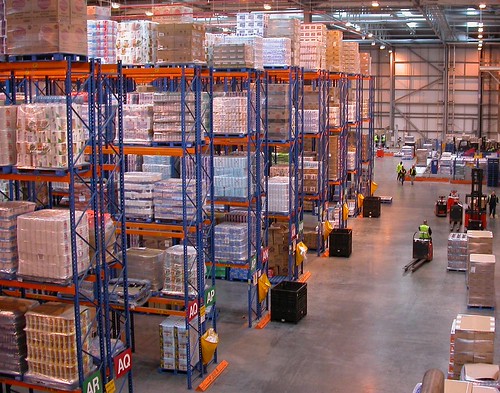
Distribution centre Last week I presented the lessons learned loop as a Knowledge Management supply chain,

If this is a reasonable analogy, then we should be able to look at the principles behind good supply chain management, and see if Knowledge Management can learn from them.

Principle number 1. Everyone involved must be committed to the (knowledge) supply chain. Supplier-user relationships must be good. The teams must be eager to share their lessons, the process owners must be eager to hear them, the users must be keen to get the new knowledge. The market for new knowledge will drive the supply chain.

Principle number 2. The (knowledge) supply chain must be reliable. We need to make sure lessons do not get lost somewhere along the way. People need to be convinced that if they share lessons, something will get done, and people need to be convinced that if they ask for knowledge, it incorporates the latest lessons. We will need validation along the chain, and we will need to check that lessons reach the right people, and that actions are taken and changes made as a result.

Principle number 3. The (knowledge) supply chain must be quality-controlled. Garbage in, garbage out. Poor quality parts, poor quality product. Let's aim for good lessons to feed good knowledge.

Principle number 4. The (knowledge) supply chain must be transparent, with visibility and metric, to give you oversight. We need to be sure the supply chain is working, so we need metrics on lessons volume, lessons distribution, knowledge assembly, knowledge re-use.

Principle number 5. The (knowledge) supply chain must add value. People need to be sure that when they share lessons and experiences, that this will make a change to business results.

Principle number 6. The (knowledge) supply chain must be efficient. The cycle time from experience to re-use needs to be as short as possible.

Principle 7. The (knowledge) supply chain must be lean. We need to aim for just-in-time knowledge. The user should not have to stockpile knowledge themselves, it should be provided by the supplier, as and when it's needed.


Friday, 20 February 2015

Removing waste from the KM supply chain

There is a lot of value on using metaphors as different ways to look at KM, and recently I have gained a lot of value from using the metaphor of a Supply Chain.  Can we use a Lean Supply Chain as a model for Lean KM?


Knowledge has a user - the knowledge worker who needs to make a decision or plan an action - and it has a source - usually someone else's experience. The KM supply chain consists of getting the knowledge from the source to the user in the most effective,  efficient and timely manner.

In the industrial world, much work has been done on the concept of  a Lean Supply Chain - one in which all waste has been removed.  A Lean supply chain is one where components reach the manufacturer "just in time", with minimal additional processing, and in a form where they can be used immediately.

Can we eliminate the waste from our Knowledge supply chain, and end up with Lean Knowledge Management -  where knowledge reaches the knowledge worker "just in time", with minimal additional processing, and in a form where it can be applied immediately?

Let's look at the 7 wastes, and see what we can do.

Waste #1. Over-production—producing more than and/or ahead of demand.  

Over-production of Knowledge is very common in Knowledge Management.  We see this particularly in push-based enterprise social media, where we can be bombarded with hundreds of messages, very few of which are relevant. This blog post describes overproduction taken to the extreme, with massive push of (often duplicated) content resulting in destruction of value, with people spending far more time creating content, than time was saved re-using it. It is no coincidence that Lean Supply Chain is pull-based, and Lean Knowledge Management should be pull-based as well.

Waste #2. Waiting. 

Knowledge Management can be really helpful, but only if the knowledge arrives on time to impact the decision. A lean KM supply chain will focus on the "clock speed" of KM, to ensure questions receive answers as soon as possible, and new knowledge is identified and embedded into process within minimum time.

 Waste # 3. Unnecessary transport of materials.

In our knowledge management world, this really refers to hand-off, and to whether the chain between knowledge supplier and knowledge user can be made as short as possible. Communities of practice, for example, where "ask the audience"-type questions can be asked, and answered directly by the knowledge holder, will minimise the number of handoffs.  With a large community of practice, everyone is at One Degree of Separation.

Waste # 4. Non-value added processing—doing more work than is necessary. 

We often see this in lesson-learning systems, where the work of sifting and sorting multiple lessons or multiple search-hits has to be done by the knowledge user. Far better is a system where the sifting and sorting is done once, at source, by the lessons management team or the relevant subject matter expert. Then instead of each reader doing the work of synthesis, the knowledge arrives already synthesised.

 Waste # 5. Unnecessary motion. 

In KM terms, this could be unnecessary online motion - the need to visit multiple databases, multiple knowledge bases, a separate CoP system, another place for Yammer feed etc. The best and most efficient KM systems have everything in a single portal - the community forum, the knowledge base etc etc.

Waste # 6. Excess inventory— frequently resulting from overproduction.  

Lessons systems jammed with lessons, hundreds of hits from the search engine, knowledge bases crammed with near-duplicate content, or obsolete content, or contradictory content - all of these represent the waste associated with excess inventory. Part of the role of the process owner in KM is to ensure that the knowledge inventory is well managed and free from dross.  This does not mean eliminating knowledge which might be useful some day; it means eliminating duplicates, wrong knowledge, and otherwise removing noise from the system and leaving the signal behind.

Waste # 7. Defects, or the cost of wrong knowledge. 

Wrong knowledge is worse than no knowledge. Any KM system needs to have a quality assurance step, whether this is Community QA of a wiki, or editorial QA of a knowledge base.


The lean supply chain analogy allows us a new way to look at KM, and the 7 wastes give us a filter for improving the way we work. If we could make our KM supply chains truly lean, we could considerably improve the way our organisations operate.

Monday, 5 October 2020

How to measure the waste in the KM supply chain

If KM is a lean supply chain for knowledge, how can you measure the amount of waste in the chain?


Shredded waste, image from wikimedia commons
I have often used the concept of a knowledge supply chain as a way of describing Knowledge Management; the supply chain being a mechanism for providing knowledge to the knowledge worker in an efficient and effective way, just as a materials supply chain provides materials to the manual worker. 

If you go one step further, you can use the principles of the lean supply chain, as applied to materials supply, to make the knowledge supply chain even more efficient. We do that by eliminating "the 7 wastes" of overproduction, waiting, unnecessary transport, non-value-add processing, unnecessary motion, excess inventory, and defects. 

But how can we measure the current level of waste in the knowledge supply chain? Here's how.

  • Waste #1. Over-production—producing more knowledge than we need.
We might measure this by measuring how much of what is published is actually useful. We could for example look at the read-rates of content (how much content never gets read), or the duplication of content. For example the World Bank commissioned a study of "Which World Bank Reports Are Widely Read", which was able to analyse which of the reports were widely downloaded and cited, and which remained unread, and therefore represent over-production.  A lot of effort and knowledge goes into these reports, and the last thing the World Bank wants is to create reports which are never downloaded.  We could also look at the push/pull ratio in communities of practice, balancing the number of question-led discussions against the number of publication-based discussions (see this analysis of linked-in discussions, for example). 


  • Waste #2. Waiting. 
Here we measure the clock-speed of knowledge, such as the time it takes for a community question to be answered, the time it takes to find relevant synthesised knowledge, or the time it takes for lessons to be a) collected and b) embedded into guidance.


  • Waste # 3. Unnecessary transport of materials. 
 In our knowledge management world, this really refers to hand-off, and we might measure the number of links or steps between knowledge supplier and user. Communities of practice, for example, where "ask the audience"-type questions can be asked, and answered directly by the knowledge holder, will minimise the number of handoffs. With a large community of practice, everyone is at One Degree of Separation.  A wiki, where knowledge suppliers can update knowledge themselves without going through unnecessary editorial process, can also minimised handoffs.

  • Waste # 4. Non-value added processing—doing more work than is necessary. 
We might measure this by looking at the degree of processing the end user has to do to get an answer to their question, and how much synthesising is done by the user, which could be done further up the supply chain.  For example, does a user have to read and understand all lessons in a database on a particular topic, or can you make sure that these have already been synthesised into guidance?


  • Waste # 5. Unnecessary motion. 
We measure this by counting the number of places the knowledge user needs to go to in order to find relevant knowledge. Do they have to visit every project file to find lessons, or are the lessons collected in one place? Is there one community of practice to go to, or many? Linked-in, for example,  had at one time 422 discussion groups covering the topic of Knowledge Management rather than only one. That is a waste of 421 groups (99.8% waste).


  • Waste # 6. Excess inventory
Like waste 1, we look at the unnecessary, duplicate or unread knowledge in the knowledge bases and lessons learned systems.


  • Waste # 7. Defects
Here we measure now much knowledge is out of date, and how much is poor quality. Some organisations, for example, measure the quality of lessons with a lesson management system, and often find that much of the content is of very poor quality. If your users are telling you that the lesson management is full of poor quality lessons, then you have a defect problem.

All of these metrics are indicators that your KM framework, or knowledge supply chain, is far from efficient. 

Monday, 6 December 2010


Warnings - the crucial content of the knowledge supply chain


Warning!
Originally uploaded by Håkan Dahlström

I blogged recently on the knowledge supply chain, as a metaphor for the transmission of knowledge and lessons in support of corporate decision making. The supply chain I described was a lateral one, peer to peer, designed for identifying learning from activity which can be used to improve future activity.

There is another knowledge supply chain, which is a vertical one. This is the supply of knowledge, and often the supply of warnings, from deep within the heirarchy, up to levels where major decisions need to be made.

It is the failure of this vertical knowledge supply chain that is behind some of the most spectacular disasters of the last century.

Nancy Dixon recently identified the 3rd age of KM being the integrated flow of knowledge up and down the heirarchy. This is still a very difficult thing to get right, as is profoundly illustrated by Christopher Burns in his book "Deadly Decisions - how false knowledge sank the titanic, blew up the shuttle, and led america into war". Burns mentions several cases where warnings have been ignored, or downplayed, or rationalised away completely. He cites many high profile examples
  • Multiple warnings, often very detailed, that Al Qaeda was planning a major assault, using aircraft, within the USA
  • Repeated warnings that the O-rings on the Challenger shuttle were at risk at low temperatures (the sam O-rings that failed at low temperature, with catastrophic loss of the shuttle and all crew)
  • Warnings that the Titanic was steaming into an icefield
  • Warnings that the cooling water system on the Three Mile Island plant was faulty, and might lead plant engineers to make decisions that could lead to melt-down
In his book, Burns talks about the psychology of information and knowledge processing, and reinforces how we form mental models which can be difficult to shift. A strong mental model can reject facts that don't fit, and companies and organisations can create structures that actually make this worse. The Bush Administration, he argues, was particularly bad at this, surrounding the president with like minded people, and producing a heirarchical knowledge supply chain which filtered out news that didn't fit the preferred model. The knowledge supply chain was fed at the base with warnings that might have averted 9/11, and might have avoided the Iraq war, but these warnings became weaker as they moved up the heirarchy, or were filtered out completely, he argues. The knowledge that was supplied to the top, was the knowledge that The Top wanted to hear.

However if an organisation is to avoid disaster, it must be very sensitive to warnings. Warnings cannot be filtered out or ignored, if we want to avoid our own versions of the Titanic, 9/11, the Enron collapse, the Challenger disaster, or Three Mile Island. The knowledge supply chain must carry these warnings faithfully and accurately, Burns says that

"Warnings are a special class of dissonant information and they are difficult to heed for three reasons. First warnings .... often come from people deep within the organisation who have few credentials and are often hard to understand. Secondly, they contain a prediction about the future based on facts, values and concepts which might be different fron those of the listener. It is important for the person giving the warning to remove as many of these obstacles as possible. And third, there's a pathology of giving and receiving warnings that needs to be overcome".
He describes this pathology as the warner, anxious to get the message across and worried that the "warnee" will not listen, having a tendency to overstate the danger. The warnee gets used to these overstatements, and discounts the significance of the message, which prompts the warner to even greater exaggeration. He says that the only way around this is to lay out the facts for the warnee, and let them connect the dots themselves. The end result is that warners find warning to be exhausting, confrontational and career-threatening. Many of the people Burns identifies as having tried to deliver warnings, either lost their jobs or retired soon afterwards.

So to allow warnings to reach the decision making layer, we need
  • an openness at senior level to dissonant voices and to the "weak signals" of warnings (perhaps using an anlysis function specifically to look for these)
  • a knowledge supply chain that is as short as possible, either through a flat information heirarchy, or the sort of cross-heirarchy knowledge sharing events that Nancy Dixon describes
  • to reward warners rather than punish them, much as people are now encouraged and rewarded in safety-conscious cultures for identifying near misses or unsafe conditions. In a safety context, people are encouraged to warn, and a lack of warnings is seen as a sign that something has gone wrong with the system. We need a similar approach to warnings in all areas - not just safety warnings, but warnings of changes in the market, warnings of inefficient processes, warnings of complacency and of obsolete thinking.
Making the vertical knowledge supply chain work efficiently and effectively may just be the biggest challenge that will face Knowledge Management going forward.

Friday, 29 January 2016

Revolutionising the productivity of the Knowledge Worker 3 - the Knowledge supply chain

Over the last two days I have blogged about the challenge of revolutionising the productivity of the knowledge worker, which Peter Drucker set for us. We have looked at the division of knowledge labour, and the automation/augmentation of knowledge work. Today we look at the knowledge supply chain. 


The productivity of the manual worker was revolutionised through the transformation from craftsman production to factory production. Work was divided and automated, and individuals took their part within a work chain, or production line. Partly finished work came to them automatically, together with the parts and tools they needed, they did their own tasks, added their own value, and passed the updated work on to the next person.

That's how it works for manual workers, who make things.  Knowledge workers, on the other hand, make decisions rather than things. 

The raw material for knowledge workers is knowledge. Therefore in a world where knowledge work is divided (where we do not rely on experts who carry all the knowledge in their head) the knowledge worker needs partly finished knowledge to come to them automatically, together with the knowledge tools and additional knowledge they need, and when they have made their decisions and added their own value (often this is the innovation piece), then the updated work needs to be passed on to the next knowledge worker.

This is the vision of the organisation as a knowledge factory, or a knowledge assembly line, and for this to work, we need the knowledge supply chain.

I have already blogged several times about the knowledge supply chain (here, here and here). The knowledge supply chain is a new way of looking at an organisation of knowledge workers (predicted 20 years ago by Lord Browne of BP), and for ensuring that the correct knowledge reaches each knowledge worker, at the time and place they need it, to the required standard and quality, in a deliberate and systematic manner. Knowledge Management then becomes the supply chain for the knowledge worker.

Few organisations have got this right. Perhaps the only sector where KM approaches this model is the service-desk sector, where providing correct knowledge (answers to customer questions) to the front line staff is a vital KM service.

This vision of "Knowledge Management as a supply chain" requires a complete Knowledge Management Framework to be in place, with roles, processes, technologies and governance, with the sole purpose of supplying knowledge to the knowledge workers, to enable them to make the correct decisions.

In the next and final post of this series we look at the nature of this supply chain, and what it needs to become Lean

Thursday, 5 March 2020

How to remove waste from Knowledge Management

This updated reprise from the archives uses the Lean Supply Chain as an analogy for KM, and suggests ways in which we can remove waste from Knowledge Management.


There is a lot of value on using metaphors as different ways to look at KM, this blog has frequently used the metaphor of a Supply Chain.

Knowledge has a user - the knowledge worker who needs to make a decision or plan an action - and it has a source - usually someone else's experience, or the synthesised knowledge of a community of practice. The KM supply chain consists of getting the knowledge from the source to the user in the most effective,  efficient and timely manner.

In the industrial world, much work has been done on the concept of  a Lean Supply Chain - one in which all waste has been removed.  A Lean supply chain is one where components reach the manufacturer "just in time", with minimal additional processing, and in a form where they can be used immediately.

Can we eliminate the waste from our Knowledge supply chain, and end up with Lean Knowledge Management -  where knowledge reaches the knowledge worker "just in time", with minimal additional processing, and in a form where it can be applied immediately?

Let's look at the 7 wastes identified within Lean, and see what we can do to reduce these in the KM context.

Waste #1. Over-production—producing more than and/or ahead of demand.  

Over-production of Knowledge is very common in Knowledge Management.  We see this particularly in push-based enterprise social media, where we can be bombarded with hundreds of messages, very few of which are relevant. This blog post describes overproduction taken to the extreme, with massive push of (often duplicated) content resulting in destruction of value, with people spending far more time creating content, than time was saved re-using it. It is no coincidence that Lean Supply Chain is pull-based, and Lean Knowledge Management should be pull-based as well.

Waste #2. Waiting. 

Knowledge Management can be really helpful, but only if the knowledge arrives on time to impact the decision. A lean KM supply chain will focus on the "clock speed" of KM, to ensure questions receive answers as soon as possible, and new knowledge is identified and embedded into process within minimum time.

 Waste # 3. Unnecessary transport of materials.

In our knowledge management world, this really refers to hand-off, and to whether the chain between knowledge supplier and knowledge user can be made as short as possible. Communities of practice, for example, where "ask the audience"-type questions can be asked, and answered directly by the knowledge holder, will minimise the number of handoffs.  With a large community of practice, everyone is at One Degree of Separation.

Waste # 4. Non-value added processing—doing more work than is necessary. 

We often see this in lesson-learning systems, where the work of sifting and sorting multiple lessons or multiple search-hits has to be done by the knowledge user (the knowledge user searches the system, finds 20 hits giving conflicting or multiple advice, and needs to work out which is right, which is misleading, which can be combined, and which is obsolete). Far better is a system where the sifting and sorting is done once, at source, by the lessons management team or the relevant subject matter expert, so that right answers are combined and preserved and obsolete knowledge removed. Then instead of each reader doing the work of synthesis, the knowledge arrives already synthesised.

 Waste # 5. Unnecessary motion. 

In KM terms, this could be unnecessary online motion - the need to visit multiple databases, multiple knowledge bases, a separate CoP system, another place for Yammer feed etc. It is unfortunately all too common to see a KM platform with separate areas for Standards, Best Practice, Lessons Learned, Video etc, so a person searching for knowledge on a topic - Electrical Engineering Tools for example -  will need to look in all four areas t get a complete picture. Far better to have a topic based portal, where the Electrical Engineer Tools section of the portal or wiki will contain standards, best practices and lessons on the topic of Electrical Engineer Tools, with embedded video from the subject matter experts where appropriate.

Waste # 6. Excess inventory— frequently resulting from overproduction.  

Lessons systems jammed with lessons, hundreds of hits from the search engine, knowledge bases crammed with near-duplicate content, or obsolete content, or contradictory content - all of these represent the waste associated with excess inventory. Part of the role of the process owner in KM is to ensure that the knowledge inventory is well managed and free from dross.  This does not mean eliminating knowledge which might be useful some day; it means eliminating duplicates, wrong knowledge, and otherwise removing noise from the system and leaving the signal behind.

Waste # 7. Defects, or the cost of wrong knowledge. 

Wrong knowledge is worse than no knowledge. Any KM system needs to have a quality assurance step, whether this is Community QA of a wiki, or editorial QA of a knowledge base, of Quality Assurance of lessons at source through use of good facilitation.


The lean supply chain analogy allows us a new way to look at KM, and the 7 wastes give us a filter for improving the way we work. If we could make our KM supply chains truly lean, we could considerably improve the way our organisations use knowledge.


Monday, 13 August 2018

7 Metrics for the KM supply chain

The Supply Chain analogy for KM suggests several metrics we can use.


I have often used the analogy of the supply chain as one way of thinking about KM. This involves looking at KM as a chain of processes supplying knowledge to the user.

This analogy has the benefit of thinking about KM from the point of view of the knowledge user. You can ask "If a person in this organisation were in need of a specific piece of knowledge to make a specific decision, what system is in place to make sure that this knowledge a) gets to the person on time, and b) is of the correct quality?"

And like any analogy, it brings with it many other ways to think about KM. Can we apply "Lean Supply Chain" thinking to KM, for example? Can we remove waste from our Knowledge Supply Chain? Can we think of the Knowledge Manager as a supply chain manager?

Or - the subject of our blog today - can we use common Supply Chain metrics to help us understand how to metricate KM?

Here are 7 metrics from the supply chain world which might help us decide on metrics for our Knowledge Management Framework.


  • Backorders - unfulfilled orders from the customer. In KM terms, these might be search queries, or questions to a Community of Practice, which receive no answers. These are indications of the need to create knowledge resources for the user, and the number of unfilled requests is a proxy of the completeness of your knowledge base (both tacit and explicit).

  • Cycle time. There are many definitions of cycle time in the Supply Chain world, but for KM the crucial cycle time is how long it takes from the first observation of new knowledge, to that knowledge being embedded in the knowledge bases, training courses and community of practice resources. Or in lesson-learned terms it might be the time from "Lesson identified" to "Lesson closed". In CoPs it might be the "question to answer" time.


  • Defects - defective supplied material. This is a quality measure of your knowledge content, measuring how much of it is out of date, wrong, or unhelpful. You could measure the quality of lessons entering your lessons management system for example, or of articles published to a knowledge base, or of answers in a community forum.


  • Fill Rate - the amount of ordered supplies filled on the first order. In KM, this might be the number of community questions answered by the first response, or the percentage of times the answer is found in the first search.


  • Inventory costs - what it costs you to stock and manage your inventory (cost of stock, cost of warehouse, salaries of warehouse staff etc). In KM terms, this is the cost of operating your KM framework, including the cost of KM roles, the licence cost for KM software, and the time cost from populating the system. This represents the total costs to the business of operating KM.


  • Gross margin return on inventory - the  gross margin divided by the inventory costs, a popular metric for retail stores. In KM terms, the gross margin would be the overall value of KM to the business, which you would track and estimate through success cases, value stories and metrics such as decreased costs or increased sales. It is in effect the KM ROI.


  • Inventory turnover - the average annual use of your inventory; for example if a store carries 1000 items and sells 10,000 items a year, that's a 10 times inventory turnover. In KM terms this would be applied only to explicit knowledge, and you would measure the number of reads of knowledge articles divided by the number of articles.  You could of course get smarter, and you could look at which articles get the most reads and which get none at all.

Hopefully that gives you some ideas of a few more metrics you can use to make sure your Knowledge Supply Chain is working - delivering valuable knowledge to the knowledge works in your organisation in an efficient, reliable and effective way.


Tuesday, 6 April 2021

How to map the knowledge "sticking points"

Knowledge transfer often requires several steps, and knowledge can get stuck along the way. But where are those sticky points?


I have often used the analogy of a Supply Chain when looking at knowledge transfer, with knowledge as a resource to be supplied to the knowledge workers on whose decisions the firm depends, in order to support them in making the best available decisions.

That knowledge supply chain can be very simple, in the case (for example) of a supervisor coaching their staff.  Or it can be complex, as in the case of organisational lesson learning. Where the supply chain is complex, involving many steps. it can be all too easy for the knowledge to get stuck or to run into quicksand along the way; never to reach the knowledge worker.

If we can map out the supply chain, we can find the sticking points, and un-stick the knowledge.


The figure here is reproduced with permission from a thesis dissertation by Catherine Barney, entitled "Cross-project learning in project-based organizations", and Catherine did just this exercise of mapping the knowledge supply chain.

Catherine was studying knowledge management and lesson-learning in a major European engineering company. As part of her dissertation, Catherine surveyed the company to measure employees' satisfaction with various steps (or "aspects") in the lessons learned cycle (an important component of the knowledge supply chain for this global organisation).

She mapped the chain as having 6 components

  • Lesson identification through the lessons procedure
  • Lesson validation
  • Direct application of lessons
  • Future application of lessons
  • Lesson storage
  • Lesson retrieval

Her lower diagram (above) is interesting. Every step of the process seemed to need significant improvement, but this need was smallest with the first step - lesson identification - and indeed the content of captured lessons showed the highest level of satisfaction. With every step after that, dissatisfaction grows. This could either be because this company (like many others) thinks the job is done once the lesson is "captured", or because inefficiencies along the chain combine to make each step progressively less satisfactory (in other words, poor verification on top of poor capture leads to even less satisfaction with application).

By the time you get to the storage and retrieval steps, almost everyone says that a large improvement is necessary.

It looks like lessons are entering the chain, but getting lost or stuck as they go along. If this company wants to improve their lesson supply chain, they need to focus not so much on lesson capture and validation, but what happens to the lessons afterwards, and how they are re-used.

Contact us for help in mapping the sticking points in your lessons chain.

Wednesday, 6 April 2016

Mapping where knowledge gets stuck

Knowledge transfer often requires several steps, and knowledge can get stuck along the way. But where are those sticky points?


I have often used the analogy of a Supply Chain when looking at knowledge transfer, with knowledge as a resource to be supplied to the knowledge workers on whose decisions the firm depends, in order to support them in making the best available decisions.

That knowledge supply chain can be very simple, in the case (for example) of a supervisor coaching their staff.  Or it can be complex, as in the case of organisational leasson learning. Where the supply chain is complex, it can be all too easy for the knowledge to get stuck or to run into quicksand along the way; never to reach the knowledge worker.

If we can map out the supply chain, we can find the sticking points, and un-stick the knowledge.


The figure here is reproduced with permission from a thesis dissertation by Catherine Barney, entitled "Cross-project learning in project-based organizations", and Catherine did just this exercise of mapping the knowledge supply chain.

Catherine was studying knowledge management and lesson-learning in a major European engineering company. As part of her dissertation, Catherine surveyed the company to measure employees' satisfaction with various steps (or "aspects") in the lessons learned cycle (an important component of the knowledge supply chain for this global organisation).

She mapped the chain as having 6 components

  • Lesson identification through the lessons procedure
  • Lesson validation
  • Direct application of lessons
  • Future application of lessons
  • Lesson storage
  • Lesson retrieval


Her lower diagram (above) is interesting  shows reasonable satisfaction with lessons identification, but with every step after that, dissatisfaction grows. This could either be because this company (like many others) thinks the job is done once the lesson is "captured", or because inefficiencies along the chain combine to make each step progressively less satisfactory (in other words, poor verification on top of poor capture leads to even less satisfaction with application).

By the time you get to the storage and retreival steps, almost everyone says that a large improvement is necessary.

It looks like lessons are entering the chain, but getting lost or stuck as they go along. If this company wants to improve their lesson supply chain, they need to focus not so much on lesson capture and validation, but what happens to the lessons afterwards, and how they are re-used.

Contact us for help in mapping the sticking points in your lessons chain.

Thursday, 19 November 2020

Revolutionising the productivity of the knowledge worker - 4, becoming lean and efficient

This week I have been blogging about the challenge of revolutionising the productivity of the knowledge worker; the challenge which Peter Drucker set for us.

The lean working environment for the manual
worker (image from greenhousecanada.com).
Does the working environment for the knowledge
worker look like this?
We have looked at the division of knowledge labour, the automation/augmentation of knowledge work, and the knowledge supply chain. Now we look at how to make the knowledge work-flow efficient.


When we look at how the productivity of the manual workers has been revolutionised, then the most recent advances come from lean production, lean working and the lean supply chain have all played their part. The Manufacturing Advisory Service (quoted here) claims a 25% increase in productivity through lean principles - a small increment compared to the difference made by division of labour, automation/augmentation and an effective supply chain, but still a significant factor in the continuous improvement of productivity. Lean is also a mindset - a relentless focus on adding value on behalf of the customer and removing waste effort and stock.

However a lean and efficient approach has not yet reached knowledge management. 

Certainly most organisations now apply a division of knowledge labour, all are applying automation/augmentation to knowledge work, and many have the concept of a knowledge supply chain, supplying knowledge (or insights, experiences etc) to the knowledge workers, at the time and place they need it, to the required standard and quality, in a deliberate and systematic manner.  

However our track record of delivering that knowledge in a lean and efficient way is poor, and there is little or no sign of a relentless focus on removing waste and adding value.  Metrics measure the completeness of the KM framework and its effectiveness, but rarely its efficiency. 

Knowledge bases are often full and clumsy to use, poorly structured and indexed, with duplicate, outdated or irrelevant material. Knowledge workers are often required to use multiple search engines or to visit multiple sites, social media streams are unfiltered and full of noise, knowledge is often synthesised, often unfindable, and usually is poorly tagged and labelled.

All of this makes knowledge seeking a massive chore, which it is easier to skip than undertake.

A lean approach to Knowledge Management would involve eliminating the 7 wastes, such as

  • Over-production of knowledge, which then becomes noise in the system
  • Waiting for knowledge, and a slow turnover speed of knowledge
  • Unnecessary hand-off of knowledge, with unnecessary steps in the chain between knowledge supplier and knowledge user  
  • Non-value added processing—doing more work than is necessary. We often see this in lesson-learning systems, where the work of sifting, sorting and synthesising multiple lessons or multiple search-hits has to be done by the knowledge user. 
  • Unnecessary "motion" - the need to visit multiple databases, multiple knowledge bases, a separate CoP system etc 
  • Excess knowledge inventory— frequently resulting from overproduction.
  • Defective knowledge.
Lean KM is the last of the four components to drive knowledge worker productivity. Together these 4 components can be revolutionary.

If we can have a lean and efficient knowledge supply chain, using automation and augmentation to deliver high quality knowledge to knowledge workers in a divided system of knowledge work, then we will approach Peter Drucker's initial vision of a 50-fold increase in productivity of the knowledge workers.

Monday, 20 July 2020

Running the KM "supply chain" on lean principles

If we see KM as a supply chain, supplying knowledge to the knowledge worker in order that they can make the right business decision, then we can apply concepts such as lean to optimise that supply chain.


There are other ways to use lean principles to improve KM, such as the removal of waste from the KM supply chain.  Another approach is to ensure that every step is driven by Pull. Nothing moves along a step in the supply chain unless it is pulled by the need from the next step. This ensures that supply is always "just in time" and that there is no wasteful build-up of unwanted inventory.

Let's see how Pull can drive the steps in the Knowledge supply chain.

Knowledge transfer through conversation and discussion
Pull-based discussion includes online discussion driven by questions, and face to face discussion in Peer Assists. The questions of the knowledge workers are answered from the experience of their peers/

Knowledge documentation
Rather than wait for project teams and work groups to volunteer knowledge, the knowledge owners conduct interviews and hold facilitated retrospects to draw out their tacit knowledge. They focus particularly on knowledge of high importance to the organisation.

Synthesis of knowledge into a knowledge store or knowledge base
The knowledge owners and subject matter experts seek for new knowledge to incorporate into the knowledge base and to synthesise with existing knowledge. They may look in the community discussions and the lessons learned system for new knowledge, or may convene community meetings to discover and incorporate existing good practice. The knowledge base may well be constructed as FAQs - the most "pull-based" way of storing knowledge. 

Review of documented knowledge
The knowledge workers use search to access relevant documented knowledge, or use a system where knowledge is presented automatically at each stage in a work process.

Pull is an unusual way to look at the knowledge cycle, but it can significantly streamline your KM efforts.


Thursday, 21 May 2015

The lean km supply chain

If we see KM as a supply chain, supplying knowledge to the knowledge worker in order that they can make the right business decision, then we can apply concepts such as lean to optimise that supply chain.


One of the principles of a lean supply chain is that every step is driven by Pull. Nothing moves along a step in the supply chain unless it is pulled by the need from the next step. This ensures that supply is always "just in time" and that there is no wasteful build-up of unwanted inventory.

Let's see how Pull can drive the steps in the Knowledge supply chain.

Knowledge transfer through conversation and discussion
Pull-based discussion includes online discussion driven by questions, and face to face discussion in Peer Assists. The questions of the knowledge workers are answered from the experience of their peers/

Knowledge documentation
Rather than wait for project teams and work groups to volunteer knowledge, the knowledge owners conduct interviews and hold facilitated retrospects to draw out their tacit knowledge. They focus particularly on knowledge of high importance to the organisation.

Synthesis of knowledge into a knowledge store or knowledge base
The knowledge owners and subject matter experts seek for new knowledge to incorporate into the knowledge base and to synthesise with existing knowledge. They may look in the community discussions and the lessons learned system for new knowledge, or may convene community meetings to discover and incorporate existing good practice. 

Review of documented knowledge
The knowledge workers use search to access relevant documented knowledge, or use a system where knowledge is presented automatically at each stage in a work process.


Monday, 1 February 2016

Revolutionising the productivity of the Knowledge Worker 4 - eliminating the waste

Last week I blogged about the challenge of revolutionising the productivity of the knowledge worker, which Peter Drucker set for us. We looked at the division of knowledge labour, the automation/augmentation of knowledge work, and the knowledge supply chain. Now we look at the lean knowledge working environment.

The lean working environment for the manual
worker (image from greenhousecanada.com).
Does the working environment for the knowledge
worker look like this?
We have been looking at how the productivity of the manual workers has been revolutionised, and certainly lead production, lean working and the lean supply chain have all played their part. The Manufacturing Advisory Service (quoted here) claims a 25% increase in productivity through lean principles - a small increment compared to the difference made by division of labour, automation/augmentation and an effective supply chain, but still a significant factor in the continuous improvement of productivity. Lean is also a mindset - a relentless focus on adding value on behalf of the customer and removing waste effort and stock.

Many organisations are now beginning to realise the importance of the correct knowledge reaches each knowledge worker, at the time and place they need it, to the required standard and quality, in a deliberate and systematic manner.  However our track record of delivering that knowledge in a lean and efficient way is poor, and there is little or no sign of a relentless focus on removing waste and adding value.

Knowledge bases are full and clumsy to use, poorly structured and indexed, with duplicate, outdated or irrelevant material. Knowledge workers are often required to use multiple search engines or to visit multiple sites, social media streams are unfiltered and full of noise, knowledge is unsynthesised, often unfindable, and usually is poorly tagged and labelled.

All of this makes knowledge seeking a massive chore, which it is easier to skip than undertake.

A lean approach to Knowledge Management would involve eliminating the 7 wastes, such as

  • Over-production of knowledge, which then becomes noise in the system
  • Waiting for knowledge, and a slow turnover speed of knowledge
  • Unnecessary hand-off of knowledge, with unnecessary steps in the chain between knowledge supplier and knowledge user  
  • Non-value added processing—doing more work than is necessary. We often see this in lesson-learning systems, where the work of sifting, sorting and synthesising multiple lessons or multiple search-hits has to be done by the knowledge user. 
  • Unnecessary "motion" - the need to visit multiple databases, multiple knowledge bases, a separate CoP system etc 
  • Excess knowledge inventory— frequently resulting from overproduction.
  • Defective knowledge.
Lean KM is the last of the four components to drive knowledge worker productivity. Together they can be revolutionary.

If we can have a lean and efficient knowledge supply chain, using automation and augmentation to deliver high quality knowledge to knowledge workers in a divided system of knowledge work, then we will approach Peter Drucker's initial vision of a 50-fold increase in productivity of the knowledge workers.

Thursday, 5 November 2015

The role of Warnings in Knowledge Management

When we look at horizontal peer-to-peer knowledge transfer in an organisation, the knowledge which is transferred tends to be knowledge of practice, knowledge of product, or knowledge of customer. With vertical knowledge transfer - transfer of knowledge between workers and management - a crucial component of the knowledge which needs to be transferred is warnings.


Warning!
Originally uploaded by Håkan Dahlström
Nancy Dixon identified the 3rd age of KM being the integrated flow of knowledge up and down the hierarchy. This is still a very difficult thing to get right, as is profoundly illustrated by Christopher Burns in his book "Deadly Decisions - how false knowledge sank the titanic, blew up the shuttle, and led America into war". Burns mentions several cases where warnings, transmitted from workers to management, have been ignored, downplayed or rationalised away completely. He cites many high profile examples
  • Multiple warnings, often very detailed, that Al Qaeda was planning a major assault, using aircraft, within the USA
  • Repeated warnings that the O-rings on the Challenger shuttle were at risk at low temperatures (the same O-rings that failed at low temperature, with catastrophic loss of the shuttle and all crew)
  • Warnings that the Titanic was steaming into an ice field
  • Warnings that the cooling water system on the Three Mile Island plant was faulty, and might lead plant engineers to make decisions that could lead to melt-down
In his book, Burns talks about the psychology of information and knowledge processing, and reinforces how we form mental models which can be difficult to shift. A strong mental model can reject facts that don't fit, and companies and organisations can create structures that actually make this worse. The Bush Administration, he argues, was particularly bad at this, surrounding the president with like minded people, and producing a hierarchical knowledge supply chain which filtered out news that didn't fit the preferred model. The knowledge supply chain was fed at the base with warnings that might have averted 9/11, and might have avoided the Iraq war, but these warnings became weaker as they moved up the hierarchy, or were filtered out completely. The knowledge that was supplied to the top, was the knowledge that The Top wanted to hear.

However if an organisation is to avoid disaster, it must be very sensitive to warnings. Warnings cannot be filtered out or ignored, if we want to avoid our own versions of the Titanic, 9/11, the Enron collapse, the Challenger disaster, or Three Mile Island. The knowledge supply chain must carry these warnings faithfully and accurately, Burns says that

"Warnings are a special class of dissonant information and they are difficult to heed for three reasons. First warnings .... often come from people deep within the organisation who have few credentials and are often hard to understand. Secondly, they contain a prediction about the future based on facts, values and concepts which might be different from those of the listener. It is important for the person giving the warning to remove as many of these obstacles as possible. And third, there's a pathology of giving and receiving warnings that needs to be overcome".
He describes this pathology as the warner, anxious to get the message across and worried that the "warnee" will not listen, having a tendency to overstate the danger. The warnee gets used to these overstatements, and discounts the significance of the message, which prompts the warner to even greater exaggeration (the "cry Wolf" effect). He says that the only way around this is to lay out the facts for the warnee, and let them connect the dots themselves. The end result is that warners find warning to be exhausting, confrontational and career-threatening. Many of the people Burns identifies as having tried to deliver warnings, either lost their jobs or retired soon afterwards.

So to allow warnings to reach the decision making layer, we need
  • an openness at senior level to dissonant voices and to the "weak signals" of warnings (perhaps using an analysis function specifically to look for these)
  • a knowledge supply chain that is as short as possible, either through a flat information hierarchy, or the sort of cross-hierarchy knowledge sharing events that Nancy Dixon describes
  • to reward warners rather than punish them, much as people are now encouraged and rewarded in safety-conscious cultures for identifying near misses or unsafe conditions. In a safety context, people are encouraged to warn, and a lack of warnings is seen as a sign that something has gone wrong with the system. We need a similar approach to warnings in all areas - not just safety warnings, but warnings of changes in the market, warnings of inefficient processes, warnings of complacency and of obsolete thinking.
Making the vertical knowledge supply chain work efficiently and effectively may just be the biggest challenge that will face Knowledge Management going forward.

Tuesday, 10 November 2015

Measuring the waste in the KM supply chain

If KM is a lean supply chain of knowledge, how can you measure the waste in order to eliminate it?


Shredded waste, image from wikimedia commons
The concept of Knowledge Management as a supply chain is one I have been incubating for a few years (see here, here, here, here for example). I presented the idea at KM World last week, and got some very good feedback.

I presented the idea of KM as a supply chain, providing knowledge to the knowledge worker, and used the concept of the lean supply chain to suggest that we could eliminate "the 7 wastes", and make the transfer of knowledge more efficient.

Then one person asked "how can we measure that waste"?

I didn't know the answer, but said I would think about it and blog an answer.

Here it is.


  • Waste #1. Over-production—producing more knowledge than we need.

We might measure this by measuring how much of what is published is actually useful. We could for example look at the read-rates of content (how much content never gets read), or the duplication of content. We could look at the push/pull ratio in communities of practice, balancing the number of question-led discussions against the number of publication-based discussions (see this analysis of linked-in discussions, for example).


  • Waste #2. Waiting. 

Here we measure the clock-speed of knowledge, such as the time it takes for a community question to be answered, the time it takes to find relevant synthesised knowledge, or the time it takes for lessons to be a) collected and b) embedded into guidance.


  • Waste # 3. Unnecessary transport of materials. 

 In our knowledge management world, this really refers to hand-off, and we might measure the number of links or steps between knowledge supplier and user. Communities of practice, for example, where "ask the audience"-type questions can be asked, and answered directly by the knowledge holder, will minimise the number of handoffs. With a large community of practice, everyone is at One Degree of Separation. 

  • Waste # 4. Non-value added processing—doing more work than is necessary. 

We might measure this by looking at the degree of processing the end user has to do to get an answer to their question, and how much synthesising is done by the user, which could be done further up the supply chain.  For example, does a user have to read and understand all lessons in a database on a particular topic, or have these already been synthesised into guidance?


  • Waste # 5. Unnecessary motion. 

We measure this by counting the number of places the knowledge user needs to go to in order to find relevant knowledge. Do they have to visit every project file to find lessons, or are the lessons collected in one place? Is there one community of practice to go to, or many? Linked-in, for example, has (or had at one time) 422 discussion groups covering the topic of Knowledge Management rather than only one. That is a waste of 421 groups (99.8% waste).


  • Waste # 6. Excess inventory
Like waste 1, we look at the unnecessary, duplicate or unread knowledge in the knowledge bases and lessons learned systems.


  • Waste # 7. Defects

Here we measure now much knowledge is out of date, and how much is poor quality. Some organisations, for example, measure the quality of lessons with a lessons database, and often find that much of the content is of very poor quality.

Blog Archive