Thursday, 30 August 2018

Applying a "just culture" to learning from mistakes

The "just culture" is a midpoint between a Blame culture, and a culture of hiding failures. But how does it work?

Any organisation that aspires to learn, and to gather knowledge, must be able to learn from mistakes and failures. However this is a difficult thing to do, especially where failure may have fatal consequences. People often fear they will be blamed unjustly, and refuse to share knowledge of what happened.   Where such blame is frequently unjust, then we have a "blame culture"; a culture where people are blamed even when it was the system that failed, rather than an individual.

However sometimes people need to be blamed. Sometimes they were negligent, or acted as saboteurs. The opposite of a blame culture is a laissez-faire culture, where people can do what they like without fear of consequence.

What is needed is a just culture - where people are not blamed if the system failed. Such cultures are developed in aviation (see this Just Culture toolkit from Skybrary) and the emergency services, and other sectors such as medicine are attempting to adopt the same approach.

One of the clearest descriptions I have seen is the diagram, reproduced below from the Australian Disaster Resilience handbook on Lesson Management, and based on the ICAM incident investigation process. 


In this diagram we see the difference between the individual at the left side of the diagram who followed all rules and procedures and who is free from blame of any failure, but may still need counselling and coaching if the failure was distressing or serious, and the individual at the right side who deliberately violated clear workable procedures in order to engineer a failure, and who is totally to blame.

In most of the cases in this diagram the problem lies at least partly with the system, and the right response is to correct the root cause. This is a just approach to blame. 

Wednesday, 29 August 2018

A model for KM technology selection

An example from Schlumberger shows us how selecting KM technology should be done.


image from wikimedia commons
At the KMUK conference a few years ago, Alan Boulter introduced us to the Schlumberger approach to selecting Knowledge Management technology. This is a very straightforward contracts to the common "gadget-store pick and mix" approach, and worth repeating.

Firstly, Schlumberger defined exactly what the business needed from their Knowledge Management technology. They divided these needs into 4 groups;
  • Connecting people to solutions
  • Connecting people to information
  • Connecting people to communities of practice
  • Connecting people to people
Secondly, they bought technology which does each required job, and only that job, and does it well.  If no technology was available that did the job well enough, they built it in-house.

Thirdly, they stuck with that technology over time, provided it still did the job well. People were familiar with it, so they stuck with it.

Finally (and this seems so rare nowadays, that I want to emphasise it), if they bought new technology which had optional functionality that duplicated an existing tool, they disabled that functionality. As an example, they brought in SharePoint as an ECM tool, and SharePoint comes with the "MySite" functionality, which can be used to build a people-finder system. Schlumberger had a people-finder system already, and to introduce a second one would be crazy (if you have two systems, how do you know which one to look in?). So they disabled MySite.

Schlumberger have ended up with a suite of ten tools, each perfect for the job, and with no duplicates. Staff know how to find what they need, and which tool to use. Schlumberger are long-term winners of the MAKE awards, and deliver hundreds of million dollars annually through KM.  Their technology selection forms part of their success.

Tuesday, 28 August 2018

Safety management as an analogue for Knowledge Management

Can Safety Management be a good analogue for KM?


In many ways, Safety Management is a good analogue to Knowledge management.
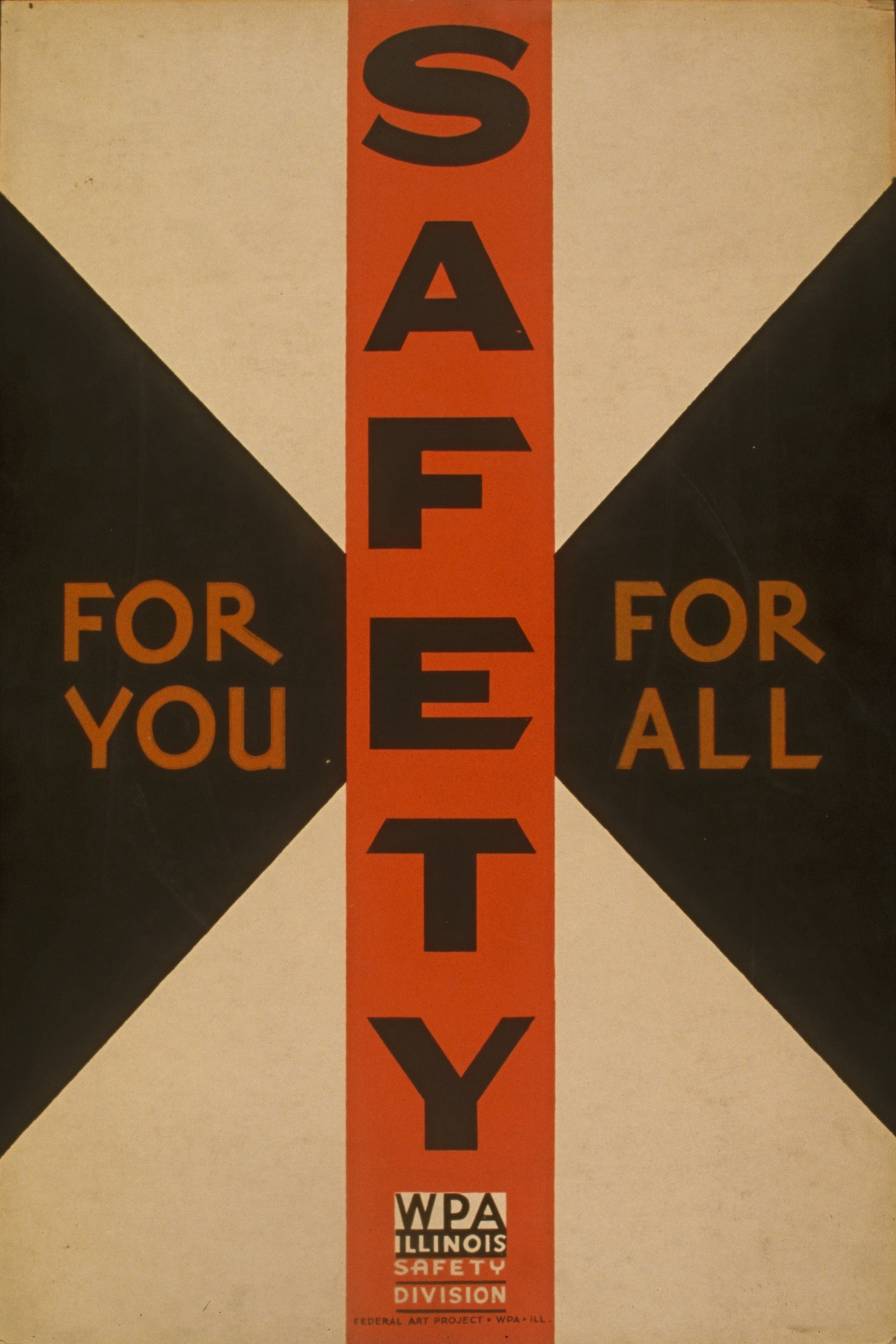
Vintage safety poster from public domain images
  • Both are management systems for dealing with intangibles.
  • Both are leaps in thinking from treating safety/knowledge as something personal, to treating it as something of company priority
  • Both require introduction of a framework, including roles, processes, governance, and technology support
  • Both need to be introduced as change programs.
  • Both deliver step changes in performance.
This is good news for the Knowledge Manager, as Safety Management has been successfully introduced in many industries, and therefore is a source of learning for KM implementation.

One of the early exercises for any knowledge manager in an organisation where a safety culture is in place, is to look at how safety management was implemented; what succeeded, what failed, what needed to be in place, and therefore what the lessons are for KM. Culture change is possible, implementation of a new intangible-management system is possible, and KM can learn from that.

There are plenty of public-domain guides to introducing a safety culture, which can also be used as templates for introducing a KM culture. For example;

ISHN provide 8 tips (my additions in italics, to show how it could apply to KM)

  1.  Define safety (KM) responsibilities 
  2. Share your safety (KM) vision 
  3. Enforce accountability 
  4. Provide multiple options 
  5. Report, report, report 
  6. Rebuild the investigation (lesson learning) system 
  7. Build trust 
  8. Celebrate success


OSG provide 6 tips - 

  1. Communicate 
  2. Provide Training 
  3. Lead by Example 
  4. Develop and Implement a Positive Reporting Process 
  5. Involve Workers . 
  6. Put your JHSC (Knowledge Management Framework) into Action 

However all analogies break down somewhere, and one of the major differences between KM and Safety Management is that a safety incident is very visible; as lost time, or as an injury. A lost time incident is far more visible than a lost knowledge incident.  Therefore safety management is easier to implement, because the outcomes are so visible, and performance metrics can easily be captured and shared.

However, intangible metrics are used in Safety are only recorded because people take time to record them, and one of the things they record are the near misses and the "high potential events" (times when things COULD have gone horribly wrong. These events and near misses themselves don't result in accidents or injury, but are a leading indicator, and show that safety processes are not being applied.

An equivalent leading indicator in KM would be the number of lessons without closed-out actions in a learning system, or the repeat mistakes, or the number of  unanswered questions in a community forum - indicators that knowledge processes are or are not being applied. So although we cannot capture a "lost knowledge incident" we can at least record whether the right questions are being asked, or the right observations and insights shared.

Indirect outcome-based metrics can be applied to knowledge management, the ultimate output being continuous business performance improvement. This does not directly measure knowledge, but indicates the effect of the application of knowledge. See my blog post on learning curves, and our website page on valuation of KM.

Friday, 24 August 2018

How to "sell" the topic of KM (video)

Here is a recording I gave of a talk to ISKO in Singapore, on the topic of "Selling KM"


Courtesy of Patrick Lambe


ISKO SG Nick Milton How to Sell Knowledge Management from Patrick Lambe on Vimeo.

Thursday, 23 August 2018

How a lurker benefits from observing collaboration

A lurker within the massively collaborative Polymath project explains the benefit he received.


The Polymath Project is a collaboration among mathematicians to solve important and difficult mathematical problems by coordinating many mathematicians to communicate with each other. The project uses a blog, to manage conversation, and a wiki to build the solution. Mathematicians of all seniorities take part, the result is truly collaborative, and several papers have been published under the pseudonym D.H.J. Polymath.

A recent paper discussing the solution of the 8th problem to be solved by the Polymath community contains an interesting couple of paragraphs by an American Undergraduate maths student, Andrew Gibson. Andrew and his classmates are not yet experienced enough to contribute to the project, but they gained valuable knowledge and insight through lurking and observing.

As Andrew explains

"Shortly after Zhang announced his result and you (Tao, the coordinator of the Polymath community) proposed the project, my classmates and I began a small, weekly seminar with a professor devoted to studying some of the theory involved (analytic number theory, sieve methods, etc.), albeit on a much more elementary level that was within our reach.

Of course, the majority of the actual proof is still mostly over our heads but at least I feel as if I’ve gained a bird’s-eye-view of the strategy and, probably more importantly, how it fits into the larger field. (For instance, before any of this, I could never have explained the Bombieri/Vinogradov theorem or the Hardy-Littlewood prime tuple conjecture.) So for us the project was a great excuse to enter a new subject and has been immensely educational. 

More than that though – reading the posts and following the ‘leader-board’ (blog) felt a lot like an academic spectator sport. It was surreal, a bit like watching a piece of history as it occurred. It made the mathematics feel much more alive and social, rather than just coming from a textbook. I don’t think us undergrads often get the chance to peak behind closed doors and watch professional mathematicians “in the wild” like this so, from a career standpoint, it was illuminating. I get the sense that this is the sort of activity I can look forward to in grad school and as a post-doc doing research (...hopefully). I also suspect that many other students from many other schools have had similar experiences but, like me, chose to stay quiet, as we had nothing to contribute. So, thank you all for organising this project and making it publically available online".

I love the bit about  "academic spectator sport" and "watching professional mathematicians in the wild".

This is the benefit of a community deliberately "collaborating out loud" to an audience of more novide members - they get to experience the way the experts think and the way they collaborate on solutions. It's an intense learning experience for the lurker.

Wednesday, 22 August 2018

50 ways to wreck your KM strategy

Here's another reprieve from the archives - 50 ways to wreck your KM strategy


When I wrote "Designing a successful KM strategy" with Stephanie Barnes, we originally included a final chapter on "how to wreck your strategy" - a list of 50 things not to do (similar to the chapter on "100 ways to wreck organisational learning" from my previous book). 

The publishers did not like the concept and found it too negative.  Here's what we would have included. Please let us know if we have missed anything!


"In the previous chapters, we've looked at how you can write an effective Knowledge Management Strategy, which will provide context, direction and limits to your Knowledge Management implementation. We've looked at the success factors, the things you have to get right; the principles, the inputs, the approaches. In this penultimate chapter, we will turn it around, and look at how not to write a strategy. If you follow any of the advice in the list below, you will weaken your strategy. If you follow all of the advice, your job as a Knowledge Manager can be mercifully swift, and you can sabotage your company’s competitive future as well.
1. First of all, don’t even bother with a strategy. Tactics are so much more fun, and save you a lot of difficult thinking. 
2. Don’t try to understand the field of Knowledge Management before you start. I mean, how complicated can it be? Knowledge is pretty simple stuff, so this won’t need much research. You can make it up as you go along. 
3. Don’t check your understanding of KM with your manager. When he or she says “Knowledge Management”, it’s a safe bet that they mean exactly the same as you do, when you say “Knowledge Management”. The topic is not at all broad or fuzzy. 
4. There’s no need to limit the scope of your strategy. Knowledge Management is surely a small, well-constrained topic, isn’t it? There can’t be any room for scope creep in a Knowledge Management strategy? 
5. Also, there is no such thing as too narrow a scope either. If you narrow your scope far enough, for example to a single tool or a single approach, then you can be unencumbered by any embarrassing success. 
6. Don’t bother to define your own role. A touch of role-ambiguity makes corporate life so much more exciting, especially at performance-appraisal time (“You never told me you wanted me to do THAT!”) 
7. Don’t bother to define any other KM roles either. Let’s share the ambiguity and confusion. 
8. Principles? You don’t need any principles! Guide your KM strategy by imagination and whim, rather than a set of principles.
9. Avoid learning from past KM implementations. Your Knowledge Management implementation will be so unique that there’s no point in looking at success principles from other implementations. Just start from a clean sheet of paper. After all, what’s the point of a wheel if you can’t reinvent it. I am sure you will avoid all the pitfalls that others have found. 
10. You know that statistic about “80% of KM projects fail”? That won’t apply to you! Don’t worry! 
11. I would not bother trying to make the case for a KM strategy. It will be immediately obvious to the senior staff that a KM strategy is needed; you won’t need to collect any evidence. They will be bound to give you the go-ahead anyway. 
12. Similarly, there is no need to demonstrate that value is being lost through lack of KM. Everyone already fully accepts that KM is needed, and worthy of big investment, and they have a pot of money available for you somewhere, I am sure. 
13. Also, there’s no point in getting too clear about who the decisions-makers are for KM, or what you want them to decide. Your KM strategy and KM program will find support from somewhere, somehow, to do something-or-other. 
14. The best way to write the strategy is to shut yourself in a room and write it yourself. There’s no need to include input from anyone else. Interviews and workshops will be a waste of time. 
15. You don’t need your Knowledge Management program to be business-led. That would be such a hassle. Its far easier to be tool-led; to select a new shiny KM tool (or even several tools, if they are shiny enough) and just roll them out. Business value is bound to follow somehow. 
16. That means that there’s no point in trying to identify business drivers. Knowledge Management is bound to help with something, so there’s no point in trying to decide up front how KM supports the business. 
17. Demographics is a red herring. If your company is full of experts, or full of novices, surely the knowledge issues will be identical? 
18. Vision statements! Don’t make me laugh. Visions statements are a total waste of time, and clarity of vision never helped anyone. (Now, remind me of what we were trying to do again?) 
19. Oh yes - scope statements. That’s another total waste of time. Let’s just keep KM open ended - the strategy can cover anything, all staff, all topics, for as long as you like. If we set a scope, we would just be in danger of excluding things, like new shiny tools, or going off on tangents. 
20. If you DO have to write a vision and scope, then, again, there’s no point in involving anyone else in creating these statements. Just make them up yourself - they’ll all buy into it just fine. 
21. Avoid all temptation to focus on specific areas of knowledge. Far better to leave yourself free to address every knowledge topic, whether it is valuable to the business or not. Surely all knowledge is of equal value? 
22. Also its better if you free your KM strategy completely from the company strategy map. You don’t want KM to bear the burden of being seen as something strategic; that would be far too risky and high-profile. 
23. Start Knowledge Management from a completely clean sheet. There may be some aspects of KM in place already, but it’s better to demolish and reinvent these wherever possible, no matter how well they are currently working. 
24. This applies to technology as well. You really need the users to abandon all old habits, and start afresh. 
25. If you are forced to do an assessment of the current state, then do this yourself, rather than hiring an experienced consultant to help you. It doesn’t matter that you “don’t know what you don’t know”. 
26. You don’t need to treat Knowledge Management as a Management Framework - better to see it as a single tool, or perhaps an optional “pick-and-mix” toolbox. That’s how every other management system works, eh? 
27. Don’t seek to embed the framework in business activity. KM works better as an add-on to “real-work”, so that people can ignore it if they want to.
28. There’s no need for Governance within KM. Let’s keep KM low key, let’s leave it up to the individual, let’s keep it as an optional activity. Everyone has plenty of time for optional activity. 
29. There’s no need for Roles and Accountabilities within KM. Just present it as “everyone’s job” and everyone is bound to do it. 
30. If you want to save time and heartache, just ignore the issue of information architecture, and information lifecycle. Information can just look after itself - all you need nowadays is a search engine. 
31. Selecting Knowledge Management Technology is easy. Don’t bother with business requirements, don’t bother with user requirements, just listen to the vendors. They will let you know how valuable their own products are, and in fact you may be surprised to hear that (according to the vendors) there are many products that will just “do KM for you” with no effort from you at all. 
32. Once you have the technology, then there is no need for training or coaching. Roll it out and see what happens. 
33. KM technology, unlike any other technology, is an end in itself, and needs to business justification. All proper companies need a KM toolkit, even if it adds no value to the bottom line. 
34. There are very many types of KM technologies available nowadays. Just buy them all. 
35. OK, here we get to the core of the advice. Forget change management. All the books tell you that KM is a Change exercise, but change is hard, and takes time and effort. Just quietly ignore the Change issues. It will all sort itself out in time. 
36. Similarly stakeholders. Everyone has an equal interest in KM, everyone will naturally support what you are doing, so why bother to engage people - why bother to get powerful people on your side. 
37. Similarly communication planning. KM is common sense, and doesn’t need to be communicated. 
38. Again - piloting - total waste of time. Knowledge Management won’t need any adaptation for your own organisational context - it will work “right out of the box”. Just roll it out to everyone, all at once - you can’t fail. 
39. If you are forced to pilot, then pick the first pilot you think of. Any pilot is as good as any other pilot. Why bother to rank and select. 
40. You can’t make a business case for KM. Don’t even try. Who needs business cases anyway? Your managers will give you the money you need, without you having to explain about benefits, let alone attempt to estimate the scale of the benefits. KM will add value because it will allow people to share knowledge with each other - that’s all you need to say. 
41. If you have to do “KM by stealth”, then be as stealthy as possible. The ideal is for nobody to have any idea at all what you are doing. 
42. You don’t need a leader for the KM project - it will lead itself. 
43. If you do appoint one, make sure they are a KM geek, with no business experience (and especially no Change Management experience). 
44. Don’t appoint a team. 
45. If you do appoint one, ensure they are all from HR, or all from IT, or all librarians (diversity is over-rated). 
46. Avoid any people with passion for the topic. Passion is so exhausting. 
47. Avoid any clear reporting lines. 
48. Avoid using a steering team. Who needs managers meddling in KM, with their “business needs” this and their “operational priorities” that? 
49. Implementation planning is to be avoided at all costs. KM will just implement itself. 
50. You can estimate your budget as being the cost of the software alone. You can treat any other elements (current state assessment, requirements definition, roles, accountabilities, processes, governance, change management, communication, stakeholder management, training, coaching, roll-out) as essentially negligible."

Tuesday, 21 August 2018

Learn from triumph and disaster

There should be no difference to learning from success and failure.


Kipling wrote, in "If" -  "if you can meet with triumph and disaster, and treat those two impostors just the same..". 

As knowledge managers we try to collect lessons from projects which have been triumphs and projects which have been disasters, but these are seldom treated the same way by the project teams.

If you read through a lessons learned database from a British, US or Australian organisation, you get the feeling that projects never go right. The database will be full of lessons from failure, with almost no success-based lessons.

If you read through a lessons learned database from a Middle Eastern or Far Eastern organisation, you get the feeling that projects never go wrong. The database will be full of lessons from success, with almost no failure-based lessons.

OK, the statements above are generalisations and your particular company may differ, but there is a reality behind them representing two different biases; in the first case, the bias against "showing off to your peers"; in the second case, the bias against "appearing to have failed in front of your manager". These two biases affect the way in which teams approach the collection of lessons.

In reality, of course, we need to learn from both success and failure, particularly when these are unexpected. We need to seize on, and repeat, the breakthroughs, and map out and eliminate the pitfalls. As someone from NASA told me a couple of years ago - there are no successes and failures, there are just events. NASA learns from events.  In other words, NASA treats those two impostors - triumph and disaster - just the same when it comes to learning.

Also as far as the user of the lessons is concerned, they don't actually care whether the lesson came from success or failure, so long as
a) it is well written,
b) they trust the provenance, and
c) it helps them deliver their own project better, cheaper, faster.

In both the case of failure and success, the lesson will be written in the same way; a set of recommendations and advice, supported by context (in the form of a story) which helps them internalise the lesson.

So when you meet with triumph and disaster, success and failure, treat them just the same in terms of learning. 


Monday, 20 August 2018

My favourite definition of Knowledge Management

A simple but effective definition of KM


I was moved to reprise this video, from 2009, in which I offered a simple definition of KM, because I was very pleased to see the same definition appearing in a speech this week by by Director Dr Haji Mohd Zamri bin Haji Sabli in Borneo.

The definition is

"‘Knowledge Management is the way we manage our organisation when we understand the value of knowledge’.


Friday, 17 August 2018

7 KM predictions from 22 years ago - how did they pan out?

In 1996, Karl Wiig and colleagues made a set of predicitions about the future of KM. How right were they? 

The 1996 article by the Knowledge Research Institute (Towe, Pizziconi and Wiig) entitled "Knowledge Management; Where Did It Come From and Where Will It Go?" not only presented a timeline of the first 20+ years of KM, but also made predictions for the next 20+ years.

Here we are 22 years later, and we can see how accurate those predictions proved. The 7 major predictions are listed below, and in many cases these can be tested against data such as our combined 2014 and 2017 Knoco survey data.

"1. Similarly to what happens to other management directions that prove vital to enterprise viability, we can expect that KM -- as an explicit and primarily stand-alone management initiative -- will disappear from view within a decade or two (ie by 2006 to 2016). Instead, we can expect to find that what we today think of as explicit KM practices and activities, will have been assimilated into the daily mainstream work -- they will become automatic and “second nature.”"

This has not happened yet, or at least not completely. There are certain elements of KM which have become second nature - the common use of search engines, for example, and enterprise social media-style tools, which are not though of as "KM activities" per se. However KM as a discipline is still a discrete and separate topic. It has not yet been generally internalised to the point of disappearance (see point 6 below for evidence). Even in some of the longest running KM programs there are still defined KM roles and explicit KM expectations. KM has not yet disappeared from view as a result of assimilation.

2. (In Technology) the limiting factors can be expected to change over the next years... we see advances and breakthroughs in intelligent software that promise to support, enhance, and even automate many KM functions and assist in discovering and building knowledge.
This is absolutely correct. Although all of the common KM software elements - search, groupware, community forums, artificial intelligence - were around at the time that Karl Wiig and his associates wrote their paper, these tools are now more powerful, more prevalent and more sophisticated than ever. KM is not just about tools, but the tool set certainly support, enhances and even automates the processes and interactions that KM requires.


3. Enterprises increase KM efforts and expand KM scopes as they gain greater insights into how to manage knowledge and how KM increases the value of competitively applied knowledge assets. However, they only expand efforts to the extent they perceive that the extra investments will buy increased viability and profitability and not interfere with other important functions
The expansion of KM within organisations was well predicted. Even within individual organisations, KM has grown and developed over the past 20 years. in fact, as our KM survey data shows, it takes on average over a decade for an organisation to fully embrace and internalise KM, and the development and internal expansion of KM takes place during that decade.


4. As indicated in Figure 2 (below), we can expect that KM methods and technologies generally will be provided in a“technology push” manner for sometime to come, perhaps until after the turn of the century (2000). After that time, we can expect user organizations to seek KM products and services in a “demand pull” fashion. That will lead to a well-established development and supply chain with accepted and tested methods and tools

.
Figure 2 is shown above, with the "developers" being the first adopters, and "suppliers" being the consultants and vendors.  Here Karl Wiig and his co-authors have been overoptimistic in terms of timescale.

Firstly technology push continues, for the simple fact that selling technology is more lucrative than selling KM services. There is no set of "well established, accepted and tested methods and tools". In certain areas there are well established processes, like the use of KCS in customer service KM, but even here the accompanying technology market is huge and complex. In other areas the tools are sold without the accompanying processes, methods, roles and governance. The big consultancies no longer offer KM as a core offering, unless (like IBM with Watson) they hope to sell technology as well.

Secondly adoption of KM has taken far longer than they predicted. Even in the early adopters, KM was not "in general use everywhere" by Q3 1998, and certain the average company was not in full operation of KM by 2003. Our 2014 and 2017 surveys show that, of the organisations surveyed, only 16% had KM fully embedded, 32% were "well in progress" and 39% "were in the early stages" (see pie chart below).  You could argue from this that "the average organisation" is in piloting to roll-out stage rather than full operation, well over a decade behind the prediction.


Thirdly we are nowhere near the "Standard Phase" for KM yet. No standard approach, or set of industry-specific approaches to KM has been developed, although the publishing of the ISO KM standard later this year is a step in that direction. The "Standard Phase" is about 2 decades later than predicted, or longer.


5. We see it likely that something akin to systematic Intellectual Asset Accounting (IAA) will be developed and become common practice before long.
This never caught on.


6. In 25 to30 years (ie by 2021 to 2026)... (the) management of knowledge processes and knowledge assets ... will have become routine with well-developed tools, practices, and monitoring approaches. Management of these assets will have become one of the important but low profile routine activities that are vital for enterprise success.

As in number 4 above, this has not yet happened. It may still happen - that KM has become routine, well developed and low profile - but as yet it is still more often a discrete separate and deliberate activity, as shown by our plot below from surveys in 2014 and 2017 which shows that in only 16% of responding companies is KM integrated and routine.


7. With knowledge being a major driving force behind the economics of ideas and hence behind new, resource-independent areas of growth, we can expect to find that emphasis on knowledge creation, development, organization,and leveraging will continue to be of prime focus for generations to come.
This is the final and most positive conclusion from the study, and this continued emphasis and prime focus would be my fervent wish as well. I think we can conclude that there has been a continued interest in KM over the past 2 decades, but perhaps not as emphatic as was predicted in 1996, and as yet knowledge is seldom if ever the "prime focus" for organisations.


As the mathematician Nils Bohr said, It is very hard to predict, especially the future.”

The predictions from the 1996 paper have mostly been correct in direction, but not in speed, and the timescales have proven much longer than predicted. KM, rather than being an obvious value delivery mechanism that would be rapidly adopted, standardised and embedded, has been more of a slow burn, with a "technology push" element very much to the fore.

It would be very interesting to work out why this has been the case.

Thursday, 16 August 2018

A history of the first 21 years of Knowledge Management

From an old article, a time line of the first 21 years of KM - taking us up to 1996


This time line is taken from the 1996 article by the Knowledge Research Institute (Towe, Pizziconi and Wiig) entitled "Knowledge Management; Where Did It Come From and Where Will It Go?"

It is an interesting and valuable reminder of the deep roots of the discipline, on which our modern efforts are built.

  • 1975-- As one of the first organizations to explicitly adopt a knowledge-focused management practice, Chaparral Steel bases their internal organizational structure and corporate strategy to rely directly on explicit management of knowledge to secure technical and market leadership--without the assistance of informationtechnology. Chaparral still does not rely much on IT for its extensive KM practice and remains the quality and efficiency world-leader among mini-mills.
  • 1980-- Digital Equipment Corporation (DEC) installs the first large-scale knowledge-based system (XCON) for support of its configuration engineering and sales functions.
  • 1981-- Arthur D. Little starts the Applied Artificial Intelligence Center to build practical knowledge-based systems (KBS) for commercial and Government clients.
  • 1983-- USAA develops the first version of a KBS to transfer expert knowledge to practitioners as part of  their deliberate effort to manage knowledge.
  • 1986-- The concept of “Management of Knowledge: Perspectives of a new opportunity” is introduced in a keynote address at a European management conference sponsored by the International Labour Organisation of the United Nations.
  • 1987-- The first book relating to KM is published in Europe (Sveiby & Lloyd: “Managing Knowhow”).
  • 1987-- The first round table KM conference“ Knowledge Assets into the 21st Century” Hosted by DEC and Technology Transfer Society at Purdue University.
  • 1989-- A survey of Fortune 50 CEOs’ perspectives on KM is undertaken in which all agree that knowledge is their organization’s most important asset--but noone knows how to manage it.
  • 1989-- The Sloan Management Review publishes its first KM-related article (Stata: “Organizational Learning --The key to management innovation”).
  • 1989-- Several management consulting firms start internal efforts to manage knowledge. (Price Waterhouse integrates KM into its strategy.)
  • 1989-- A few small and specialized consulting firms offer KM-specific services to clients.
  • 1989-- The International Knowledge Management Network is started in Europe.
  • 1990-- The Initiative for Managing Knowledge Assets (IMKA) is started by a consortium of several U.S. companies to provide a technological base for KM.
  • 1990-- In Europe the first book on the learning organization is published (Garratt:“Creating a Learning Organization: A guide to leadership, learning & development”).
  • 1990-- In U.S. the first books relating to KM are published (Savage: “Fifth Generation Management” and Senge: “The Fifth Discipline: The art & practice of the learning organization”).
  • 1990--The French Grande Colloquium de Perspective provides major address on “Knowledge Flow in a Global Innovation Management System.”
  • 1991-- Skandia Insurance creates the position of Director of Intellectual Capital.1
  • 991-- The first Japanese bookrelating to KM is published in the U.S.(Sakaiya: “The knowledge value revolution”).
  • 1991--Fortune runs the first article on KM (Stewart: “Brainpower”).
  • 1991--Harvard Business Review runs its first article on KM (Nonaka: “The knowledge creating company”).
  • 1992--Steelcase and EDS cosponsor conference on Knowledge Productivity.
  • 1993--In Europe, an important KM article is published (Steels: “Corporate Knowledge Management”).
  • 1993--The first book explicitly dedicated to KM is published (Wiig: “Knowledge Management Foundations”).
  • 1994-- The International Knowledge Management Network expands its scope to include the Internet.
  • 1994-- The International Knowledge Management Network publishes a KM survey of 80 Dutch companies (Spijkervet & van der Spek, 1994).
  • 1994-- The International Knowledge Management Network conducts a conference “Knowledge Management for Executives” with over 100 European participants in Rotterdam. Universitéde Technologiede Compiègne (France) holds its first annual KM conference.
  • 1994-- Several large consulting firms offer KM services and start seminars for prospective clients on KM.
  • 1994-- Knowledge Management Network and FAST Company magazine are founded in the U.S..
  • 1995-- The European ESPRIT program includes explicit requests for KM-related projects.
  • 1995-- American Productivity & Quality Center (APQC) and Arthur Andersen conduct the “Knowledge Imperatives Symposium” with over 300 attendees. Other KM conferences and seminars are held in the U.S. and Europe.
  • 1995-- APQC initiates a multiclient KM Consortium Benchmarking Study with 20 sponsors.
  • 1995-- The Knowledge Management Forum is started on the Internet.
  • 1995-- KM Focus is broadened to include research on intellectual work (Suchman,1995).
  • 1996-- Several KM conferences and seminars are held in Europe and the U.S. organized by both general conference organizers and consulting organizations.
  • 1996-- Over one dozen large consulting organizations and many smaller ones offer KM services to clients.
  • 1996-- Many companies arestarting KM efforts--some with internal resources only, others with assistance by outside organizations.
  • 1996-- The European Knowledge Management Association is started

Wednesday, 15 August 2018

Why don't good practices spread better?

Sharing is no guarantee of uptake. Sometimes better practices and innovations take a long time, and require a lot of support, to take hold.


_MG_0095 Here is a very interesting article from the New Yorker, by Atul Gwande, about why some ideas or best practices catch on and spread, while others don't. In today's connected world we expect good ideas to diffuse virally, but the fact is that many great ideas never spread.

For example, Gwande contrasts the histories of anaesthesia and asepsis in medicine - both important life-saving ideas, but the practice of anaesthesia spread like wildfire, while asepsis is still not properly adopted world wide. What was the difference between the two?

The difference was the immediacy and visibility of the problem to the practitioner.

Anaesthesia solved an immediate and visible problem for the surgeon. Under ether, the patient was no longer screaming and thrashing about, and the operation could take place in peace and quiet. Asepsis, on the other hand, did not solve an immediate problem. The operation took place as normal, and nothing apparently changed. As far as the surgeon could see, there was no immediate improvement. OK, the long term patient survival rate improved with asepsis, but that was a longer term issue and more remote for the surgeon. Asepsis solved a big problem, but a problem that was largely invisible to the practitioner, at least in the short term.

Gawande concludes that with the big invisible problems, you cannot expect improved practices to spread virally. You need to work on them. You need to sell the solutions, and like sales reps, that requires frequent interactions (the "seven touches") between the trainer or knowledge holder and the user - person to person, door to door, talking.

He gives an example of an interaction with a nurse who learned, from a visiting trainer, a new practice that improved the survival rate of newborn infants. This was a practice that addressed one of these "invisible problems", but had proved very difficult to spread. Gwande wanted to know why the nurse had adopted the practice in this case.

“She showed me how to get things done practically,” the nurse said. 
“Why did you listen to her?” I asked. “She had only a fraction of your experience.” 
In the beginning, she didn't, the nurse admitted. “The first day she came, I felt the workload on my head was increasing.” From the second time, however, the nurse began feeling better about the visits. She even began looking forward to them. 
“Why?” I asked. All the nurse could think to say was “She was nice.” 
“She was nice?” “She smiled a lot.” “That was it?” 
“It wasn't like talking to someone who was trying to find mistakes,” she said. “It was like talking to a friend.”
This was one of those big ideas that spread through repeated personal contact and influence, rather than virally, and the repeat contact and trust that developed between the trainer and the nurse was vital for adoption and re-use of the knowledge.

So what is the implication for Knowledge Management?

The implication comes through the strategies you need to employ for knowledge re-use. Where knowledge solves an immediate problem for the user, then you can rely on a viral approach. Where it solves a longer term problem for the organisation, but may be invisible to the user, then knowledge re-use needs to be promoted through training, coaching and frequent interaction with a friendly person. 

Tuesday, 14 August 2018

Example KM job description - KM advisors at HP

Taken from this publication by Knowledge Street, here is a role description for what is effectively KM Help-desk and support staff - the KM advisors at HP consulting services. This is one in a series of example KM role descriptions on this blog.


image from wikimedia commons
Stan Garfield describes the HP KM advisors role as follows:

Knowledge assistants are people who help employees use the knowledge management environment by offering a variety of services. 
They can advise on how to use collaborative team spaces or how to use other KM tools. They can assist in locating reusable collateral or searching for information needed when a user is facing a deadline or not connected to the network and needs to find something out. They can find needed content and send it by email or post a link to it in an ESN. 
They can help connect to other knowledge sources, either through communities or finding the right people inside or outside the organization. They can help with knowledge capture and reuse, assisting in submitting content to repositories, and evaluating the submitted content it is of acceptable quality And they participate in ongoing training and communications. They host webinars. 
They help people with training. They communicate information on a regular basis to employees. The knowledge assistant is someone to contact with a question about how to do something, where to find something, or for assistance with any process or tool.
Below is an example role description. There are 3 such role descriptions in the publication and I have chosen this one as it is more complete, and also addresses the measurement element ot the role.


HP Knowledge Advisor Job Description – Asia Pacific Region

Role Objective:

  • Help drive the Knowledge Capture and Reuse processes within Asia Pacific (AP) by assisting Bid Managers, Project Managers (PMs), Solution Architects (SAs), and Consultants in accessing and using Engagement Knowledge Management processes systems and tools.
  • Provide advice and KM consulting to project teams and individuals to increase reuse and repeatability across the region.
  • Network with Subject-Matter Experts (SMEs) and other AP and Worldwide KM resources to identify and deliver required knowledge, expertise or collateral to K-Advisor callers requesting assistance.

Key Accountabilities:

  • Act as a broker to connect people to the appropriate SMEs
  • Where appropriate provide expert advice based on personal subject matter expertise
  • Assist users in searching for selling and delivery reusable collateral.
  • Assists users that are wishing to contribute new or improved collateral for possible reuse
  • Help users get up to speed on the Project Profile Repository, SharePoint, Forums, Knowledge Briefs, and other KM tools
  • Facilitate collaboration needs
  • Direct users to the right knowledge sources based on their specific needs
  • Actively advice and guide project teams especially at bid development or project startup to ensure their collaboration workspace are established effectively and efficiently as well as to encourage the teams to search for Project profiles of similar projects to leverage and share.
  • Solicit user feedback
  • Conduct training on KM process, systems and tools
  • Participate in other user support initiatives
  • Provide Monthly AP K-Advisor report with key metrics, issues/problems with KM process, systems and tool, and recommendations

Skills:

  • Good people and communications skills
  • Able to quickly learn about tools and processes
  • Eager to be of help to users
  • Subject matter expert in a solution set or discipline, e.g., PM, SA, Test Manager
  • Demonstrated understanding of C&I business initially, later expanding to the other business units
  • Excellent planning and organisation skills, tracking and monitoring a range of activities at any one time
  • Good analytical & decision-making skills
  • Flexible and adaptable
  • Intellectually curious, actively keeps abreast of knowledge developments
  • Uses own initiative, demonstrates a creative approach to problem solving
  • Strong analytical skills
  • Drive and resilience to achieve challenging objectives
  • Calm and collected, even when under pressure maintaining a high level of performance

Experience:

  • 3-5 years team leader/project manager/solution architect experience
  • 2-3 years business pursuit/customer engagement experience

Reporting:

  • Reports to HP Services KM Lead

Monday, 13 August 2018

7 Metrics for the KM supply chain

The Supply Chain analogy for KM suggests several metrics we can use.


I have often used the analogy of the supply chain as one way of thinking about KM. This involves looking at KM as a chain of processes supplying knowledge to the user.

This analogy has the benefit of thinking about KM from the point of view of the knowledge user. You can ask "If a person in this organisation were in need of a specific piece of knowledge to make a specific decision, what system is in place to make sure that this knowledge a) gets to the person on time, and b) is of the correct quality?"

And like any analogy, it brings with it many other ways to think about KM. Can we apply "Lean Supply Chain" thinking to KM, for example? Can we remove waste from our Knowledge Supply Chain? Can we think of the Knowledge Manager as a supply chain manager?

Or - the subject of our blog today - can we use common Supply Chain metrics to help us understand how to metricate KM?

Here are 7 metrics from the supply chain world which might help us decide on metrics for our Knowledge Management Framework.


  • Backorders - unfulfilled orders from the customer. In KM terms, these might be search queries, or questions to a Community of Practice, which receive no answers. These are indications of the need to create knowledge resources for the user, and the number of unfilled requests is a proxy of the completeness of your knowledge base (both tacit and explicit).

  • Cycle time. There are many definitions of cycle time in the Supply Chain world, but for KM the crucial cycle time is how long it takes from the first observation of new knowledge, to that knowledge being embedded in the knowledge bases, training courses and community of practice resources. Or in lesson-learned terms it might be the time from "Lesson identified" to "Lesson closed". In CoPs it might be the "question to answer" time.


  • Defects - defective supplied material. This is a quality measure of your knowledge content, measuring how much of it is out of date, wrong, or unhelpful. You could measure the quality of lessons entering your lessons management system for example, or of articles published to a knowledge base, or of answers in a community forum.


  • Fill Rate - the amount of ordered supplies filled on the first order. In KM, this might be the number of community questions answered by the first response, or the percentage of times the answer is found in the first search.


  • Inventory costs - what it costs you to stock and manage your inventory (cost of stock, cost of warehouse, salaries of warehouse staff etc). In KM terms, this is the cost of operating your KM framework, including the cost of KM roles, the licence cost for KM software, and the time cost from populating the system. This represents the total costs to the business of operating KM.


  • Gross margin return on inventory - the  gross margin divided by the inventory costs, a popular metric for retail stores. In KM terms, the gross margin would be the overall value of KM to the business, which you would track and estimate through success cases, value stories and metrics such as decreased costs or increased sales. It is in effect the KM ROI.


  • Inventory turnover - the average annual use of your inventory; for example if a store carries 1000 items and sells 10,000 items a year, that's a 10 times inventory turnover. In KM terms this would be applied only to explicit knowledge, and you would measure the number of reads of knowledge articles divided by the number of articles.  You could of course get smarter, and you could look at which articles get the most reads and which get none at all.

Hopefully that gives you some ideas of a few more metrics you can use to make sure your Knowledge Supply Chain is working - delivering valuable knowledge to the knowledge works in your organisation in an efficient, reliable and effective way.


Saturday, 11 August 2018

AI requires KM - quote

A quote from a CIO Dive article "Skills required of a successful 2020 IT service management professional"


Knowledge management capabilities

Many self-service technology initiatives have failed in recent years due to the neglect of knowledge creation and nurturing. The same may be true of any new technology initiatives if the appropriate knowledge groundwork isn't created today.

AI and knowledge management are two sides of the same coin. Essentially, machines learn as human beings do through experience and through education, the latter in this case being "available knowledge."

Without effective knowledge management capabilities, organizations and individuals will struggle to succeed with AI and other cutting-edge initiatives.

Friday, 10 August 2018

4 management styles and how they affect KM

We know that culture and management style affects KM; here is a way of characterising management style through 2 dimensions.


The Boston Square shown here explores four management territories, and their impact on Knowledge Management.

The two axes of the square are

  • management by power v management by empowerment; i.e. how much the leadership operates through command and control, rather than through inspiration and enablement, and 
  • the levels of internal cooperation v internal competition (often reinforced by reward and recognition schemes such as forced ranking, or competitive bonuses).


These two axes give us four territories.


  • Where there is strong internal cooperation, and management by empowerment, then Knowledge Management will thrive. 
  • Where there is strong internal competition, and management by empowerment, then Knowledge Management will find things more difficult. Leaders can, if they try, use KM as a sort of coopetition tool, where the groups will cooperate to a certain extent through knowledge sharing and re-use, but will compete regarding the application of that knowledge. This is a difficult line for leaders to tread, as the internal competition can be used as an excuse not to share with and learn from each other. Sometimes people will "go underground" and share knowledge without their managers knowing, but more often the sharing is stifled.
  • Where there is strong internal cooperation and management by power, then formal Knowledge Management will find things more difficult, but informal KM may arise in unexpected ways.  Here KM definitely will go underground, and can become a way for the workers to share knowledge and gain some sort of personal power without the managers knowing. I have seen this happen in organisations, where the communities of practice become "grumbling shops". KM can turn from being a grassroots movement to a workers revolutionary force. You can see an extreme geopolitical version of this in the "Arab Dawn" where Government by Power met a collaborative and networked populace.
  • Where there is strong internal competition, and management by power, then Knowledge Management will never take off. Everyone will keep their knowledge to themselves. 

Thursday, 9 August 2018

3 ways to look at the KM Paradigm Shift

Here is another couple of ways to characterise the KM paradigm shift.

Image from wikimedia commons
When I looked at this topic in 2009, I saw the KM paradigm shift as a shift from seeing knowledge as personal and individual property, to seeing it as collective. I presented the shift as follows:


The "individual to collective" culture shift


FromTo
I knowWe know
Knowledge is mineKnowledge is ours
Knowledge is ownedKnowledge is shared
Knowledge is personal propertyKnowledge is collective/community property
Knowledge is personal advantageKnowledge is company advantage
Knowledge is personalKnowledge is inter-personal
I defend what I knowI am open to better knowledge
Not invented here (i.e. by me)Invented in my community
New knowledge competes with my personal knowledgeNew knowledge improves my personal knowledge
other people's knowledge is a threat to meShared knowledge helps me
Admitting I don’t know is weaknessAdmitting I don’t know is the first step to learning


Here is another way to look at this shift, taken from a paper on The Learning Organisation, by organisational Psychologist Gitte Haslebo, translated by Maja Loua Haslebo.

Shift to a learning organisation


FromTo
Knowledge has permanent validityKnowledge has temporary validity
Knowledge = Adding of information from the outsideKnowledge = Insight created from within
Learning activates the intellectLearning activates thoughts, values, emotions and action
The right answers must be foundThe central questions must be formulated
The expert finds the right solutionNew ways and new methods are co-created by the employees


This mirrors the transition from Knower to Learner, and Gitte suggests it is accompanied by a shift in the attitudes of managers and knowledge workers to transition from the attitudes we learned at school to the new attitudes we need at work.

Shift in learning attitudes


FromTo
Do not make mistakesLearn from your mistakes
Do not reveal that there is something you do not knowIt is a good thing to admit that there is something you do not know
Do not make a fool of yourselfIt is important to explain what you wonder about.
Know that the teacher is always rightKnow that your manager may be wrong.
What counts is the individual achievementWhat matters is teamwork
If you ask the person sitting next to you, you are cheatingWhen there is something you do not know, ask your colleague

So there are 3 ways to look at the shift, with significant overlap between them. They give you some ideas of the culture you need to aim for in KM - the sort of attitudes and behaviours that a learning organisation, and the people within it, should exhibit.

Now you just have to make that shift, and ensure you don't shift back again.


Wednesday, 8 August 2018

Is it possible for an organisation to learn?

Can organisations learn, or can only people learn? Some thoughts on the subject.

from creative commons images

We often hear about "organisational learning" but is learning something that organisations actually can do? Or is learning the province of people and animals? (Let's put machine learning aside for the moment - that is another discussion).

There is a school of though that learning is a human attribute- that only humans are able to learn. After all, learning  requires a memory in which new knowledge can be stored. Humans  have a memory, but do organisations?

You could argue that organisations have two memories - one if the collective memory of the individuals in the organisation, often reinforced through stories and "shared experience"

The second memory is held in "the way we work" - the processes, procedures, doctrines, structures, norms, behaviours, organigrams, and the stories that are told. As one project person said to me - "our standard process is made up of all the lessons we have learned over the years".

The first memory comes and goes with the people, and the effect of this can be observed in the cycles of unlearning you see in some organisations, where the same mistakes are repeated on a 5 to 10 year cycle as the older staff retire. The second memory is potentially longer-term, and survives the changeover of staff, but is also slower to build up and slower to respond to events.

However I would argue that this deeper slower memory is where real organisational learning can take place. An organisation, through activating learning activities and learning cycles, can steadily but surely change the way it operates, in response to events and to new experiences.

So, yes, organisations can learn. Organisations can modify their behaviour as a result of experience, and that, surely, is a form of learning. Maybe its more mechanistic than intuitive learning, maybe they don't learn as fast or as well as a human does, maybe they learn more like the way a dog learns.

However I believe that organisations can learn if they develop a structure for learning. The bigger question is why don't they learn better, and more often?

Tuesday, 7 August 2018

Hear a CEO's view of the Knowledge Sharing culture change

Very few CEOs have written about KM, and even fewer have spoken about in on video. Here is one example, which helps us to understand the CEOs view of the topic.


This video of Bob Buckman, CEO of Buckman Labs, was recorded in Greenwich University in 2006, and in the video Bob describes the approach to KM used by Buckman labs, and the reasons behind the choices they made. He makes some very interesting points, and I include some of them below the video window.


"Knowledge can take many forms, but the principal ones we are concerned with are either written down, or between the ears and behind the eyeballs. Our experience indicates that about 90% of the Knowledge in your organisation is here (taps head) not written down. And what is typically written is frequently out of date as soon as you write it down. Therefore if we want to be dynamic as an organisation we need to focus on this stuff (taps head again) not what’s written down".

"If you have 5 people sharing knowledge around almost anything, you will get a very high quality response out of the process. It’s almost an automatic quality control mechanism".

"(In KM) we have to provide benefits to each individual as they try to define their personal time equation of work. People will use those systems that provide them benefits in doing whatever they are trying to do, and I will be very honest - if it doesn’t provide those individuals with enough benefits, they won’t use it, no matter how good your IT people think it is"
"We want to leverage Knowledge through networks of people who collaborate, not networks of technology. Connectivity begins with groups of people who want to accomplish something for the organisation beyond the face to face world. Technology is the tool that makes the connections."
"People networks leverage Knowledge through organisational pull rather than centralised information push. I don’t know of any individual in any organisation today who can deal with the amount of stuff which is pushed out to them... So focus on satisfying the need for help in solving real problems in real day to day operations, not at pushing information at your people".

"As we expand an individual’s span of communication through technology, you automatically begin to expand their sphere of influence. And as that span of influence expands, your individual expands and their value increases, both to the organisation, and the individual becomes more valuable to themselves. Think in terms of giving your associates the same opportunity to expend their own span of influence as if they were all promoted to CEO of the organisation. That’s scary I know, but that’s what we have done, and it works".

"We have got to move from hoarding Knowledge to gain power, to sharing Knowledge to gain power. If I hired a PhD tomorrow and they didn’t share anything they knew with anyone else, their value would be zero. So if you have people who do not want to share, their value is nowhere near as high as those who do want to share".

"Now you are not going to get there from the direction of the IT department, though I hate to say it. When we talk about culture change it’s got to be led by those who are in command, not the IT department. If you are throwing the monkey on the IT department’s back, you are doing everyone a disservice".

"Reduce the number of transmissions of knowledge to 1, to reduce the level of distortion of that knowledge".

"The greatest Knowledge base in the company is in the heads of the individuals associated in the company, so we have to give everyone access to everyone else in the company across the organisational barriers to communication. We have to go across the organisational silos of the organisation, and that scares most people right there".

"Sharing of Tacit Knowledge by the users will generate the content to update the Explicit Knowledge of the company".

"Individually we are all vulnerable to being beaten, but by collaborating together we can win in any situation, We need to focus on the importance of harnessing the minds that are in our organisation, to meet our needs anytime, anywhere. It’s the most powerful weapon you have available in the competitive arena today".

Monday, 6 August 2018

Knowledge Management Awards - brilliant Multimedia example

The link below is to an excellent and high-quality multimedia description of the Knowledge Management Awards 2007 at ConocPhillips, introduced by the Executive Vice President of Exploration and Production, John Lowe

It provides a glimpse into how a mature KM program maintains visibility, and recognises the good KM performers.


Link


Friday, 3 August 2018

The 6 steps of Knowledge Retention

The Knowledge Retention process consists of 6 generic steps.


In many organisations crucial knowledge is held in the heads of a few ageing experts, and when they retire, that knowledge is lost. In some Western organisations, with large baby-boomer populations, up to 50% of the corporate knowledge will depart within the next decade. Unless something is done, the organisation will suffer a form of corporate Alzheimers; progressively losing its intellectual capacity until it fails to function.

Or like a jigsaw progressively losing its pieces until the picture no longer makes sense.

Knowledge retention is an approach to dealing with the risk of knowledge loss when senior experts retire.  In high-reliability organisations, this knowledge loss presents a serious risk and is addressed systematically and routinely. The Nuclear industry, for example, has a complete and well documented approach to Knowledge Loss risk assessment.

When your organisation has a full KM framework in operation, this risk is mitigated as the expert knowledge should be already dispersed within the system and available to other staff. However you may still need to run additional activities just to capture the unique tacit knowledge of the most experienced experts. One of the oil majors, for example, despite their complete and well embedded KM approach, still conducts retention exercises for about 5% of departing staff to capture the last pieces of tacit knowledge that may have escaped the system to date.

Where your organisation has no embedded KM framework, then knowledge retention becomes a necessity. 


6 steps


I have recently completed a major study of retention approaches used by leading KM organisations, including interviews with some of the key players, and I see a total of 6 steps at work in the Knowledge Retention process. These are as follows:

  1. Analyse the risk of knowledge loss through retirement, and high-grade the experts to address. You will not have enough resources to retain knowledge from all experts, so you need some method to identify where the risk of loss is greatest. The Nuclear screening approach is as good as any (although there are variants) and you or your HR department need to run this screening on a regular basis.
  1. Engage the individual experts and their line managers in the retention process. Knowledge retention, done properly, is a resource-intensive process, and both the expert and their line manager need to understand the process, accept the importance of retention and the risks of not doing it, and agree to set the time aside to take part. When KM is at its infancy in an organisation this step is crucial and takes a lot of explanation. Once KM becomes embedded and retention is routine, this step becomes more efficient; merely involving a stated agreement between all parties. Part of this step also involves assignment of a facilitator to work with the expert, and the identification wherever possible of a successor to whom knowledge will be transferred.
  1. Scope and plan the retention process. Even once you have high-graded the expert, you still need to high-grade the knowledge topics you want to address in order to focus on the knowledge topics that are unique to the expert, and are crucial for the future running of the organisation. The facilitator (and others) work with the expert to map out the knowledge topics the expert knows about, to prioritise these, and then to decide how each topic will be retained and transferred.
  1. Conduct the retention activity. This will be a series of activities to make sure the knowledge is both transferred to a successor (if a successor is available) and also, as much as possible, documented in guidance, stories, procedures, checklists and training material. Activities might include
  1. Document and structure the knowledge. Although much knowledge will have been directly transferred to successors and others during these activities listed above, much can also be recorded in audio, video and text. The facilitator and/or successor will need to synthesise this source material into a useful and usable form - a knowledge asset for future reference, or training material, or a series of wiki articles, for example. 
  1. Embed the documented knowledge within the organisation knowledge bases. The wrong thing to do is to build a standalone knowledge asset based on a single expert, The right thing is to disperse and embed that knowledge into the existing knowledge basis of the organisation - the wikis, the community portals, the training sites and so on. It needs to be integrated with what already is known, and put where the knowledge seekers will come looking. 

These 6 steps, run well and routinely, will help address the risk of knowledge loss, and help stave off the onset of corporate Alzheimers.

Thursday, 2 August 2018

The 4 Ifs of Knowledge Management

This post is an elaboration of a Linked-In comment, and is based on a diagram from a paper I co-authored called Implementing a Framework for Knowledge Management

There are four key enablers for Knowledge Management - the 4 legs on the KM table.


The first 3 are generally recognised as the "People, Process. Technology" trio, while experience over a number of years (and documented in the paper referenced above) has shown that without governance, the other three cannot be sustained.

It's informative to look at what happens if any of these four are missing.
  • If there are no roles and accountabilities, then Knowledge Management is nobody's job (or else, it's "everyone's job" which soon becomes "no-one's job")
  • If there are no processes for KM, then nobody knows what to do, or how to do it.
  • If there is no Technology for KM, then nobody has the tools, and KM can never extend beyond the immediate and local
  • If there is no Governance, then nobody sees the point. KM remains an optional activity, and nobody has time for optional activity.
That's the Four Ifs of KM

Wednesday, 1 August 2018

The dangers of Neomania in KM

Why search for what's new? Why not search for what we know works?


Image from wikimedia commons

Rolf Dobelli in his book "The Art of Thinking Clearly", and Nassim Nicolas Taleb in "Antifragile", refer to the term Neomania.

Taleb defines Neomania as follows
"The "love of the modern for its own sake. We are constantly in pursuit of the next big thing, but how can you know that something will last if it's only been around for a year, offering no information on its future longevity?"

Dobelli says

"You’re sitting in a chair, an invention from ancient Egypt. You wear pants, developed about 5,000 years ago and adapted by Germanic tribes around 750 B.C. The idea behind your leather shoes comes from the last ice age. Your bookshelves are made of wood, one of the oldest building materials in the world. At dinnertime, you use a fork, a well-known “killer app” from Roman times, to shovel chunks of dead animals and plants into your mouths. We place far too much emphasis on flavour-of-the-month inventions while underestimating the role of traditional technology".

I think of both these guys when I see the LinkedIn posts looking for the "Next New Thing in Knowledge Management", or "What's new in KM". These discussions appear several times a year, and, to me are looking for the wrong thing.

To be honest, there has been very little new in KM for a long time. OK, there is a lot of social media technology around now, but companies have been using varieties of social technology (personal pages, threaded discussions, user-created content) for a very long time. The technology is commercially available now, but its not new. AI has been around in various incarnations for ages as well, and still suffers from the same problems now as it did then.

If we look at the organisations that still top the MAKE awards and have done for many years, the bulk of them are using the same Knowledge Management approaches that they did a decade or more ago. They may have perfected some of the details, they may have improved some of the technology or added extra governance, but they are using the same basic approaches that they have ever done - Communities of Practice, Collaboration, Learning from Experience, Knowledge Ownership, Learning Before, During and After (or Ask,Learn,Share).

New ideas and new technologies pop up all the time, and few last. Longevity is important. The key thing to understand as far as Knowledge Management is concerned, is not "What's New", but "What has been proven to work over the long term".

If you have been tasked by your organisation with sorting out an approach to Knowledge Management, then don't go for the new and untried - go for what has passed the test of time, and has proven its value.

Go for what we know works.

Blog Archive