
There's an old saying about those who forget history. I don't remember it, but it's good.
- Stephen Colbert


 The figure here is reproduced with permission from a thesis dissertation by Catherine Barney, entitled "Cross-project learning in project-based organizations"
  One of the biggest challenges in working with knowledge is that it is invisible.

"We have had some people come to us saying they want to launch a community, and we have ended up encouraging them just to have a workshop. Invite the same people you would have invited to the launch of the community, and just see what level of interest there is. I think the one advantage of that is that it avoids overloading the community with excessive expectations early on. It is much easier to say "we had a workshop; we covered the subject and thats it", whereas if you launch a community, people expect to to have a lifecycle of at least 2 years, and you may discover that's not what you need"

"I have a knowledge sharing problem in my company- I will buy SharePoint 2010"But if knowledge is the problem, is IT always the solution?
"Knowledge is being hoarded, I will buy Yammer"
"Knowledge is held in silos, we must get blogging software"

The literature says that a learning organization is one that “facilitates learning of its members to continuously transform themselves and enables them to remain competitive”.Now that, to me, sounds like an organization of learners, rather than learning organisation. The learning organisation, surely, should be more than the sum of its members? It should be the organisation that learns, over and above the individual members within it, or at least that was my first reaction.
“Through learning (the organisation) re-creates (itself). Through learning (the organisation) becomes able to do something it never was able to do. Through learning (the organisation) perceives the world and its relationship to it. Through learning (the organisation)extends its capacity to create".He concludes this quote by saying, of individuals, that "There is within each of us a deep hunger for this type of learning”.
 Last week I blogged a letter from the Knowledge Management team to senior managers in the organisation. In that letter I asked for their support - not just in words, but in action - and for their involvement in early knowledge management activity.
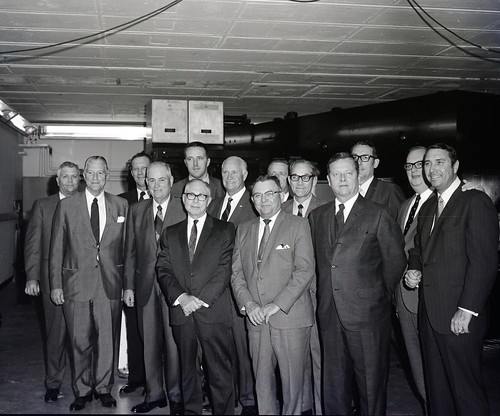
 We all know you shouldn't talk to business staff in KM-speak, but in the language of the business. We also all know we should focus our KM efforts on business benefits. But what are those benefits? And how do you describe them in business-speak? Basically there are 4 areas of benefit, as shown on the picture to the right; innovation, collaboration, standardisation and retention




 Now perhaps this is natural learning. Perhaps KM has nothing to do with it? But contrast this with the Japanese equivalent, where there was no program of standardisation, and therefore no opportunity for learning from one construction to another. In the Japanese case, we see no learning curve at all. So yet again the combination of standardisation and lesson-learning can be a powerful driver behind industry economics and competitiveness.

 Posts
All Comments
Posts
All Comments