Tuesday, 28 September 2010


Innovation, Know-How, Expertise, and capping the Macondo well


I know BP is the Pantomime Villain of the US at the moment, and I know BP got themselves and the Gulf Coast into a huge mess with the Macondo well, but few people credit how amazingly difficult and skillful the job was of getting the Gulf Coast out of that same mess again afterwards.

Capping and clearing up an uncontrolled blowout is very hard. Think how long it took to cap the Kuwait wells after Saddam had blown them up - it took about 8 months, and the clean-up took much longer. And that was on the surface, where you could deploy bulldozers and cranes, and you could get up close with a wrenches and pipes.

Now imagine doing this a mile underwater, in the dark, in the cold, beyond the reach of divers. Nobody had ever tackled anything like this.

In containing, capping and clearing up the blow-out, BP has done things in months that usually take years. They have done things never before done in the Gulf. They have done things never before done in the world. They have orchestrated probably the biggest deployment of ships, aircraft and personnel ever seen outside wartime.

How have they done this? They have done it by using Innovation, Know-How, and Expertise. See the extract below from this speech by Andy Inglis

As I reflect on the response over the past five months, I believe three factors were critical to the conclusion of this incredibly challenging endeavor. These are:


•Innovation,

•Know-how; and

•Expertise

Let me give you some examples.

First on Innovation. From the beginning, the relief wells were envisaged to be the final step in permanently killing the well. It was critical that these wells were drilled safely and efficiently to intercept the Macondo well. To put this in perspective, this requires hitting a 7” target at a distance of 3-1/2 miles. Using existing technology (openhole magnetic ranging), 17 ranging runs were performed to accurately position the relief well, and I am pleased to say we hit the target the first time. Each ranging run required the magnetic tool to be deployed on wireline from the surface, a process that took approximately 36 hours. In total, the ranging runs added over 3 weeks to the time it took to successfully intercept the well. Whilst the relief well was being drilled, we developed a tool that allows ranging while drilling, eliminating the need for time consuming tool deployment from surface. This technology was proven in the final intersect of the well. This is just one example. The challenge going forward is to ensure this type of technology development for subsea containment continues beyond the immediacy of incident response.

Second – know-how. I’m sure many people here today will remember the unsuccessful deployment of the containment dome early in the response effort. This dome was around 20 ft square and three stories tall and designed to contain the flow from the well. Why was this unsuccessful? The operational procedures, while detailed, did not fully contemplate the impact of hydrates inside the dome during installation in these conditions. We took this learning into account for the installation of the sealing cap. Ahead of its deployment we ran over a hundred trials onshore to test the installation procedures for any scenario we could envisage. This time and attention led to the successful installation of this cap and the sealing of the well on July 15th. The challenge going forward is to make sure the know-how embodied in these and other detailed procedures developed during the response is not lost.

And third - expertise. In the early days following the incident, it became apparent that it would have been extremely difficult for any one company to address the challenge. Therefore, we welcomed the offers of expertise from other deep water operators and service companies world-wide. Under the direction of the National Incident Commander, the U. S. Coast Guard, BOEM and the government science team, played a particular role in reviewing each step of the subsea containment effort and I would like to acknowledge the contribution they made in response to this incident. The challenge going forward is to maintain this collaboration between industry and government. It is our hope that the subsea expertise developed in the National Laboratories during this response will be expanded and available if needed in the future.

Now you could argue that the Innovation, Know-How and Expertise might be better used avoiding the disaster in the first place, and nobody would disagree with you. Failing that, then using them a) to fix things, and b)  make sure they never happen again is a vital secondary objective with huge implications for us all.


Hedgehopper Knowledge Management


I have met a few organisations recently who operate what I call "Hedgehopper Knowledge Management" (which is nothing to do with the war of the hedgerows).

Hedgehopper KM operates in global siloed organisations, where only a certain level of manager or senior expert is allowed to travel to other units. These are the people who are allowed to hop over the hedges between the silos.

In a Hedgehopper company, if someone at an operational level has a pressing knowledge need, they ask their manager, who asks their manager, until the request reaches someone senior enough to travel. At the next global managers meeting (often called a global network, or even a knowledge sharing network), they can raise this question. Maybe someone knows about someone in their own organisation silo who can help, so they pass the question down the levels until it finds someone at operational level with an answer. In the better hedgehoppers, the asker and the answerer are put in touch with each other.

In the worst hedgehoppers, the answer also travels up the heirarchy to the travelling experts - then back down again on the other side.

Do you know the term "Chinese whispers"? This is Chinese Whispers with a vengeance.  Not only is the transfer of knowledge delayed until the hedgehoppers meet, the knowledge is filtered as it travels up and down heirarchical levels, until by the time the answer arrives, it may be too late, completely garbled, and largely irrelevant.

What's the alternative to hedgehopper KM?

The alternative is to allow peers all over the organisation to communicate directly, without having to go through managers. You set up the communities of pracice to allow peer networking, and you empower people to seek answers wherever they may be found.

Partly the hedgehopper concept comes from applying the concept of T shaped management, without realising that anyone in the organisation can operate in a T-shaped space - looking both vertically at the heirarchy, and hosrizontally at their peer group.

Monday, 27 September 2010


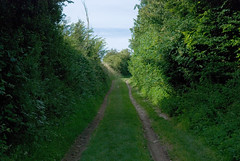
The war of the hedgerows - Learning in Action


The Sunken Lane
Originally uploaded by CityWodge

Thanks to Jack Whalen for pointing me at this excellent Learning Story from WW2 and the D Day landings

What has been quoted as being "one of the greatest intelligence failures of all time", was the failure of the US forces to realise the nature of the battle they would fight after the D day landings - a battle in a maze of small fields, sunken lanes and almost impenetrable hedgerows, known as the Bocage.

Now I must admit, when I first heard this, I had a "well, duhh!" moment. I was brought up with hedgerows and small fields. Hedgerows were where we found badger sets and foxes earths, where we picked sloes, blackberries, wild damsons, hazelnuts and wild cherries, and where we cut branches for catapults and pretend spears. It would be pretty obvious that these would be an obstacle. Yet for the US forces, the nature of this obstacle was a huge surprise.  Hedgerows cultivated for over a thousand years to keep even the strongest bull in a small field, are not a feature of the US countryside. They are impenetrable to troops, and the earth banks under the hedgerow make them a death trap for tanks, as the unarmoured base of the tank is exposed as it climbs the bank. As one U.S. Army Captain put it, “We had been neither informed of them or trained to overcome them”. General Bradley called the Bocage the "damndest country I've seen."

Actually there had been warning of the hedgerows - see this quote from Brigadier General James M. Gavin- "Although there had been some talk in the U.K. before D-Day about the hedgerows, none of us had really appreciated how difficult they would turn out to be."

This is a classic failure of Learning Before - trying to share a context. The British would have known about the challenge of the hedgerows, as similar countryside is found in Devon, Dorset and south Somerset. They would probably have assumed that Americans knew about the challenge as well. The conversation might have gone

Brit "Watch out for the hedgerows"
Yank "Yeah no problem"

Whereas the conversations needed to have been

Brit, "No, I mean REALLY watch out for the hedgerows"
Yank "How do you mean? Whats the problem with a hedgerow?"
Brit, "Let me explain ....."

The Germans knew all about hedgerow warfare, and had been practicing tactics for months - tactics of covering fire, pre-aimed mortars, communication lines between fields, covering fire from parallel hedgerows, turning each field into a deathtrap. They knew that they were perfectly hidden behind the dense hedges. So the first few weeks were a nightmare for the Americans, losing on average one man for every metre of progress.

However, despite the failure to "learn before", some very smart "learning during" went on. The Americans improvised and innovated, with such innovations as
  • The Rhino Tank invented by Sergeant Culin - a tank-bulldozer, where recycled German tank traps were welded to a tank, enabling it to burst through a hedgerow,
  • A communication system, where an infantry observer could shelter under or behind a tank and direct its fire, linked by telephone to the tank crew
  • Use of light rifles for covering fire, instead of more unwieldy machine guns
  • A doctrine, or series of approaches, for clearing a field, involving the close operation of a tank and an infantry platoon ("'One Squad, one tank, one field'")
  • A whole language of hand signals for communicating between tanks
  • Using the back of a tank as a platform for the mortar spotter
  • Employing light aircraft to scout in advance
As quoted here
"the American army in Normandy during the summer of 1944 functioned as a remarkable “knowledge creating organization.” And this knowledge creation was accomplished not by the command staff or the war room strategists but by the troops on the frontlines. It was a case of necessity being the mother of invention, and of strong organizational support for that inventiveness".
Once that knowledge had been created, it was rapidly spread among the various divisions, though interestingly, not as a uniform approach across the entire Army. Individual divisions created their own variants on the doctrine, whcih were shared as Example Practices.
"After the rehearsal on 24 June, the 29th Division's operations staff prepared diagrams and explanatory notes outlining the new hedgerow tactics in detail. The operations section then distributed the information as a training memorandum to all regiments within the division. Units in the 29th Division practiced and rehearsed the new tactics in preparation for their next bout with the Germans.On 1 July, General Cota summed up the 29th Division's tactical experience in France: "What held us up at first was that we originally were organized to assault the beach, suffered a lot of casualties among key men, then hit another kind of warfare for which we were not organized. We had to assemble replacements and reorganize. Now we have had time to reorganize and give this warfare some thought. I think we will go next time"

Using the new knowledge, the 2nd Battalion made spectacular progress. They completely ruptured the main line of German resistance.  Infantry casualties were relatively light during the attack, and not one Sherman was lost. Other US Army units delivered equally impressive advances.

Thus new knowledge turned the tide of the battle.

This reference summarises the learning approach (my emphasis)
Ideas on how to achieve better results against the Germans came from a wide variety of sources. In general, ideas flowed upward from the men actually engaged in battle and were then either approved or rejected by higher commanders. Within the bottom ranks of the Army, individual soldiers suggested ways that enabled their units to move against the enemy. Sergeant Culin's hedgerow cutter is the best example of a single soldier's idea that influenced all of First Army. At the top end of the chain of command, general officers also produced ideas on how to defeat the Germans. General Cota's supervision of the development of hedgerow tactics in the 29th Division typifies the contributions made by general officers.
The effort to gather ideas on how to beat the Germans was decentralized. There was almost no effort to work out an Armywide solution to the tactical problems of combat in the Bocage. The First Army staff made no distinct attempt to devise tactical solutions for. the whole command to use in overcoming the German defenses. First Army did publish and distribute to all units a series of "Battle Experiences," reports that contained information and lessons learned in battle. The bulletins were not directive in nature, but subordinate commanders were expected to use the information to assist them in finding ways to defeat the Germans. In fact, in only one area did First Army headquarters take an active role in dealing with tactical problems: the production and distribution of Sergeant Culin's hedgerow cutter.

What explains the decentralized, collective method of tactical problem solving exhibited within First Army? Firstly, the U.S. Army was not in a position to analyze the German defense systematically and produce one best solution for attacking through the hedgerows. First Army simply did not have the time to slow the pace of combat operations while seeking a uniform, coordinated solution to tactical problems. The U.S. Army had to push inland and expand its beachhead as a prelude to larger operations. Corps and division commanders received orders and were expected to execute them as quickly as possible while overcoming all difficulties. Commanders who did not perform well were relieved; several division commanders lost their posts during the Normandy campaign.

An interesting story, and an interesting example of Learning in Action, when speed of deployment was more important than consistency.

Wednesday, 22 September 2010


Progress quote


Progress
Originally uploaded by kevindooley

Progress isn't made by early risers. It's made by lazy men trying to find easier ways to do something.
- Robert Heinlein

This reminds me of a plant operator, who told me "Knowledge Management is the lazy man's solution. WHy should I work hard inventing something, if someone else has already done it, and I can copy them"?

Tuesday, 21 September 2010


Random quotes and ideas from KM Egypt, day 1


View at KM Egypt
6 great questions from the Egyptian Minister of State for Administrative Development

  1. How do we avoid knowledge hoarding?
  2. Can knowledge be disseminated through informal networks?
  3. Is there knowledge that cannot be recorded?
  4. How do we find the people with the knowledge we need?
  5. How do we recruit people capable of creating and transferring knowledge?
  6. How can we measure an organisation's KM capability?

One of Peter Hofer's "KM Myths" - we don't "spend lots of time searching" - stats from 2300 knowledge interactions showed people searching in only 10% of the cases. 38% was asking and eliciting, 6% was negotiating, and 48% was interpreting and adapting the knowledge received.

In Germany, 91% of surveyed managers said that KM was "important" or "very important" to the German economy. Howeveronly 24% said that current KM in their company was "good" or "very good"

Potentially the greatest value in innovation will come from innovation at the Base of the economic pyramid - creating products for consumers with <$2/day income.

Monopolies lead to non-creative thinking.

In biology, Stigmergy (swarm dynamics) means that a group where the members follow simple rules can demonstrate an intelligence far greater that the knowledge of the individual members would allow. COuld this be used human organisations?

Quote - Everyone thinks of changing the world, but no one thinks of changing himself. Leo Tolstoy


KM Egypt


I am at KM Egypt for the next couple of days. Here's the presentation I gave today.


Monday, 20 September 2010


KM failure stories number 6


Here's a story from New Scientist magazine, 08 July 2000, which is a classic example of a KM failure, through lost knowledge.

"How could the designers of a revolutionary bridge miss something so obvious?
ENGINEERS who designed London's wobbly Millennium Bridge admitted last week that the computer simulations they used to model its behaviour couldn't cope with the effect of people walking across it. The blunder, say observers, resulted from an out-of-date standard for testing bridges and poor dissemination of information in the industry about previous incidents.

The 320-metre footbridge over the Thames, which cost £18 million, was closed on its opening weekend last month, when it was found to wobble more than expected. Since then Arup, the engineering firm responsible for the bridge, has been analysing its response to vibrations.

The engineers used shaking machines to send vibrations through the bridge. They found that horizontal vibrations at 1 hertz (one complete cycle per second) sent the bridge into the kind of S-shaped lateral wobble that was seen when it opened.
This was a clue to the source of the problem, says Pat Dallard of Arup, structural adviser on the bridge project. "Normal walking pace is about two strides a second, so you produce a vertical force at around 2 hertz," he says. But the horizontal frequency is half that. "As we walk, one foot pushes left, then the other pushes right, so you have a 1-hertz horizontal force," he says.

To make the bridge wobble, a lot of people would have to be walking in step, says Tony Fitzpatrick, Arup's head of engineering. And when engineers checked TV news footage, this is exactly what they found. "What we saw was unintentional synchrony of walking," says Fitzpatrick. People on the bridge were adjusting their balance as the bridge moved slightly--probably because of high winds on the day, Fitzpatrick says."When what you're walking on moves, you start to steady yourself. And here, everybody is doing the same thing." Synchronised walking made the bridge wobble even more.

...........

So why didn't Arup engineers know small movements of the bridge could cause "lock-in", as synchronous walking is called? One reason might be industry secrecy, says Bill Harvey, a civil engineer at the University of Exeter. "Engineers are very, very sensitive about these things," he says. "The only reason anybody knows about the Millennium Bridge is because it's so public. If it had been somewhere small, then I imagine it would have been kept quiet." Even when problems are aired in civil engineering journals, they rarely identify the projects under discussion.

Pavic, too, isn't surprised that Arup did not know about the effect. He says it took a Sheffield PhD student four years to track down three cases of horizontal wobbling on footbridges. "What chance have practising engineers got, when they're working on several projects at the same time?" Pavic asks. Arup has now called in Yozo Fujino, who worked on one of the previous cases in 1992.

Arup is now working on a new computer simulation that will account for lock-in--which should be cured with dampers. "I'm embarrassed for my industry," says Fitzpatrick. "But if you're not going to do new things, you might as well put a bin liner over your head and sit in the corner."
Interesting, eh?

It had happened before, but a combination of secrecy and buried knowledge meant that it happened again, in a very emberassing high-profile way, resulting in 2 years delay and costing £5 million.

Friday, 17 September 2010


Poor sort of memory (quote)


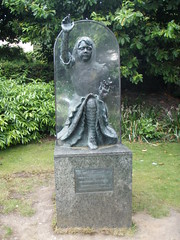
Lewis Carrol Statue
Originally uploaded by mrpbps

It's a poor sort of memory that only works backward.

- Lewis Carroll

Thursday, 16 September 2010


What do your staff want from KM?


One of my friends asked his organisation "what does your team want from the KM project"?
 
That's a very good question, and these are the answers he got back.
 
Note that there is a lot there about finding stuff, a lot there about not losing knowledge, and a lot about "who knows who" and general connectivity.
  • A central place to be able to store and find key information and knowledge in an organised and easily accessible way.
  • A clear place to be able to show new staff where key information is kept, as part of their orientation.
  • Each team to have a learning conscience person to connect with
  • With service / support teams, the learning to be integrated with the learning of the teams they support.
  • When people leave, or are absent for periods, their knowledge is captured by exit interview for others to use.
  • Avoid re-learning things and starting things from scratch, to improve what we do by capturing lessons.
  • To know who knows what in the organisation.
  • To have more collaboration and learning between teams
  • Increased connectivity and awareness in the organisation.
  • Make clear the tools and techniques of KM.
  • Put in a process for managing / coordinating external key relationships.
  • Clarity about how to transmit company values
  • To allow a process to take time out to reflect and see insights that can feed into strategy and planning next time
  • To be able to see that Learning is being incorporated into the next time things are done.
  • When people come back from long term assignments overseas, to capture what they have learnt.
  • Increased awareness of what other roles are like, to help plan job moves within the organisation.
  • To build knowledge on team leadership
  • Updated and clear procedures to follow
  • Information on why teams are deviating from budgeted plans
  • When partners ring asking if we have experience in an area, the ability to be able to tell quite quickly without having to email everyone.
  • To have a well organised country and partner contact details information set.
I am not suggesting that you use answers like this to build your KM strategy (as there are other stakeholders, and also people may not know whats possible), but you still need to deal with enough of these issues that the organisation will be grateful for KM.

 
So this is a great question to ask, as this starts to define the WIIFM for some of the key stakeholders.


Wednesday, 15 September 2010


Operator error, or KM error?


I have been reading through a book about the explosion at Esso’s Longford refinery in Australia; a sobering report of a fatal disaster, which makes some interesting points about "Operator error". It got me thinking about whether operator error is a cause of failure, or a symptom of a deeper failure - a  failure of the Knowledge Management system.

"Operator error" might be a first pass conclusion when something goes wrong, but the book suggests that very often you need to look deeper, and understand why the operator made an error. Did they have all the knowledge they needed to make decisions? Did they have training? Did they have access to expertise?

Here's what Wikipedia says about the disaster
During the morning of Friday 25 September 1998, a pump supplying heated lean oil to heat exchanger GP905 in Gas Plant No. 1 went offline for four hours, due to an increase in flow from the Marlin Gas Field which caused an overflow of condensate in the absorber. A heat exchanger is a vessel that allows the transfer of heat from a hot stream to a cold stream, and so does not operate at a single temperature, but experiences a range of temperatures throughout the vessel. Temperatures throughout GP905 normally ranged from 60 °C to 230 °C (140 °F to 446 °F). Investigators estimated that, due to the failure of the lean oil pump, parts of GP905 experienced temperatures as low as −48 °C (−54 °F). Ice had formed on the unit, and it was decided to resume pumping heated lean oil in to thaw it.
When the lean oil pump resumed operation, it pumped oil into the heat exchanger at 230 °C (446 °F) - the temperature differential caused a brittle fracture in the exchanger (GP905) at 12.26pm. About 10 metric tonnes of hydrocarbon vapour were immediately vented from the rupture. A vapour cloud formed and drifted downwind. When it reached a set of heaters 170 metres away, it ignited. This caused a deflagration (a burning vapour cloud). The flame front burnt its way through the vapour cloud, without causing an explosion. When the flamefront reached the rupture in the heat exchanger, a fierce jet fire developed that lasted for two days ......
Peter Wilson and John Lowery were killed in the accident and eight others were injured.....Esso blamed the accident on worker negligence, in particular Jim Ward, one of the panel workers on duty on the day of the explosion.  The findings of the Royal Commission, however, cleared Ward of any negligence or wrong-doing. Instead, the Commission found Esso fully responsible for the accident:
So what might cause apparent "operator error" or "worker negligence" as Wikipedia puts it, in cases like this?  The disaster happened when hot oil was pumped into the cold exchanger, which was the wrong thing to do, but why did the operators do this? The book mentions what it calls "latent conditions" which can cause operators to make poor decisions, such as "poor design, gaps in supervision, undetected manufacturing defects or maintenance failures, unworkable procedures, clumsy automation, shortalls in training, less than adequate tools and equipment (which) may be present for many years before they combine with local circumstances and activate failures to penetrate the system's many layers of defences".

If an operator does not have the correct training, or the correct procedures, for example, then they do not have the means to make the correct decision, and so may end up making mistakes through ignorance. If they do not have the knowledge they need to make an effective decision, then any error they make could be argued to be not their fault. The failure could therefore be seen to be a failure of the knowledge management system, for not providing the operators with the knowledge they need to avoid the error, to make the correct decision, or to take the necessary preventative action when things go wrong.

In knowledge management terms, the investigative commission found these three contributory factors (again, according to Wikipedia), which talk to a lack of knowledge on behalf of the operators, lack of access to more skilled knowledge, and lack of communication of knowledge - all of them potential KM failures
  • inadequate training of personnel in normal operating procedures of a hazardous process;
  • the relocation of plant engineers to Melbourne had reduced the quality of supervision at the plant;
  • poor communication between shifts meant that the pump shutdown was not communicated to the following shift.

The following quote from the book is a statement from the operator himself, and you can hear from the language he uses that this was way outside his experience and knowledge base.
"Things happened on that day that no one had seen at Longford before. A steel cylinder sprang a leak that let liquid hydrocarbon spill onto the ground. A dribble at first, but then, over the course of the morning it developed into a cascade ... Ice formed on pipework that normally was too hot to touch. Pumps that never stopped, ceased flowing and refused to start. Storage tank liquid levels that were normally stable plummeted ... I was in Control Room One when the first explosion ripped apart a 14-tonne steel vessel, 25 metres from where I was standing. It sent shards of steel, dust, debris and liquid hydrocarbon into the atmosphere".
In a situation like this, where operator error can be lethal and operator error through ignorance cannot be allowed, effective knowledge management (in the sense of ensuring that people have access to the knowledge they need, at the time they need it, in order to make correct decisions) is not just a nice-to-have; it's a life saver.


Tuesday, 14 September 2010


Change quote


"It is not the strongest of the species that survive, nor the most intelligent, but the one most responsive to change"
Charles Darwin

For species, also read Companies

Monday, 13 September 2010


the curse of knowledge


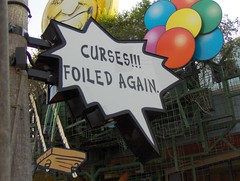
Curses!!! Foiled Again.
Originally uploaded by Joe Shlabotnik
The Curse of Knowledge is a real problem when it comes to knowledge sharing, or trying to transfer knowledge to the Unknown User. It's also one of the reasons why lessons learned systems are full of mushy motherhoods and useless bullet points.

The curse of knowledge refers to the fact that when we know something, its obvious to us, so we assume its obvious to everyone else. Therefore we underestimate the difficulty of transferring that knowledge to someone else; to whom it is not obvious.

Chip and Dan Heath, in their book "Made to Stick", describe an experiment where one person taps the rhythm of a popular song, and another person has to guess the song (it might be Happy Birthday to You, or The Star Spangled Banner, or something equally familiar). This is actually very difficult to do, and the success rate turns out to be about 2.5% for a successful guess. However the tappers estimated that the success rate would be 50%. They had the knowledge - they knew what tune it was - and they underestimated the difficulty of transferring that knowledge to someone else.

They underestimated it by a factor of 20!

When people put lessons into databases, or write PowerPoints with bulleted "learnings", the curse of knowledge strikes again. They assume that the knowledge will be obvious to the reader, and write down little shorthand koans such as "get the right team in place from the start", "plan properly", or "do not underestimate the complexity of this task" (as if anyone ever sets out to put the wrong team in place, to plan improperly, or to underestimate the complexity). These bullet points are, to be frank, completely worthless. They underestimate by at least a factor of 20 the difficulty of transferring to someone else what you have learned.

A lesson needs context, it needs explanation, and above all it needs concrete recommendations that others can follow, and can take action. To avoid the curse of knowledge, and get to a quality result, requires facilitation. A facilitator can challenge the curse, can ask "will that really be obvious to the reader, who has no prior context"?

Without facilitation, without quality control of the lessons, and without awareness of the difficulty of transferring learning, the curse of knowledge will strike, and you will be "foiled again"

Friday, 10 September 2010


New franchise - Knoco Hungary


The Szechenyi Chain Bridge and Royal Palace (Buda Castle), Budapest, Hungary
We are pleased to announce a new Knoco franchise, in Hungary.

Welcome to Tibor, Balint and the guys at Poziteam


Phot of The Szechenyi Chain Bridge and Royal Palace (Buda Castle), Budapest, Hungary by Paul Mannix, on Flickr


KM and the three cultures of management


In his article “Three Cultures of Management: The Key to Organizational Learning in the 21st Century”, Edgar H. Schein of the MIT Sloan School of Management describes three cultures of Management he believes are prevalent in organisations.

The walls between these cultures can form impenetrable barriers for knowledge and learning.

His three cultures are as follows
  • The Operator Culture evolves locally in organizations and within operational units. It is based on human interaction and high levels of communication, trust and teamwork. The focus is on getting the work done efficiently. Operators know that the world is unpredictable and that sometimes you have to use your own innovative skills to bend the rules.
  • The Engineering Culture is found in the designers of products and systems. The engineers are driven by utility, elegance, efficiency, safety. They are looking for systems that work well, all the time, and ideally without operator intervention.
  • The Executive Culture is the set of shared tacit assumptions that CEO's and their immediate subordinates share. This executive world view is built around the necessity to maintain the financial health of the organization. Executives think in terms of control systems and routines which become increasingly impersonal. Executives feel an increasing need to know what is going on while recognizing that it is harder and harder to get reliable information, which drives them to develop elaborate information systems alongside the control systems.
There is a good history of effective Knowledge Management when it comes to peer-to-peer knowledge sharing within communities, but knowledge sharing up and down the hierarchy and across the communities is notoriously difficult. Partly this is due to the inequality of power in the hierarchical relationship, so that knowledge exchange becomes complicated by power exchange. However partly it will also be due to the barriers between the engineering, operator and executive culture.

We have already seen some excellent examples of ways to break the operator/engineer barrier. Many of the major projects we have worked with recently have involved operators in the engineering design stage of the project, often with massive benefit. The operators can merger their experience with that of the engineers, to design systems that not only are elegant, but are also practical to work with. They know when a compressor needs to be resited to allow maintenance access, or where a bend in a pipe would introduce turbulence.

But how do we introduce a similar dialogue with the executive?

Nancy Dixon has some suggestions in her blog, and they revolve around open and facilitated conversations that cross the hierarchy, and cross the peer levels. This is relatively new territory for knowledge management, but may be the only way to start to bridge these three entrenched organisational cultures.

Sooner or later, KM has to step out of the communities and out of the peer to peer networks, and has to cross the three cultures of management, if true organisational learning is to be delivered. Let us know underestimate the cultural difficulties of doing this!


Thursday, 9 September 2010


The importance of definitions in the KM marketplace.


Addis fruit stall
Originally uploaded by magnusfranklin
There is a report being advertised now, entitled The 2010-2015 Outlook for Knowledge Management (KM) Products and Services in Europe, at a cost of $325.

This would be a very interesting report to see, as it would help my company Knoco to develop our European business strategy.

However personally I would not spend $325 without first wanting an answer to the question - "What do they mean by "Knowledge management" in this context?"

Knowledge management is still a term without a definition (although we have a definition we like), and therefore without a defined scope.

Definitions are important. If I don't know what a term means, I cannot have a conversation with anyone until we have agreed on a shared meaning.

This is particularly true of knowledge management.  Is KM a culture? Is it all about social media? Is it another word for content management? Is it another word for data management? Is it all of these things? Is it none of these things?

Imprecise definitions make a market place difficult. It makes it difficult for someone to spend their money, time and attention wisely, if they don't know what they are getting in return. Is the buyer's definition of KM the same as the sellers definition of KM? The report would cost me £325, for example, and I might find that the report is all about content management, and so of little interest to me as a seller of KM strategic services and learning approaches. Or I might be a content manager, and spend £325 and find it is all about communities of practice.

It's like trying to buy oranges to make orange juice, when the market definition of "oranges" covers everything from kumquat to graprefruit, including lemons and limes.

We are a long way from coming to a standard definition for knowledge management, but while the definition remians imprecise, the KM marketplace is going to be a confusing place to operate, both as a buyer and a seller.

Wednesday, 8 September 2010


Rewards for information sharing may be cultural?


In this post, I suggested that incentivising information sharing may be a bad thing to do.

However Samuel Drieesen asked "Hi Nick, I enjoy reading your posts! My comment on this post is a bit late... First of all, thanks for this post. I agree with it. But during my vacation I came up with this post.  I'd love to hear your thoughts! In short: why does a financial reward help to solve crimes, but doesn't help to encourage knowledge sharing in organizations"?

Samuel was referring to a program on Netherlands TV where the police offer rewards for people to solve crimes.


Here's my thinking on the matter.

Sure, they offer rewards for information, but how well do those rewards work? The BBC Crimewatch program has operated for many years without offering any rewards (though of course the individual and corporate victims sometimes offer rewards).

The questions this would raise for me are, firstly, whether the offer of rewards increases the number of false positives or spurious information, and secondly, whether you really want a society that only offers information about criminal activity if they are paid to do it.

I dont know the answer to the first - it would be good to have some research available. All I could find was the following;
 
Do rewards help police solve crimes?


Detectives hunting the killers of two Chinese students in Newcastle have decided to offer a £5,000 reward for information leading to the killers' capture.

But do rewards work? The charity Crimestoppers provides the most rewards in Britain for people informing on criminals. Even people reporting crimes anonymously can claim, without their identity being revealed. But the charity says that even with its anonymity selling point "there is a notable year-on-year decrease in rewards being paid out". Hannah Daws, for Crimestoppers, said: "In 2007/08 less than 1% of informants claimed the reward they are entitled to of at least £1,000. The key motivating factor for people to phone our number is that they are vulnerable and feel trapped."

In 1994, the charity paid out a peak of nearly £121,000 in rewards, but the figure now is a tenth of that, with no less information being offered. Daws said: "We have downplayed the rewards in our marketing and concentrated our messages on 'the communities doing the right thing'.

"An interesting comparison is the US Crimestoppers programme, where the rewards payout is around 70%."

For a reward to be offered, an investigating force applies to Crimestoppers, which puts up the money. Private individuals or newspapers can also offer rewards. One of the biggest currently on offer is £50,000 from a private individual - Michael Ashcroft, the former Tory chairman who set up Crimestoppers - for information leading to the killer of the BBC newsreader Jill Dando.

Rewards can revive media interest in a case, but they are no guarantee of success. Ashcroft set up Crimestoppers after offering a reward to find the killers of PC Keith Blakelock, who was hacked to death during the 1985 Broadwater Farm riots. More than 20 years on, despite the reward, that murder remains unsolved.
Vikram Dodd

So in the UK, its more about "doing the right thing" and less about the money, whereas in the US it's the opposite?

Is that it? Down to culture? Are the UK and US really that different?

Or is there a systemic difference between the way Crimestoppers operates in the two countries?

I don't know, but there is enough in this article to allow us to challenge the simple idea that rewards drive information sharing.


Introducing AAR – a story in quotes


factory-worker
Originally uploaded by Kalinago English

Here's a story about introducing After Action Review at an industrial plant. The story is told in quotes from the people involved. There's some good learning here!

"It was important, that the management group here and all the people would be aligned, including the contractor. Our CKO came in and put on his presentation to the management group, as well as to the contractor, and after the presentation nobody had any doubt that this was intuitively the way to go, though there was scepticism about the AARs themselves. To a person they supported the concept, but I am not sure they felt comfortable that it would work out in the field".
"We got the senior people in the plant committed to the idea, and some good people seconded onto the project. That was the fundamental key to success"
"I think the biggest disappointment was at the stage in the training where we get to the bit of ‘now how do you apply it’. We've gone through the chalk and talk, we've done AAR's in Bird Island, building the tower, and now - what is going to happen in the real world? We have the desire that we come out with a specific statement, and it just doesn’t work - people need time to let the ideas they've been presented with sink it"
"After the 2nd-3rd day of meetings with the supervisors, talking about general things, you could tell they were losing interest, so I said ‘let me work with one of your craft teams’; and it took off from there. That’s what I mean by getting your foot in the door; they didn’t want me bothering the workers, but it became apparent to the Front Line Supervisors that this was they way to go. So we got it to the field; where the rubber meets the road. That’s where you get most from an AAR, and you can start cascading it up. Unless you get in at ground level you miss a lot of resources".
"We took what they gave us. Because there was scepticism, the closer to the date we got the more sceptical and worried people got. They backed me up to where they gave me only 2 support teams and no crafts people. I was discouraged, but took what they gave me and worked with that. I thought, well if that’s what they will give me I will work from there. So I got my foot in the door and expanded it from there. We were willing to be flexible and take what they gave us. It would have been real easy to drop the thing. My mindset was that if you start working with the supervisors, very quickly they will get into their own area of work, and will not have that much in common".
"These guys would be craftsmen themselves and become Front Line Supervisors during turnaround. Good workers, in the plant all year, with existing skills and knowledge, and some leadership ability. They are not used to conducting meetings or facilitating, so it was important to give the support. Get out there, facilitate a couple, bridge it over to them and be there with them, then back away and let them go".
"We went from a formal workshop approach, to a very informal workshop round a table, and field support afterwards. My advice to others would be to know your customer, know who you’re dealing with, know the people, and know what they are more apt to expect. If you’ve got front office people, more technically oriented, and they have been to workshops in the past, then the workshop training is nice; good hands on stuff. But if you have people who are used to moving all day, don't sit in offices, don't go to workshops, hands-on people, then I would use this informal approach, with field support. I’m not saying that the front people wouldn’t enjoy the workshop at some time, but where we were, they were wanting to get on with the job".
"Another point was that there was some action taken almost immediately after things were brought up. We were not just generating Lessons Learnt, but things were improved the next day. That helped to sell the crafts people and the foremen on the use of AARs".

"I generated the lessons learnt on a day to day basis, and I highlighted the day before in bold. I gave 2 lots of feedback. I gave the 1 pager back to the team the next day, and talked from that a bit. They saw how it was being used, and how action was coming out. I also took the lessons and I had 2-3 minutes in the 3pm turn-around meeting. I spoke about 1 or 2 of the lessons and that helped to build some credibility in the teams, and hopefully planted the seed for the next exercise. The report of lessons got to be 5-6 pages, and typically these would be read during the meeting and they took them with them - you never saw them left on the table at the end of the meeting".

Tuesday, 7 September 2010


2020 hindsight – wildly erroneous predictions


Hindsight
Originally uploaded by The.Rohit
Many of you will have heard these before, but it's a good collection of predictions which (with 2020 hindsight) were way off.

”Computers in the future may weigh no more than 1.5 tons.”
--Popular Mechanics, forecasting the relentless march of science, 1949

”I think there is a world market for maybe five computers.’
--Thomas Watson, chairman of IBM, 1943

”I have travelled the length and breadth of this country and talked with the best people, and I can assure you that data processing is a fad that won’t last out the year.”
--The editor in charge of business books for Prentice Hall, 1957

”But what ... is it good for?”
--Engineer at the Advanced Computing Systems Division of IBM, 1968, commenting on the microchip.

”There is no reason anyone would want a computer in their home.”
--Ken Olson, president, chairman and founder of Digital Equipment Corp.,1977

”This ‘telephone’ has too many shortcomings to be seriously considered as a means of communication. The device is inherently of no value to us.”
--Western Union internal memo, 1876.

”The wireless music box has no imaginable commercial value.Who would pay for a message sent to nobody in particular?”
--David Sarnoff’s associates in response to his urgings for investment in the radio in the 1920s.

”Who the hell wants to hear actors talk?”
--H.M. Warner, Warner Brothers, 1927.

”I’m just glad it’ll be Clark Gable who’s falling on his face and not
Gary Cooper.”--Gary Cooper on his decision not to take the leading role in “Gone With The Wind.”

”We don’t like their sound, and guitar music is on the way out.’
--Decca Recording Co. rejecting the Beatles, 1962.

”Heavier-than-air flying machines are impossible.”
--Lord Kelvin, president, Royal Society, 1895.

”Drill for oil? You mean drill into the ground to try and find oil? You’re crazy.”
--Drillers who Edwin L. Drake tried to enlist to his project to drill for oil in 1859.

”Airplanes are interesting toys but of no military value.”
--Marechal Ferdinand Foch, Professor of Strategy, Ecole Superieure de Guerre.

”Everything that can be invented has been invented.”
--Charles H. Duell, Commissioner, US Office of Patents, 1899.

”Louis Pasteur’s theory of germs is ridiculous fiction.”
--Pierre Pachet, Professor of Physiology at Toulouse, 1872

”The abdomen, the chest, and the brain will forever be shut from the intrusion of the wise and humane surgeon.”
--Sir John Eric Ericksen, British surgeon, appointed Surgeon Extraordinary to Queen Victoria 1873.

And a classic quote from “640K ought to be enough for anybody.”
- Bill Gates 1987

Monday, 6 September 2010


The joy of phone conferences


The trouble with learning from experience


Graduated!
Originally uploaded by ralph and jenny

"The trouble with learning from experience is that you never graduate."

Doug Larson


Who should steer a KM program?


in the driver's seat
Originally uploaded by jenny downing

I blogged recently on the Knowledge Management steering team, and got a supplementary question (which is a very good question) – who should be on the steering team?

If you think of a Knowledge Management framework as a combination of People, Process, Technology and Governance, then you are going to need steer from four quarters

  • If we think of the People aspect as referring to the roles and accountabilities related to KM, then the People-related steer will come from HR, and from Learning and Development. You should have the head of HR and the head of L&D on your steering committees.
  • Knowledge Management processes will need to be built into the work process. You will therefore need a steer from senior people in the main activity areas. For example the Head of Marketing, the Chief Engineer, the head of the Project Office all might be suitable contributors to the steering team.
  • Technology steer will come from the CIO and/or the CTO.
  • Governance steer will come from the head of HR, as they are best placed to address the issues of performance reporting and incentives.
Ideally, your steering team should be between 6 and 10 people, and you should be able to create your own steering team list based on the advice above.

Friday, 3 September 2010


Contracts will drive KM adoption


I hear from Shell, via Linked-In, that "We will be including Knowledge Management requirements in our ITTs for all our contractors".

So to get a contract with Shell, you need to be able to demonstrate KM.

Now we see market forces starting to drive the adoption of KM. It is no longer a nice-to-have - it is becoming a pre-requisite for doing business. As more companies take Shell's lead, KM will be driven deeper and deeper into the layers of contractors and subcontractors.

At last, KM is becoming a requirement.


Free KM september newsletter


September Meadow
Originally uploaded by gurdonark
The Knoco September newsletter has the theme of Knowledge Assets - what they are, what they contain, how you value them, and how you build a taxonomy. The newsletter is available for free download here


The Steering Team – a vital piece in the KM engine


Steering
Originally uploaded by Howard Dickins
Any time we kick off a Knowledge Management program with a client, we recommend that they put together a steering committee to help steer the program. This is the mechanism that keeps KM tightly aligned to the needs of the business. The leader of the Knowledge Management team does not report to the Steering Team; he or she reports to the high level sponsor, and the steering team acts to advise both the sponsor and the KM team leader.

The purpose of the steering team could be defined as follows
  • Provide a source of additional input and insight from people outside the core KM team to ensure the team doesn’t become introverted and lose their business-led outlook;
  • Provide a source of rigorous challenge when needed (in a safe environment);
  • Further build and maintain the profile of KM;
  • Bringing influential thought leaders closer to the KM programme;
  • Help the team to see emerging risks and opportunities
The steering team would meet on a quarterly basis (more frequently during periods of intense activity). The agenda of the meeting would be to present KM progress since the previous meeting, to discuss lessons learned during this period, to present a plan for the next quarter and to receive feedback and steer from the steering group.

In every case where we have had such a steering group, we have found that it delivers a level of guidance, rigour and challenge that otherwise would be missing.

Thursday, 2 September 2010


The goal of KM


BrainPower
Originally uploaded by centralasian
I have been reading "Made to stick" by Chip and Dan Heath, and thinking about simple messages we can give regarding Knowledge Management.

It struck me that the simplest message you can give about KM, is that the goal of KM is to harness


"The knowledge of the organisation in support of every business decision"

It's that vision of organisational knowledge as a resource to the individual to help them make better decisions. As one of my previous work colleagues used to say - "We have this massive know-how - why would you not want to use it? It will make your life easier, and you will do a better job"

Wednesday, 1 September 2010


Knowledge Management Incentives


Carrot incentive
Originally uploaded by Finsec
The list below is an old document I found, based on a survey of a community of knowledge managers,  which lists possible incentives for seeking knowledge, and for sharing knowledge.

In each case I have addressed intrinsic incentives (which come from within, such as altruism and curioistity), and extrinsic incentives which can be applied by others, such as recognition and reward. The italic text represents quotes from members of the knowledge management community which I surveyed, and can be considered to be the voice of experience, from grass-roots level.


Intrinsic incentives for seeking for knowledge

Payback   The most effective intrinsic incentive for asking for help or looking for knowledge, will be when you receive help, or find knowledge, and profit by it. This leads to self-reinforcing behaviour.

"The organisation as a whole will only achieve learning / sharing as a natural process when everyone has personally benefited by the sharing of someone else's experience (e.g. enabling a task to be done more easily / quickly / cheaply / reliably ... etc.), and perhaps have seen their own experience shared with and used by others."

Openness, or curiosity. Some people naturally look for knowledge, through curiosity, openness, or a spirit of inquiry. They are looking for effective solutions to the business problems, and are humble enough to realise they don't have all the answers. These people should be enrolled in the knowledge management process, and could make good knowledge managers.

"The need/desire to learn comes from inside and the thirst for more of the same will, if the desire is from self motivation and not the motivation for a reward of any kind, grow."

Security People need to feel secure in asking for help. There must be no mixed messages from management that make people feel that looking for outside knowledge is somehow cheating, or showing weakness or failure. Management can set a good example here by calling their own peer assists, and showing a willingness themselves to ask for help.


Practicality. Any barrier to knowledge management may be used as an excuse not to do it. Make sure the processes and technology you use are simple and practical, and fit as closely as possible with established work practices.

"The method of doing the networking has to be practicable, easy and effective: Undue extra burdens, from remote sources (i.e.outside your own Asset) can get relegated to low priority."

Familiarity. Even a small learning curve may be too much for a busy person. The KM practitioners have a role to play in familiarising their business with Knowledge Technologies such as the community softwarelessons learned systems,  and wikis

Trust. People will happily ask for help from a group of people they know and trust. By forming a community of practice, especially if the community meets face to face, you can build a network of people with common interests who can develop a sense of trust and loyalty.

"No matter how good technology is - people connect with people! It is all about mutual trust and respect!"


Extrinsic incentives for seeking for knowledge
Expectation. Ultimately, asking for help becomes the expected activity; a part of normal business. Everyone is doing it, and it becomes a surprise when people do NOT seek for knowledge. This incentive 'kicks in' after KM becomes established, and is the single most powerful extrinsic incentive for Knowledge Management.

"I think the question " What have you done about lessons learned ?" gets asked more and more frequently these days, before sanction is given. I don't know of a case where sanction was refused due to a negative response, but I would be interested to hear if anyone has had that experience. In any case I'm sure that works."
Encouragement.  Personal encouragement and prompting may be very effective in promoting knowledge seeking, and this is part of the role of the knowledge manager or community moderator. Often an gentle reminder is all that is needed; sometime people just don't think to ask!

"The key is encouraging people to "ask the question" not getting people to share per se! What I have found is that if somebody requests information, he will always receive feedback from his peers around the world (people will intuitively help people when they can - its in our nature, particularly when they are asked). What I can't help is when people don't ask in the first place."

Mandate. This is the ultimate extrinsic incentive for KM. As the late great Melissie Rumizen said to me “At Buckman Labs, we incentivise knowledge sharing. If you do it, the incentive is that we let you keep your job!”
________________________________________

Intrinsic incentives for sharing what you know

Reciprocity. "If I share my knowledge with you, perhaps you will share your knowledge with me".  The reciprocity of sharing knowledge can be a powerful motivator, and can lead people to share what they know within an established community. A flip-side to this can be seen in businesses which have benefited from the knowledge of others, and feel they should reciprocate by providing their knowledge in return. "Because others shared their knowledge with me, I will share mine with them". The knowledge asset then begins to operate like a 'favour bank', with established reciprocal behaviour.

Professional pride. Pride in your achievement is often an incentive for sharing knowledge when the project has been a success. The knowledge manager can use pride as a motivator when encouraging people to share their knowledge.

Altruism. Altruism should not be under-rated. Some people feel a strong motivation to share knowledge for the benefit of other people, often people they do not know. This may particularly be the case with difficult or traumatic projects, where people can feel compelled to help others in similar predicaments in future. Altruism can be an important motivator in sharing safety knowledge from accidents, for example.  Altrusitic individuals, with a strong drive to share knowledge with others, could make natural knowledge managers.

Loyalty and friendship. Communities of practice often operate through trust, loyalty and friendship, which can be strengthened by face-to-face meetings. Members can feel an obligation to the community, which leads them to share knowledge for the benefit of their colleagues and friends.

"Projects generally feel some moral obligation to prepare a close out report of some description. Usually difficult because they have forgotten what they did 3 years ago and it is completed after the key players have left the project. Close out reports don't get read very often but the motivation to produce them is still there."


Extrinsic incentives for sharing what you know
Expectation. Ultimately, managing knowledge has to become the default behaviour in a business unit. For this to happen, it needs the active endorsement of the BU leader, and a knowledge manager to watch the process. All new employees need to be introduced to the KM system, and use of the system needs to be encouraged, monitored and audited.

"In our business unit we do our work under a system called Project Management System . Part of the process we go through is that the project team sit down when the project is complete to discuss what went well and what could have been done better. After this session, lessons that are worth carrying forward are distilled from the team comments and published on a board for the rest of the unit to see. We also keep an electronic record of the lessons each project have learnt on the server and the gems are put into our homepage. I think that the behavioural bit is now taken care of by the fact that "this is the way we do work around here".

Encouragement.  When knowledge sharing does NOT occur, it may be time for a little light intervention. One member maintains "You need to have somebody to badger people to capture the lessons, otherwise this will not happen. Even if this person does nothing else for KM, this role is still vital. If you don't badger, the whole system breaks down."  This badgering can be a significant part of the role of the knowledge manager or community moderator.

"At times, activity slumps and, after a while, I take this as the time to issue a little encouragement, either by posting some technical content or by trying to spark some discussion."


Recognition.  Recognition works on three levels; firstly it is a form of thanks, secondly it endorses knowledge sharing as valuable, and thirdly it can give the individual status as being clever or altruistic or both. One company sey up Knowledge Management Intranet awards so that the knowledge management team can recognise the efforts of others.  Remember, recognition needs to be Personal, Immediate, Sincere and Specific (sorry about the acronym).

"Some people developed a systematized approach to capturing and sharing knowledge in (X company) using a system where use went from 30 people contributing what they knew, to 1000 people in 2 months, after they introduced a flag which marked each bit of knowledge with the name of the person who contributed it. The flag stays with the knowledge forever - in this way, people knew they would be recognised whenever someone extracted their bit of knowledge from the system. This reinforces much of what we are learning about the importance of recognition, and is a fairly simple thing to do."

Endorsement. Line Management can endorse the value of knowledge sharing if they lead the way in KM behaviours, for example by holding their own Retrospects or After Action Reviews. On the other hand, if they show no involvement in KM activity, they are implying that they see little value in it. One Knowledge Manager points out that "Managers need to 'walk the talk' in order to legitimise the time spent in transfer of knowledge."

"I think the key is to make visible that we recognize the sharing activity as a valued behaviour. Profile people who have the behaviours we want....and we will see everyone start to act that way over time."

Reward.  Financial reward may be the most concrete form of endorsement and recognition. Many of the respondents in the KM forum discussion did not feel that financial reward would be as effective as other incentives, ("In general, I don't believe you can financially incentivise someone to share; they have to want to do it") but financially rewarding non-KM behaviour could well be a dis-incentive.

"The only sure way I see it working is to attach it (incentives) to the objectives/goals of the job and reward success when they happen. Our managers constantly talk about "team work" but still rewards individual successes. When we see true knowledge sharing, we need to reward it quickly."

Mandate.  Capture and re-use of knowledge could become mandated behaviour, or at least written into the performance contract. See comments above from Bob Buckman

"Every project manager is required by performance contract to complete a closeout report at project conclusion. The report includes financial data, contractor performance & intelligence and lessons learned. So knowledge sharing is already mandated here”

Blog Archive