Friday, 27 November 2009
The fog of information
"Technology is so much fun, but we can drown in our technology. The fog of information can drive out knowledge." - Daniel J. Boorstin


Thursday, 26 November 2009
15 reasons for KM failure
From this blog - 15 reasons for KM failure

•overreliance on a database for problem solving
•to replicate the same knowledge-management system across different departments
•the original team of contributors in a project ends up squeezing out any knowledge from outside the core group
•the Field of Dreams trap: “Don’t assume that if you build it, they will come.” There was no incentive for anyone to invest time and energy to solve other people’s problems
•no process to monitor the quality of the written contributions
•expecting new technology and reengineering of processes to produce a collaborative, sharing culture, where the company’s greatest need was not new technology but a culture modification program to prepare for a KM initiative
•Management says they want it, but everything they do is opposed to it
•belief that professional standing depends on what you know that others don’t
•Technological incompatibility : each file had to be translated to a spreadsheet before transmission
•A respected head of KM at a large multinational consulting firm, who had her budget cut to nothing by senior management
•Defining knowledge within functions or silo-oriented communities of practice does not work. Instead define knowledge at the level of business processes.
•forgetting that a knowledge management initiative must relate knowledge to people’s day jobs.
•Attempting to apply Information Technology to tacit knowledge. This is fraught with difficulty. Instead, it is explicit knowledge that is most susceptible to the application of Information Technology.
•Failure to carefully manage external input to knowledge management initiatives managed to ensure people within the organization are in control of the initiative at all times.
•Failure to understand the organization’s willingness to change and to manage people’s expectations appropriately.
Wednesday, 25 November 2009
The other oil business
We are used to seeing KM applied in high tech industries. However I was at a conference in Jakarta last week, and there was a fantastic presentation from a company working in a very basic, very low tech area, namely palm oil production.

Palm oil is an agricultural business, producing oil from palm plantations. It's agricultural, unsubtle, and low tech. And yet, according to Henky Chahyadi from PT SMART, KM has added huge value. The practices being shared are about processes such as changing truck tyres in the jungle, and technology such as machetes and axes. And yet, through sharing many small improvements across many many plantations in Asia, huge value has been generated for the company.
KM is not just for high-tech - low-tech KM delivers just as much value.
Tuesday, 24 November 2009

2009 European MAKE awards
he 2009 European MAKE awards have been published. The finalists are
-- BP (United Kingdom)
-- British Broadcasting Corporation (United Kingdom)
-- Ericsson (Sweden)
-- IKEA (Netherlands)
-- Mondragon Corporation (Spain)
-- Nokia (Finland)
-- Royal Dutch Shell (Netherlands)
-- SAP (Germany)
-- Siemens (Germany)
-- Uria Menendez (Spain)
We are pleased to see BP and the BBC on the list - two of our major clients.
Congratulations to them both
Create vs Re-use - the core tension in KM
Where does the drive to innovate, turn into re-inventing the wheel? Where does creativity become counter-productive?
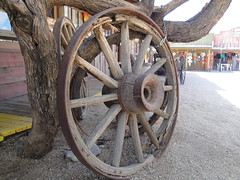
This is a question we cover in our Bird Island exercise. Towards the end of the exercise, we provide people with a complete knowledge asset for performing a task. People who re-use the knowledge, succeed in the task, as the knowledge is now well-established after 10 years of experience. People who try to innovate usually fail (although as a facilitator, I usually allow them to construct a fall-back version using the existing knowledge). Then afterwards we have a really good debate about the drive to innovate, versus the need to re-use knowledge.
This is often a real tension at work. People love to create, they are hired to be creative, and many companies now are looking to promote creativity and innovation. However innovation in the wrong place turns into reinvention of the wheel. Where the wheel is well established, then reinvention is a waste of time. Creativity in the wrong place is a waste of time and effort. Just as knowledge-reuse in the wrong place is a waste of time.
Take something well established such as the rules of the road. Should we be creative with these? Should we experiment with driving on the other side of the road? Or stopping on green and going on red? Perhaps if we are a formula 1 driver, or in the Dakar rally, creative driving is something to aim for. For the rest of us, it would be a real risk.
The secret, and our aim as professional knowledge managers, is to ensure that people reuse knowledge wherever knowledge is well established, and are creative and innovative where there is room to be creative and innovative. Re-using well established knowledge actually releases time for creativity and innovation in the other areas of the task. However creativity in the wrong place can be very wasteful.
Monday, 23 November 2009
It's not my job! Recruiting the experts to KM
Remember the ancient approach to Knowledge Management, of Master and Apprentice? Throughout the middle ages, and into the early industrial age, the Masters were the knowledge holders, and Apprenticeship was the system of transferring that knowledge to a new generation of practitioners of a skill.
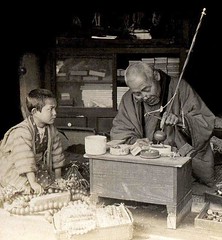
Has that survived to the knowledge age? Many clients I speak to are having real problems recruiting the knowledge holders to the concept of KM. Even in those companies where knowledge holders are few, and knowledge seekers are many, the experienced subject matter experts are often reluctant to become involved with KM.
The reason is, that because knowledge is scarce, they are busy doing the job, and have no time to teach. The fewer experienced practitioners the company has, the busier they are in actually performing the work. In addition, many experienced staff are experienced because they enjoy doing the work, and doing it well, and they see KM as a distraction or an added burden. They often feel that KM "is not my job".
"I am an experienced boiler-maker/salesman/brewer/application designer - my skills are in huge demand. Why should I take time out to share my knowledge? That's not my job"
The answer to this, of course, is to make it their job. You can't expect busy people, in demand from all over the organisation, to add to their burdens with work that isn't in their job description. But if their knowledge is vital to company performance, then sharing that knowledge needs to be in their job description. It needs to be recognised as part of their job, and they need to be given the space, the resources, the assistance, and (if necessary) the training to allow them to share their knowledge with the next generation - the apprentice generation.
The old career progression was Apprentice - Journeyman - Master. Knowledge Companies need to rediscover this progression, so that the Masters (of both sexes) - the Subject Matter Experts - can see their role as Teaching as well as Doing, and as passing on their skills to those who need them, through the tools of KM (wikis, community forums, peer assists etc) as well as through the traditional tools of apprenticeship (coaching, mentoring, training).
(The need for Knowledge Retention, described in the white paper available here, is often a symptom that the SMEs have become disengaged from knowledge sharing)
Wednesday, 18 November 2009
asking the forward question

I blogged a while ago about "looking backward to look forward", and the role of the facilitator in ensuring that Retrospects and After Action Reviews draw lessons for the future, rather than just looking back at the past.
One of your most powerful tools for doing this is what I call the "forward looking question". And not just in Retrospects and After Action reviews either - the forward looking question is very powerful in Learning Histories and Retention Interviews as well
Once you have identified a point where the individual or team has learned a lesson, and you have got to the root cause behind the lesson – the factor that made it go well, or the element that made it fail, or go badly. That is when you ask a future-tense question, to require the person or team to analyse the learning and create a recommendation. The question might be one of the following.
o What would be your advice for someone doing this in future?
o If you were doing this again, what would you do next time?
o If you could go back in time and give yourself a message, what would you tell yourself?
This last question is vital, and needs to be asked. By getting them to provide advice and recommendation, you are moving beyond exploring the history of the project, and starting to think about what should be repeated, or what should be avoided. You are starting to identify the process improvements, which will lead to real learning.
Monday, 16 November 2009
The wisdom of young unmarried male crowds

In an article for the Boston Review, Evgeny Morozov writes as follows
Wikipedia’s potential lies in harnessing the “wisdom of crowds”; however, those
crowds are only as wise as they are diverse. The individuals who compose the
crowd need to bring different sets of expertise to the project. But in Wales’s
own words, Wikipedians are “80 percent male*, more than 65 percent single, more
than 85 percent without children, around 70 percent under the age of 30.” This
homogeneity, too, may explain the persistence of certain knowledge gaps.
*Other studies suggest over 90% male.
These are words of warning for those who want to use the wikipedia model in their organisation. Sure you will get content, but if you leave it up to the volunteers, your content might reflect the views of the young unmarried childless men, rather than the older seasoned professionals, the female workforce, or the married-with-kids contingent. In many industries, these latter groups would represent at least 80% of the staff, and more like 90% of the knowledge. You leave this group out, and what do you get? The wisdom of the nerds?
Thats why any wiki deployment needs to be accompanied by a framework of accountabilities, processes and governance, to make sure that the reqyured content comes from where it needs to come from, and not just from a subsection of the demographic.
Thursday, 12 November 2009
The things that “everyone knows”
 There is a highly amusing TV quiz here in the UK, called QI. Many of the questions on the program are about the things that “everyone knows”, but in fact knows incorrectly. The audience has great fun watching the participants answer with obvious, but totally wrong, answers.
I wrote a while ago about the maturity trajectory of knowledge – how knowledge passes through stages of maturity; from discovery, to exploration, to consolidation, to embedding. An exciting new idea passes through the stages, to become established knowledge; something “everybody knows”. Everyone knows the earth is just one planet in a solar system, everyone knows how an internal combustion engine works, and everyone knows that you need to wear a hat in the winter, because you lose most of your heat through your head. Except, in the last case, you don’t. You don’t lose any more heat through your head than you do through any other part of your body. That’s one of the things “everyone knows,” wrongly. This is knowledge that has got stuck somewhere on the Maturity chain, and has become common knowledge before it became truth.
In Knowledge Management, we need to beware of the things that “everyone knows”, and occasionally we need to challenge them. Maybe they are not correct, maybe they got stuck somewhere down the chain, or maybe the context has changed and the knowledge is out of date. For example, everyone knows you put the milk in the cup before the tea, but people used to do this to sterilise the milk, and all our milk is pasteurized. Similarly someone told me recently that you mustn’t pick blackberries near busy roads, for fear of lead poisoning, but who uses leaded petrol nowadays?
My friend Claude tells the story of the monkeys and the fire hose. The story is of a group of monkeys in a cage, with a bunch of bananas hanging from the ceiling out of reach. The researchers lower the bananas, the monkeys go to grab them, and the researchers turn on the firehose. Pretty soon none of those monkeys go for the bananas. The researchers introduce a new monkey, and lower the bananas. The new monkey goes for the bananas, and they turn on the firehose. Pretty soon the monkeys have learned not only not to move, but also to jump on any new monkeys who start to move before the fire hose can be brought into play. One by one the researchers swap out the monkeys, and any time a new monkey moves towards the bananas, it gets jumped on. Eventually they have a completely new set of monkeys in the cage, none of whom have seen the firehose, but none of whom will go for the bananas. As far as the monkeys are concerned – “everyone knows we don’t go for the bananas” – but nobody knows why any more!
We need occasionally to challenge the things “everyone knows” – and ask “Why?” Because, just maybe, we might be hiding from a firehose that doesn’t exist any more
Wednesday, 11 November 2009
Tom Davenport’s Kindergarten rules for sharing

Although we are all highly intelligent and mature adults, the organisation we represent is much less mature in its behaviour, and probably has the learning age of a 4 year old!
The incentives that apply to kindergarten kids sharing toys also apply to organisations and teams sharing knowledge.
Do you recognise any of these?
The incentives that apply to kindergarten kids sharing toys also apply to organisations and teams sharing knowledge.
Do you recognise any of these?
- you share with your friends
- you share when you're sure you'll get something in return
- your toys are more special than anyone else's
- you share when the teacher tells you to until she turns her back
- when toys are scarce there's less sharing
- once you get taken you never share again
Tuesday, 10 November 2009
Knowledge lies in the walls
A friend of mine – a professional knowledge manager – said an interesting thing to me recently.

He said “Knowledge seems to lie within the walls in the organisation. Much of the effective learning comes when you get people and teams together, who often don’t meet to share openly. It’s as if the most valuable organisational learning lies inside the actual walls that divide people and teams”.
He was talking in the context of the learning meetings and Retrospects that he set up to facilitate knowledge sharing. Of course the knowledge itself isn’t in the walls – but the walls are the barriers that keep that knowledge from being realised.
Break down the walls, and you release the knowledge.
For breaking down organisational walls, your most potent weapon is not the sledgehammer, it’s the conversation. It’s dialogue.
Monday, 9 November 2009
Benefits Mapping template
On our downloads page this week we have posted a free Benefits Mapping template which we use during the early stages of KM implementation, as a buy-in tool.
The purpose of the Benefits Mapping Template is to allow the participants in a benefits workshop to articulate, in the form of a diagram, how knowledge management interventions can yield measurable business results in service of business drivers or goals.
We generally run a benefits workshop either
a) For an organisation, in the early stages of KM implementation, when we have completed a full assessment (and therefore know the interventions needed), and have agreed a KM strategy with management (so that we can prioritise those interventions).
b) For a KM pilot project, after the scoping phase, and before completion of the terms of reference.
We run the workshop with senior business leaders, whose guidance and buy-in are crucial. Visit our downloads page to obtain a copy of the template.
Saturday, 7 November 2009
Knowledge - important on its own account
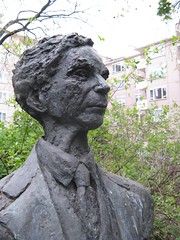
The main things which seem to me important on their own account, and not merely as means to other things, are knowledge, art, instinctive happiness, and relations of friendship or affection.
- Bertrand Russell
Friday, 6 November 2009
Learn from the mistakes of others
You must learn from the mistakes of others. You can't possibly live long enough to make them all yourself.

- Sam Levenson
Thursday, 5 November 2009
Knowledge Retention and communities of practice - a story from the 90s
Here's another story from the archives, which we recorded in BP in the late 90s. This story shows that the issues of Knowledge Retention, and using this to build the Community Knowledge Base, are well over a decade old.

The Grease network aims to provide access to data, knowledge and experience for BP Lubricants marketing professionals around the world on the topic of Grease. For a long time, the centre of knowledge for grease in BP has been Mike, in Aukland, who with his many years experience has been a real asset to the network. Mike has been involved in developing new greases and improving the properties of current ones, advising on methods and efficiencies of grease production, in ensuring the application of greases is as good as it can be, and collecting information from customers to improve the product line.
Unfortunately Mike was due to retire at the end of 1998, and the Grease network needed to act fast to ensure a vital source of knowledge was not lost to the company.
Chris, the facilitator of the network, flew out to Auckland to spend four days with Mike, to try and capture some of his knowledge. She started with a list of issues, collected from the members of the Grease network.
"I sent a note to the network explaining what I was doing, and said 'what three questions have you always wanted to know the answer to?' I got piles of stuff back; loads of input. I used that as a starter; I pointed Mike at the issues and let him go. It was like flicking a switch - he just took off! As we went through the questions they generated loads of comments and answers, and also a pile of actions for the future ('the next guy should work on this, and focus on that', and so on)."
Chris took a tape recorder with her, and recorded all her conversations with Mike.
"I had a copy typist type it all up, but it is not studio quality and it needed a lot of editing. Sometimes the copy typist didn't know the words and typed what they sounded like, and you can see Mike's Auckland accent in the way she tried to spell it!
Chris and Mike also went through Mike's reference material; his slide sets and his bookshelf.
"Mike took me through his set of training slides, and we also raided his cupboards and shelves for books and literature in the public domain. So for a book, we could photograph the front cover (to go on the web site), copy the contents page, and ask Mike to write a 2-3 line abstract covering whether you ought to read it or not!"
Chris came back with loads of material, much of which she subsequently put into the Grease section on the lubricants Web site. The training slides that she went through with Mike were made into PowerPoint training packs, with Mike's tape-recorded comments as training notes.
"There can be two courses" explains Chris, "A basic course on 'What do we know about the product' and a more advanced course as well"
The questions and answers were made into a 'Frequently Asked Questions' on the web site, and the book reviews went on the web as well.
"We spent the last day talking about where we should take the business in future. We took this taped conversation, and turned it into a strategy document for the business network. This resulted in the business agreeing that they will fund grease globally next year, and we should put grease back into the Global Product Development Programme."
"The downside of all this is that we ended up with so much material, and there is so much we can do with it, but I have a day job to do!" says Chris. " It takes a long time to do all this - editing the transcript, putting the web site together - and if they had said 'You can take a month to pull it all together' I would have done a great job. Fitting it into the odd hour here and there does not get it done, and you don't get very far. Our Knowledge Manager has been invaluable, giving suggestions of how to handle the information we've got and the practical matter of getting the material into the Lubricants web site"
"Capturing knowledge from an expert is hard work. One thing I've learnt from this exercise is that it's taken considerable time and effort to turn my conversations with Mike into material like the grease web page and training packages for our sales staff. Knowledge capture is absolutely essential to the Lubricants business, but we've got to appreciate the commitment which is needed to make it happen."
People always smile when I tell this story, as Grease seems a funny topic for Knowledge, but industrial lubricants are complex things, and grease is vital to keep moving the wheels of industry and the machines of the armed forces. Although the story was written over 10 years ago, and the people have left, and the Grease network has evolved into new communities of practice, BP still applies the principles of Knowledge Management to its knowledge of its products and processes, in service of even better performance.
I remember Chris and Mike well, as we trained Chris in retention interviewing before she left for Aukland. This was one of the cases where we developed our skills and training in knowledge retention and knowledge harvesting, which we have been honing ever since.
Wednesday, 4 November 2009
Still not part of the day job?
Through one of Luis Suarez's posts I was led to the IBM social computing guidelines; a very interesting set of guidance (in many ways, close to Policy) on the use of social computing at IBM. I was enjoying leafing through these, until I got to the last one, which reads

Don't forget your day job. You should make sure that your online activities do
not interfere with your job or commitments to customers.
So even at IBM, online activities are not seen as part of the day job? That really surprises me.
Now I know that these guidelines refer to social computing rather than KM as a whole, but I really really think we are going to get nowhere in our organisations until knowledge management is seen as an integral component of the day job.
Knowledge is a massive asset to the organisation, and managing the value that it brings has to be part of people's day jobs. It's not a spare time activity. Imagine if we treated other management disciplines in that way - "yes, sure, do your budgets and financial planning, but don't let it get int eh way of your day job". "OK, you can do a little quality management if you have time, but don't let it get in the way of your day job". "As a manager, you may need to do some people management, but do not let your personnel management activities get in the way of the day job". Or worst of all "We have safety management systems here, but don't let them get in the way of your day job".
Safety management IS the day job
Personnel management IS the day job
Financial management IS the day job
Knowledge management IS the day job
Even for a construction worker in Texas, KM is the day job. If he finds a better way to do something, he shares it, through an after action review or whatever. He doesn't keep the knowledge to himself.
How do we make KM part of the day job? Through introducing KM as a management discipline, through embedding it in performance management, and through governance
Tuesday, 3 November 2009
Ten steps to an effective peer assist

Peer Assist is one of the easiest, and at the same time one of the most powerful processes in the KM toolbox. It is powerful, because it brings knowledge to the point of need, in its richest form (i.e. in the heads of people with experience). It is simple, because it is based solely on dialogue between the host team and the invited “peer assisters”. It is a Help session - it allows people to ask for help in a safe way.
(If you need to know more about Peer Assist, contact us for a copy of our Peer Assist guide).
However to deliver the value from Peer Assist, there are some simple rules to follow. These are presented below in reverse order of importance.
10. First, check that you really need a Peer Assist. Maybe your network or community of practice can provide the solution to your problem, or maybe there is already an established practice in place that answers your needs. Peer Assists are powerful, but there may be a simpler way to learn.
9. Prepare some briefing material for the event. This should not be too detailed, but should provide the necessary context for the peer assist. At the very least, the visitors should have a good idea of the importance of the challenge they are being asked to help address.
8. Allow enough time for the peer assist. A peer assist on a really important topic cannot be conducted in a hurry. Half a day will probably be the minimum, but big peer assists can take up to 3 days or more.
7. Include time for the assisters to gather their thoughts and feed back. Without careful facilitation, the host team can dominate the time giving presentations. This is not what you want. Presentations should take up no more than 20%-25% of the time, and you will need to allow an hour (or even two) towards the end for the visitors to gather their thoughts, review what they have heard and seen, and prepare feedback for the host team.
6. Follow up afterwards. If you have been successful in forming the team spirit (see #5) then the visitors will feel they have a stake in the success of the host team’s project. Make sure they are keep updated with progress, and continue to use them as a resource for advice and experience.
5. Set the atmosphere to elicit frank and open exchange. This is crucial. If a peer assist descends into attack/defend behaviour, the event is broken and will not deliver value. If the host team is not open about their challenges, then the proposed solutions may not work. The facilitator needs to set the ground rule, watch the behaviours, and intervene if needed. Encourage the visiting group to perform as a team, together with the host group. A peer assist is almost like a problem solving team, where the host team has knowledge of the problem, and the visitors have knowledge of possible solutions. There is a joint responsibility to find the best solution(s) to the problem, and the visitors and the hosts need to feel they jointly own this. Include time for socializing to build the relationships that will promote this feeling. For example, for a one-day peer assist, invite people for a dinner the night before.
4. Invite a diverse group of peer assisters. The more diverse the group, the more likely you are to find the out-of-the-box idea that creates the breakthrough solution. Don’t invite “the usual suspects”, or you will just get the usual answers. Don’t just invite the old friends of the host manager, or you will just get the old friendly answers. Look for diversity of experience.
3. Be very clear about the objectives. This is really important. The clearer you can be about the objectives, the more likely you are to achieve them. SO before the event, spend time with the host team and the host manager, and create some clear terms of reference, with well-defined objectives and deliverables.
2. Plan the Peer Assist for the right time. What’s the right time? It is the moment where the host team are clear on the questions to be addressed and the challenges they face, but early enough that they are open to incorporating the feedback. Once the host team has decided their solution, it’s too late for a peer assist, as they may no longer be open to making changes. Then you end up with a frustrating event, where the visitors say “don’t do it like that, it won’t work” and the host team say “it’s too late, we are already committed”. This is where attack/defend behaviours can start.
1. Act on the results. This is the most important rule of all. There is no point in having a peer assist, if nothing changes as a result (except in the unusual case where the project team has already thought of everything). After the feedback session (#7) the host team should create an action plan (and feed this back to the visitors), detailing what they will do as a result of the peer assist. It is also worth checking that this plan is followed, so one of the actions may be to create a formal report back to the visitors, some time in the future, listing what was done as a result of the peer assist, and what the results were.
Follow these rules, and your peer assists should add real and lasting value. Neglect them, and not only will your peer assist potentially be a waste of time, you may also have tarnished the image of KM by introducing a tool which has not delivered against expectation.
Monday, 2 November 2009

Business focus for KM – the wisdom of 12 years ago
Looking in my archives today, I found an old article from CIO magazine in 1997, where John Cross, the head of IT for BP, was talking about Knowledge Management, back in the early days. I think it is very interesting to look back, after 12 years, and see the outcome of the approach he described

This is what he said
“[At British Petroleum], we think there is another level of performance that can be extracted by a more powerful utilization of the knowledge inside an organization. I think the challenge is, well, what does that mean? And how does it translate into practice?
Rather than talking about it, we're simply running a lot of pilots in and around it. We have been looking at the key processes of the business, testing them for their "knowledge intensity" to see if we would create some significant new change in the performance of that particular process if we managed knowledge in a more profound way. The concept has not been difficult to sell to the top executive team.
The chief executive of our aviation business said, "I know that getting the next 10 percent of performance out of this business is going to be entirely dependent on my ability to manage knowledge." That was quite an interesting observation because knowledge is what executives really work with when you think about it. It's not a techie thing.
In the oil business, we spend a lot of money trying to punch holes in the ground in drilling. We reckon that, broadly, we should be able to halve those sorts of costs. And we know that knowledge management is one of the key strategic levers to performance in drilling. Absolutely. We can track our performance and improve our drilling rates, and it is almost all due to incremental buildup of knowledge about the management of the drilling process. So we're concluding that this would be one of those knowledge hot spots with high financial leverage.”
Wow. Look at that. Look at his focus –
“Knowledge Intensity”
“Knowledge hot spots with high financial leverage”
“significant new change in performance”
“10 percent ….. halve those costs”
This degree of focus on business need, on knowledge-intensive hotspots, and on performance improvement was behind BP’s early success in KM, and the embedding of processes and approaches that have survived for over a decade. The focus was not on introducing groupware, or on setting up portals, or on building communities; it was on business performance.
This is an approach that all KM initiatives can learn from. Focus on the knowledge-intensive hotspots and on performance improvement, and then work out what you need to put in place to deliver this. Let the solutions fit the need, rather than letting them drive the program.
For more on this theme of business focus, see my post "are you putting a man on the moon, or trying out a new mop"
Subscribe to:
Posts (Atom)

 Posts
Posts

