 |
| Sunset Mauritius, by Matthias Ott |
This blog is on holiday for a week
Normal service resumed soon
 |
| Classic John Cleese sketch |
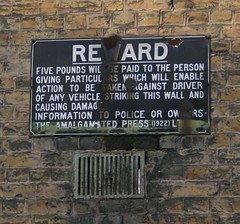
"In 2007/08 less than 1% of informants claimed the reward they are entitled to of at least £1,000. The key motivating factor for people to phone our number is that they are vulnerable and feel trapped."In 1994, the charity paid out a peak of nearly £121,000 in rewards, but the figure now is a tenth of that, with no less information being offered.
Daws said: "We have downplayed the rewards in our marketing and concentrated our messages on 'the communities doing the right thing'.
Where levels of moral outrage are expected to be low, financial rewards will likely be a decisive factor, and the inquiry may shift to discovering the true price tag of the reporting behavior.
For inherently offensive misconduct.....where the informant is expected to have a greater ethical stake in the outcome, regulation must fully appeal to the informant’s sense of duty. This may mean that financial incentives are not only unnecessary but are counterproductive and offset internal motivations to report.
Where sharing knowledge (in this case, knowledge of illgal activity) is seen as the right thing to do (the knowledge provider having an ethical stake in the outcome), then monetary incentives have no effect, and can be counter-productive.
Where sharing knowledge is seen neither as right nor wrong, then monetary incentives will work.As this study also says, "To the degree that people are motivated by legitimacy, people cooperate because they feel it is the right thing to do, not because of material gains or loses"
a) There has been a longer time for KM to establish itself, and so to allow us to look at the common factors for long term KM success in organizations,
b) The new clause in the ISO 9001 standard at least makes the point that knowledge must be considered as a resource and managed as such, if an organisation is to achieve the 9001 quality standard.The value a certification standard can add to the market is to provide a minimum definition of what “managed as such” in the previous sentence entails. There is some guidance on this in the new 9001 standard, but not enough.


"In their culture, a senior officer ordering such an investigation was sending a clear message: “I don’t trust your judgment.” As a result, the coalition operators took a hard look at how they were operating and decided they needed to adjust some of their tactics on their next mission. Their commanders thought that, because I ordered the investigation on their previous raid, I wanted to avoid the use of additional firepower (such as airborne assets) at all costs, even if it meant endangering the safety of operators on the ground. This couldn’t have been further from the truth — but it was their interpretation that mattered, not the intent behind the order that sat in my mind".Therefore in the next mission, the coalition unit refused to ask for airborne assist based on their assumption that this had been implicitly criticised, and had a hard time of it as a result.
"A forgetting curve is a very well known paradox in software engineering: A well designed software system does not require much maintenance and software engineers are not busy fixing its bugs. This is a good news for the maintenance budget and at the same time a bad news for the (expensive) engineering knowledge concerning the respective software design - it erodes since software engineers do not have to utilize it. At the end you are kind of lucky to have a certain level of maintenance just to keep the knowledge fresh. A depreciation curve of a software system in general is quite an interesting issue that keeps (clever) CIOs busy".
Skandia AFS reduced the time taken to open an office in a new country from 7 years to 7 months by identifying a standard set of techniques and tools which could be implemented in any office.
 |
| Photo from wikipedia |
Suddenly, dense black smoke begins to fill the cockpit. I flip the checklist over and follow the five steps listed on the back under In-Flight Electrical Fire:
These steps took maybe 90 seconds. Then we descended to an uneventful landing. The crisis hardly caused a significant increase in heart rate, because I just followed the checklist.
- (1) Master Switch to Off
- (2) Other Switches (Except Ignition) to Off
- (3) Close Vents/Cabin Air
- (4) Extinguish Fire (in this case, I isolated a faulty transponder)
- (5) Ventilate Cabin
Why do I love checklists? Because a checklist helped avert what could have been some serious unpleasantness. And because rather than letting my imagination run amok to my detriment (otherwise known as “panicking”), effective use of checklists allow me to direct my imagination to more productive purposes.

Clause 7.1.6. Knowledge
- Determine the knowledge necessary for the operation of its processes and to achieve conformity of products and services.
- This knowledge shall be maintained and made available to the extent necessary.
- When addressing changing needs and trends, the organization shall consider its current knowledge and determine how to acquire or access any necessary additional knowledge and required updates.
- NOTE 1: Organizational knowledge is knowledge specific to the organization; it is generally gained by experience. It is information that is used and shared to achieve the organization's objectives.
- NOTE 2: Organisational knowledge can be based on: a) Internal Sources (e.g., intellectual property, knowledge gained from experience, lessons learned from failures and successful projects, capturing and sharing undocumented knowledge and experience; the results of improvements in processes, products and services); b) External Sources (e.g., standards, academia, conferences, gathering knowledge from customers or external providers).
In 7.1.6 the international standard addresses the need to determine and manage the knowledge maintained by the organization, to ensure the operation of its processes and that it can acheive conformity of products and services. Requirements regarding organizational knowledge were introduced for the purposes of:
a) safeguarding the organization from the loss of knowledge, e.g. - through staff turnover - failure to capture and share information
b) encouraging the organization to acquire knowledge, e.g. - learning from experience - mentoring - benchmarking".


 |
| image by stockarch - stockarch.com |
"This wiki is both a working area for the Knowledge Management for Development (KM4Dev) community and a way for us to make our joint work accessible to a wider audience"Wikis in places like Shell, Pfizer and Conoco use the wiki for level 2. Level 1 knowledge is held in the discussion forums and lessons management systems, and the wiki page editor promotes content to the wiki once it is considered "valid". They make reference to level 1 knowledge by linking to official procedure documents and standards.

 Posts
All Comments
Posts
All Comments