Showing posts with label knowledge transfer. Show all posts

Monday, 4 April 2022

Siloed organisations; knowledge in the hallways, knowledge in the walls.

There is a clear view than knowledge lies in the "walls" and the "hallways" between the "rooms" of an organisation.  Here are some of the implications of this view for Knowledge Management.


This blog post was inspired by a post from Nancy Dixon entitled  Where Is The Only Place Employees Share Their Knowledge? (The Hallways of Learning). If you haven't read Nancy's excellent post, please do so and then come back, as I want to expand on some of the ideas it raises. 

Nancy talks about knowledge and learning in an organisation using 3 metaphors:

  • Learning in "private rooms", and under this heading she talks about individuals learning for themselves, and creating their own understanding.
  • Learning in the hallways, where individuals get together and create shared understanding, and
  • Learning, or Knowledge, in the Storerooms of knowledge; the storerooms being the collections of knowledge created through the hallway conversations.
Nancy concludes as follows:
Hallways are the only space where it is possible for an organization to learn. It cannot learn in the Private Offices, although individual learning can certainly take place there. It cannot learn in the Storeroom, where it is only possible to affirm what is already known. If organizations are going to learn, they will need to construct Hallways in which the in-depth exploration of meaning can occur.

Nancy's blog post reminded me of something said by a one-time colleague of mine, Paul Whiffen, who was of the view that "Organisations are like a series of rooms, and knowledge lies within the walls". Paul was talking about teams at the time, and the rooms being "team spaces" (both metaphorical spaces and electronic spaces) while the walls represent the barriers to inter-team interaction. When those barriers are breached, knowledge flows.

Silos and hallways


We are talking here about silos, and silos in organisations exist at individual level, team level, and department level. Effective KM requires breaching some of the silo walls and creating the learning spaces ("hallways") in which knowledge can be shared. It is possible to learn within these silos - the Private Offices of the individual, and the Team Spaces - but the real value of KM - the challenge as well as the opportunity - comes when you break the silos. 

An illustration of the value of silo-breaking, and exchange of knowledge between individuals and teams, comes from the data from our classroom exercise "Bird Island" (reference here). This exercise has been rather like a controlled KM experiment which has run for over 20 years. We find that:

  • teams that learn only from their own experience, see potential performance gains of 40% on average;
  • when teams learn from experience of the other teams in the classroom, they see potential performance gains of 80% on average, and
  • when teams use all the historical knowledge from all past teams (the knowledge in Nancy's storeroom), they see actual performance gains of, on average, 220%.
The 80% and the 220% performance increase came from knowledge that was "in the walls and the halls" and that needed the teams to break their silos and enter a shared space - a hallway or storeroom as Nancy would say.

Where are the hallways in hybrid organisations?

Nancy's use of the term Hallways does not necessarily mean real hallways in a building (although it could; when I ran a local knowledge management system in a Norwegian office in the 90s, before online collaboration was common, we posted lessons learned on the hallway noticeboard opposite the coffee corner, and there was often a knot of people looking through these), she refers also to tools like After Action Review and storytelling circles. She says:

The real hallways of our organizations will not suffice for the level of organizational learning that is necessary. Rather, organizations to need to develop processes that have the positive characteristics of real hallways, yet are more focused and intentional.

Increasingly that focused intentional activity needs to happen in a hybrid world. And here we see an added challenge. As the Microsoft study showed, in an online or hybrid world, the silos are strengthened. Proportionately more interaction tends to happen within teams, in "Team Space" while proportionately less happens in the walls and hallways between the team spaces. I quote from the study;

Our results suggest that shifting to firm-wide remote work caused the collaboration network to become more heavily siloed—with fewer ties that cut across formal business units or bridge structural holes in Microsoft’s informal collaboration network—and that those silos became more densely connected. Furthermore, the network became more static, with fewer ties added and deleted per month. Previous research suggests that these changes in collaboration patterns may impede the transfer of knowledge and reduce the quality of workers’ output.

In other words, in a hybrid world the silos are strengthened and the hallways begin to disappear. This is a real risk for KM. 

So what can we do?

As Nancy suggests, we need to become intentional.

At the start of a project, the project leader needs to intentionally ask their team "who else can we learn from?" This question forces them to look outside team space, to look through the windows in the walls, to look into the hallways to see who else has valuable knowledge. And then they track those conversations to make sure the knowledge is brought into the team space, perhaps through Peer Assist or another process.

During a project, the project leader needs to intentionally ensure that team conversations are not just about task and activity, and that the question "what have we learned" is a regular topic of discussion. After Action Review is a great format for this discussion. 

At the end of a project, the project leader needs to intentionally ask the team "who else do we need to share our lessons with"? Again this forces the team to look through the walls and into the hallways. 

All of this intentionality can be built into a KM plan for the project.

The organisation also needs to intentionally build and support the required communities of practice which will act as the hallway monitors and the silo-breachers. In a hybrid world, these communities need their own communication channels, as well as their own roles, processes and governance. Each community lives in its own hallway.

The communities of practice can then act as the custodians of the storehouses of knowledge. 

None of the above is new. However in a hybrid world, it needs to become, in Nancy's words, more focused and more intentional if we are to open the hallways and release the knowledge trapped in the walls. 


Friday, 29 January 2021

The power of stories in Knowledge Management

Here are 4 reasons why stories can be a very powerful way to share knowledge.

I often use the US Wildland fire lessons center as a great example of knowledge sharing. Their portal contains lessons, advice, a blog, summaries of incidents, and links to videos hosted on their youtube channel. Playing one of these videos yesterday as part of an online webinar reminded me of the power of stories in sharing knowledge. 

Below is the video I used. It concerns awareness and strategies to avoid dangerous trees when fighting a forest fire. 

This material could have been presented in a dry formal way, in bullet point lists and PowerPoint slides. Instead they decided to use stories. Watch the first minute of the video below, and you can immediately see the power of this approach.


That was powerful, wasn't it?

So why are stories so powerful as a means of sharing knowledge?

  1. They remind us that knowledge comes from the real experience of real people. People "just like you". Knowledge is not an abstract thing; it's grounded in reality. In the case of this video concerning danger trees, it's grounded in the reality of risk, injury and death. It's "hard-won" knowledge.
  2. They convey emotion, in the way that the written word cannot. In the video above, the emotion is a very healthy respect for the dangers that trees present. In fact, the video identifies "normalisation of risk" as an issue, and the stories certainly would discourage anyone to become blasé about the risk from trees. The emotion in the first story also acts as a sobering introduction which compels you to treat the rest of the video very seriously. You think "this could happen to me if I'm not careful".
  3. The great thing about stories is that everyone has a story to tell. If you see someone else share their story, it legitimises you to share your own. This is the concept of social proof; if you want to promote a behaviour in your organisation, show real stories of  people exhibiting that behaviour. If you want people to share knowledge from failure, then show stories of people talking about failure (as an example of this, see the NASA "my best mistake" compilation). This legitimises others to share their failure stories, and the knowledge they have gained as a result, and starts to bring about culture change.
  4. You can use the stories to convince senior managers of the value of KM.  Senior managers will support Knowledge Management if they believe it can be done, and can add value. Like most people, they "believe it when they see it". My colleague Ian Corbett speaks below about using video testimony from a young engineer as social proof to convince senior managers of the value Knowledge Management can bring.
“This was a high-profile project with big returns and the opportunity to do some marketing of what the processes will do.  I recorded one of the engineers talking. He is young, credible and eloquent, and I put his video in a presentation for the senior management team. I gave the talk, and the video transformed the presentation and got people on the edge of their seat. This was the turning point for the Director of Operations who is now the high-level sponsor for KM”

So think about the value of stories when it comes to transferring knowledge. There may be more benefits than you think.

Monday, 2 November 2020

When "easier to share" means "harder to learn"

Easier to share can mean harder to learn


Image from wikimedia commons

A common mistake companies often make when it comes to setting up knowledge sharing systems is to make it as easy as possible for people to share.

I know that doesn't sound like a mistake, but let me explain.

Imagine a company that wants to make it easy for projects to share knowledge or lessons with other projects. They set up an online structure for doing this, with a simple form and a simple procedure. "We don't want people to have to write too much" they say "because we want to make it as easy as possible for people to share knowledge".

So what happens? People fill in the form, they put in the bare minimum, they don't give any context, they don't tell the story, they don't explain the lesson. And as a result, almost none of these lessons are re-used. The feedback that they get is "these lessons are too generic and too brief to be any use."

By making the knowledge too easy to share - by demanding too little from the knowledge supplier - they make the whole process ineffective. Knowledge transfer is not easy, and the sharing part is the easiest part. There are  more barriers to understanding and re-use than there are to sharing, so if you make the burden too light on the knowledge supplier, then the burden on the knowledge user often becomes overwhelming.

It's like passing a ball. If a ball is harder to catch than it is to throw, then the thrower has to do more work, and think more carefully, when it comes to making an effective pass. If you don't place some demands on the thrower, it won't work for the catcher. If you make it too simple to throw, it can be too hard to catch.

The same is true for knowledge. Sharing is teaching - it takes thought and effort.

So when you set up a system for knowledge sharing, then ensure that it allows enough detail, story, context and analysis to be shared, that the user can actually understand the nature of the knowledge, and what it might mean to them.

If you make it too simple to share, you can make it too hard to learn.

Monday, 26 October 2020

4 roles for the KM team

I presented this Boston Square last week to talk about 4 styles of knowledge transfer. Here's how the KM team can help with each. 


The Boston Square looks at four modes of knowledge transfer within KM, differentiated by Push and Pull, and Documented/Undocumented knowledge.  Any balanced KM program will address all four, more or less equally. Any KM program that focuses only on one or two quadrants in unbalanced.

Here is how the KM team can ensure balance.

The Explicit Push quadrant, labelled Share, is where an organisation focuses on collecting and publishing codified or documented knowledge, thus creating knowledge collections. It is the "Collect" route described here. The KM team can help ensure collection of documented knowledge by:
  • Training people in how to collect and document knowledge:
  • Ensuring each project understands what knowledge products it should document:
  • Embedding into the workstream knowledge-collection processes such as lesson learning;
  • Providing facilitation for these processes, or training facilitators;
  • Providing technology where knowledge can be collected, which is outside "project space" and visible to other projects or to the organisation as a whole (ie technology for the "knowledge workstream");
  • Measuring whether the required knowledge products are being created, to the right standard;
  • Promoting a culture of openness and honesty, and discouraging secrecy and knowledge hoarding.

The Explicit Pull quadrant, labelled Search, is where an organisation focuses on facilitating searching for documented knowledge. The KM team can help by;

  • Ensuring the organisation has an enterprise search engine;
  • Ensure there is someone in the organisation responsible for maintaining and tuning the search engine;
  • Ensuring that there are roles in place for maintaining, curating and synthesising the stores of collected knowledge;
  • Ensuring the knowledge stores are browsable as well as searchable;
  • Ensuring there is a taxonomy and metadata system in use;
  • Embedding into the workstream  processes that encourage and promote searching, such as knowledge gap analysis;
  • Providing facilitation for these processes, or training facilitators;
  • Measuring search, eg search queries, and the number of document downloads;
  • Measuring whether the use of sought knowledge is aiding the business, and by how much;
  • Promoting a culture of curiosity and Learner behaviours, and discouraging not-invented-here, "too busy to learn" and other Knower behaviours.

The Tacit Push quadrant, labelled Tell, is where an organisation focuses on storytelling and knowledge exchange.  The KM team can help by;
  • Ensuring people and projects understand what knowledge they should talk about:
  • Embedding into the workstream knowledge-presentation processes such as knowledge handover, knowledge exchange, knowledge café etc;
  • Providing facilitation for these processes, or training facilitators;
  • Providing blogging platforms for individuals and/or projects and communities of practice;
  • Measuring whether the required knowledge presentations and discussions are happening;
  • Measuring whether they are aiding the business, and by how much;
  • Promoting a culture of openness and honesty, and discouraging secrecy and knowledge hoarding.

The Tacit Pull quadrant, labelled Ask, is where an organisation focuses on creating and satisfying a demand for knowledge. This is the "Connect" route described here. The KM team can help by;
  • Ensuring people and projects have channels and mechanisms to ask questions;
  • Ensuring, where appropriate, that communities of practice are set up for the main knowledge topics;
  • Providing Q&A forums for communities of practice;
  • Providing a "knowledge index"/"yellow pages"/"Expertise locator" system if appropriate;
  • Embedding processes like Peer Assist into the workstream;
  • Introducing knowledge discussion processes such as knowledge handoverknowledge exchange, knowledge café etc;
  • Providing facilitation for these processes, or training facilitators;
  • Measuring whether the required  discussions are happening;
  • Measuring whether they are aiding the business, and by how much;
  • Promoting a culture of curiosity and Learner behaviours, and discouraging not-invented-here, "too busy to learn" and other Knower behaviours.

Everyone will have their preferred quadrant in which they feel most comfortable, but the key for any KM program is that you need to address all four elements, as different knowledge needs to be transferred in different ways, and to focus on only one quadrant of the diagram is to miss 75% of the possibilities KM can deliver.

Use this lists here to check how balanced your KM program is.

Wednesday, 21 October 2020

4 dimensions for knowledge transfer

Here is a useful Boston Square which might help you unpack some of the assumptions behind knowledge transfer. 


Knowledge transfer is a term everyone uses, but often we can bring baggage and assumptions to the term. What exactly do we MEAN by transferring knowledge? How is it transferred, and what prompts the transfer?

Boston Squares are great for pulling apart a topic, and allowing you to untangle some thoughts which otherwise might get lumped together. The square shown here is often useful to help an organisation check its assumptions, and make sure it is not getting polarised in its thinking. 

 Here we pull apart knowledge transfer into the dimensions of Knowledge Push and Knowledge Pull (which you might call "Sharing" and "seeking"), and the dimensions of Documented and Undocumented knowledge.


We get 4 quadrants, which we could call Ask, Tell, Search, Share.

  • An Ask approach to knowledge transfer focuses on communities of practice, where people can ask questions of their peers
  • A Tell approach to knowledge transfer focuses on training, lectures, mentoring and coaching
  • A Search approach to knowledge transfer focuses on enterprise search, semantic search and AI
  • A Share approach to knowledge transfer focuses on sharing documents, lessons and best practices 
Which quadrant should your KM program address? Why, all of them of course. Probably it doesn't. Probably most of your attention goes to one quadrant, and the others are neglected. 

Use this Boston Square to check the balance of your KM program.


Thursday, 10 September 2020

How Connect and Collect work within knowledge management

A reprive from the archives - an overview of Connection and Collection as dual components of KM.

2009 - October 14 - NodeXL - Twitter Network MWA09 Followers
Image by Marc Smith on Flickr
There are two main mechanisms for supporting the flow of knowledge in an organisation - Connecting the people, or Collecting the content.

 These are sometimes seen as separate strategies of codification or personalisation, but both are needed as dual components of any Knowledge Management strategy

Here is an overview of Connection and Collection, starting with the concept of knowledge suppliers and users.

Knowledge suppliers and users


Knowledge is created through experience, and through the reflection on experience in order to derive guidelines, rules, theories, heuristics and doctrines. Knowledge may be created by individuals, through reflecting on their own experience, or it may be created by teams reflecting on team experience. It may also be created by experts or communities of practice reflecting on the experience of many individuals and teams across an organisation. The individuals, teams and communities who do this reflecting can be considered as ‘knowledge suppliers’.

In business activity, knowledge is applied by individuals and teams. They can apply their own personal knowledge and experience, or they can look elsewhere for knowledge – to learn before they start, by seeking the knowledge of others. The more knowledgeable they are at the start of the activity or project, the more likely they are to avoid mistakes, repeat good practice, and avoid risk. These people are ‘knowledge users’.

Communication, Conversation, Connection


The most direct way to transfer knowledge from suppliers to users is through direct communication and dialogue. Face to face dialogue, or dialogue via an online communication system, is an extremely effective means of knowledge transfer. This method allows vast amounts of detailed knowledge to be transferred, and the context for that knowledge to be explored. It allows direct coaching, observation and demonstration. It often allows new knowledge to be created through the interaction.

However, it is very localised. The transfer takes place in one place at one time, involving only the people in the conversation. For all its effectiveness as a transfer method, it is not efficient. For direct communication and dialogue to be the only knowledge transfer mechanism within an organisation, would require a high level of travel and discussion, and may only be practical in a small team working out of a single office where travel is not an issue (for example a regional sales team that meets on a regular basis). This may be the only practical approach to the transfer of uncodifable knowledge; that knowledge that cannot be written down (that Polyani would call “tacit”). However, it should not be the only mechanism of knowledge transfer, nor should knowledge be stored only as tacit knowledge in people’s heads.

Using people’s memories as the primary place for storing knowledge is also a very risky strategy. Memories are unreliable, people forget, misremember, or post-rationalise. People leave the company, retire, or join the competition. For example, what is the staff turnover in your team? Your division? Your company? How much knowledge is leaving your organisation in the heads of the departing people? There needs to be a more secure storage mechanism for crucial knowledge, and a more efficient means of transfer than just dialogue.

Codification, capture, content, Collection.


The less direct flow of knowledge  is through codification and capture of the knowledge, storage in some sort of ‘knowledge bank’, and retrieval of the knowledge when needed. The transfer is lower bandwidth than direct communication (perhaps 14 times lower), as it is difficult to write down more than a fragment of what you know, and the written knowledge needs to be translated back into human understanding by the knowledge user (some would argue that the written knowledge has become information, and needs to be translated back into knowledge). No dialogue is possible, and demonstrations are restricted to recorded demonstrations, eg using video files.

Transfer of knowledge by this means is not very effective. However, the knowledge need only be captured once to be accessed and reused hundreds of times, so it is an efficient method of transferring knowledge widely. The knowledge is secure against memory loss, or loss of personnel. This approach is ideal for codifiable knowledge with a wide user base. For example, the widespread transfer of basic cooking knowledge is best done through publishing cookery books, rather than creating communities of chefs.

It is also ideal for knowledge that is used intermittently, such as knowledge of office moves, or knowledge of major acquisitions. These events may not happen again for a few years, by which time the individuals involved will have forgotten the details of what happened, if it has not been captured and stored.


These two approaches to knowledge transfer are the Connect and Collect approaches.  Effective Knowledge Management strategies need to address both these methods of knowledge transfer. Each has its place, each complements the other, as summarised below.

Connection

  • Advantages  - 
    • Very effective 
    • Allows transfer of non-codifiable knowledge 
    • Allows socialization 
    • Allows the knowledge user to gauge how much they trust the supplier 
    • Easy and cheap
  • Disadvantages
    • Risky. Human memory is an unreliable knowledge store 
    • Inefficient. People can only be in one place at one time 
    • People often don’t realize what they know until its captured
  • Type of knowledge for which this approach is suitable -  
    • Ephemeral rapidly changing knowledge, which would be out of date as soon as its written
    • Highly contextual knowledge 
    • Knowledge of continual operations, where human knowledge is contatntly being refreshed and rehearsed
    • Knowledge needed only by a few
  • Comments - One traditional approach to Knowledge Management is to leave knowledge in the heads of experts. This is a risky and inefficient strategy other than in very small organisations

Collection

  • Advantages
    • Allows systematic capture and development of knowledge
    • Allows synthesis of knowledge from many sources
    • Allows knowledge to be embedded in common process, in product design, or in algorithms
    • Creates a secure store for knowledge, which will therefore not be list when people leave the organisation
    • Very efficient. Knowledge can be captured once and accessed many times
  • Disadvantages -  
    • Some knowledge cannot be effectively captured and codified.  
    • Capturing requires skill and resource 
    • Captured knowledge may become impersonaland decontextualised
  • Type of knowledge for which this approach is suitable -  
    • Stable mature knowledge 
    • Knowledge of intermittent or rare events 
    • Knowledge which requires input form many sources or people
    • Knowledge with a large user-base
  • Comments -  A strategy based only on capture may miss out on the socialization that is needed for culture change, and may fail to address some of the less codifiable knowledge.

Wednesday, 26 August 2020

8 ways to transfer team knowledge

Imagine you have identified some lessons or new knowledge within a work team. How do you pass them on?  There are 8 different contexts which determine how you might approach this.


I am a great believer in tailoring your approach to circumstances, and the circumstances you need to consider are as follows
  • Who needs the knowledge? The same team as generated it, or a different team?
  • When do they need it? Now, or at some undetermined time in the future?
  • Where are they? Near enough to sit down with, or somewhere remote?
So we have three variables, so we can't draw a Boston Square with four sections - we have to draw a Boston Cube with eight sections. And in each of those sections, we take a different approach to how we transfer the knowledge.

  1. Same team, same place, same time - hold an After Action Review. Discuss the learning, and help everyone internalise it.
  2. Same team, different place, same time (virtual team) - hold a virtual After Action Review. Discuss the learning, and help everyone internalise it. Checking for internalisation will be harder without access to body language, but it can still be done if the team is well-bonded. In today's coronavirus times, this is shoul dbe the default approach.
  3. Same team, same place, different time - hold a Retrospect and update and improve your team processes, procedures and practices. Then if you follow those next time, your performance will improve as the knowledge will already be embedded in your procedures.  
  4. Same team, different place (virtual team), different time  -  conduct a Learning History or a virtual Retrospect and update and improve your team processes, procedures and practices. Then if you follow those next time, performance will improve as the knowledge will already be embedded in your procedures.
  5. Different team, same place, same time - hold a Peer Assist or a Baton-passing exercise. Discuss the learning, and help the other team internalise it. Or host a site knowledge visit.
  6. Different team, different place, same time - hold a virtual Peer Assist or virtual baton-pass. Discuss the learning, and help everyone internalise it. Checking for internalisation will be harder without access to body language. Set up a community of practice, or virtual coaching group to continue the discussions.
  7. Different  team, same place, different time - hold a Retrospect and document a Knowledge Asset. When the knowledge is needed, find someone from the original team to talk through the Knowledge Asset and to provide face to face coaching.
  8. Different team, different place, different time - hold a Retrospect and document a stand-alone Knowledge Asset.

Different contexts, different approaches.  Choose the technique that fits your context.

Thursday, 13 August 2020

Yokoten - the Japanese approach to best practice sharing

How do Japanese organisations approach best pratice sharing? Let's look at Yokoten

Workers exchanging knowledge (genchi gembutsu) 

Japan, exemplified by Toyota, has developed its own flavour of Knowledge Management.  Together with a local focus on knowledge development (Kaizen), knowledge documentation (A3) and the behaviours of Hansei we can add the knowledge sharing practice of Yokoten.

Yokoten literally translates as "across everywhere" and means the horizontal sharing of knowledge and experience and the horizontal deployment of practice improvements.  It is a process which avoids the development of pockets of excellence within and organisation, and results in the spreading of knowledge across the whole organisation.  The Ford Best Practice Replication system is a version of Yokoten, though Yokoten refers to the sharing of all knowledge rather than best practices per se.

There are several important aspects to Yokoten


  • The first is its horizontal nature. Knowledge sharing is peer to peer.  It’s not a vertical (top-down) requirement to copy, and it is not a case of the knowledge passing upwards in the organisation to be spread back downwards. It is truly peer-to-peer. The role of the managers is to make people aware of the existence of knowledge that should be shared and learned from. 
  • Secondly, as in the Ford example, the idea is that people to not blindly copy; they review the knowledge of others, learn from it, and add their own wisdom and context to the knowledge they gained.
  • A key point to this is that it is not just the result that is shared, but the process that led to the result.   It is not enough to copy a successful practice; Toyota realise you must also copy (or learn from) the thinking that resulted in the successful practice.
  • It is the responsibility of the team that generated the knowledge to identify others who could possibly benefit, and the responsibility of the others to make an effort to learn. They should not simply dismiss ideas that do not seem at first pass to be relevant. 
  • Yokoten is not just about sharing success, it involves sharing failures too, so that others can learn from them.
  • The expectation is that people should make an effort to go and see the idea or process improvement in practice first hand (this is called genchi gembutsu). This is what we call a learning visit, which can be as simple as a half hour trip to the other side of the factory, or a week long visit to the other side of the world. 
You can find a good western summary of Yokoten in this blog post by Jon Miller. In his post, Jon mentions the cultural background needed to enable Yokoten.

There is another Japanese phrase which is often associated with building a yokoten culture. It is kaze toushi which literally means “ventilation” or “wind blowing through” but refers to the openness or ease of communication within an organization. When this ventilation or information flow is poor, yokoten does not happen.

Remember Yokoten and Kaze Toushi in your KM programs, and ensure the wind of fresh knowledge and new ideas blows horizontally through your organisation.

Thursday, 30 July 2020

3 types of Tacit Knowledge

In an interesting New Scientist article, Harry Collins (author of "Tacit and Explicit knowledge") describes three types of Tacit Knowledge. 


Image from wikimedia commons
We know about the concept of tacit knowledge, which originally was described as knowledge which cannot be expresses (although often nowadays people use the term for knowledge which has not been documents. Collins describes it as "knowledge that is not and sometimes cannot be made explicit".

Tacit knowledge is "unspoken knowledge" and it remains unspoken for one of three reasons.

Collins describes Somatic Tacit Knowledge, which is the knowledge stored in the muscles, nerve pathways and synaptic connections. This is theoretically describable - "in principle, if not in practice, science could describe all of this. We still wouldn't be able to use it to guide our actions, because we aren't built for that". In other words, you can read a book that gives you the basic tango steps, but you can't learn tango from a book.

 You can express the way to balance a bicycle as follows - "In order to compensate for a given angle of imbalance α we must take a curve on the side of the imbalance, of which the radius (r) should be proportionate to the square of the velocity (v) over the imbalance r~v2/α." - but the only practical way to learn this is to feel it (and to fall off a few times as well).  The only way to transfer somatic tacit knowledge to someone is through long term coaching, demonstration, observation and feedback.

He describes Relational Tacit Knowledge, which is about social interaction and how this keeps some knowledge unspoken. Basically its the things you could explain but don't, for one reason or another. It includes secrets, the things you don't know that you know, and the things you can't explain because you don't know what the other party needs to know.  This knowledge remains tacit for social reasons, and the work of the knowledge manager is to go through the social barriers and retrieve this knowledge through questioning processes - for example in Knowledge Interviews.

Finally, there is collective tacit knowledge. This is about the way WE work. Its about knowledge held socially and collectively. He gives the example of riding a bike. The mechanics of riding a bike are all about somatic tacit knowledge, but the knowledge of riding a bike in London traffic are collective and tacit; you need to understand the unspoken social conventions, otherwise the taxis and buses will get you.  It is the collective tacit knowledge that the interviewer seeks for in team knowledge processes such as After Action Review and Retrospects, and the facilitator seeks to exchange in Peer Assists and Knowledge Exchange meetings.

Tacit knowledge is not always tacit because it CANNOT be made explicit. Some of the knowledge from some of the three types may be shared and documented, some may not.


The role of the knowledge manager is to ensure the right approaches are applied to the right knowledge.


Monday, 16 March 2020

What can happen if you don't capture the "know-why"

Know-Why is important in KM, but sometimes neglected. Let's see what happens if this is not captured.


Image courtesy of keesler.af.mil
Know-how is one of the cornerstones of Knowledge Management.  If we capture how things should be done, we empower people who need to perform a task, but have no experience of their own. Capturing know-how allows you to build a "recipe book" for repeat tasks, which allow them to be replicated in similar circumstances in future.

However unless you also capture know-why, the know-how can trip you up, especially when the know-how is applied in a different context.

Here is an example of when know-how was misapplied, through lack of know-why. 

This story comes from oil-well drilling back in the 90s, where one part of the organisation was learning from another part about a particular technique for drilling in deep water. The details of the technique were transferred, but not the reasoning behind it, and when the team applied the technique in their own part of the world, where the sea-bed was different, it failed, and several days were spent recovering the situation at a cost of over a million dollars.

One of the partners involved with the well, however, picked up the technique and also the rationale behind it(the know-why)  and applied it successfully, at a saving of several million dollars per well.

If we capture the  Know-how of a technique, but not the Know-why, then
  1. others can "follow the recipe" when the context is the same, but
  2. when circumstances change, people do not have the knowledge to adapt the technique, and either proceed to failure, or tinker with the technique, which often leads to failure as well

If we capture the  Know-how of a technique and also capture the Know-why, then
  1. others can know when the recipe is inapplicable, and
  2. know what can be safely changed
How do you capture the Know-Why?

There are a number of ways to capture the Know-why.

In After Action Reviews and Retrospects, the questioning includes a "Root cause analysis" step, that shows why the lessons were derived, and why they are worded the way they are. The observers and participants understand the context, and this is also recorded in the lessons management system. There should always be a paper trail between any changes to procedures made as a result of lessons, and the know-why recorded in the lessons themselves.

The A3 approach used in product design also captures the context and the root cause.

Some equipment designers use a document called Basis of Design. This captures the rationale behind a design of equipment or design of a process. It explains why the design is the way that it is.  The Basis of Design can be updated as design continues, to capture any changes, and the rationale behind these.  As one Alaskan drilling engineer said to me, "With a good Basis of Design, I could come up to this oilfield and put a quality well program together in a week, and there hasn't been a rig drilling here for two years".

Toyota capture the Know-why in "checksheets", attached to each technical drawing, which captures the rational behind the design, its impact on performance, and any known issues. Rolls Royce Aero Engines have an even more sophisticated system called the Design Rationale Editor, which captures the reasons behind design choices, and the reasons why other choices were rejected, as a Functional Analysis diagram.

In each case, the knowledge product contains not just the final design of a product or product, but the rationale behind it. This preserves crucial knowledge for future use.


Monday, 2 March 2020

How to select a methodology for a CoP event

You want to plan a face to face event for your Community of Practice in order to transfer knowledge, but which event style do you select?


This is a discussion I have been having recently, and it struck me that this might be a useful blog post.

Now there may be many reasons for a CoP event; to launch the CoP, to celebrate CoP achievement, or to agree on the CoP charter, work plan, objectives and knowledge focus areas. For these purposes you may use many styles of meeting - Open Space, World Cafe, Knowledge Market etc. 

However if we assume that the purpose of the CoP event is to transfer knowledge among the members on one or more topics of interest, then the primary driver of the choice of event style or methodology is driven by two factors:
  • The number of CoP members who have knowledge and experience on the topic ("knowledge holders", and
  • The number of CoP members who actively need to acquire the knowledge ("knowledge needers"). These are not just "interested parties" - these are people who will apply the knowledge they gain to improve the way they work. 
  • Please note that many people can be both holders and needers - they hold some knowledge but need to acquire more. 
The crossplot of these two factors above is used to suggest some methodologies or styles of knowledge transfer meetings, all of which should be based on positive dialogue between the knowledge holders and knowledge needers. Also note that if your CoP meeting addresses many topics, then you may need many styles of meeting at the same event - either one after the other, or in parallel in separate spaces. How do you find out the topics, and the number of holders and seekers within the CoP? You either conduct a survey, do some knowledge mapping, analyse the questions in the community forum, or hold a Knowledge Market

If you have a relatively small number of knowledge holders and a large number of knowledge needers, then you can hold a lessons learned discussion. This requires active moderation, and should be driven by questions from the knowledge needers. The discussion will create reference content for the CoP. Alternatively, a storytelling session may be appropriate. Or if the knowledge is very polarised, with one or two experts and everyone else in the CoP novices, then a training session may be the best approach, but try to drive the training by the questions of the needers as much as possible.

If you have one or two people with experience in the topic and a moderate number of knowledge needers, then in some cases a knowledge site visit may be appropriate. Here the CoP meeting is held at the premises of one of the knowledge holders (a factory, or a working office) who can demonstrate the knowledge in application.

If you have many knowledge holders and many knowledge needers, then a knowledge exchange may be appropriate. Here the CoP members discuss the topic, and all its subtopics, exchanging experience, answering questions, and discussing and co-creating best practice. The process is driven by the questions of the knowledge needers, and is suitable when there are one or more areas of practice applied by most of the CoP members, but where approaches differ. This process can develop good practice reference documents for future use by the CoP. 

If there are a moderate number of knowledge needers, then you can run a Peer Assist to enable knowledge transfer to the needers. Generally the process adds value to others as well.

If there is a topic where there are a few holders and a few needers, it may be best not to make this the focus of a CoP event, but to create a small action learning group, which will report back to the CoP through the online portal, or through short briefings.

Finally if there is a new topic which the CoP wants to explore, but currently has no experts or knowledge holders, then a more open process such as Open Space or World Cafe/Knowledge cafe.

However if transfer of knowledge is your aim, use one of the processes above to ensure effective dialogue between the knowledge holders and the knowledge needers. 


Friday, 28 February 2020

The two accountabilities in effective knowledge transfer

Transferring knowledge is like passing a ball - both the thrower and the catcher share accountability for an effective pass.

Imagine an experienced practitioner transferring knowledge to a younger colleague or group of colleagues. Who is accountable for ensuring effective knowledge transfer?

The answer is that the accountability is equally shared. It's like a football pass - both the thrower and the catcher are responsible for making a successful pass.

Not only is the accountability equally shared; both parties need to be equally involved, and both need specific skills.

The experienced person (the thrower of the knowledge) needs to be willing and able to share their knowledge. They need a good overview of what knowledge needs to be shared, and they need to have thought through the best way to share it. They need to understand the difference between showing, teaching, coaching and questioning, and know when each technique needs to be used. If they are writing their knowledge, they need to be aware of the curse of knowledge, and have to write it in such a way that it can be fully understood.

The junior person (the catcher of the knowledge) needs to be willing and able to learn. They need a good overview of what knowledge they need to acquire, and they need to have been trained in knowledge elicitation techniques such as open questioning and root cause analysis. If they are reading the knowledge, they need to pay attention; to "read, mark learn and inwardly digest."  Also they need a structure for storing the knowledge they acquire, so it can be useful to themselves and also to their colleagues. Learning blogs and a shared wiki can be powerful tools. They may also find it useful to video record their coach at work, and to analyse the video afterwards together with the coach.

So to make sure knowledge transfer works, you need to prep the passer and the receiver, just as in a game of football.

Wednesday, 20 November 2019

The twin KM approaches of Connect and Collect

I have blogged quite a bit recently on Connect and Collect approaches to KM, aka the transfer of tacit and explicit knowledge. Here is a reprise and extension of a useful table which describes the two.

Three of my recent blog posts have touched on

Each of these deals with knowledge transfer through tacit and explicit knowledge, comparing the use of the two, its efficiency and its effectiveness.  These two approaches to knowledge transfer are the connect approach, where knowledge is transferred by connecting people, and the collect approach, where knowledge is transferred by collecting, storing, organising and retrieving documents.

Each method has advantages and disadvantages, as summarised in the table below and the blog posts referenced above.  Effective Knowledge Management strategies need to address both these methods of knowledge transfer. Each has its place, each complements the other. These are not "either/or" choices, they are "both/and".


Connect

Collect

AdvantagesVery effective
Allows transfer of non-codifiable knowledge
Allows socialization
Allows the knowledge user to gauge how much they trust the supplier
Easy and cheap
Very efficient.
Allows systematic capture
Creates a secure long-term store for knowledge
Knowledge can be captured once and accessed many times
DisadvantagesRisky. Human memory is an unreliable knowledge store
Inefficient. People can only be in one place at one time
People often don’t realize what they know until its captured
Ineffective. Much knowledge cannot be effectively captured and codified.
Capturing requires skill and resource
Captured knowledge can become impersonal
Captured knowledge cannot be interrogated
Transfer mediumConversation, whether face to face or electronically mediated, or in team processes such as knowledge exchange, retrospect, peer assist

Content in the form of documents, files, text, pictures and video.


Need for balanceManaging conversation without content leads to personal rather than organisational learning. Unless new knowledge becomes embedded in process, guidance or recommendations, it is never truly "learned", and without this we find knowledge becomes relearned many times.

A focus on content without conversation results in a focus on publishing; on creation of knowledge bases, blogs, wikis, as a proxy for the transfer of knowledge; on Push rather than Pull. But unless people can question and interrogate knowledge in order to internalise it, learning can be very ineffective.

Types of knowledge suitable for this form of transferEphemeral rapidly changing knowledge, which would be out of date as soon as its written down
 Knowledge of continual operations, where there is a large constant community
Knowledge needed only by a few

Stable mature knowledge
Knowledge of intermittent or rare events
High-value knowledge
Knowledge with a large user-base
Organisational demographics which suit this approach A largely experienced workforceA largely inexperienced workforce
CommentsOne traditional approach to Knowledge Management is to leave knowledge in the heads of experts. This is a risky and inefficient strategy. A strategy based only on capture will miss out on the socialization that is needed for culture change, and may fail to address some of the less codifiable knowledge.

Monday, 18 November 2019

Why transferring knowledge through discussion is over 10 times more effective than written documents

Connecting people is far less efficient than Collecting while being far more effective - but how much more effective?

Knowledge can be transferred in two ways - by Connecting people so that they can discuss, and Collecting knowledge in written (explicit) form so others can find and read it (see blog posts on Connect and Collect). 

Connecting people is less efficient than transferring documented knowledge, but more effective.  We can never be sure about the absolute effectiveness of knowledge transfer without some good empirical studies, but there are 2 pointers towards the relative effectiveness of these two methods. These pointers are as follows;

First, the often repeated (and sometimes challenged) quote that “We Learn . .
  • 10% of what we read 
  • 20% of what we hear 
  • 30% of what we see 
  • 50% of what we see and hear 
  • 70% of what we discuss 
  • 80% of what we experience 
  • 95% of what we teach others.”
This is similar to Media Richness theory, which ranks media on the basis of it's richness, with unaddressed documents as least rich, and face-to-face as most rich.

Second, David Snowden's principle that

  • We always know more than we can say, and 
  • We will always say more than we can write down
Our assumptions

Let's make two assumptions here, firstly that the percentages in the first list are correct, and secondly that we equate the "more than" in Snowden's principle to "twice as much as." OK, the fist assumption is highly dubious and the second is entirely arbitrary, but I want to see what the consequences are.


With these assumptions, the effectiveness of the Connect route (knowledge transfer through discussion) is as follows
  • I know (100%)
  • I say (50%) 
  • You learn through discussion (70%)
The effectiveness of transmission of knowledge through Connecting is therefore 35% (100% x 50% x 70%) provided there is discussion involved.

If you connect people through video (seeing) the effectiveness drops to 15%. Through hearing only (eg podcasts) it drops to 10%. The most effective way to transfer knowledge would be to work together, so the knowledge donor does not need to tell or write, they just have to show, while the knowledge receiver learns by experience. That way you minimise the filters.

The effectiveness of the Collect route for knowledge transfer through documents is as follows
  • I know (100%)
  • I write (50% x 50% = 25%)
  • You learn through reading (10%)
The effectiveness of transmission of knowledge through Connecting is therefore 2.5% (100% x 25% x 10%)

Transfer through discussion is 35% effective, transfer through documents is 2.5% effective. In the first case you can transfer a third of what you know, and in the second case you transfer one fortieth.

Therefore transferring knowledge through Collecting is 14 times less effective than transferring knowledge through Connecting people.

If we change the proportions in Snowden's principle then we change this conclusion. If for example 
we always know 3 times more than we can say, and we will always say 3 times more than we can write down, Collecting becomes 21 times less effective, and so on.

I know all these figures are arbitrary and inexact, but what we are looking at here is some sort of estimate of relative efficiencies.

Note that this does not mean that Collecting knowledge has no place in Knowledge Management - quite the opposite. Despite being very ineffective, it is very efficient. Knowledge has only to be documented once, to be re-used one thousand times. Efficiency can trump effectiveness. However we can conclude the following
  • Because of these relative efficiencies, Knowledge should shared in explicit form (the Collect route) only when it is relatively simple and when it can be codified with minimum loss of context. 
  • Where efficiency is more important than effectiveness (i.e. broadcasting relatively straightforward knowledge to a large number of users), the Collect route is ideal.
  • The Collect route is also necessary when a Learner (a recipient for the knowledge) cannot be immediately identified, so no Connection is possible (see "speaking to the unknown user").
  • Even then, it is worth "keeping the names with the knowledge" so that readers who need to know more detail can call the originator of the knowledge and have a discussion.
  • Where knowledge is more complex or more contextual, it should be shared through discussion (the Connect route) - for example through conversational processes such as Peer Assist.

Given that transfer of knowledge through documents is so ineffective, choose your KM strategy carefully!

Tuesday, 24 September 2019

The two chambers of the KM heart

The heart of KM keeps knowledge flowing, and that heart has two chambers. 


Image from wikipedia
You can think of the organisation as a body, and knowledge flowing round the organisation like blood flows round a body.  But what is at the heart of KM? Is it knowledge sharing? Is it communities of practice? Is it knowledge creation?

The answer is that if there is a heart, it is not a single thing, but two chambers working together.  The two chambers are our old friends Connection and Collection; the Connect and Collect routes for knowledge transmission through Conversation and Content respectively. 


Connection


Connection refers to connecting people so that they can share knowledge between them; through discussion and conversation. 


Collection 


Collection supports knowledge transfer through collecting documented knowledge, synthesising it, sharing it and making it findable.
  • In the Collect route, Knowledge is transferred through documentation ("Knowledge capture"), through organisation and synthesis of that documentation, and through connecting the user with the documents, through search or through push.
  • It can be supported by processes such as Retrospect, Lesson Learning, Interview, creation of Knowledge Assets, and Knowledge Synthesis. 
  • It can be supported by technologies such as portals, lessons management systems, search, semantic search, blogs and wikis


You Need both routes!


In the past, Connect and Collect have been positioned as opposites, for example in the rival Personalisation vs Codification strategies described by HBR.

However they are not opposites; they are two sides of the same heart.  The two different approaches address different sorts of knowledge, both of which exist in your organisation. 
  • The Collect route is ideal for relatively simple non-contextual knowledge which needs to reach a large audience, for knowledge that needs shelf life, for knowledge where no immediate user is available, and for knowledge which needs compiling and processing (such as lessons). 
  • The Connect route is necessary for complex knowledge, advanced knowledge, deep skills, and highly contextual knowledge. 
  • Collection without connection results in bland knowledge bases which answer basic questions, but often lack nuance and context.
  • Connection without collection preserves no corporate memory, and runs the risk of overloading the experts with basic questions, and of loss of knowledge as the experts retire.
In reality, the two chambers of the heart work together. 

People can unite around collections of knowledge, connected people can collect what they collectively know. Conversation is where content is born, and content is something to talk about. In combination, both Connect and Collect drive the engine that makes knowledge flow. 

Keep the two chambers of Connection and Collection at the heart of your Knowledge Management strategy  if you want to succeed!


Thursday, 5 September 2019

The four contexts for Knowledge Transfer

There is no one-size-fits-all solution for knowledge transfer, because not every transfer context is the same.  However we can look at four main classes or types of knowledge transfer, by looking at the dimensions of TIME and LOCATION.

There are other dimensions as well, such as whether the transfer is Expert/Expert, Expert/Novice etc, but let's stick with 2 dimensions at a time, as that helps build a Boston Square, as shown here. 

This particular Boston Square, based on location and time, allows us to identify 4 contexts for knowledge transfer, described below. 

OTJ (On The Job) Transfer

The transfer of knowledge between people or teams who are co-located - doing the same sort of work at the same time in the same place - can be done on the job. This is the sort of context you see within a project team. The knowledge does not need to be documented in order to be transferred, and because everyone is working with the knowledge every day, then your focus should be more on conversations about knowledge rather than building knowledge bases. Knowledge can be transferred through embedding processes like mentoring, coaching, and particularly After Action Reviews, as well as through numerous informal conversations. 

Serial transfer

The transfer of knowledge within a series of projects in the same location, one after the other (and often with the same team) is called serial transfer. Much serial transfer can be accomplished by the transfer of project plans, designs, basis of design documents, and so on, as well as by transferring lessons learned, and transferring core team members. Project knowledge handover meetings can also be useful - sometimes known as baton-passing. The focus here is less on conversation, and more on transfer and continuous improvement of artefacts. This can results in excellent examples of steep learning curves.

Knowledge transfer between individuals working in the same place but at different times is accomplished by personal knowledge handover - a planned set of conversations, and compilation of a set of key documents, contacts, lessons and tips and hints. This can be part of a Knowledge Retention Strategy.

Parallel transfer

The transfer of knowledge between a series of projects running simultaneously but in different locations, or between many individuals doing the same work in different parts of the business, is called parallel transfer. This can rely heavily on face-to-face activities such as peer assist, and knowledge visits, as well as real-time transfer of knowledge through communities of practice, online forums and enterprise social media. Because operations are simultaneous and continuous, much knowledge can remain tacit, and the focus is on conversation rather than content.

Far Transfer

The transfer of knowledge between projects running in different times and different places, or from person to person separated by time and distance, is called far transfer (a term coined by Nancy Dixon). Far transfer cannot rely on real-time conversations, or on simply transferring project plans, as the next project may take place in a completely different country in several years time. Knowledge will need to be transferred in written form as a knowledge asset, or as a series of Lessons Learned. Far Transfer relies on captured knowledge, the development of knowledge assets, and careful attention to well written and easily findable advisory and instructional content.

There is no one-size-fits-all approach to Knowledge Transfer; it depends on the specific context, which may  be one of the four described here. 


Friday, 5 July 2019

How knowledge can be "the thread through the labyrinth"

"The thread through the labyrinth" is a metaphor for allowing others to follow our steps safely. This is what Knowledge can do. 


When Theseus negotiated Daedelus' labyrinth in order to kill the Minotaur, he left a thread behind him (provided by Ariadne, daughter of Minos) so that the way through the Labyrinth would be clearly marked.

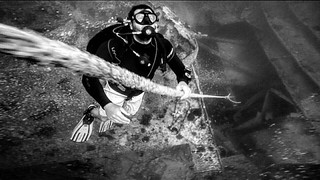
Cave divers do something similar, unreeling a line behind them as they explore the labyrinth of flooded passageways; both so they can find their own way out, and also so that others can follow the path without getting lost, or without having to explore the same dead ends and blind alleys that the first divers did. 

Sometimes, negotiating our projects feels like making our way through a labyrinth, especially when the project has to negotiate complex regulatory or bureaucratic hurdles, or technical difficulties.

When we successfully negotiate these hurdles, which sometimes can be long and taxing, we need to leave a thread behind us for the sake of the next project.

Imagine the first project of its type in a country - the first factory, or the first branch office. Imagine you have eventually worked your way through the maze of rules, regulations and red tape, contracts and logistics. The thread you leave behind is not string, but the collected knowledge (the "knowledge asset") that enables the second factory, or the second branch office, to successfully follow the path of the first.

That knowledge might include;
  • The list of activities you need to undertake
  • The order in which to undertake them
  • The people you must contact, and how to contact them
  • The letters you must send, and how to write them
  • The evidence you must collect, and how to best present it
Without leaving this trail of knowledge behind you, the second factory or the second branch office will approach the maze of logistics and legislation with the same ignorance as the first, and may get just as lost and confused.

If you are the first to try something, then leave a guideline of knowledge for others to lean from.


Wednesday, 6 March 2019

Three styles of Knowledge flow - centre-out, out and in, or multiflow

There are three common styles of knowledge flow that you can see in organisations. We can call them centre-out, out and in, and multiflow.


In our picture here, the red dots are the central group of experts, the white dots are the knowledge users or knowledge workers, and the white arrows are the flow of knowledge.

In the centre-out model, the knowledge is created by the experts in the centre, and "pushed out" to the knowledge workers, in the form of doctrine, work instructions and policies. The centre owns the knowledge - they are the Knowers - while the knowledge workers apply the knowledge - they are the Doers.

In the out-and-in model the knowledge is managed by the experts in the centre. Knowledge is gathered from the knowledge workers, synthesised and validated in the centre, and transferred back out to the workers. There are feedback loops such as lesson learning systems which mean that the central knowledge is always tested against reality and updated regularly. The centre stewards the knowledge and validates it, while the knowledge workers both apply and improve the knowledge.

In the multiflow model, the knowledge flows between expert and worker, worker and worker, worker and expert. Knowledge is created, updated and validated by all parts of the system, and is available in real time. The knowledge is managed and owned by the Community of Practice, while the centre manages and stewards, not so much the knowledge itself, but the knowledge-creating and knowledge-validating system.

The first model seems very old fashioned nowadays, and the third model seems much more attractive, and is becoming more common (see for example the use of Wikis to develop Army doctrine).

However in reality all three models may be needed simultaneously in any one organisation, to deal with different types or different levels of knowledge.


  • There may be mandatory knowledge, such as knowledge of company law, or knowledge of policies such as anti-money-laundering or anti-corruption policies, which has to be mandated and controlled from the centre.
  • There may be strategic knowledge, driven by company strategy, which can certainly be tested in the business, with clear (and welcome!) feedback, but which needs to be owned and coordinated centrally and strategically.
  • There may be operational and tactical knowledge which is owned by the Communities of Practice, and handled within wikis and blogs and discussion forums (and indeed the Army wikis mentioned above were specifically for tactical knowledge).


So it is not as simple as saying "model 1 is old fashioned and rigid and Bad, model 3 is free and liberated and modern and cool and Good".

It is, as is so often the case in Knowledge Management, a case of determining which model is most appropriate for which knowledge.


Tuesday, 29 January 2019

7 failure modes for knowledge transfer failure

There are at least 7 ways in which Knowledge Transfer can fail. Here are 7 of the most common. I am sure you can suggest others.


This post is inspired by this article by John F. Mahon and Nory B. Jones, authors of the book "Knowledge Transfer and Innovation". They identify 5 failure modes of knowledge transfer. I have added two more

1) Knowledge is transferred, but too slowly to make a difference. This is a failure in the efficiency of the knowledge management process - your "KM clock speed" is too low

2) Knowledge is shared, but in an inadequate way so that the user cannot understand it. Maybe it is written in fuzzy statements, or statements of the blindingly obvious. These are both byproducts of the curse of knowledge, whereby an expert assumes that if something is obvious to them  it is obvious to everyone else They underestimate the difficulty of transferring that knowledge to a non-expert
 and so write the knowledge in the form of bullet points or aphorisms. This is a failure of a) km training, b) KM facilitation and c) KM quality control.

3) Knowledge is corrupted by inadvertent omission – for example, as Mahon and Jones say, "your neighbor accidentally leaves out a critical step or ingredient in a recipe. When you make the dish, it is not what was intended". This is difficult to guard against, and you need to make sure your KM system is self-correcting, so that inadvertent omissions are corrected later.

4) Knowledge is corrupted by deliberate omission – for example if it is not politically comfortable to transfer the whole truth. Mahon and Jones give the example of the Gulf of Tonkin incident - "There were actually two such incidents reported, and there is credible information that one and possibly both reports were false. Based on this erroneous knowledge, Congress passed the Gulf of Tonkin Resolution, which granted President Lyndon B. Johnson legal justification for deploying U.S. troops to Vietnam and commencing open warfare". This is a failure of culture and therefore of leadership.

5) Knowledge doesn't get shared at all. This is the problem of knowledge hoarding, which affects many organisations. People hold on to their knowledge, largely through fear that it will leak to competitors - either to industrial competitors, or to people within the same job who are competing for the knowledge holders budget or job.  This is also a failure of culture and therefore of leadership.

Now my two

6) Knowledge gets shared, but not used.  This is the re-use barrier - potentially the most difficult barrier in KM, and there are several reasons why people may be unwilling to re-use knowledge - it's difficult to find, difficult to understand, they don't trust it, or they can get away with not using it. This is a failure of many things - the KM system, the culture, the incentive system - and often comes from treating KM as a supply problem rather than a demand problem.

7) Knowledge is not co-created. We often have a simple view of knowledge transfer; that it leaves one head and enters the other. In reality knowledge is often co-created through conversation and through collaboration. Knowledge is more often co-created than it is transferred in a one-way direction.  Ignoring co-creation is a failure in the KM philosophy as much as anything else. 

Blog Archive