Friday, 31 August 2012


After Action Reviews as a culture change agent


change_thoughtsWhen we talk about Culture Change and Knowledge Management, we need to realise that the Knowledge Management processes themselves are in themselves culture change agents.

After Action reviews are a prime example. They promote openness; people will learn that ‘there is no comeback’ and questions will receive answers. They promote reflection, learning and a performance focus, through discussions on "What did we set out to achieve? What actually happened” "How can we do better next time".

Below is some feedback from work we did several years ago at an industrial plant in the US, experimenting with introducing After Action Review. We found that not only did the AARs identify many many opportunities to save time and money, they also started to change the mindset, as these quotes from the workforce demonstrate.

"I thought I needed to be the expert and felt threatened at first. After a few AAR’s I felt comfortable that the guys appreciated using their ideas and we became a team" (Supervisor)

"Before the AAR, they didn’t feel like they were a team; After a few AAR’s they became one". (Boilermaker)

"I have been doing this work for 20 years, and no one has ever asked me what I thought before; so it was a change". (Boilermaker)

"We are now doing a Before action review in the mornings". (Supervisor)
Here's another quote, from a mine manager in Botswana, where we used AARs to radically improve some of his production processes, and deliver savings in the million-dollar range. However for him, there was something even more important than the money.
"The most important thing was the engagement of the people. The people who were involved in this, they actually feel that they are part of a team now. It's not the project team vs the contractor vs the end users - everybody is part of a single team now. And people are actually coming up with suggestions for implementation, and what makes it quite exciting is that people come up with very good suggestions, we implement it, they see the implementation of that, and they see the benefit afterwards, and so success breeds success".
That engagement, and that "success breeding success," was worth more to this manager than a million dollars, because it is the start of a new engaged performance-driven knowledge-enabled and knowledge-seeking culture that will deliver value for years to come.
Thursday, 30 August 2012


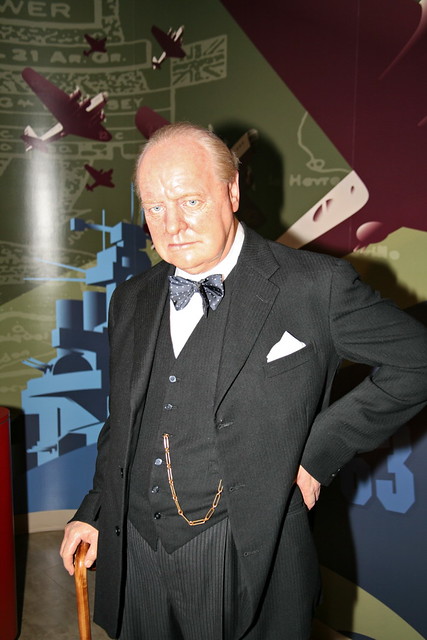
The 4 questions in Winston Churchill's Knowledge Audit


Winston Churchill Sir Winston Churchill hated being surprised, particularly by bad news.

According to Karl Weick and Kathleen Sutcliffe,  the authors of "Managing the Unexpected",

"Winston Churchill provides a good example of ... self-conscious auditing. During world war two, Churchill made the terrible discovery that Singapore was much more vulnerable to a Japanese land invasion than he first thought. Reflecting on this unexpected discovery, Churchill commented in his history of the war, “I ought to have known. My advisers ought to have known, and I ought to have been told, and I ought to have asked”. Churchill’s audit consisted of four questions: Why didn’t I know? Why didn’t my advisers know? Why wasn’t I told? Why didn’t I ask?”
This concept of a leadership Knowledge Audit is a very powerful one. We have already talked about the knowledge bubble that leaders can get into, where they hear only what they want to hear, and are told only what people think they want to be told. This can be a disastrous situation for a leader. Even more of the risk is that a leader can create systems in the organisation which are almost designed to create nasty surprises.

Weick and Sutcliffe quote the example of the ferry boat “Herald of Free Enterprise” which sank offshore Belgium in 1987 with the loss of 193 lives. It sank because the bow doors had never been closed, and it had not been ready for sea, but had put to sea nonetheless. The standing orders for “Readiness for Sea” were as follows.
“Heads of department are to report to the master immediately if they are aware of any deficiency which is likely to cause their departments to be unready to see in any respect at the due sailing time. In the absence of any such reports the Master will assume, at the due sailing time, that the vessel is ready for sea in all respects”. 
Weick and Sutcliffe notes that this order fails Churchill’s knowledge audit in two ways.
  • Firstly the heads of departments weren't required to be aware that the vessel was seaworthy, only to report if they know that it wasn't ("Why didn't my advisors know"?). 
  • Secondly, if the Master heard nothing, he didn’t ask “where’s the report” - he just put to sea ("Why didnt I ask?"). 

In fact the person in charge of closing the bow doors had fallen asleep, and the reporting chain (which relied on reporting unreadiness, not readiness) had failed.  The advisors didn't know, and didn't ask. They told the Master nothing, and the Master didn't ask either. The Master was in an knowledge bubble - and the result was disaster.

For those of you concerned with the effective transfer of knowledge up the hierarchy - up the chain of command - consider Churchill’s Knowledge Audit, and audit each person's knowledge supply using the four questions

  • Would I know? 
  • Would my advisers know? 
  • Would I be told? 
  • Would I ask?”

Wednesday, 29 August 2012


The Knowledge Management Iceberg


The Iceberg is a very familiar model within Knowledge Management, seen in many slide presentations. I first used it myself in the public domain, in an article in Knowledge management magazine, 2000, entitled ""Mining the deep knowledge - tapping into things you don't know you know, and have re-used it many times over the last decade-and-a-bit.

In this analogy,the explicit knowledge of an organisation is like the visible portion of an iceberg, and the known tacit knowledge is underwater, but close to the surface, in the daylight zone where it is visible, and easily accessed.

The explicit knowledge can, in theory, be seen and found easily, as it lies in plain site. Similarly the known tacit knowledge can be found and accessed.

However deeper down, out of sight, lies the vast mass of unconscious knowledge; the bulk of the iceberg. This knowledge is invisible, inaccessible, and easily overlooked. These are the things that you don't know that you don't know - the unknown knowns, and this is very often the deep-lying technical knowledge - the mastery - that is of real value to others.

Before this knowledge can be shared and applied, it first needs to be made tacit and conscious. A process of realisation is needed, to move the knowledge into the tacit domain. Much as data may need to be mined out of documents to be useful, so the unconscious knowledge needs to be mined out of the human brain before it can be made tacit, then explicit. This "brain mining" is a skill, which can be learnt and taught, but it is primarily a human activity that cannot be automated. It is however the highest value step in the entire spectrum of knowledge management activity.

The mining tools we use to reach this deep knowledge are Questions, and any knowledge management system that does not somewhere involve a questioning process, or some question-based techniques, will never reach the deep dark unconsiouc knowledge where the real secrets of success and failure are to be found.

Tuesday, 28 August 2012


5 ways to personalise a knowledge base


There is something very personal about a conversation, which you can completely lose in Text form, for example when putting lessons into a database, or creating a knowledge base or a knowledge asset around some topic or process.

In a personal conversation, each party can watch body language, listen to tone of voice, check for understanding, ask questions for clarification. In an online conversation, on social media perhaps, although do you don't get the body language or the tone of voice, you can still check for understanding and ask questions.  You can't do that with a static text article.

So how can we retain some of the person touch when writing explicit knowledge into a static article such as a Wiki or a knowledge base ? Here are a few tips for you.

1. Structure the knowledge as an FAQ. Even if the Reader doesn't have the option to ask questions, it "feels more like it" somehow if the information is provided as a set of answers, rather than a set of instructions.

2. Make sure each piece of knowledge or each piece of advice is attributed to a specific person.  Show that it comes from a real person with real experience. It is difficult to trust anonymous knowledge.

3. Include a picture of the person.  Psychologically this really helps.  The text then becomes "this person speaking to me" rather than some anonymous block of letters and spaces. Where multiple people have contributed to a piece of text, then include each contributor's picture against their own contribution.

4. Include a little video clip of the person summarising the most important pieces of knowledge.  A moving image allows a much greater personal connection than a static image, and although you may not want to replace the entire text by video, for purposes of disk space and ease of search and reuse, that little  glimpse of the other person can be very engaging.

5. Provide a link to the contributors personal pages, so that the reader can follow up for more detail, or gain more background about the contributor.

The more you can personalise the text - the more you can simulate a conversation between the writer and the reader - the more engaged the reader will be, and the more effectively the knowledge will be transferred.

Monday, 27 August 2012


"There's always a better way" - great KM strapline


Better This post is inspired by my friend Adel Al-terkait from Kuwait, who used, as the strapline for his Knowledge Management program

"There is always a better way"

This is reminiscent of John Browne's vision for knowledge management in BP in the 90s -

"Every time we do something again, we should do it better than the last time"

The key word in each case is "Better"

"Better" is the antidote to complacency, the enemy of "Good Enough", a weapon against "Not Invented Here". "Better" takes some of the risk out of the concept of "Best Practice"

Looking for a better way implies a search for other forms of knowledge, and a curiosity about what's possible, and how others address things. A search for Better drives continual improvement, and drives a culture of seeking, of asking, and of Knowledge Pull. And if you can't find that Better Way through asking, then you can innovate.

All in all, it's a great strapline!

Unless you can suggest a Better one?

Friday, 24 August 2012


Don't rely on Personality when implementing Knowledge Management


personality... A strong passionate leader is essential for an effective Knowledge Management implementation team, connecting with strong "first followers" in the business. As discussed in previous posts, the leader needs to be a change agent, with a strong profile and good influencing skills, who has some hard-won experience in KM, who can translate KM into business terms.

But there is a risk in relying on the Personality of the leader to drive transformation, because when the leader moves on, transformation can falter or "tip back".

Here is just such a story.

A project manager was working in a major project in the Far East. He was a KM Believer, one of the "first followers", eager to lead change in his part of the business. He set up a community of practice, or knowledge network, of project managers who would meet, exchange documents, and swap lessons learned for further re-use. And it worked - in his area he cut costs, shortened timelines and improved safety statistics. He acted as champion, thought leader, and role model for Knowledge Management within the wider business. 
Then he left - moving on to another part of the business.
The community stopped functioning. Knowledge capture ceased. Many people in the business claimed that they were unaware of what he had been doing. Knowledge management in the Far East Division dwindled away and died. The culture "tipped back" to where it had been before.

No matter how strong your personality, no matter how much you can get done by personally driving it, there comes a time when you have to pass over the reins. Not to another strong personality, but to an embedded system that is going to function no matter who is driving it - a system of KM expectations, embedded processes, roles within the business, and governance.

Thursday, 23 August 2012


Can you miss out KM components such as roles, processes?


I'm What's Missing I blogged yesterday about partial Knowledge Management implementations, and asked whether there were circumstances where you didn't need any KM technology.

What about the other parts of the Knowledge Management Framework? What happens if they are missing? Can KM still function?

Can you do KM without any roles and accountabilities?

This one I find harder to imagine. Even in a small team, learning for an by themselves, someone has to facilitate the AARs, for example. However you could have a team where everyone tales accountability for sharing and learning, where everyone edits the knowledge base, and where roles such as facilitator and scribe are rotated. Here the accountabilities are still assigned,. but there are no full time roles.

Can you do KM without any processes?

The majority of effective KM processes, such as Peer Assist, AAR, Retrospect, are really structured dialogue, so if your dialogue works well, and you naturally discuss issues such as root cause, then you could effectively deconstruct the KM processes and replace them with good dialogue. Again, this is only likely to happen in a small group who know each other well, and have developed good dialogue habits.

Can you do KM with no governance? No expectations, no checking and reinforcement, no support?

Most of the KM efforts we have seen with no governance, do not last long. However, again, it is possible to imagine a group with self-governance - a group that has set their own expectations ("lets make sure we do an AAR after each day"), who reinforce these ("hey guys, we still haven't done our AAR yet"), and who train the newcomers ("Susie, let me walk you through the idea behind the AAR"). It's still governance, but self-governance.

So the answer is that yes, it is possible to run KM with common accountabilities, rotating roles, deconstructed process and self-governance, but only in a small group. Once the group becomes larger, such as a CoP, or knowledge sharing between multiple groups, then roles are assigned, ground-rules established, charters written, and the gaps in the framework need to be filled in.

Wednesday, 22 August 2012


When you don't need KM technology


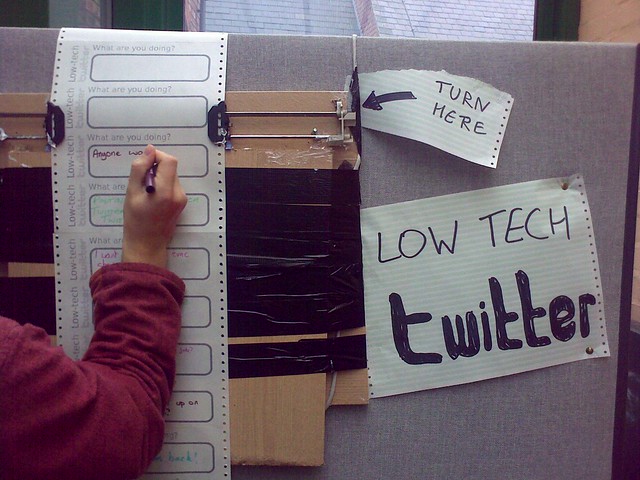
Low-tech Twitter We often talk about a Knowledge Management Framework as a mix of Roles and Accountabilities, Processes, Technologies, and Governance.

But can you get along with any of these missing?

Can you do Knowledge Management with no technology, for example?

The purpose of KM technology is to allow people to talk when they can't get into the same room at the same time, and to allow knowledge to be stored beyond the constraints of human memory.

So you could have a technology-free application of KM for

  • a small group 
  • meeting frequently
  • debriefing quickly while memories are fresh,
  • dealing with rapidly-changing knowledge, or knowledge they need to internalise
  • which they will re-use quickly, before they forget the details. 


This application, for example, used nothing more elaborate than a whiteboard, and was highly successful.

Similarly the training-day after action reviews in the army are technology free, and the wildland fire AARs use  nothing more complex that a sandbox (ie a box with sand in it), and personal notebooks.

But as soon as the conversation needs to reach beyond the immediate team, or where knowledge has to be stored for more than a few days, technology needs to play its part


Tuesday, 21 August 2012


"85% of KM initiatives have no stated objective"


Do you want to hear a scary statistic?

According to the slide on Page 7 of this KPMG presentation,
  • 80% of companies in a recent survey said that they had KM initiatives under way
  • Of those companies, 85% had no clear stated objectives for their KM initiative.
I suppose it depends what you mean by "stated objectives", but even so, that's a scary statistic.

Given that so many KM initiatives fail, then to start an initiative with no clear business objective is surely a rash thing to so. Clarity of business purpose is one of our 7 top success factors

Monday, 20 August 2012


Do-it-yourself KM benchmark survey


Survey the World Poster We have just put up, on the Knoco Australia site, a simple survey for you to benchmark the current status of knowledge management in your organisation.

It is only 10 questions, and we have pre-populated the database as much as possible, but as usage grows, this may start to build a good picture of the current state of KM across industries and geographies. Once you have completed the survey, we will email you with the relevant benchmark statistics.

Try it - we hope you like it.


Friday, 17 August 2012


Where do you do your knowledge debrief?


P1000163 Your project has ended. You need to do a lessons debrief, to capture the knowledge while memories are fresh. Where will you do this debrief?

Most of us would hold the debrief in or near the project offices.

However the debrief for the London 2012 Olympic games will be held in Rio De Janiero, in November of this year.

When you think about it, it makes sense, doesn't it? The next time this knowledge will be needed, will be in Rio in four years time.

After all, the purpose of knowledge capture is to be able to transfer the knowledge, so why not make the transfer part as easy as possible for the people who will next need the knowledge? Why not debrief where the knowledge customers are?

Thursday, 16 August 2012


Quantified success story #46 - Siemens


Texas 46 Quoted from Business Week in 2001, an old but still relevant story from Siemens, on the value delivered through ShareNet

Since its inception in April, 1999, ShareNet has been put to the test by nearly 12,000 salespeople in Siemens' $10.5 billion Information & Communications Networks Group, which  provides telecom equipment and services. The tool, which cost only $7.8 million, has added $122 million in sales. For example, it was crucial to landing a $3 million contract to build a pilot broadband network for Telekom Malaysia. The local salespeople did not have enough expertise to put together a proposal, but through ShareNet they discovered a team in Denmark that had done a nearly identical project. Using the Denmark group's expertise, the Malaysia team won the job. 
Better yet, the system lets staffers post an alert when they need help fast. In Switzerland, Siemens won a $460,000 contract to build a telecommunications network for two hospitals even though its bid was 30% higher than a competitor's. The clincher: Via ShareNet, colleagues in the Netherlands provided technical data to help the sales rep prove that Siemens' system would be substantially more reliable.
$122m from an investment of $7.8m is an ROI of 1565% over 2 years.

Wednesday, 15 August 2012


Knoco newsletter NOW available


Sorry for the false alarm yesterday; I have edited our website, and the new Knoco newsletter for August 2012, with the theme of Creativity and Innovation, is now available via this page.

You can sign up for future newsletters here


Monday, 13 August 2012


Introductory video on lesson-learning


This is a basic introductory slideshow I put together on Lessons learned systems

It takes about 9 minutes

Sunday, 12 August 2012


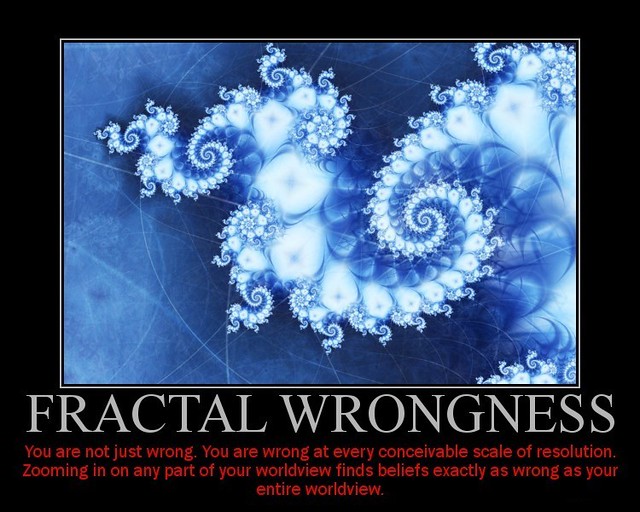
Fractal Wrongness


Fractal wrongness

Found on Flickr (click on the picture for attribution)

Saturday, 11 August 2012


A little knowledge (quote)


[ This IS ALL WE Need : And SOME Love AND Passion ] Temple Bar, Dublin, Republic of Ireland

If a little knowledge is dangerous, where is the person who has so much as to be out of danger? -- Thomas Henry Huxley

Friday, 10 August 2012


8 reasons for having a knowledge management strategy


StrategyCan you introduce Knowledge Management without a strategy?

Sure you can, but your chance of success will be much lower. As Sun Tzu said*, in "the art of war",

“Strategy without tactics is the slowest route to victory. Tactics without strategy is the noise before the defeat.” 

Lots of books and articles on strategy come from a military point of view, or from game theory, and are strategies for competing and winning. Should we think in terms of winning and competing, when implementing Knowledge Management? Surely it's a Good Thing to do - it's a win-win for everyone?

But as leader of the KM program, you are in competition. You are in competition against other programs and initiatives, for internal resources (money, people, time) and you are in competition for internal attention (management support). If you do not have a good strategy, then good tactics are not going to save you. We are constantly hearing of yet another KM program closed, and yet another KM leader looking for a job, as the company sought to cut back on expenditure, and found KM to be too far from the front-line delivery - too non-strategic - and thus an easy target.

So what can a good KM strategy do for you?

  1. Your strategy will help you define where you heading, and what the end point should be.  It will define the vision, and the objectives for knowledge management within your organisation, and allow these to be discussed and agreed up front, before you start on the planning.
  2. Your strategy will provide a set of principles or ground-rules to guide your actions, and guide your decision making during knowledge management implementation, in order to deliver the greatest chance of success. Don't forget that 80% of knowledge management programs fail (depending on what you mean by “knowledge management program” and what you mean by “fail”). The reasons for failure are well known, and a good strategy will be designed to avoid these reasons.
  3. Your KM strategy, if it follows the principles mentioned above, will be closely linked to business objectives, business strategy, and business results. This protects you from being seen as peripheral to the business, and an easy target for downsizing. 
  4. Your strategy will form the framework of constraints for planning purposes. It will define the areas of focus, the risks to be addressed, and the allies to work with.
  5. Your strategy will guide you in deciding what not to do. If a tactic is outside the constraints, or in opposition with the principles, then it is not strategic, and a waste of resource.
  6. The strategy also looks at implementation priorities and issues. It’s not just a vision; it’s a high level approach for how the vision will be realized. 
  7. Your strategy is a public agreement with your leadership. It represents agreed ground rules for knowledge management implementation, and should have leadership blessing and support. If over time that support does not materialise, then you should be able to go back to the strategy, remind them that it was agreed, and claim their support (or else renegotiate the strategy). The strategy is therefore a key decision point for the organisation.
  8. Your strategy allows managed flexibility. As your business context changes, your organisational priorities, or the competitive or technological landscape, so your knowledge management strategy should also evolve over time, but will need to be renegotiated with your steering group. This is your "Management of Change" process for the KM implementation.
The most important thing for you, therefore, is to get a good strategy in place from the start. Contact us at Knoco if you want a copy of our guide to KM strategy.

Thursday, 9 August 2012


Communities - regulated or unregulated?


R-chie overlapping structure arc diagram by Daniel Lai, Jeff Proctor, Jing Yun and Irmtraud Meyer There has always been a polarity of views between those who see Communities of Practice as something that should be allowed to flourish naturally, springing up as a bottom-up initiative in response to user demand, and those who see communities as more powerful when they are aligned with the business strategy, and structured to provide a valuable resource to their members.

 This is the "emergent or structured" debate.

I have always been in the "structured" camp, and while recognising communities of practice as an organic structure, would rather see them organised into a productive garden, than allowed to run to jungle. This view seems to be supported by recent research

Now, as part of a Linked-In discussion on "Communities of practice, limited or unlimited", we have a useful piece of data from Arjan van Unnik, who was head of Knowledge Management at Shell.

Arjan says that in 2006, Shell relaxed it's policy of "managed structures CoPs", and threw CoPs open to anyone who wanted one.

The net result was that, rather than increasing, CoP use decreased by 32% as a result of the fragmentation that followed.

Arjan says that he then had to "implement corrective actions and increase the management of the CoP portfolio" in order to get things back on track.

Wednesday, 8 August 2012


Learning through watching at the Olympics


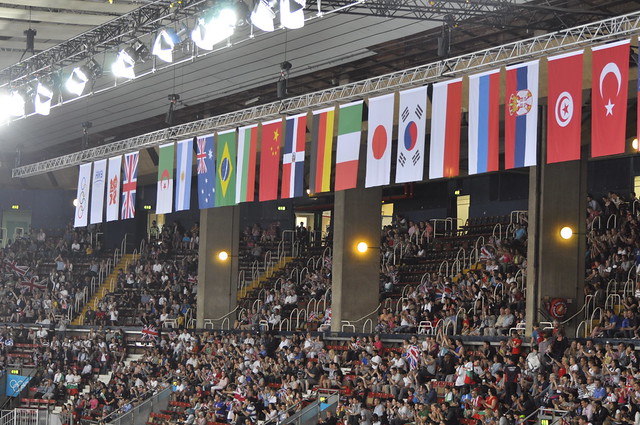
London Olympic 2012 No, not you, watching through your TV - this is the "learning through watching" program organised by the International Olympic Committee as part of their Knowledge Management program.

Read more about it here, which says

"The Observer Programme forms an integral element of the Olympic Games Knowledge Management (OGKM) platform of learning. It represents a key component of the knowledge-transfer process, providing a unique opportunity to live, learn and experience real Olympic Games operations. ..... For future Games organisers, it is a valuable opportunity to learn and experience the event live. During the Observer Programme, each future Organising Committee can not only witness how things are done, but also study specific areas, so that they can learn and improve upon those subjects within their own organisational and cultural context.
Some of the issues they will be observing are (source)


  • Ceremonies
  • Brand Identity and Look of the Games
  • Command, Control and 
  • Communications
  • Olympic Village Operations
  • Sport
  • Workforce Services
  • Uniform
  • Accreditation
  • Sustainability
  • Brand Protection
  • Transport
  • Protocol
  • Ticketing
  • Venue Management
  • Medical Services
  • Marketing
  • Press Operations 
  • Broadcasting
  • Technology
  • Arrivals and Departures
  • Licensing
  • Athlete Experience
  • Spectator Experience
  • Logistics
  • Signage
  • Communications


This is a very important part of any Knowledge Management program - something we refer to as a  Knowledge Visit

Tuesday, 7 August 2012


Quantified KM success number 45


Another public-domain story showing quantified value from knowledge management; this is one from BP Trinidad, mentioned in this press release, which shows how lesson-learning in the construction of a series of offshore platforms has saved 17% of the overall engineering time for the program.

The press release says
"The engineering work went from 14 months on Cannonball to 13 on Mango, 11 on Cashima and 11 on Savonette. We expect the engineering work for our latest clone NUI, Serrette, to be completed in 9 months, which means that in just eight years, we have been able to reduce our platform engineering execution by five months, which of course translates into improved capital efficiency"
 How do we know this is a result of lessons learned? Well, we need to cross-reference to other publications, such as this one, where we read that
“Serrette is truly the culmination of the significant experience we have been gaining since 2001 when we began plans to construct our first platform locally, the Cannonball. By living the concept of continuous improvement, which is now being embedded across bpTT, we have taken the lessons from each project and applied it to the next project".
The article goes on to describe some of the lessons incorporated into Serrette, and claims that the value of saved time can be in the order of $500k to $1m per day.

The five Trinidad platforms account for a total of 58 months in engineering, which would have been 70 months with no learning (assuming they all took as long as the first). The 12 month savings represents a 17% time saving, and can be valued at between $180m and $360m in total.

Monday, 6 August 2012


Best Practices and Olympic High Jump techniques


Picture from here
This is Olympic Week 2, so let's look at some hard data on Best Practices and how they affect performance.

Let's look at the high jump.

There was a time when there was no established technique for the high jump. People approached the bar front-on, often from a standing start. However as the high jump became an international field event, techniques and practices began to be developed.

One of the early successful practices was the Western Roll, introduced in 1912, leading to the world record of that time, and a step change in performance (see picture above). This new practice rapidly became "best practice" of the time, and was predominant through the Berlin Olympics of 1936.

The Western Roll was superseded by the Straddle technique in 1937. You can see on the graph how this new practice led to another step-change in performance, with record height rapidly increasing over a period of years as the technique was perfected and adopted around the world.

Then in 1968, Dick Fosbury introduced a new technique, the "Fosbury flop", to win a gold method in Mexico City. As Wikipedia says, "After he used this Fosbury flop to win the 1968 Olympic gold medal, the technique began to spread around the world, and soon floppers were dominating international high jump competitions". The new practice had become Best Practice, and so standard practice. Over the years since 1968, the details of the Flop have been perfected, but it still remains the basis of Best Practice in high jump techniques, until a new technique is discovered.

So what has all this got to do with Knowledge Management?

Basically, this is a metricated historical look at Best Practice under controlled conditions, and allows us to draw the following conclusions.

1) Best Practice is not static. Best is "Best for now, until something better is found". The existence of "current best" doesn't stop you looking for Better.

2) Best Practice is what delivers Best Results. In high jumping, this is easily defined - it's the technique allows you to jump higher than any other technique.

3) People will follow Best Practice whenever they are highly incentivised to deliver the best performance, e.g. in an Olympic Games, where the new Best Practice is better than their old practice, and when they have not yet found an even better practice (see number 1 above).

4) Best Practice is easiest to develop and copy in a relatively repeatable situation, where the parameters remain fairly constant, and where the metrics are clear (such as jumping over as high a bar as possible).

5) Under such circumstances, changes in Best Practice drive step changes in performance - the steps seen in the attached graph

6) There will be personal variants of Best Practice, but the core of the practice - the fundamentals of the technique which differentiate it from other techniques -  remains the same. Tinker with the core, and the practice fails to deliver.

7) Changes in Best Practice are often driven by changes in context. The Fosbury Flop, which drove the biggest leap forward in high Jump achievement, was made possible by the change from sawdust landing pits to deep foam matting. Basically, you could land on your neck without killing yourself. So the new Best Practice - the flop -  was born.


Thursday, 2 August 2012


When collaboration helps, when collaboration hinders


This is a very interesting paper from Martine Haas and Morten Hansen, which takes a scientific and statistical view of collaboration, and whether it actually helps performance or not.

Haas and Hansen looked at a series of bid teams, assessed how much they accessed documents from previous bids (which they called "codified knowledge"), and how much they received advice from experienced colleagues outside the team ("personal knowledge"). They then looked at bid success rates, to give an objective measure of the VALUE of the knowledge to the team.

Now, we might assume that the more Knowledge a team accesses, the better their performance?

Unfortunately it is not as simple as that.

The graphs shown here are the authors' conclusions about how much in knowledge helps to improve bid performance, in varying circumstances. In each graph, the vertical axes represents increasing bid success probability, the horizontal axis represents increasing amount of knowledge used, the black line is "codified knowledge" (reuse of documents) and the purple line represents "personal knowledge". If the lines rise from left to right, then increased knowledge is linked to increased chances of success. If they fall from left to right, then increased knowledge is linked to reduced success. Read the paper to understand the evidence behind these.

The top left graph (2i) represents a team which is inexperienced (and so has a high need to learn), working in a situation where they do not need to differentiate the bid significantly, so can deliver a fairly standard proposal. In this case, the more knowledge they use, the more documents they copy and the more experts they refer to, the better their chances of success.

The top right graph (2ii) represents a team which is inexperienced (and so has a high need to learn), but are working in a situation where they really need to differentiate the bid. Here it is a great idea to get input and knowledge from experienced colleagues, but the re-use of documents from previous bids is actually harmful to the chances of success.

The bottom right graph (2iii) represents a team which is experienced (and so has a low need to learn), and who are working in a situation where they really need to differentiate the bid. Again, it is a great idea to get input and knowledge from experienced colleagues, but the re-use of documents from previous bids is actually harmful to the chances of success.


The final graph at bottom left (2iv) represents a team which is experienced (and so has a low need to learn), and who are working in a routine situation where bid differentiation is not needed. In this case, they pretty much know what they are doing, and re-using any knowledge does more harm than good.

So what's the conclusion?

The conclusion is that collaboration, the re-use of documents or seeking input from others is not always going to help you, and in some cases it can hinder.

In most cases (3 out of the 4), the more input you get from colleagues the better, but also in  most cases (3 out of the 4), recycling documents from other teams will not help you perform better, and may even harm your chances of success.

So know your context, and choose a collaborative method that will actually help, not hinder.

Wednesday, 1 August 2012


The importance of an asking culture (video)


A recent video, recorded in China, which explores the requirement for an Asking culture and part of Knowledge Management