Sunday, 28 February 2010
The experience of ages (quote)
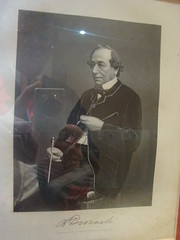
The wisdom of the wise, and the experience of ages, may be preserved by quotation.
- Benjamin Disraeli
(Incidentally, when creating Knowledge Assets, I always try and use direct quotes from the contributors, of this very reason)


Friday, 26 February 2010
Being the Best - Benchmarking, motivation and KM
I posted a few days ago about Performance metrics, KM and asparagus. The story tells how publishing data about aircraft loading procedures among Peruvian asparagus producers motivated the poor performers to learn from the good performers, for the benefit of all, The authors of the study I quoted claimed

Objective proof of superior performance helps overcome a principal barrier to
convincing experienced professionals to adopt new practices - that is, the
belief that they are already doing the right thing and that their current
results are the best that anyone can expect
I would like to follow that thought - about how benchmark data can motivate people to learn.
One of the biggest barriers to overcome in KM is the lack of desire people usually have for learning from others. It's the old "Not Invented Here" syndrome, and behind "Not Invented Here" are two things
1. People are comfortable and familiar with their own performance, and with the way they currently do things
2. Change involves risk. "If my way works" they think, "why risk changing it? Why change horses in midstream? Why ditch a perfectly good approach, for something unfamiliar?"
The great thing about good performance data, and good benchmark data, is that people then often come to realise that their approach is not "perfectly good", that their way may "work", but it works pretty badly. They become uncomfortable with their own performance, and beconme open to learning. "Not Invented here" disappears, because they realise that "Invented Here" is not actually very good!
We see this very very clearly in our Bird Island exercise, where people were comfortable building an 80cm tower, and think they might be able to stretch it to 120cm. Then we show them benchmark data where the record is over 3m, the mean is 285cm, and even a bunch of Chicago lawyers achieved 250cm. And we show them a picture of the record tower, so they can see this is not a joke.
What happens, is that the people are shaken out of their comfort zone, They realise their own performance was pretty poor. They become very open to learning. And they DO learn, and they also turn in a top quartile performance.
The old motivation, to be safe and secure with a known approach, is replaced by a new motivation. The new motivation is "To do a decent job". (And they often feel that of they are being soundly beaten by Chicago Lawyers, they are't doing a decent job!*)
When you think about it, most people are professionals. They have pride in their work. They don't like to put in a poor performance. It's only the Homer Simpsons of this world** who are happy with shoddy work. So the existence of benchmarking data or performance data makes people aware if their performance is bad, they become dissatisfied with their approach, and are open to learning something better.
This is a very positive motivation. It reminds me of the introduction of technical limit (a very detailed approach to benchmarking and target setting) in the USA, and the motivation of the Ocean America drill crew to try new things and learn new approaches. Here's what the guy in charge of that program said.
"Technical Limit creates a new world; it creates something that says "there is a
big difference between perfection and where we are at today. We really were not
doing it to save the company millions of dollars; we were doing it because we
wanted to be undeniably the best drilling team in the world".
That's a very positive motivation - to be undeniably the best. And that's where the combination of good performance data and KM can really help. The performance data tells you if you're not the best, and it tells you who the best is. It tells you that you need to learn, and it tells you who to learn from. KM enables that learning.
*Apologies to all the Chicago Lawyers out there
**I was thinking of when Homer said "If you don't like your job you don't strike. You just go in every day and do it really half-assed. That's the American way".
Tuesday, 23 February 2010
Performance metrics, KM and asparagus

In this post I asked the questions - "What if there are no measures of performance? How will you know if any one approach is better than another, and worth replicating? How will you see the learning curves, without metrics? How can you plan to improve, with no targets? What will incentivise people to learn from each other, if performance is not a driver"?
I was reminded of this yesterday, reading an article on KM and the Peruvian Asparagus Cooperative (by Luis Chang, in Pauleen, "cross-cultural perspectives on knowledge management". This is a story of how the asparagus growers of Peru began to collaborate, firstly to build a shared refrigeration facility, and secondly to exchange knowledge of processing and aircraft loading, so that the slow loaders didn't hold the others back.
Hidden in there, are some really important observations on the link between performance metrics, and KM. I quote -
"Knowledge Management experience in many settings has shown us that trying to
quantify productive knowledge is virtually* impossible, but charting the
positive outcomes that knowledge generates is both possible and useful, because
it shows where productive knowledge resides, and which practices deserve to be
widely adopted"
Like I said above, if you have measures ("charting the positive outcomes"), you know if one approach is better than another, and worth replicating ("deserve to be widely adopted"). In Peru, this happens as follows
"Each partner company receives daily information .... the reports blank out the
names of all the other partners, so each recipient sees his rank and detailed
quality on quality without knowing which of the other companies occupy the other
lines. For partners that score significantly below the others, the reports who,
first and foremost, that the work can be done more effectively and efficiently.
This objective proof of superior performance helps overcome a principal barrier
to convincing experienced professionals to adopt new practices - that is, the
belief that they are already doing the right thing and that their current
results are the best that anyone can expect"
I would like to repeat that last bit, because it's really really key
Objective proof of superior performance helps overcome a principal barrier to convincing experienced professionals to adopt new practices - that is, the belief that they are already doing the right thing and that their current results are the best that anyone can expect
That's the link that I was talking about in the other post, when I asked "What if there are no measures of performance? How will you know if any one approach is better than another, and worth replicating? What will incentivise people to learn from each other, if performance is not a driver"
A final quote from the paper to summarise the point
"Knowledge management experience in a range of settings has shown that clear
evidence of better performance helps motivate adoption of best practices"
In other words, if you know for sure that your performance sucks, you have no excuse for not learining. And the caveat is, that if you have no metrics, you will never know your performance sucks, and you may very well continue in blissful ignorance of how poor you are.
*virtually, but not completely. There are some very well metricated settings where it is possible.
Monday, 22 February 2010
Men think in herds (quote)
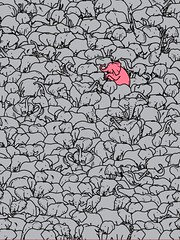
Men, it has been well said, think in herds; it will be seen that they go mad in herds, while they only recover their senses slowly, and one by one.
Charles Mackay (author of Extraordinary popular delusions, and the madness of crowds)
Lessons Learned Video
My most recent video on Youtube, on the topic of "lessons learned" (now superceded here)
Friday, 19 February 2010
Quantified value stories - number 14 in a continuing series

A great early-days KM success stories quoted in this blog by John Gaynard
People say give us "real life examples" of where KM has worked. My first real life examples came when I worked at the World Bank, putting in place a low-cost internal telecommunications (voice and data) network in Africa and Eastern Europe at the end of the 1980s, beginning of the 1990s. Some people with foresight at the Bank like Harinder Kohli and Gus (August) Schumacher realized that the then nascent system of email (which many sceptics had, of course, said would never work) could be opened up to the Bank's customers and used to network and coordinate the Polish ministries and the ministries of many other countries to exchange and better codify their knowledge. The pay off from this was immediate. For example, Gus, sitting in Washington but sharing knowledge and advising his counterparts in Poland every day, managed to get the approval time for a vital $600 million agricultural project for Poland down from about eighteen months (in the best of cases) to six months. How do you estimate the value of putting $600 million dollars to work 12 months early? Even if you are only talking about a 5% return on investment (and in Poland's case it was much more than that) you are talking about $30 million dollars. Compound that initial 5% over 10 years and you are talking real money.
Thursday, 18 February 2010
The knowledge great circle

Something struck me a few days ago. When I look at the people who read this blog (as a resonable representation of KM folks round the world), the locations where they live lie pretty closely on a great circle.
Look at the map on the lower right, where the last 100 visitors are plotted. Compare with the map on the upper right, where the great circle is plotted that passes through the US, northern europe, india, and australia. 99 of those last 100 blog visitors sit pretty close (in global terms) to that great circle.
Is this a coincidence? Or is there a sort of "great circle of KM" across the globe?
(the 100th visitor is in South Africa, which sort of busts the trend)
KM communication and repetition

An interesting article here from Ramon Barquin on communicating the KM message. His central message is not only that you need a simple, understandable message, but that you also need constant repetition. Here's a sample.
A memo from the CEO isn’t enough to build support for business intelligence,
knowledge management, or recycling in the lunchroom. Constant repetition from a variety of sources, both spontaneous and carefully strategized – meetings, memos, word of mouth – is the only way to do it, and this brings us to the Rule of 151.
Scientific? Maybe not, but the Rule of 151 goes something like this. The first 50 times you talk about the business advantages of (KM), nobody seems to hear you. The second 50 times you explain it, they don’t understand. And the third 50 times, they just don’t believe it.
Persist beyond this point, however, and you see progress. Colleagues, peers and bosses hear what you’re saying. They understand it, and more importantly, they repeat it. Fueled by word-of-mouth, even the most offbeat notions can evolve into conventional wisdom. Marketers call it branding, politicians call it campaigning, cynics call it brainwashing. Call it whatever you like: repetition works.
And a really useful summary paragraph at the end
Shortly after Michael McCurry, Clinton administration press secretary, left the White House, a writer for the Harvard Business Review asked what McCurry says when people ask him how to become better communicators. “Know what you’re trying to say and say it precisely and simply,” McCurry answered. “And be committed to telling the story over and over again. You have to persevere.”
Wednesday, 17 February 2010
KM "because we will"
You can find may blog posts out there contrasting Knowledge transfer "just in time", versus "just in case".

"Just in time" knowledge transfer is transfer of knowledge to solve an immediate business problem. This can be done interpersonally through networks and communities of practice, or inter-team through peer assist or other similar team processes. This is classic "knowledge pull"
"Just in case" is the capture of lessons at the end of a piece of work, "just in case" someone should want to use them again. This is classic "knowledge push"
However we should not make the mistake of assuming all knowledge push, and all knowledge capture, is "just in case". Very often it is "because we will".
In other words, we do the knowledge push because we will do this task again, and we want to make the most of what we have learned. This is not "Just in case", because the reuse is guaranteed. It's not like taking an umbrella "just in case" it rains; it's like taking an umbrella because we know it will rain.
Let me give you an example from BP days (and I have a very similar example from much more recently which I can't share with you in detail, for confidentiliality reasons).
In 1997/8, BP Oil Europe, went through a massive merger. At the end of this merger, we conducted a full "learning history" exercise, along the standard MIT lines for learning histories, to discuss, agree, and document the stories and learning points. We knew that similar deals would happen again in the future, so this knowledge was strategically really valuable.
Then in 1999, it did happen again. BP merged with Amoco, in what was at the time the biggest industrial merger in history. Massive lessons were learned, and again afterwards we conducted a learning history, interviewing many of the top people in the organisation, to capture the stories and identify the learning points, the tips, hints and key points. We knew that similar deals would happen again in the future, but didn't know when.
The "when" was almost immediate. in 2000, BP decided to acquire Arco, and no sooner has we cut our first multimedia disc of learnings, tips and hints than it was whisked away to Chicago for the merger team to read and digest. Then again, after the Arco acquisition, we did the same (this time extending the exercise to look at Integration lessons as well). We knew that similar deals would happen again in the future, and sure enough, more mergers and acquisitions happened, and that disc again became much sought-after.
I would like to make two points from this story.
This was not "just in case" knowledge identification and storytelling; we knew this knowledge would be needed again; we just didn't know when.
Secondly, this was not an alternative to knowledge transfer through conversation, it was an addition. In each case the merger team spoke to people from previous mergers (and in several cases, team members moved from one merger to another), but the learning history acted as an index of things to talk about, it acted as an aide memoire to remind people of the details of their exercise (as you know, the human memory fades over time), and in many cases the people were no longer available for conversation and yet their stories and bits of advice were preserved.
Exactly the same happened with the second company (the one where I cant give the details), but there the gap between the mergers and acquisitions was greater; in the order of 2 or 3 years. Here the documented learnings and stories were even more critical in bolstering, triggering, augmenting, and (in some cases) replacing human memory.
So this is knowledge capture, if you like, but it wasn't "Just in case". It was "Because we will".
Because we knew in each case that we will do this again, and that we would like to learn from previous experiences. That's very different from "Just in case we ever do something similar again"
Tuesday, 16 February 2010
Time, or priority?
Very often people say "we don't have the time for Knowledge Management".

"We are busy - we have lots of real project tasks to do - we can't take time off for an After Action review, or a Retrospect or a Peer Assist"
But in fact, it's not a question of time, it's a question of priority. They have time to
- do their timesheets
- prepare reports for management
- attend teambuilding events
- listen to senior management briefings
- attend appraisal meetings
- go to risk workshops
- go to safety workshops
and none of these are any more "real project tasks" than Knowledge Management.
The difference is that these activities are prioritised. They are treated as priority activities; things that it is valid to spend time on.
So when I hear people say "we don't have the time for Knowledge Management", I know that this really means "we don't prioritise Knowledge Management". Probably because they don't appreciate what their knowledge is worth, or how much value KM will deliver.
Monday, 15 February 2010
Skimping on the learning
I was looking at a set of slides today for a project - a 5 month project involving a large number of people. The slideset included an agenda for the final review meeting, and I was pleased to see that they had included a session on lessons learned.

Then I looked a little closer, and noticed that this section was sheduled for 15 minutes brainstorming, and 30 minutes discussion.
Well guys, I thought - you're not going to get anything of value in 45 minutes.
For a decent sized project like this one, I generally allow 20 minutes or more per person when deciding how long to spend on lessons (in a Retrospect, for example). So say there were 12 people in the room, that's 4 hours. 15 people would be 5 hours.
You need to identify, rank and group the learning points - there's your 45 minutes gone already. Then for each one you have to analyse
- what actually happened
- the root causes behind what actually happened
- what you are going to change as a result
- and the actions that arise.
If you skimp in the time you allow for learning, you never got to root cause, you don't even find out what really happened, and you end up with a set of anodyne bullet points that are no use to anyone.
If you only have 45 minutes, folks - don't even bother to try. If it's worth doing, it's worth doing well, and it's worth taking the time. The corollary to this is that if you don't spend the time and don't do it well, people get the message that it's not worth doing at all.
So you dont have the time to do your learning well, then don't do it at all - you will only devalue the entire process.
KM survey
 Another interesting snippet I found in the archives - this was a staff click-button survey on the front page of the BP Intranet in 2003.
If you asked this question in your company, I wonder what response you would get?
Saturday, 13 February 2010

Friday, 12 February 2010
Asimov quote
If knowledge can create problems, it is not through ignorance that we can solve them.
- Isaac Asimov
Another KM definition
This is the first KM definition that echoes my own favourite definition
This one comes from Rob Van Der Spek (who I have admired for ages as an experienced and practical KM professional). He says Knowledge Management is
"anything an organisation can do to create an environment in which employees areI like this, because it portrays KM as an organisational response, without defining HOW the orgamisaiton will shape that response, which will differ from organisation to organisation.
seduced to deal intelligently with their own knowledge and the knowledge of
others in order to achieve their individual and collective actions"
(although I think the word "seduced" isn't right in the long term. Maybe in the short term - not in fully embedded KM)
Thursday, 11 February 2010
BASH - the KM anticulture
In the wrong culture, knowledge management will be a real struggle. But what's the wrong culture?
I've blogged already about the OPEC culture, of openness, performance management, empowerment and conversation. The opposite to this is the BASH culture - Blame, Abdication, Silence and Heirarchy.
BLAME - let's seek to assign blame for anything that goes wrong. A mistake is a punishment opportunity, not a learning opportunity. Pretty soon, we will find that no mistakes are made at all - at least none that anyone will admit to - and yet the business seems to be going down the tubes. Funny, eh?
ABDICATION - nobody need take any responsibility for performance. After all, there are so many things that can go wrong and spoil our performance, that we can't be expected to take responsibility, can we? Performance is in the lap of the gods. And if we can't be held reponsible for performance, that we can't be held responsible for learning about performance. As if there were any point in trying to learn.
SILENCE - you aren't paid to chat, you're paid to work. That's why we give you doors and walls on your office - so you can get on with your work. So less of this conversation, please. I know that other guy may have useful knowledge for you, but if you sit in your office long enough, you might rediscover it for yourself. Or you might not.
HEIRARCHY - if you have a question, ask your boss. If you have a bright idea to share, tell your boss. If you have discovered new knowledge that your peers round the world desperately need, tell your boss. And if you have a decision to make, ask your boss to make it. After all, you may be the one with the knowledge, but he's paid more than you, so why not abdicate your resp0nsibility (see above) and let him take the blame (see above) if things go wrong. Actually, it's just possible that if you tell him your new knowledge, he might tell his boss, and she might tell her boss, and so on, and eventually the knowledge might reach a level where it can cross the organisation and filter back down the levels to (eventually) reach the worker who needs it. And with any luck, it may not be in TOO garbled a form by then. Stranger things have happened.
That's the BASH culture, the antidote to OPEC. If you've got BASH, you need some culture change!
(Actually, to tell the truth, there are some more anti-culture elements, such as Suspicion (which feeds Not Invented Here), and Internal Competition (one of the most damanging elements are far as KM is concerned), but BASH was such a neat acronym, I did't want to spoil it!)
Wednesday, 10 February 2010
Quantified value stories - a negative example
An old one, but not one I had in my collection
"How the US forgot how to make Trident missiles
heraldscotland
Inquiry cites loss of files and key staff as reason for $69m repair delay
By Rob Edwards, Environment Editor"
Plans to refurbish Trident nuclear weapons had to be put on hold because US scientists forgot how to manufacture a component of the warhead, a US congressional investigation has revealed.
The US National Nuclear Security Administration (NNSA) "lost knowledge" of how to make a mysterious but very hazardous material codenamed Fogbank. As a result, the warhead refurbishment programme was put back by at least a year, and racked up an extra $69 million.
According to some critics, the delay could cause major problems for the UK Trident programme, which is very closely tied to the US programme and uses much of the same technology. The US and the UK are trying to refurbish the ageing W76 warheads that tip Trident missiles in order to prolong their life, and ensure they are safe and reliable. This apparently requires that the Fogbank in the warheads is replaced.
Checklists in KM
I don't know if you have read the Checklist Manifesto? You ought to. It's extremely interesting for the KM professional. I read it recently, and something clicked for me as I went through it. It answered a question I have been struggling with for a long time - which is, how do we get knowledge back out into the organisation?

Identifying new knowledge is relatively easy. Updating practice, as a result of new knowledge, is not too hard either. Getting people to change their behaviour as a result is extremely difficult.
But listen to this story.
17th Jan, 2008, Times Online “Passengers aboard the BA38 from Beijing were reflecting on their lucky escape, after all 136 were safely evacuated when the stricken aircraft tore into the tarmac. Only three suffered minor injuries. A formal investigation is under way to find out what led one of the safest aircraft in the world to crash land at Heathrow airport this afternoon”.
13 May 2008, London Evening Standard “The British Airways plane that crash landed at Heathrow may have suffered from "fuel freeze" caused by cold weather, according to investigators. First Officer John Coward was forced to glide the Boeing 777 to safety after both engines failed at 600ft on flight BA38 earlier this year. The Air Accident Investigations Branch (AAIB) interim report into the incident on 17 January has indicated a drop in temperature to -76C (-105F) while flying over Russia may have caused the fuel to thicken, depriving the engines of the additional thrust needed to land”.
As a result of this investigation, new knowledge was created - How to stop ice forming in the fuel on polar flights, and how to recover flight control if icing causes engine failure (counter-intuitively – you cut the throttle instead of increasing it. This allows the heat of the engine to melt the ice and restore the fuel flow).
New knowledge.
And how long do you think it took for every 777 pilot in the world to update their flight practices with this new knowledge?
According to Atul Gawande, author of the Checklist Manifesto, it took 30 days.
Only 30 days for every 777 pilot in every airline in every country in the world.
How long does it take your company to incorporate new knowledge? 30 weeks? 30 months? Atul reckons that a new surgical procedure, in contrast, takes 17 years to be globalised. The difference is that pilots codify everything they know into checklists. They share them widely, and use them rigourously.
Most jobs nowadays are incredibly complex. The human brain can only remember so much at one time, and suffers easily from overload. Most mistakes are made, not because we don’t know what to do, but because we forget (or skip) a crucial step, especially in emergency situations. We need to be reminded of what we know, and what we need to remember. Checklists force us to stop and review, remind us of what needs to be done, take us through the critical steps, ensure we remember the right things, ensure we ask the right questions, and ensure we have the right conversations. And updates in checklists as a result of new knowledge, can remind us to do new things.
Atul has some fascinating stories to tell of introducing checklists into hospital surgery theatres, the pushback that he received and the difficulties that he met, but also the remarkable improvements in patient safety statistics that were made as a result.
However here's an anecdote to close out our story.
November 26, 2008, Delta Airlines from Shanghai to Atlanta.
39,000 ft above Montana the flight crew experienced “uncontrolled rollback of the right engine” due to ice in the fuel line. The pilot and co-pilot followed the revised checklist, the engine restarted, and none of the 247 passengers knew that anything unusual had happened.
That's effective learning in action.
Tuesday, 9 February 2010
Bertrand Russel quote
There is no nonsense so arrant that it cannot be made the creed of the vast majority by adequate governmental action.
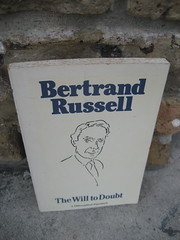
- Bertrand Russell
The epistemology crapper endeavor, and the owlish decision-making processes
Some more machine-translated nonsense on KM
"Inquiring Organizations: Moving from Knowledge Management to Wisdom assembles into digit intensity a broad assemblage of the key underway intellection regarding the ingest of C. West Churchman’s Design of Inquiring Systems as a foundation for computer-based investigatory systems organisation and implementation. Inquiring systems are systems that go beyond noesis direction to actively communicate most their environment. While self-adaptive is an pertinent procedural for investigatory systems, they are critically assorted from self-adapting systems as they hit evolved in the fields of machine power or staged intelligence. Inquiring systems entertainer on epistemology to pass noesis creation and organizational learning. As such, we crapper for the prototypal instance ever, begin to contemplate the idea of hold for “wise” decision-making. Readers of Inquiring Organizations: Moving from Knowledge Management to Wisdom module acquire an approval for the persona that epistemology crapper endeavor in the organisation of the incoming procreation of noesis direction systems: systems that pore on activity owlish decision-making processes".
What's with all the "crapper"s by the way?
Monday, 8 February 2010
The KM 1.0 myth
There's a lot out there about so-called KM 1.0 - what people see as having been the nature of the early stages of KM, which they often then contrast with today's enlightened times.

For example this "The traditional approach to KM, dubbed KM 1.0, is about "deploying" specific knowledge sharing tools to be used for extra "above-the-flow" tasks of capturing and sharing knowledge in the form of structured content. Since those tools are usually quite cumbersome to use, and are justified by potential reuse of content by others in the future, their use is mainly enforced by a culture of recognition and rewards for those who share, and/or sticks for those who don't".
or this "KM 1.0: all about content and collection"
or this "KM 1.0 techno-centric, command and control, centralised monolithic systems, email, databases, KM is extra work, IT select the tools"
or this "the old traditional, corporate, techno-centric, command and control form of KM"
or this "KM 1.0 - is the top-down way to mandate (command and control) “what you know” documents into a database, as a separate job duty, and then seeking this database when you have a need".
or all of this
I am afraid I am going to be controversial here.
If you look back at the beginnings of KM, to where it started, it was not about collection, and not about command and control at all. If you look back to the 90s, you can see the birth of social media in Lotus notes, you can see the storytelling work done at World Bank, you can see the Communities of Practice at IBM, at Xerox, at Shell. Almost all the work we did at BP was about Connection rather than Collection - the Communities of Practice, the face-to-face conversations within Peer Assists and After Action reviews, the Virtual teamworking using the first generation of desktop videoconferencing to bring people into conversation.
This may be "Old" in historical terms, and it was of course far from perfect, but it was a long long way from the 1.0 caricatures quoted above.
KM in the 90s was about Connection as much as it was about Collection, if not more. It was about empowerment, not command. It was about conversation, not content. It was about devolution, not centralisation.
I agree that a focus on content, on collection, on monolithic databases, is a Bad Thing if it happens at the expense of connection, conversation, and putting knowledge in the hands of the users. But this change of focus is not a simple historical progession or evolution, and the myth of "they were wrong and we are smarter" is more than simplistic, it is plain wrong.
The Collect/Connect debate is not a question of 1.0 and 2.0, not a question of old vs new, not a question of traditional versus radical, and not a question of demonising the past and glorifying the future. It is a debate that is happening now, and will always be with us so long as KM continues.
Sunday, 7 February 2010
The knowledge factory
Lord Browne of Madingley, when he gave his ghost-written HBR interview on KM in the 90s as CEO of BP, said something really really interesting. Well, the whole interview was interesting, but this quote has had me thinking ever since. He said

"Learning is at the heart of a company's ability to adapt to a rapidly changing environment. It is the key to being able both to identify opportunities that others might not see and to exploit those opportunities rapidly and fully. This means that in order to generate extraordinary value for shareholders, a company has to learn better than its competitors and apply that knowledge throughout its businesses faster and more widely than they do. The way we see it, anyone in the organization who is not directly accountable for making a profit should be involved in creating and distributing knowledge that the company can use to make a profit"
Let me stress that last sentence again
"anyone in the organization who is not directly accountable for making a profit should be involved in creating and distributing knowledge that the company can use to make a profit"
That is a remarkable view of an organisation as a profit-focused knowledge factory.
The same "knowledge factory" image came to me last week, working with a public sector educational organisation, who's whole raison d'etre was to create knowledge. Here we took a new process-focused view of the organisation, and started to identify the knowledge and information inputs and outputs for each step in the value chain. It was really illuminating.
And if you think of your organisation as a profit-focused knowledge factory, then you can start to think about applying manufacturing thinking to the flow of knowledge - thinking such as debottlenecking the knowledge flow, or lean approachs to knowledge flow. And who is in charge of production? And can you use Japanese style processes such as Kaizen and quality circles to improve the flow?
It's very interesting to look at your organisation as being a knowledge factory, and ask - just how well do we process knowledge? Does everyone who is not making a profit, actually realise that their job is knowledge production?
The value of knowledge
Knowledge is one of your key assets. Like your staff, your money, your customers, your brand. It is one of your more valuable assets too - just imagine how your organisation would perform if you had no knowledge, and your staff had no knowledge!

If you knew the value of your company knowledge, there is no way that you would leave it unmanaged.
It is good practice to manage your valuable assets. You almost certainly have implemented finanacial management, people management, customer relationship managment, brand management. So it makes sound business sense to implement knowledge management too; to derive maximum business benefit from the invisible asset which is the operational knowledge held in the heads of your employees.
For example, one oil-sector drilling organisation recently estimated the value of its knowledge of drilling to be worth half a billion dollars anually.
Who would leave a half-billion dollar asset unowned and unmanaged?
(Remember, my favourite definition of KM, is "the way you would manage, if you understood the value of your knowledge".
Thursday, 4 February 2010
How intellectual inbreeding stifles the meme pool
Someone came up with a great phrase in a workshop today - "Intellectual Inbreeding"

What they meant by "Intellectual Inbreeding" is the sort of restricted group think you get, when ideas or practices have been the province of a small group of people.
We see this very clearly in our famous and powerful Bird Island exercise, where groups can get stuck on a particular design, and can't see the wider possibilities. Maybe they have built a design that reaches 60cm, and think that if they really push everything to the limits, they might reach 75cm, little knowing that the best practice design is far taller.
Intellectual Inbreeding is what happens when the pool of ideas is too limited, and people can't think outside the box, to bring in new ideas and topics. Intellectual inbreeding results in a restricted meme pool.
The way to beat Intellectual Inbreeding is to bring in ideas from elsewhere, from outside the meme pool. You can do this through peer assist, for example, or through knowledge learning visits. In the Bird Island game, we open the doors and bring in people from other teams to share their knowledge and ideas. Often, while the team was racking their brains to take their design up to 75 cm, a member from another team might come in having built a design that already reaches 120 cm.
What happens then, is dramatic. You can almost see the scales falling from people's eyes, and you can almost hear the sound of the penny dropping.
Intellectual Inbreeding is one of the most dangerous outcome of siloed organisations. Use techniques such as Peer Assist to break the silos, exchange the ideas and experiences, and expand the meme pool. A healthy meme pool leads to a healthy knowledge ecosystem.
Wednesday, 3 February 2010

Communicating out, to market back in

To follow up on the previous post on KM Communication, one particular trick is to communicate your KM successes to the outside world, so that the messages can trickle back in. Here's some more quotes from Knowledge Managers
"As a company, we tend to learn more from people outside the company than from inside so we were deliberately trying to create a reputation that would come back into our company"
“My recommendation to anybody in any organisation, is to identify who the key players are in other organisations in your sector or area, and talk to them as well, so that you are planting various seeds not only in your own organisation, but across the sector. After a while, because all these key players talk to each other, you find that you have started to connect them up and they are talking to each other”.
Monday, 1 February 2010
Lessons on Communicating KM
KM is a change program, and Communication is a lever in delivering change. Every KM implementation needs a communication strategy.

For all the KM implementations we have been involved with, we try and hold a learning review at the end, to learn from the successes and challenges. At these reviews, the knwoledge managers wuthin the organisations share their learnings with us. Here’s what they have to say on the topic of communication. You can see they didnt always get it right! (NB each quote is from a different knowledge manager)
"We should have allocated always in our plan, an element of communication process. Even when push came to shove, we should have fought for that just like we fought for some of the other things that were close to our hearts and our commitment".
"The message that we have been giving has been an honest one. We have told people but we are aiming to do something, although we haven't told them what it's going to look like to after the summer, because we don't honestly know ourselves. If we had gone and said "we are going to do this, this and this" then they might have asked a lot more questions".
"We should have implemented a communication strategy, to define all the different ways of communicating, what the medium would be, what the target audience would be, what the message would have to be".
"Compared to some that we have seen, our communication is very much better. (Program X) for example are putting a lot of effort in, but they are not telling anybody anything. We took the opposite tack, and decided to tell people that something was coming. When they ask questions, we say "we do not yet know the details"".
"Maybe what we could have done with the benefit of hindsight is have that communication strategy right from the start instead of inventing it three quarters of the way through".
“Make it someone's accountability. To form a strategy and to keep revisiting that strategy. Don't let it fall below the water line”.
"We developed a bulletin for people who self-select to stay in touch with things. There are 1000 or 1200 people in the organization who have an interest in what we are doing. Every month we send an e-mail to all the new joiners, and say "Do you know that people are sharing their trade secrets on the intranet all across the company? would you like to be kept in touch with this?" And every time we have a workshop with a group of people, we add them on, and every time we do some consultancy or just meet people we ask them if they would like to subscribe. We send it out once a month by e-mail. It is quite colorful, it is not just plain text, we put colored text in it, we have four bulleted items, and there's a link to one thing on the Live and Learn site and then two other things on the intranet which have been published, and we advertise our workshops".
"We could easily have doubled or trembled the level of communications that we were doing, if we had had the manpower".
Subscribe to:
Posts (Atom)

 Posts
Posts


