Sunday, 29 March 2009


Knowledge Management and the age of Navigation


The golden age of Navigation was a golden age of knowledge management, and offers several lessons to KM today.

We are talking about portugal, spain and england in the 15th century, so what on earth has knowledge management got to do with it? Let me explain.

The 15th century Navigators were, absolutely literally, heading off into the unknown, and their lives, as well as their fortunes, were at risk. Knowledge - knowledge of existing discoveries, and where the unknowns still were - was vital to them, and knowledge was their main product on their return (well, knowledge, and shiploads of spice).

Part of the eminence of Portugal in the navigation race was down to the KM techniques of Henry the Navigator. Henry created the Sagres School - the most advanced navigation study and research centre of the time - where he gathered state of the art knowledge on astronomy, cartography and navigation. Before the captains set off on their journeys of discovery, they would visit the Sagres School, talk at length with the captains from previous voyages, study and copy the existing maps, train in the principles of navigation and map making, and read through the exploration journals from previous voyages (usually taking these journals with them, as reference). They would start with as full a cargo of knowledge as they could manage. Then, as they explored, they would capture their own knowledge, in the form of their own journals, and (most important) their own, new, maps. Gradually, voyage by voyage, the white spaces on the maps were filled in, and taken back to the Sagres school to build up the body of knowledge of navigating the new world. This knowledge was a hugely competitive advantage for Portugal, and jealously guarded from Spain and from England - the main competitors for new territory.

So what can this teach the project manager of today? Are there relevant lessons that we can learn from the Navigators?

Yes there are. Wherever a project is exploring "unknown territory" they can follow the principles of Henry the Navigator.
* Learn Before. Visit the knowledge centres (the modern equivalent of the Sagres school). Talk at length with the managers of previous projects (peer assist), study and copy existing processes, read through the lessons from the past, train in the new technologies.
* Learn during. Make your own "map" of the project journey. Fill in the unknowns, using techniques such as After Action review or project blogs to keep journals of the learning.
* Learn After. Bring that knowledge back to the organisation. You are not just delivering the project scope, you are delivering knowledge as well. Fill in the white spaces. Update the knowledge base. Keep the knowledge safe. This is your competitive advantage. Learn from the Navigators - the greatest explorers were the greatest knowledge managers.

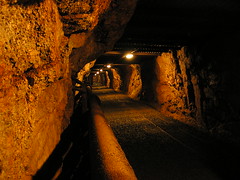
Photo from Flickr Creative Commons, originally uploaded by shizhao

Incidentally, I am not condoning the imperialism and slave trading that was associated with these voyages - I am merely pointing out the deliberate and highly effective management of knowledge for competitive advantage. I am sure today's competitive organisations are far more ethical, though perhaps not as consciouly aware of the value of knowledge.

Saturday, 28 March 2009


Conversations about knowledge


Actually, the operative word is probably not "conversations" but "Dialogue". Dialogue is probably the single most important component of effective knowledge management.

It's the conversations that drive the identification, the exchange, and the implementation of tacit knowledge. This isn't just true of knowledge management either; risk management is driven by conversations about risk, safety management is driven by conversations about safety. And knowledge management is driven by conversations, or by dialogue, about knowledge.

All my favourite, most powerful knowledge management processes are dialogue-driven. It's the dialogue that allows people to reach a shared understanding of "what have we learned". Knowledge management planning is a dialogue about knowledge needs. Peer Assist is a dialogue to exchange and acquire knowledge at the start of a project. After Action Review is a ongoing, regular learning-based dialogue within a working team. Retrospect is a detailed dialogue at the end of the project to idenfity and clarify the team learnings. Knowledge exchange is a multi-person dialgue within a community or between two teams.

The time and attention given to this dialogue is crucial to effective learning, and to effective knowledge management. I remember Steve Denning saying at the Ottowa KM summit that the learning capacity of an organisation is directly related to it's ability to hold conversations, and I truly believe he was right.

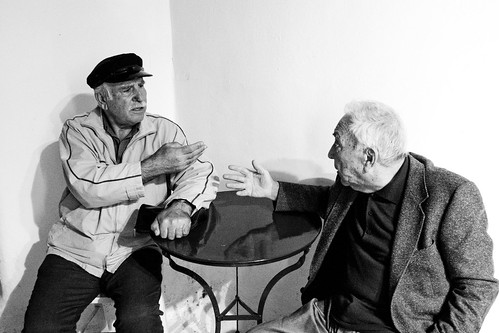
Photo - Little Conversations Originally uploaded to Flickr by iwona_kellie


Knowledge Management value revisited


Inspired by a dicussion in Linked-In - another muse on kowledge management value. There seems to be a school of thought that the value in Knowledge Management comes from improving people's access to knowledge (or to information). Even back in the 90s I remember someone coming into BP and explaining that you can measure the payback from KM by looking at how much time they spend seeking information after KM implmentation, versus how much time they spent before.


I think this seriously underestimates the value. Imagine a project team, running a project. Yes, you could improve the efficiency with which they access knowledge. Imagine that previously they spent 20% of their time seeking knowledge, and that now that spend 10%. The value created by KM is therefore 10% of their time, or 10% of the project team salary bill.


I would rather concentrate on what they can deliver for the project if they access better knowledge; if they learn before doing, to access better ways of working, if they avoid the mistakes and blind alleys explored by previous projects, if they tap into community knowledge to solve problems as they arise, and if they learn as a team to deliver the project faster, cheaper and more effectively. Thats where the value lies - not in their personal time saved, but in the more effective delivery of the project.

Thursday, 26 March 2009

Quantified success stories number 3 - cutting well costs


An oil company drill crew were given an aggressive stretch challenge - to drill the wells on a new field for a budget of $100m less than that on the previous benchmark field. They realised that to do this, they would need to effectively eliminate the learning curve, and to start their program with a complete set of knowledge.

They set up a program of "learning before doing", to access all relevant existing knowledge before the start of the program. They set up a system of identifying, validating and reapplying lessons from each well in their own program. They hired three knowledge managers to manage the process. And they addressed the cultural aspects of "not invented here".

As a result they very nearly hit the stretch target, delivering a saving of $86 million on the previous benchmark performance. In fact, the first well on the field was drilled at a performance equal to the previous best well in the basin.

Saturday, 21 March 2009

Quantified Knowledge Management success stories - number 2 - south african mine


This case history comes from the mining industry in South Africa. We were engaged by a client with a large open cast mine, which was planning to go underground.

Underground mining is a difficult, dangerous and expensive business, with many challenges. However this was not the only underground mine in the company, and the other mines have faced the same challenges and addressed the same issues. Two of the key issues which are common to the mines are Block Caving (a particular technique for extracting rock from the underground) and Earth Moving Equipment. The mine was considering a major investment in Earth Moving equipment, but before they went ahead, they wanted to access the knowledge and experience of the other mines. We were acting for them as knowledge management consultants at the time.

They decided to access this knowledge through a peer assist, and engaged us to help plan and facilitate the event. The process we used was a four step process - the host mine describing the challenges they faced, the visiting peers describing the solutions they have used in the past, a series of dialogue sessions where people broke into small groups to discuss the issues, and then a final session where the attendees came back to the larger group with feedback and recommendations.

According to the knowledge manager at the mine, the Peer Assist has delivered in the order of 80 million Rand in value, in terms of improving their ordering and operating process for Earth Moving Equipment
Photo from Flickr creative commons, by Alarch

Sunday, 15 March 2009

Video - knowledge and performance


There is a close link between knowledge and performance, and therefore between knowledge management and performance management, as I explain in this video.


see more knowledge management video here

Saturday, 14 March 2009

Quantified Knowledge Management success stories - number one in a series


Recently I have seen several posts in Linked-In asking for quantified success stories for Knowledge Management. People want to know, where does the value lie, and how much value can it deliver? Now we have been involved in so many success stories over the years, and some of them are pretty well quantified. I thought I might publish a series of these, as a resource for our readers. So here's number one. (To see the rest, click on the label "success story")

One of the big projects we were involved with back in BP days covered the topic of turnarounds in BP refineries. These are major refurbishment projects undertaken every four or five years at each refinery, where the refinery is shut down for maintenance. Each turnaround can require budgets of tens of millions of dollars and up to a thousand people can be working at the plant for several weeks on the project. Because turnarounds have a significant impact on the profitability of the plant, they need to be done quickly, cheaply, safely and effectively. A community of practice covering turnarounds was already in existence (the Turnarounds Improvements Network), and they had already set themselves tough performance goals, aimed at putting all of BP's refineries in the top quartile of oil industry performers. What we needed to do was arm these people with the tools, techniques and technologies of Knowledge Management.

We first introduced a structured set of Peer Assists for each turnaround. The first Peer Assist was a strategy review 16 months ahead of site work. The last Peer Assist was two months ahead of the site work to assess if the site was prepared. Then we used Retrospects and in-depth interviews to capture lessons learned after the turnarounds were over and we also developed an online knowledge asset to capture and make visible the global knowledge of the network. We also introduced After Action Reviews to learn day by day as the turnaround progressed. These had maximum impact at the Toledo refinery, where they were used on a daily basis by the shift teams. The KM tools and techniques were used at refineries in the Netherlands, Australia, Singapore and the USA.

Record-breaking results were achieved at Kwinana and Nerefco, and the other refineries showed improvements attributable to Knowledge Management. The benefits delivered at Nerefco were valued by the refinery manager at $9.6 million, based on the lower costs, faster delivery and more robust solution than the previous turnaround.

Photo by Flickr Creative Commons, uploaded by Roby72

Thursday, 12 March 2009

The Management of Intangibles, including Knowledge


One of the arguments against the term "Knowledge Management" is that knowledge is an intangible, is personal and context specific, and is not an object in it’s own right, so how can it be managed? Therefore "Knowledge Management" is said to be an oxymoron.

However the management of intangibles is common practice in the business world. Risk management, Safety Management, Customer Relationship management, Brand management, Reputation management, Environmental management; all are established disciplines which make up part of good management practice in many businesses, and are concerned with managing intangibles. Why is Knowledge Management different? Why is Risk Management a valid term for example, while Knowledge Management is an oxymoron? Surely a risk like a hurricane or a terrorist attack is not something you can manage?

I think part of the problem is that we tend to look at the management term in the wrong way. Risk Management does not mean that risk is an object that can be managed -- many risks are completely unmanageable. Instead it means putting in place a Management Framework where decisions are made, and actions are taken, in full cognisance of the importance of risk. Similarly, Safety Management means putting in place a Management Framework where actions are taken, and behaviours put in place, so that the workplace becomes safer. Similarly Knowledge Management need not mean the management of knowledge. Instead, it means putting in place a Management Framework where expectations are set, actions are taken, and behaviours are put in place and sustained, to maximise the value of the know-how of the organisation.

[As an aside, I would argue that Knowledge Management has much to learn from Risk Management and Safety Management. The latter, in particular, has been a massive cultural change in the construction and engineering based industries, and if Knowledge Management is to make a similar cultural change, there are many lessons to be learned from safety.]

To date, in many organisations, Knowledge Management has not yet become a management discipline with the same level of rigour as the management of other aspects such as risk or safety. In many organisations, tools, behaviours and processes have been introduced, communities of practice set up, after action reviews introduced, and the value of Knowledge Management has been comprehensively demonstrated. People know Knowledge Management is a good thing, although there are often more urgent "good things" that take precedence. How then can the organisation take the next step towards KM becoming a true embedded discipline? If its value is proven, would the organisation not want to make sure that this value is fully delivered? Would the organisation not want to make sure that Knowledge Management is applied in a rigorous and systematic way? This is certainly the way that management thinking is going in the oil industry, both in the oil majors and some of the many service and contracting companies. Oil company management realise the value of knowledge, they realise how costly repeat mistakes can be, and they are moving towards putting structures are in place to ensure that the right knowledge is applied by the right people at the right time. They are not relying on chance, or on adhoc KM.

There are three elements to any Management Framework; you make sure people know what they are supposed to do, you make sure they have the tools to do the job, and you check that they are doing the job [rewarding them when they do, putting in place consequences if they don't]. These three elements are described below as Leadership focus and expectation, a holistic and complete system, and monitoring measuring and incentivising.

Leadership focus and expectation
How do leadership support Knowledge Management? Well, probably the same way they support Risk Management and Safety Management. They make it very clear what they expect, they make it very clear who is accountable, they define minimum conditions of satisfaction, and they provide areas of focus. Similarly in Knowledge Management.

Leadership need to set expectations and minimum conditions of satisfaction, especially in a project based organisation. Should every project hold Peer Assists? Should every project hold After Action Reviews, or Retrospects? Should every project have a Knowledge Management Plan? If Knowledge Management is to become common practice, then people need to know what they are supposed to do.

Leadership need to help set the areas of focus for Knowledge Management. What is the key knowledge of the organisation? What does the organisation need to learn? What are the new competencies, competitive competencies or core competencies that need to be built and-or protected? For example, leadership of one manufacturing and marketing company has recognized that Third World distribution is a key area of focus, and has set up global practice groups to build and disseminate the knowledge of how to distribute in the Third World.

Leadership also need to set accountabilities. Where does accountability lie for maintaining the knowledge level of the organisation in key areas? Does it lie with the functions? The communities? The experts? The projects? The line managers? Front line supervisors? Who? If it's nobody's accountability, then it won't get done. For example, the leadership of one company has defined their areas of strategic knowledge, and has made a specific network accountable for each area.

A holistic and complete system
Once people are clear what they need to do, and what areas they need to focus on, then they need the tools to do the job. Here we are talking about a complete and holistic Knowledge Management system, not just technology. We are talking about a complete set of processes for discussing and exchanging knowledge, for identifying what has been learned, for questioning, for dialogue; Peer Assists, After Action Reviews, Retrospects, Knowledge Exchanges, Roundtables, Business-Driven Action Learning -- whatever is relevant and applicable. We are talking about a complete set of roles and accountabilities for knowledge stewardship and knowledge exchange facilitation; Community Facilitators, Subject Matter Experts, Knowledge Area Owners, Retrospect Facilitators -- what ever is relevant and applicable. We are also talking about any necessary supporting technology such as Intranets, Community Discussion Fora, Collaboration Tools, Search Engines -- what ever is relevant and applicable. The Knowledge Management system can be as simple or as sophisticated as the needs of the business demands, but it needs to be complete, it needs to address People Process and Technology, and it needs to address Connect and Collect.

Monitoring, measuring and incentivising
If the company is to set expectations in any area of behaviours, then those expectations need to be monitored and need to be incentivised. One common reason for the lack of true embedding of Knowledge Management activities and behaviours, is the lack of consequence if these are not done. Anything that is optional in today’s busy world tends not to get done. Knowledge Management remains optional. Imagine if financial management remained optional. Imagine if personnel management remained optional. If Knowledge Management is to be rigorous and sustained, it needs to be monitored and measured. This is for two reasons. Firstly, delivery against expectations needs to be incentivised. This may take the form of placing Knowledge Management expectations into performance appraisal, or it may be a case to taking action against the knowledge-hoarders. Secondly, you need to be monitoring the health and effectiveness of the Knowledge Management system itself, and making any adjustments to ensure that it works easily and effectively. Obviously this requires something to be in place to do the monitoring and measuring, whether this is a small central KM team, or whether it's part of the audit function.


Together, these elements of Expectation, System and Monitoring work for Safety Management and for Risk Management, and in the few places where they have been applied for KM, work there as well.


Intangibles Management is common established practice in business. Knowledge is an intangible, and Knowledge Management can learn a lot from these established practices.

Photo from Flickr Creative Commons, uploaded by tlindenbaum

Wednesday, 11 March 2009

Knowledge Management - in defence of the M word


There are many people who really don't like the term Knowledge Management.

They think it is an oxymoron, they don't think "knowledge can be managed", or maybe they just don't like coupling the funky, exciting term "Knowledge" with the boring, conventional and stuffy term "Management". So they become apologetic about using the term, or they avoid it completely. They start to use terms like "Knowledge Sharing" instead. "Knowledge Management" becomes a taboo term.

You won't be surprised to learn that I am completely unapologetic about the term. I don't think it is an oxymoron, because I don't think "Knowledge Management" means "Managing Knowledge" (see here and here). For me, "Management" means "creating and maintaining organisational structures, systems and processes to optimise the value of some area of focus". Then "Knowledge" represents the focus of this particular management system.

There is no need to apologise for this! This is what we should be doing! We should manage, with a focus on knowledge. What's the alternative? Knowledge-less management? Ignorant management? Not managing at all?

You know I don't like the term "knowledge sharing" as an alternative to "knowledge management", because it addresses only one side of a two-sided coin (see here). But beyond this, I really don't think we need to be shy of the M word. Management is what we do to make organisations work; to make them prosper and succeed. And if we don't manage with knowledge in mind, then they won't prosper and succeed to the same extent.

So don't apologise, don't be shy, stand up for the M word. Divorcing "management" from "knowledge"also means divorcing "knowledge" from "management". If you are talking to managers, then they need to understand that these two cannot and should not be divorced. They cannot manage properly, if they ignore knowledge.

And if they manage with due attention to the value and importance of knowledge, then this is Knowledge Management, and this is what they should be doing.

Picture from Flickr Creative Commons
, originally uploaded by Darren Sylvester

Tuesday, 10 March 2009

5 Myths of Knowledge Management - a critique


On another forum, someone posted "5 myths of KM", reportedly from Eric Rogers of NASA. They are taken from this Top 10 list

I find myself in mixed agreement/disagreement with each one. My worry is that his "Facts" sometimes go so far in avoiding the "Myths" that they could become Countermyths. Generally the truth lies in some middle ground, hence my Caveats below (Eric's myths and facts are in italics, my commentary in plain text)

KM can be independent of the business process.
Myth: KM can be delegated to support people outside of the business process who will “do KM” for us.
Fact: KM only works when it's part of the business process, not an afterthought or “only of value to others or in the future.”
Caveat: However without support people outside the business, Knowledge Management will wither and die. The role of the support people is not to DO Knowledge Management , but to ensure Knowledge Management is done, through measuring, monitoring, maintaining, training, coaching, and improving the Knowledge Management system. I can give you a long and depressing list of Knowledge Management programs that died once the central support was removed

Communities of practice can be established by the top.
Myth: CoPs can be established and their benefits obtained by simply assigning people to CoPs and telling them to share and function as a community.
Fact: People join groups they establish an affinity with. CoP efforts recognize where the groups are forming and facilitate their formation, growth and sustainability.
Caveat: However a company can, in key topic areas with real strategic value, seed and support communities. They do not assign people to the communities, but they create the correct environment and then invite people to join. You cannot write off top-down community sponsorship, just because some companies do this badly. In fact "the top" would be remiss if they did not sponsor and encourage communities in all strategic knowledge areas. I have seen spectacular billion-dollar success of some top-down sponsored communities of practice, and spectacular billion-dollar success of some bottom-up communities of practice.

KM is about centralizing knowledge content to use it more efficiently
Myth: Eliminating local databases, unifying datasets and centralizing knowledge will cause more efficient use of knowledge.
Fact: Centralized knowledge is no one’s knowledge. Locally owned knowledge is cared for, validated and used more effectively than centralized lessons-learned systems.
Caveat: You DO need centralised content, but only for centralised knowledge. The issue is not one of centralisation, it is one of unnecessary centralisation. If knowledge is needed across all part of the business (knowledge of how to operate your corporate processes, for example), then it needs to be centralised, and it needs to be owned by someone in the centre.
I really disagree with his "Fact" this time. My Fact is as follows

Nick's Fact: Local knowledge needs to be owned and managed locally. Federal knowledge (used across all divisions or sectors of the business) needs to be owned and managed federally. Ownership is the key on both scales - unless someone has the job of looking after that knowledge, it will soon become uncared for and unvalidated.

Again, I can give you an excellent example where global knowledge sharing was sadly curtailed when the centralised lessons database was removed to make way for purely local databases. (It is now being restored in a different form)
KM is really about databases
Myth: Getting information into databases means that knowledge will be used because the problem is a lack of knowledge capture.
Fact: A database supposes that someone has a question worth answering. Good KM results in more good questions not simple answers.
Caveat: however databases have a part to play. Knowledge Management is about an integrated system for ensuring supply of quality, up to date and relevant knowledge to those who need it, and databases are in there somewhere. Sometimes there are simple questions and simple answers, and the simple questions need to be answered.

KM is an IT function and should be given to the chief information officer
Myth: Building fancy web portals will attract people to use them and they will be tricked into doing KM without realizing it.
Fact: IT people provide IT solutions. KM is not an IT problem. Perhaps 90 percent of IT money spent on KM is wasted on things not needed.
Caveat: I agree with his "Myth" but his "Fact" goes too far. My FACT is "Knowledge Management is not SOLELY an IT problem. Money should be spent where the Knowledge Management problems lie, and much of the time, a minority of these problems are IT related".The Knowledge Management system will include people, process and technology (see here for details). IT provides the technology.

Before starting on Knowledge Management , you need to map out where the gaps are, and invest accordingly. Most companies are pretty well supplied with the technology they need, but there still may be some IT gaps. The mistake is spending money ONLY on the IT gaps, when generally the gaps are far greater in the application of Knowledge Management processes within the business, and the assignment of Knowledge Management roles and accountabilities.Even if the gaps were evenly spread between people, process and technology, you would still need to invest equal amounts of time, money and attention on the three. The mistake is spending the money ONLY on the IT

So, out of 5 myths and "facts", I partially agree with most of them, but worry that he is going so far to avoid some of the pitfalls, that he is in danger of falling off the other side of the road.

Sunday, 8 March 2009

Introduction To Knowledge Management - slide presentation

I have been experimenting with combining SlideShare Presentations with YouTube: here is a first pass at an introduction to Knowledge Management. Let me know what you think please - does the combination work for you?

Data, Information, Knowledge


I illustrate the difference between these three in the video below.


See here for more Knowledge Management video

"The global water cooler" - a metaphor that doesn't work for me


Very often I come across the Water Cooler as a metaphor for knowledge management; most recently in an IBM slideset, where their vision for what they called "Knowledge Management 2.0" was the Global Water Cooler.

This just does not work for me, I am afraid. A water cooler is where you go for water. Sometimes you might meet someone there by accident, who might tell you something useful and provide you with some knowledge, but this is purely by luck.

Photo from Flickr Creative commons, taken by Str8upSkills

You can't rely on luck for knowledge management! Just imagine managing your finances the same way - "I need money for my project - I will go to the water cooler and hope I bump into someone who can give me some money".

If you need knowledge for your project, it would be equally crazy to say "I will go to the water cooler and hope I bump into someone who can give me some knowledge".

Knowledge management is too important to leave to serendipity. It needs to be a deliberate and managed approach to providing people with the knowledge they need, when they need it.

If you want water, go to the cooler. If you want knowledge, you need something far more focused.

Friday, 6 March 2009

knowledge sharing and knowledge seeking


We hear a lot about "knowledge sharing". Many of the knowledge management strategies I am asked to review, for example, talk about "creating a culture of knowledge sharing".

(photo from Flickr creative commons, by shmileblik)

I think this misses the point. As I said in my post about Push and Pull, there is no point in creating a culture of sharing, if you have no culture of re-use. Pull is a far more powerful driver for Knowledge Management than Push, and I would always look to create a culture of knowledge seeking before creating a culture of knowledge sharing.


About 6 years ago I worked with a company KM team. The focus of the team, at the time, was on capturing good practice, and at the same time, the organisation was introducing blogs, wikis, discussion forums and yellow pages. They took to these new tools with alacrity, seeing them as new opportunities to share and publish. Knowledge sharing took off like a rocket. The only problem was, there was very little appetite for re-use. And there is no point in sharing knowledge, if nobody wants to reuse it.


So when I review these knowledge management strategies, my immediate response is to challenge the writer to focus on knowledge seeking and knowledge re-use, and not just on knowledge sharing. Create the demand for knowledge, and the supply will follow.

Visit our website for more details on knowledge management strategy

Thursday, 5 March 2009

Knowledge or Opinion?


How does Opinion become Knowledge?

How can one person's view become the accepted knowledge of a community or of an organisation?
How can "what I think" become "what we know"?
(photo from Flickr creative commons, by greekadman)


This is a question that has been concerning me for some time, especially as the publishing of opinion has become so much quicker and simpler through readily accessable blogs and wikis. There is now so much opinion to be had - how much of this is actually knowledge?


You could argue that opinion becomes knowledge when it is held collectively. There is something to be said for the concept that knowledge is collective. "We know". Many people believe in the wisdom of crowds, for example, which might suggest that opinion is individual, knowledge is collective. However it is a small step from the wisdom of crowds to the madness of the mob. It wasn't that long ago that "We knew" that banks were safe, and that the sub-prime mortgage market was a sensible bet. Just because an idea is popular, doesn't mean it is right - doesn't make it "knowledge".

You could argue also that opinion becomes knowledge when it is authenticated or validated by a person or group. An opinion can be peer reviewed and can become approved as knowledge. Validation and approval is an important and vital step when dealing with knowledge which has serious implications for safety, for example. The knowledge which entered the Chrysler EBOK (electronic book of knowledge) was proposed by the communities ("tech groups") but then validated by a company expert and scanned by a lawyer before it became accepted, because "wrong knowledge" could cost lives. Any company in heavy industry, or concerned with product safety, will be very keen to validate it's knowledge. Behind this lies the principle of accountability. Someone needs to be accountable for ensuring that knowledge is valid, and if something goes wrong, they take the blame. You can't blame "the crowd".

You could also argue that opinion becomes knowledge when it is tested in practice. This is close to my personal stance. An opinion is like a scientific hypothesis - it is an interesting idea, but not yet knowledge. Once you try it, and it works, it becomes a scientific theory (or in our case, it becomes knowledge).

I think in general we need a mix of these. An opinion becomes knowledge when it is tested in practice, and is validated as having been tested by an authority (or group) speaking on behalf of the community.

So why is this question of validation so important? Partly because of the rise in blogging
Blogging in organisations is still a minority sport. If we follow the 90:9:1 rule that applies to wikis, and apply it to blogs, then out of every 100 people in an organisation, one will actively and routinely blog. 9 might read the blog and comment, and maybe post some small items of their own, while 90 will never contribute. If we take blogs to be knowledge, we are only sampling one or two percent of the organisation, and what we find is mostly opinion, and can be a small minority opinion.

There are exceptions to this - subject matter experts or community leaders in an organisation may publish blogs where they share validated community knowledge, for example. I saw one organisation where the head of data security used a blog to share changes in procedures and new best practices, which really were validated knowledge and which the organisation was expected to follow. Apart from these exceptions, the majority of blogs (including this one) are individual opinion.

Wikis are the same. There needs to be a validation process. There needs to be a stamp of approval. Even wikipedia has a validation process, to overcome the recent spate of knowledge vandalism (such as the false announcement of Senator Kennedy's death). I have seen wikis in organisations descend into arguments of opposing opinions when there is no validation process. Shell, in their voluminous and authoritative Shell Wiki have clear validation rules - anything in the wiki article is validated, anything in the discussion on the wiki article is opinion. I know the original idea was that wikis are "self validating", or validated by "the community", but as discussed above, the community may not be that knowledgeable, and the community cannot be held to account.

There is a saying, that a little knowledge is a dangerous thing. A few unvalidated opinions are even worse. One of the community question and answer forums I work with has an introductory message along the lines of "Answers received from this forum are the opinions of the writers. They should not be taken as authoritative. In case of doubt, check with your technical authority". We need more such warnings, in my opinion, if we are to find our way through the thickets of opinion to find the bedrock of knowledge.

Tuesday, 3 March 2009

The Value of Knowledge Management (5)


One last post on knowledge management value and why it is important to understand the value.

Implementing Knowledge Management is a process of change - attitude change and behaviour change. Behaviours and attitudes can change – we have seen this in industry with the introduction of safety management; a profound and highly successful cultural change, with visible and measurable results.

For attitudes to change, you need leadership commitment. You cannot change a culture without the full, whole hearted backing of leadership. However, for leaders to commit to Knowledge Management, they need to understand and endorse the value.

That is your job - to convince them of the value; to strike a bargain with leadership that says "knowledge management needs your support and championship, and in return, knowledge management will deliver real commercial value to the organisation".

Understand the value, communicate the value, "sell" the value, and your reward will be the leadership support you need.

See our page on knowledge management valuation

Monday, 2 March 2009

The Value of Knowledge Management (4)


In an earlier post, I talked about how knowledge management can add value through reducing or eliminating learning curves. An alternative value-addin mechanism is the transfer of Imagine you are working in a business with multiple operating or manufacturing sites. Operations cost, and manufacturing cost, will vary from site to site, Knowledge Management gives you the opportunity to reduce these costs, by sharing learnings and good practice from low cost sites, to improve the performance of high cost sites. In order to be make to make a business case for your knowledge management intervention, you need

  • A good set of benchmark data on current operational costs, broken down as far as possible into the different factors
  • An estimate of how effective KM could be in normalising those costs
  • A desire across the business to improve. The high cost sites need to want to improve. The low cost sites need to want to help them.
As an example, in the 90s we worked with the refineries in BP to help reduce the costs of Planned Shutdowns. Historical data showed that if all refineries could reach the level of top quartile, there was a prize of £30m available. The business estimated that enhanced KM (i.e. an improvement on the existing level of knowledge sharing) could deliver $5m of this, while no knowledge sharing could lose $10m. This return more than justified an investment of $230,000 in a community of practice, an online knowledge base, and a series of Retrospects and Peer Assists.

Another one of our clients looked at one of their major cost elements, water usage, and benchmarked this around their global sites. They set a target of top quartile, and assumed that KM, at the very least, would move each site 10% of the way towards this top quartile target. Even this modest estimate of improvement was worth $7m annually to the organisation, which would more than cover the costs of the Community of Practice required to facilitate the exchange of knowledge.


The value of cost reduction through knowledge sharing between sites can be enormous. BP operations estimated the potential prize to be gained through sharing operational knowledge to be worth $2 billion.

A fictional take on Knowledge Sharing


Ian M Banks is a Science Fiction author. In his most recent book - "Matter" - he has the following, somewhat cynical, reference to Knowledge Sharing. I like the comment "does it hurt?"


"The 512th Degree FifthStrand, or 512/5, is a Humanoid Transfer and Processing Facility," the machine told them as Hippinse finally fell silent.
Holse frowned. "What sort of processing?"
"Identity establishment, in-world alien behaviour legal agreement-making, knowledge -sharing — "


"What does that mean? Knowledge-sharing?" Holse had once helped a town constable with his enquiries regarding the theft of some- tableware from the local County House; it had been a considerably rougher and more painful experience than the phrase Helping With Enquiries implied. He was worried that "knowledge-sharing" might be a similar lie dressed up pretty.


"Any data held is requested to be shared with the knowledge reservoirs of the Nestworld," Nuthe 3887b said, "on a philanthropic or charitable basis, as a rule."
Holse still wasn't happy. "Does this process hurt?" he asked.
"Of course not!" the machine said, sounding shocked.

Holse nodded. "Carry on".

Blog Archive